dailynewsnblog
A suspected rapist evaded justice for nearly two decades while an innocent man spent 17 years in prison for the crime, a jury has been told.
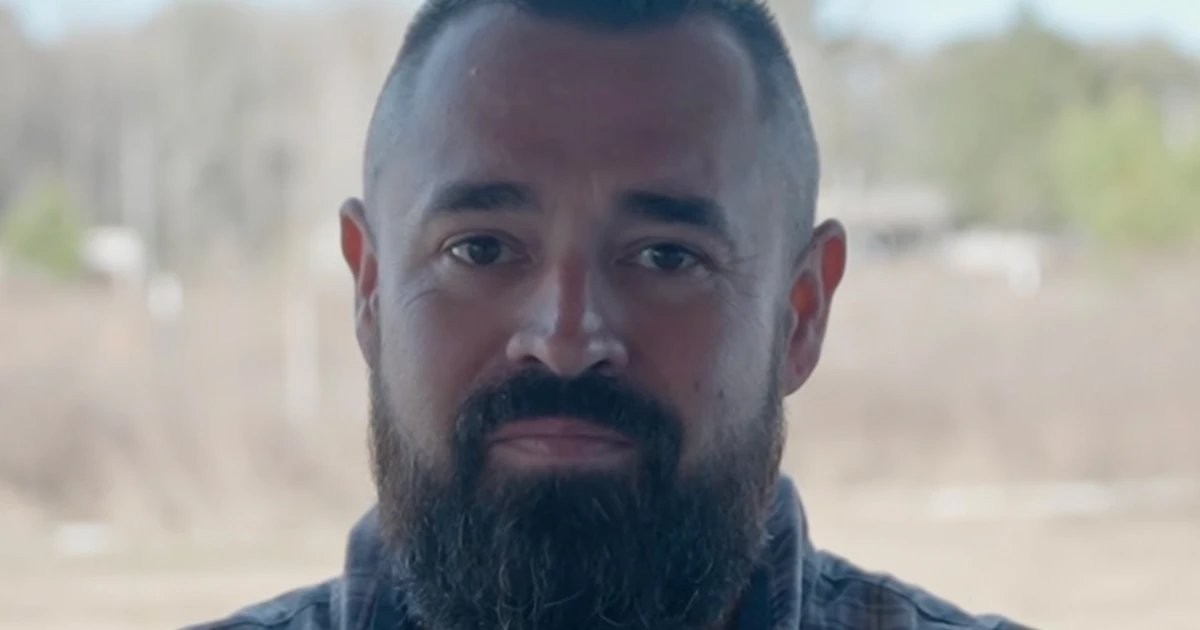
Paul Quinn, 51, is accused of raping and strangling a woman in 2003 in an attack that led to the wrongful conviction of Andrew Malkinson.
Malkinson, 60, spent 17 years in prison after being mistakenly linked to the crime in Greater Manchester, a jury was told on Wednesday.
John Price KC, prosecuting, told Manchester crown court that Malkinson was in fact “the victim of a most terrible miscarriage of justice, one of the worst there has been”.
Price said scientists now believe Quinn, 51, is “more than one billion times” more likely to be the source of crucial DNA found on the victim than anyone else.
Quinn, from Exeter, denies two counts of rape, one count of attempt to strangle, and one count of assault intending to cause grievous bodily harm.
Price told jurors that the woman was subjected to sexual violence “of the gravest kind” in the Salford area on 19 July 2003. She was raped twice and strangled until she was unconscious, her left cheekbone fractured by a blow to the face, the court heard.
The victim’s left nipple was partially severed in the attack, jurors were told, in injuries consistent with a bite. This was significant as it left a DNA profile on her clothing which was matched to Quinn years later.
Quinn, who lived near the scene of the attack at the time, is accused of following the victim as she approached an embankment near a motorway bridge, where he “suddenly launched his assault”.
Price said: “What that tells you, the prosecution submits, is that he wasn’t only a local man. He was someone who knew of that obscure location. A man with prior knowledge of its existence.”
The prosecutor told jurors that Quinn had planned to “forcibly take her out of view of the passing road”.
Malkinson’s name was first raised in connection with the rape by two police officers, the court was told. They said they had spoken to him weeks earlier and thought he matched a description given by the victim.
When the two officers spoke to Malkinson on the day after the attack, they thought he looked “strikingly” like her description, the court heard. However, the victim believed her attacker would have an “obvious” scratch on his face from the struggle, and Malkinson did not have any visible injury.
Jurors were told that Malkinson, then working as a security officer at a local shopping centre, had a dispute with the people he lived with and told them he was going to the Netherlands.
Price said this “sudden departure” added to the suspicion of Malkinson among detectives and he was arrested shortly after having been traced to a hostel in Grimsby.
The court heard that two other witnesses, Beverley Craig and Michael Seward, had picked out Malkinson in a digital ID parade, having seen the assailant “sweating profusely” shortly after the attack.
However, jurors were told that Craig initially identified another man in the police lineup but then selected Malkinson after leaving the room. Seward, her partner, picked out Malkinson during another ID parade six months later.
The identifications of Malkinson were “honestly and genuinely made” mistakes, the prosecution said.
Price said new tests had shown Quinn’s DNA on the victim’s clothing and body. The prosecutor said there was “no alternative plausible explanation” for how this DNA could be deposited in this way.
Quinn was arrested at his home in Exeter in December 2022. In police interviews, he repeatedly denied the rape and claimed his DNA may have been found because he “slept with literally hundreds of woman” in the local area.
Jurors were told that if this “rampant sexual profligacy” was true, Quinn would have had casual sex with about 2,700 local women between 1992 and 2010.
He told police: “I admit I have cheated on my wife hundreds of times with girls that we’ve met on nights out.”
Quinn’s former wife told police that the defendant had telephoned her following his arrest to tell her that his DNA had been found on the victim’s top, the court heard.
She said she remembered the incident from 2003 and recalled a night when Quinn came home shirtless after a night out, telling him around this time: “You better hope that they don’t find your shirt anywhere near [the crime scene]”.
The trial continues.