dailynewsnblog
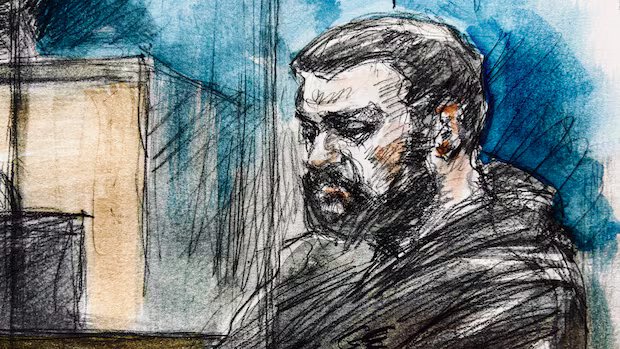
The man responsible for the 2018 Humboldt Broncos bus crash could be deported to India within weeks, leaving behind his wife and two children, who are pleading with Canada to let him stay.
At the same time, some families of the victims say he should have been removed from Canada years ago.
“I want to fight for my family. All the legal avenues, whatever I have, I will pursue that,” Jaskirat Singh Sidhu told CBC News recently in an exclusive interview.
Sidhu was behind the wheel of the semi truck that blew through an oversized stop sign with a flashing yellow light, right into the path of the Saskatchewan junior hockey team’s bus, on April 6, 2018. The collision killed 16 players and staff and injured 13 others.

Sidhu was on only his second solo long-haul truck trip, after just a week of training and two weeks of supervision, driving on unfamiliar rural roads across Saskatchewan. A protective tarp on his double trailer came loose and started flapping around. Fearing he would lose his load, Sidhu repeatedly checked his rear mirror, apparently missing signs warning of the approaching stop sign.
The court’s agreed statement of facts found neither road conditions, the sun nor trees interfered with Sidhu’s ability to see the intersection.
Sidhu says he still has nightmares about that day, and is getting regular therapy for PTSD and major depressive disorder. He remains remorseful and apologetic to the players and families affected.
“I wish I can do something that can take their pain away. I wish that day never happened,” he said. “I made a mistake. … I’m paying for that every day.”
Sidhu pleaded guilty to dangerous driving causing death, and in 2019 was sentenced to eight years in prison, the longest sentence in Canadian history for that crime that didn’t involve alcohol, drugs or purposeful behaviour.
Sidhu was granted full parole in 2023. One year later, the Immigration and Refugee Board removed his permanent resident status and ordered his deportation.

Recently, Sidhu learned a pre-removal risk assessment has determined he would not be in danger if he’s deported to India. CBSA has asked for his travel documents so it can begin the process of removing him from Canada.
When the deportation order comes, Sidhu may leave alone, leaving his wife and two young children — all Canadian citizens — behind.
‘Nobody wants to be separated from their family’
Sidhu married Tanvir Mann months before the accident, and they now have a nearly three-year-old son and a three-month-old daughter.
His son was born with a rare lung disorder and doctors have told the couple that living in India, with its poor air quality, would put him at risk. The decision of whether to take the whole family with him is weighing heavily on Sidhu and Mann.
“It just haunts me,” said Sidhu. “Nobody wants to be separated from their family, you know?”
Mann said she is worried about her husband, who has some family in India but not a lot of close support. She fears he won’t get the counselling he needs because mental illness can be stigmatized in India.
“I am in a big conflict right now,” she said, breaking down in tears. “I have to think about my son, too.”

Tanvir Mann doesn’t know if she should follow her husband to India or stay with her children in Canada, where her son will receive the health care he needs.
She says she also can’t imagine life without her husband. When her maternity leave ends next December, she’ll return to work as a nurse.
“I want my husband with me. I want the father of my kids with us, so he can contribute. He can see his kids growing, all those tiny moments,” she said. “We’re living in fear right now.”
Deportation process underway
In a statement to CBC News, the Canada Border Services Agency (CBSA) said its job is to remove inadmissible people as quickly as possible, dealing first with the most serious cases, including threats to national security and organized crime.
Sidhu’s immigration lawyer, Michael Greene, says he has filed an application for Sidhu to remain in Canada on humanitarian and compassionate grounds, arguing he has young children who would be affected and that he is living with mental health issues that could worsen if he is deported.
“They can try to remove him in the meantime,” Greene said. “We are seeing the wheels in motion to make that happen. And we expect them to be taking steps in the next few weeks or months.”
Greene, who is a senior partner at Greene Immigration Law, says CBSA has already asked for Sidhu’s travel documents. Once he sends them, the agency will provide a date by which he must leave the country — they usually give four to six weeks’ notice.

Jaskirat Singh Sidhu’s immigration lawyer says this case is a ‘litmus test’ of what kind of country Canada is.
Greene says he will ask CBSA to temporarily defer Sidhu’s removal until the humanitarian application is decided, which could be another two years. He says the timing of deportation has historically been discretionary after officers have weighed all the circumstances of the case.
Even when he is deported, Sidhu’s humanitarian application will be processed. If it’s approved, he could return to Canada. If it’s not approved, he would have to wait 10 years after the completion of his full eight-year sentence ends. At that point, Mann could apply to sponsor him to Canada as her spouse.
Foreign nationals who have been deported are permanently banned from re-entering Canada unless they’re issued an authorization to return to Canada (ARC).
At any time, the minister of immigration or the prime minister could intervene. So far, they haven’t.
Greene describes the case as a “litmus test for Canadians.”
“To what extent are we a generous and a forgiving country? And, to what extent are we punitive?” he asked. “I think if you look at [Sidhu] as a whole, he’s a really good man who made a terrible mistake that had, because of just split-second timing, incredibly terrible consequences.”
‘We can never replace our children’
The consequences are still being felt by the victims’ families.
Russ Herold’s son, Adam, was the youngest player killed in the Humboldt bus crash. He died just six days before his 17th birthday.
“It’s a big loss in our family. It’s probably the end of our family name, for one thing,” Herold said. “We were hoping at some point he’d take over the farm after … his hockey career would come to an end.”
Herold describes his son as a rugged and responsible defenceman, a hard-working and humble leader who was “friendly, good-natured and genuinely looked out for everyone on the team.”

He also had a lot of potential in hockey. In 2016, Adam was drafted to the Western Hockey League’s Prince Albert Raiders and had already played three games with the team.
Father and son had a special bond and spent a lot of time together — in the hockey arena, on the farm, hunting and snowmobiling. “I was almost like his best friend. We would do so many things together. And I miss that.”
Herold says Sidhu should have been deported to India years ago.
“To talk about [Sidhu] trying to stay here on humanitarian grounds — what about the humanitarian side of the parents that lost their children?” Herold asked.
“It’s not like he stole our car and we can go buy another one. We can never replace our children.”

Russ Herold says his family has been torn apart by the bus crash that killed his son, so he doesn’t believe the man responsible should be given a second chance.
Herold doesn’t consider it a hardship for Sidhu to go back to India, even with a son who has health problems.
“He wouldn’t have the two children that he has now, born in Canada, if this system would work the way it’s supposed to,” Herold said. “So in my heart, I’m not giving him a second chance. He’s been here eight years too long already and he’s not a Canadian resident and he is taxing our health care, taxing our legal system. I think it’s time to move on.”
Different views on deportation
Kaleb Dahlgren was injured in the crash, but survived.
While his hockey career was cut short, Dahlgren says it fast-tracked his education. He graduated as a chiropractor and works with hockey players and other athletes, with the goal of working in the NHL and with Canada’s sledge hockey team.
Dahlgren believes Sidhu has paid for his actions by going to prison, and will always carry that sentence with him. He doesn’t think Sidhu should be deported.
“My heart does go out to those who have lost their child due to his actions,” Dahlgren told CBC News. “They know that I love them and I support them and I want what’s best for them. … To have peace and to find their happiness in life and acceptance, forgiveness, love, compassion. These are all things that I’ve experienced.”

Christina Haugan, the widow of deceased Humboldt Broncos head coach, talks about why she’s chosen to forgive the man responsible for the 2018 crash.
Christina Haugan says her Christian faith helped her come to the same conclusion. She was married to head coach Darcy Haugan, who was killed in the crash.
“For me, I learned that it’s a choice. It’s a choice to stay in that dark, in that depression, or it’s a choice to see the joy,” she said in a recent interview with CBC News.
“Every joyous moment for us has a little bit of sadness, too. Like when my older son graduated and he [Darcy] should be here … and we’re having another grad and a wedding coming. All of those things are super happy but also a little bit sad, because someone’s missing.”
Haugan doesn’t think Sidhu should be deported, either, because it won’t bring her husband or the other victims back and will only hurt Sidhu’s family.
“I forgive him,” she said. “When he closes his eyes, I’m sure he sees horrific things and I just would hope that there’s some way that he can forgive himself and know that he’s allowed to be happy, too.”

Jaskirat Singh Sidhu says he could contribute to Canada and his family if his application to stay on humanitarian and compassionate grounds is accepted.
Sidhu was emotional when CBC told him Haugan said that.
“Thank you,” he said, his voice breaking, tears welling in his eyes. “I have shame, have a lot of sadness. And all of those things I deal with every day. So I’m waiting for that day when I start seeing a small amount of happiness.”
Sidhu says he still believes Canada is a country of compassion and second chances.
But he knows time is running out and that his family, like many of those involved in the Humboldt Broncos tragedy, may soon be torn apart.