dailynewsnblog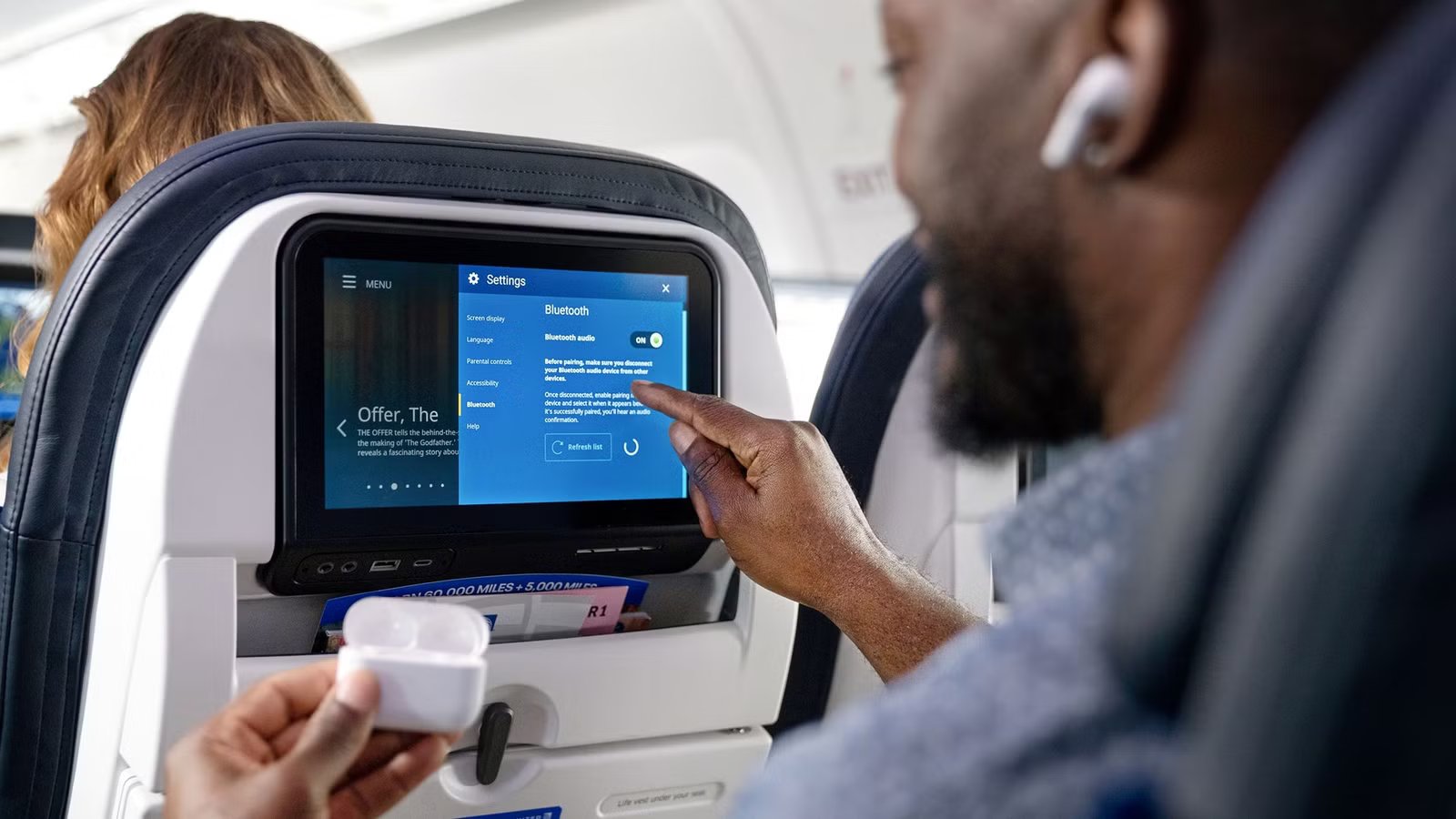
In a time when digital presence goes hand in hand with life, traveling in a commercial aircraft is gradually leaving being offline in the past. Inflight Entertainment and Connectivity (IFEC) is transitioning from a luxury and groundbreaking advancement none of us could have imagined just a few years ago to a fundamental expectation for passengers, radically altering how we perceive and experience air travel.
In this article, I will explore the evolution, technology, and psychological impact of staying connected at 35,000 feet, creating a thorough analysis on how WiFi is changing the way we travel and reshaping the skies.
The Evolution Of The Digital Cabin

From what I remember when growing up in the 2010s, inflight connectivity for passengers began as slow, narrowband systems which barely supported text-based messages and emails. The fees encountered by early adopters were extremely high, especially considering the frustratingly weak connection. Fast-forward to today, and inflight connectivity has been transformed by High-Throughput Satellites (HTS) and Air-To-Ground (ATG) systems. These satellites and systems now permit high-definition live-streaming and impressive lag-free browsing on the internet, endless social media scrolling, and even playing online video games at the same speed (if not faster) than you would at home. This massive technological leap has pushed IFEC from a “nice-to-have” feature only available for premium tickets, to a critical component of the passenger experience.
With an increasing number of carriers and the ever-growing competition, legacy airlines must now consider connectivity as a strategic differentiator. Providing good quality WiFi — such as Elon Musk’s Starlink internet — is a way for airlines to capture more data on passenger preferences, offer real-time customer service, and even generate ancillary revenue through targeted digital advertising. This new “digital cabin” is a space in which the integrated entertainment systems and any of the passengers’ personal devices work together to create a unique and personalized environment for them. This combination is the new trend in the competition between premium and conventional airlines, in which, surprisingly, megabits per second have become as important as legroom.
Furthermore, the movement has gone so far as to offer “Free WiFi” models pioneered by carriers like JetBlue and followed by giants like  Delta Air Lines, which have set a new benchmark that the industry is trying to match. When connectivity is friction-free, passenger satisfaction scores soar, and
  Qatar Airways proved it when it launched the first ever Starlink commercial flight in history. The fact that some airlines such as Qatar and
  Emirates offer free Starlink WiFi to every single passenger removes the psychological barrier of the “paywall”, making the aircraft feel less like a pressurized tube and more like an extension of one’s living room or office. This psychological shift is the true hallmark of the modern passenger experience, because it seems that as long as we have a smartphone or tablet in our hands with access to the limitless kingdom of cheap entertainment and information overload, we are happy and forget about the physical world that surrounds us.
Technical Infrastructure: From Ground To Space

Understanding how you can stream a movie while traveling at 500 mph requires a look at the two primary methods of connectivity systems: Air-to-Ground (ATG) and Satellites. ATG works similarly to your cell phone, using antennas at the bottom of the aircraft to ping ground towers. While this is very effective over land, it often fails over the ocean. Satellite connectivity, specifically using Ku-band (12–18 GHz) and Ka-band (26–40 GHz) frequencies, uses geostationary or Low Earth Orbit (LEO) satellites to provide global coverage, including for the most remote flight paths.
The distinction between these bands is crucial for the end-user experience. The Ka-band typically offers higher speeds between 26 and 40 GHz and more bandwidth, making it ideal for data-heavy tasks such as streaming live TV shows or videogames. Furthermore, the emergence of LEO constellations, such as SpaceX’s Starlink constellation of satellites — which consists of both Ku and Ka satellites as well as the newer E-band (70–80 GHz) — promises to significantly lower latency, also called signal delay. Lower latency means that the “lagging” in live content is virtually eliminated, allowing for real-time gaming and seamless video conferencing — something that was just a few years ago considered virtually impossible in aviation.
Best For | Coverage | Typical Speed | Latency | |
Air-To-Ground (ATG) | Domestic, land-based routes and older aircraft connectivity systems | Land mostly | 3-10 Mbps | Moderate |
Satellite Ku-band | International, long-haul flights | Global | 10-50 Mbps | High |
Satellite Ka-band | High-density streaming | Almost global | 50-100 Mbps | Moderate |
Low Earth Orbit (LEO) — Starlink / OneWeb | Gaming & videocalls | Global | 100+ Mbps | Very low |
The hardware required to facilitate this inflight connectivity is almost as impressive as the technology itself. To offer the latest connectivity technologies, aircraft must be fitted with “radomes” — those hump-like protrusions on top of the fuselage — that house steerable antennas that track satellites as the plane maneuvers in the sky. These systems must be aerodynamic to minimize fuel burn while remaining durable enough to withstand extreme temperature fluctuations and Foreign Object Damage (FOD), like bird strikes.

Emirates To Equip 200+ Aircraft With Starlink Internet
All the airline’s planes will offer Starlink by 2027.
The Business Traveler’s Productivity Revolution

For the corporate traveler, inflight connectivity has redefined the “working day.” Historically, a cross-country or transoceanic flight meant a forced hiatus from the workflow. Today, the cabin is a high-altitude co-working space for digital nomads, company executives and employees — but also for the so-called influencers and gamers from Gen Z (1997-2009), Gen Alpha (2010-2024) and the upcoming Gen Beta (2025-2039) — and the more we advance towards the peak of what is physically and virtually possible in the cabin, the more airlines will have to adapt their interiors, seats and even services, to cater for a new wave of unprecedented technology that probably today we can’t imagine. The ability to access cloud-based tools like Slack, Microsoft Teams, and Salesforce means that a six-hour flight can be just as productive as six hours in the office. This “found time” is an invaluable asset for high-stakes professionals, but also for all of those passengers who prefer to watch their own shows, games, films, and realities rather than watching the films — which are almost always outdated — offered by the airline.
However, this constant connectivity brings a new set of challenges, specifically the “always-on” expectation. The flight was once the last bastion of peace, a place to relax, sleep — for the luckiest passengers — or rest; now, the ping of an urgent email or message can reach you anywhere in the world faster than the speed of the aircraft you are flying on. Despite this, the consensus among business travelers is overwhelmingly positive. The stress of landing on a mountain of 200 unread emails is replaced by the satisfaction of clearing the inbox before the wheels touch the tarmac.
From a technical lens, airlines are optimizing their networks to prioritize “VPN-friendly” (Virtual Private Network) traffic. Corporate VPNs often require stable, consistent handovers between satellite beams. Modern IFEC providers have refined these transitions to ensure a secure connection isn’t dropped whenever the aircraft enters a new coverage zone. This reliability is what transforms an aircraft seat into a true workstation and a transcontinental flight into a transcontinental office.
Entertainment And The Death Of The Seatback Screen?

The rise of high-speed onboard WiFi has sparked a heated debate in the aviation world: is the Inflight Entertainment (IFE) screen obsolete? With most passengers carrying smartphones, tablets, laptops, and even gaming stations, the trend towards “Bring Your Own Device” (BYOD) is gaining momentum. High-capacity WiFi allows passengers to stream on their own streaming platforms (such as Netflix, Prime Video, HBO, etc.), offering a personalized content selection that no airline-curated library could ever match. Yet, the seatback screen isn’t dead; in fact, it is evolving. Leading airlines are now using connectivity to sync the seatback screen with the passenger’s mobile device. Imagine starting a movie on your phone in the terminal and resuming it on the seatback screen once you board. This “second-screen” experience lets you watch a film on the large monitor while using your phone to track the flight map or order refreshments from the digital menu.
This shift toward streaming has forced airlines to rethink their bandwidth management. But providing enough “pipes” for 300+ people to stream 4K videos simultaneously is a massive technical hurdle. To solve this, many carriers use “cache” content, storing popular movies on a local server on the plane, to reduce the load on the satellite link, which is also used in parallel by the personal devices of those 300+ passengers.
In the aviation world, weight is everything. Airlines measure it down to the gram because more weight equals more fuel burn and higher CO2 emissions. The weight of a single economy class IFE system (per single seat) has dropped significantly over the last decade — thanks to the continuous effort of IFE providers such as Panasonic Avionics Corporation, Thales Group, Safran Passenger Innovations, and Collins Aerospace. However, it is still a substantial “penalty” for an airline to carry. In fact, it is probably the heaviest artifact in the aircraft cabin that could be replaced by lighter BYOD smartphone and tablet holders where passengers could easily attach their devices to watch their own content using the high-speed internet that will become available on all the decent airlines within the next five to ten years.

Is Starlink About to Replace Seatback Screens Forever?
Not every airline will eliminate seatback screens entirely, but some may see a clear opportunity to reduce reliance on traditional IFE.
Nowadays, it makes sense to question whether the IFE screen should be a must-have or a nice-to-have option, for example, in the economy class. Knowing that the weight of a single seat’s IFE components is roughly 2.5 to 4 Kg (5.5 to 8.8 lbs), and that a large widebody jet can carry around 300 economy class seats, the overall weight of the IFE screens inside the aircraft can easily increase its weight OVER ONE TON. This means that for every flight, the aircraft could be carrying 10-15 more passengers in weight, or it could save thousands of liters of fuel, which costs airlines millions per year. The following chart describes the weight and function of the main components of an IFE system:
Component Per Seat | Weight (Approx.) | Notes |
The screen | 1.2 – 1.8 Kg | Modern 10–12 inch HD / 4K touchscreens. |
Cables & Wires | 0.8 – 1.2 Kg | Copper wiring is the heaviest part of the “hidden” system. |
Seat Electronic Box (SEB) | 0.5 – 1 Kg | The “computer” usually tucked under the seat. |
Peripherals | 0.1 – 0.2 Kg | Headphone jacks and USB charging ports. |
Mental Health And The “Digital Detox” Debate

A common question among frequent flyers is: Has connectivity ruined the magic of flying? For some, the hum of the engines was a signal to unplug, read a book, or simply think. The introduction of WiFi has, for many, brought the noise and anxiety of the digital world into the sky. There is a growing conversation about the “right to be offline” and whether the pressure to stay connected is detrimental to the travel experience.
However, the counter-argument is rooted in passenger autonomy. Connectivity provides the choice to engage or disengage. For a nervous flyer, being able to text a loved one or watch a live sports game can be a vital distraction that lowers anxiety. For parents, the ability to stream cartoons for a restless toddler is nothing short of a lifesaver. The “broken link” to the ground was often a source of stress, rather than peace for many flyers.
The aviation industry is beginning to address the “digital noise” issue by implementing “quiet zones” or encouraging the use of headphones. As connectivity becomes ubiquitous, the next phase of passenger experience design will likely focus on “digital wellness”, where systems might suggest meditation apps or provide “dark mode” interfaces during night flights to help passengers maintain their circadian rhythms.
The Future: 6G, LEO Constellations And Beyond…

As we look towards the next decade, the “Future Outlook” for inflight connectivity is defined by seamlessness. We are moving toward a world where your devices can connect to the aircraft’s WiFi as easily as they connect to your home router. The distinction between “ground internet” and “air internet” will vanish. With the rollout of newer 5G and 6G technologies and the expansion of LEO satellite constellations, we can expect speeds that rival fiber-optic connections on the ground.
Practical takeaways for the modern traveler are simple: Always check the aircraft type and the IFC provider before flying — and even before buying your tickets. Systems and airline offerings may vary wildly; a Boeing 737 with the latest Starlink system installed will offer a vastly different experience than an older Airbus A320 with legacy ATG hardware, and vice versa. As airlines continue to upgrade their fleets, the “digital divide” in the skies will narrow, making high-speed access a universal standard.
Ultimately, inflight connectivity has humanized the flying experience. It has turned a period of “liminal space” — the time that we used to spend in a flying limbo between take-off and landing — into a period of personal choice. Whether you use that choice to close a business deal, binge-watch a TV series, or simply stay in touch with the world below, the sky is no longer the limit to our digital lives. It is simply another place to be connected.
The world is always in constant evolution thanks to the bright minds behind technology development — such as Elon Musk and his brilliant team of engineers at SpaceX — because, as most of us continue to enjoy each phase of technology when it is introduced to us, some people out there are heavily invested in creating them.