dailynewsnblog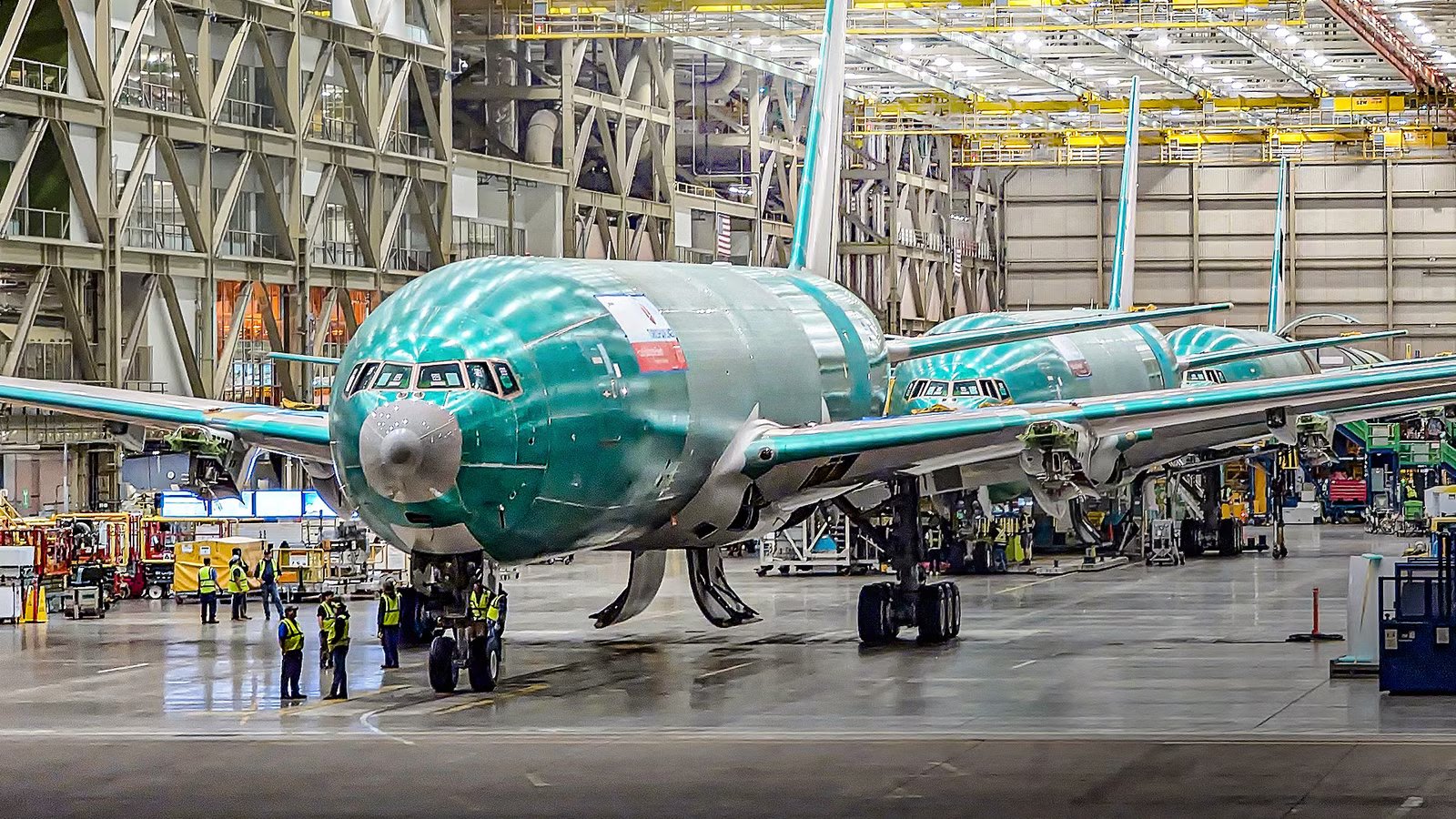
Some 13 years after  Boeing first touted its 777X and began taking orders for the next-generation jet, the program remains a way off of delivering any models to waiting airlines. Indeed, the manufacturer originally forecast the 777X’s maiden commercial flight in 2020. Now, it is targeting 2027, after being hit with delay after delay. To make matters worse, it still requires the green light from regulators, meaning the path to certification and the aircraft’s introduction into service remains somewhat clouded by uncertainty.
So, why has the Boeing 777X been so delayed, and why has Boeing not found a way to tackle problems so far to get the program fully off the ground once and for all?
What Is The 777X?

Before delving into why the 777X’s release date has consistently been pushed back, it is worth exploring what Boeing has attempted to achieve with the aircraft. Simply put, that is a new generation of more sustainable twin-engine aircraft aimed at revitalizing the economics of long-haul flight for carriers.
A total of three variants, all exclusively powered by two GE9X engines, are set to hit runways upon approval. This includes two passenger variants, the 777-8 and 777-9 differentiated by length, capacity, and range, alongside the 777-8 freighter. In all, the family of jets was designed to incorporate innovations from the 787 Dreamliner to enhance pilot flexibility and boast a 20% reduction in fuel burn compared to predecessors. This would translate to a 10% cut in “operating costs than the competition,” as per Boeing.
|
Specifications |
777-8 |
777-9 |
|
Passengers (two-class) |
395 |
426 |
|
Range |
8,745 nmi |
7,285 nmi |
|
Length |
70.9 m |
76.7 m |
|
Wingspan |
71.8 m (extended) 64.9 m (on ground) |
71.8 m (extended) 64.9 m (on ground) |
|
Height |
19.5 m |
19.5 m |
|
Engine |
GE9X by GE Aerospace |
GE9X by GE Aerospace |
The idea was, and still is, that the 777X would rival Airbus’ A350 as a new flagship option for airlines’ fleets. Each is set to boast individual strengths against each other. For instance, the Airbus A350-1000 will trump the 777X with a range of up to 8,900 nautical miles, but its capacity of 410 seats and 322 tonne maximum takeoff weight is where it will fall behind.
What Has Fueled Delays?

Airbus got a hefty head start with its A350 program, having officially announced the clean-slate design in 2006. The jet then entered service with Qatar in early 2015, nine years after its unveiling. Whilst not all smoothly, the time span from announcement to the commercial launch of Airbus’ A350 only makes Boeing’s 777X program delays look worse.
There are two key reasons Boeing has struggled so much to roll out the 777X on time. Most notably, it is realistically the manufacturer’s own failings, both in terms of issues with the program itself, but also incidents related to its other aircraft. Regulatory delays have also weighed, though they tie closely to Boeing’s own woes, leaving it struggling to push through the 777X and the 737 Max 7 and 10 in a timely manner.
Another valid excuse is the impact the COVID-19 pandemic had on the industry, all the way from passengers booking flights, to manufacturers and parts suppliers. It is no secret that the industry is still reeling from the widespread groundings and disruption caused across supply chains. For Boeing, this saw deliveries tumble from 806 in 2018 to 380 a year later, then just 157 in 2020. Though the figures are somewhat skewed by coinciding with the grounding of the 737 Max, they give an indication of the work Boeing was left with to get back up to speed as global demand rebounded after Covid.

Why Lufthansa Is Betting On Both The Boeing 777X & Airbus A350
Why has Lufthansa opted for the 777X, when it already has the A350?
Sluggish Progress In Securing Regulatory Approval

Shutterstock | Simple Flying
Boeing itself has been the subject of increased scrutiny from regulators following a string of accidents related to its aircraft in recent years. This most recently included the failure of a door plug aboard an Alaska Airlines 737 Max 9 in January 2024, further fueling safety concerns about the program after two crashes in 2018 and 2019, respectively, which resulted in the aforementioned worldwide groundings.
Whilst a different model entirely, growing wariness about the airline’s safety procedures has been an uncomfortable hurdle for Boeing to navigate. For the 777X specifically, issues such as an “uncommanded pitch event” during a late 2020 test flight have only added to regulatory woes. Currently, the jet remains within the regulatory testing process. According to the manufacturer, the Federal Aviation Administration (FAA) began phase three of its Type Inspection Authorization on the aircraft over the final quarter of last year. Under this, FAA pilots and engineers will fly with the manufacturer to assess the aircraft before final type certification.
Of course, any issues lengthen the process, a fact that passengers can take some comfort in. That said, Boeing is not entirely to blame for the sluggish timeline for getting jets approved. The FAA itself enacted a plan to speed up the certification of new aircraft late last year. Stressing this would maintain or even increase safety, the organization outlined efforts to “modernize” its process, including by reducing “exemptions, special conditions, and equivalent level of safety findings required.” This, it said, would “reduce certification costs and time to certify new and changed products.”
Issues With The 777X Itself

As touched on above, the 777X program has run into a string of problems over the years, caused by various factors. As an update on the original 777, first flown commercially in 1995, Boeing’s ambitions for the 777X centered on creating a larger model able to run on less fuel. This meant going back to the drawing board for new engines and designing folding wingtips so the bigger plane would be compatible with existing airports. As such, bringing the 777X to life required more than simply sprucing up what Boeing already had with the 777, in turn heightening the risk of mishaps during its development.
Unfortunately for Boeing, the gamble did not pay off, with issues even being recorded before the 777X’s maiden test flight. Subsequent problems have ranged from structural integrity to engine development to flight control software, to name a few.
Below are some issues identified with the 777X during its development:
|
2019 |
Fuselage structural failure |
Cargo door blew out during a high-pressure ground test. |
|
2019–2020 |
Engine compressor issues |
Early development problems with the GE9X’s compressor delayed the aircraft’s first flight. |
|
2020-2021 |
Uncommanded pitch events |
Nose moved up or down without pilot input during flight testing. |
|
2021 |
Certification delayed |
The FAA declined to certify the aircraft one year after the originally planned delivery date given outstanding technical issues. |
|
2022 |
Engine fault |
A new engine-related issue grounded the entire 777X test fleet. |
|
2022 |
Midair door panel failure |
A door panel blew out midair during a separate stress test. |
|
2024 |
Engine thrust link failures |
Cracks were discovered in the thrust link structure connecting GE9X engines to the wing, resulting in another grounding of the test fleet. |
|
2026 |
GE9X engine seal durability issues |
Further durability concerns identified with GE9X engine seals. |
For Boeing, it appears that as one issue was rectified, another was simply identified, requiring further inspections, fixes, and precious time. Indeed, the latest problem was found as recently as this year, piling even more doubt on next year’s release. Chief executive Kelly Ortberg has downplayed the issue, telling investors in January that the schedule remained unchanged, and flight testing was continuing. A spokesperson from the engine developer echoed this. However, details of the durability issue were scarce, so we will have to wait and see.

Which Airlines Have Ordered The Boeing 777X? A Complete List
Around a dozen airlines have placed orders for around 500 Boeing 777X, with the first set for delivery in 2026.
Boeing Has Already Built Some

Boeing has actually kicked off production under the 777X program in a bid to jump the gun for when regulatory approval is finally achieved. As of last year, at least 26 777X aircraft had reportedly already rolled off the production line in anticipation of approval, according to The Seattle Times.
Of these, four were said to be in use for testing at the time, leaving 22 ready to be shipped as soon as possible from Boeing Paine Field, where the program is based. Satellite images have since shown at least 32 777X airframes parked around the airfield, meaning the number built by Boeing could indeed be higher still.
Firm orders amounted to 560 variants of the 777X as of the end of last year, so it is no surprise that Boeing is preparing in advance to minimize the risk of further delays in delivering the jets once it finally gets the go-ahead. Indeed, the likes of supply chain bottlenecks have become synonymous with manufacturing across the industry since the pandemic. Any attempts by Boeing to limit further awkward delays could prove to pay dividends when the time eventually comes to roll out the 777X.
Is 2027 Achievable For Boeing And The 777X?

As of September, Boeing still had a “mountain of work” to get through before finally being able to ship off the 777X, Ortberg said at the time. One month later, it was announced that the first 777X would now be delivered in 2027, leaving Boeing with further late charges to compensate airlines that were said to have already amounted to nearly $15bn (£11.3bn).
Whether the 777X will be shelf-ready by 2027, only time will tell. But Boeing still has to get through the regulatory process, a task proven to be far easier said than done when it comes to the 777X. Perhaps the FAA will manage to streamline its certification process in time. Perhaps the 777X passes the remaining tests with flying colors. We will see. What we do know, though, is that little seems to have gone right for Boeing under the program so far, and at least one more issue must be rectified before airlines can finally get their hands on the aircraft.