dailynewsnblog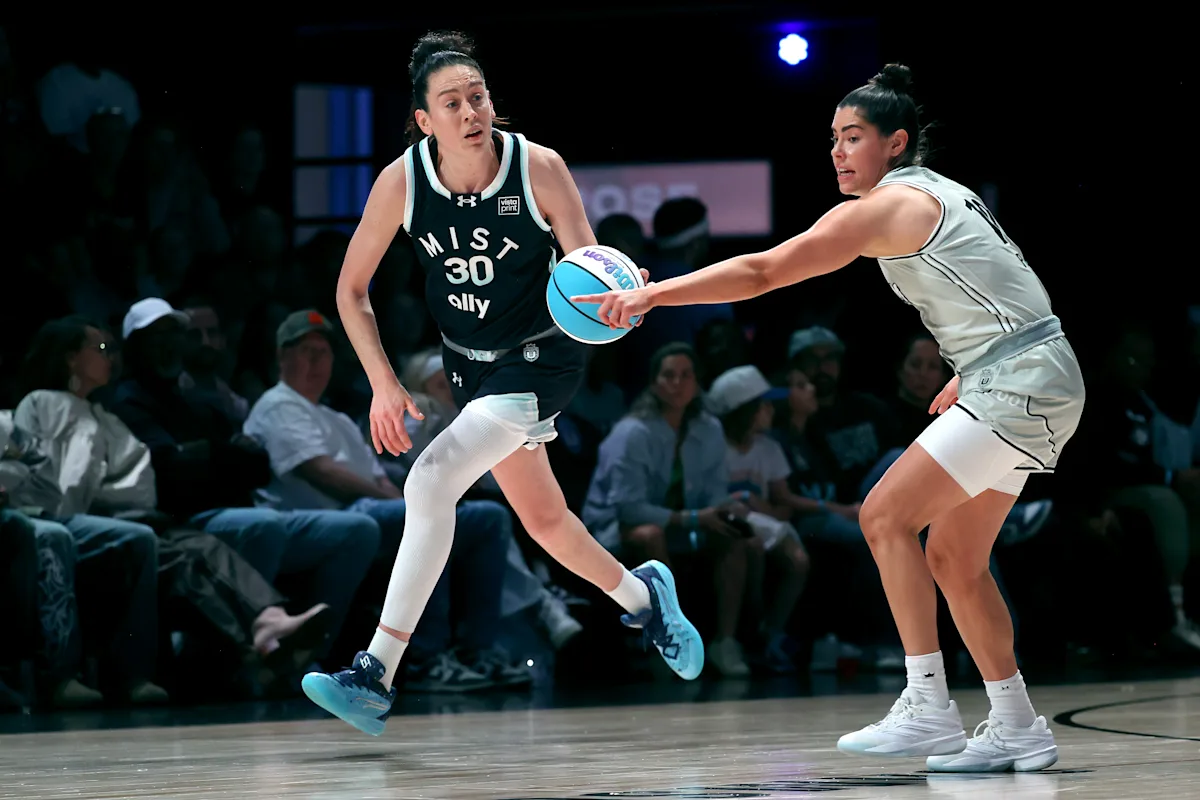
Nearly 17 months into collective bargaining negotiations that have vacillated between flurries of activity and periods of silence, the dam broke on Tuesday. It laid bare the issues that had been rumbling within the WNBA Players Association for months.
Not everyone agrees. Not everyone is being considered, or even involved. Not everyone knows what’s going on. And all this as the union and league barrel toward the March 10 date the league gave the WNBPA as the CBA deadline for the season to start on time.
Advertisement
It’s messier by the minute.
ESPN reported Tuesday night that Kelsey Plum, first vice president of the union, and Breanna Stewart, a vice president, wrote a private letter to union executive director Terri Jackson voicing concerns about how the union is handling the negotiations, “including the lack of adequate player involvement in the process.”
They said that despite the union opting out of the previous CBA more than 16 months ago, they have “been privy to details of these negotiations for less than two months, having first seen a proposal in January,” per ESPN. Their requests for specific information from the union have gone unfulfilled, they said. It makes sense that a flurry of proposals have now gone back and forth within the past few weeks, after the stalemate following a third deadline the sides failed to extend.
That’s unacceptable for two members of the executive committee, who should be conduits of information between Jackson, union president Nneka Ogwumike and each team’s player representatives. And it stands in direct contrast to the public party line that communication within the union has been solid, even amid private rumblings of concerns and a lack of information. There is no excuse. Jackson and Ogwumike have been in their positions since 2016, and worked on the 2020 CBA that was viewed as progressive at the time.
Advertisement
The claims are strong. They’re also unsurprising, as is Plum and Stewart being at the center of it. They are largely the most willing of the executive committee to speak on CBA issues and provide in-depth, nuanced responses. Plum broke the news of January’s in-person meeting in New York, which broke the weeks-long stalemate between proposals. That was no accident.
Understanding what the group of reporters waiting for her was ready to ask, and that she had a duty to speak on it, she took it upon herself not only to tell, but to offer optimism. Ahead of Monday’s Unrivaled semifinals in Brooklyn, both Plum and Stewart denounced a potential strike and highlighted the positive player advances in recent proposals.
“I’ve always been someone that’s focused on the gain, not the gap,” Plum told reporters. “And to be honest, I think if you look at where we’ve come from, shoot, since I came into the league until now, and now that we’re in a revenue share, it’s a tremendous win.”
Meanwhile, within the past few weeks, others on the executive committee have attempted to duck questions about the CBA proposals or have made themselves scarce. There are often claims of needing to align on messaging.
Advertisement
No wonder it took time to align if some were kept in the dark. And those who accidentally or purposefully stepped out of what the leaders desired took heat. Why speak at all, internally or otherwise?
“When we and other players have attempted to express concerns about negotiations, we have been made to feel as though we are acting against the interests of the PA,” the letter read, per ESPN. “Many other players across the league feel these same frustrations and have expressed them to us, but feel afraid or unable to speak out.”
It’s the players who have to live with this CBA and its ramifications. They shouldn’t be, according to Plum and Stewart, “largely … excluded from” the negotiations. There’s no reason to button up their opinions when they’re the very people the union is working to help. It has all felt very heavy-handed from the top, when the reality is, a negotiation is, by definition, a discussion aimed at reaching an agreement. Change is incremental; it can’t be done all at once.
Advertisement
Plum has often and quite publicly said that. As time dwindles, there is no other option but an impacted season. Even if some players saved money for the past two years in preparation for a potential strike, as the union advised, that’s not easy to live through financially. And the league has offered much of what the players have asked for, including developmental players, acquiescing on housing, movement on salary caps and accelerating rookie contracts. The union has been less clear, speaking only of revenue sharing and its incremental changes over the last few weeks.
There’s also a valid concern about the league’s long-term financial health. If either of the proposals on the table were codified today, the players will receive revenue-sharing. To revenue-share, you need revenue. And to bring in revenue, there need to be games.
That’s all Stewart and Plum were saying this week in Brooklyn. Behind the scenes, they’ve been saying a lot more. Their direct call to union leadership for failing players is a turning point in these talks. Whether that’s for better or for worse.