dailynewsnblog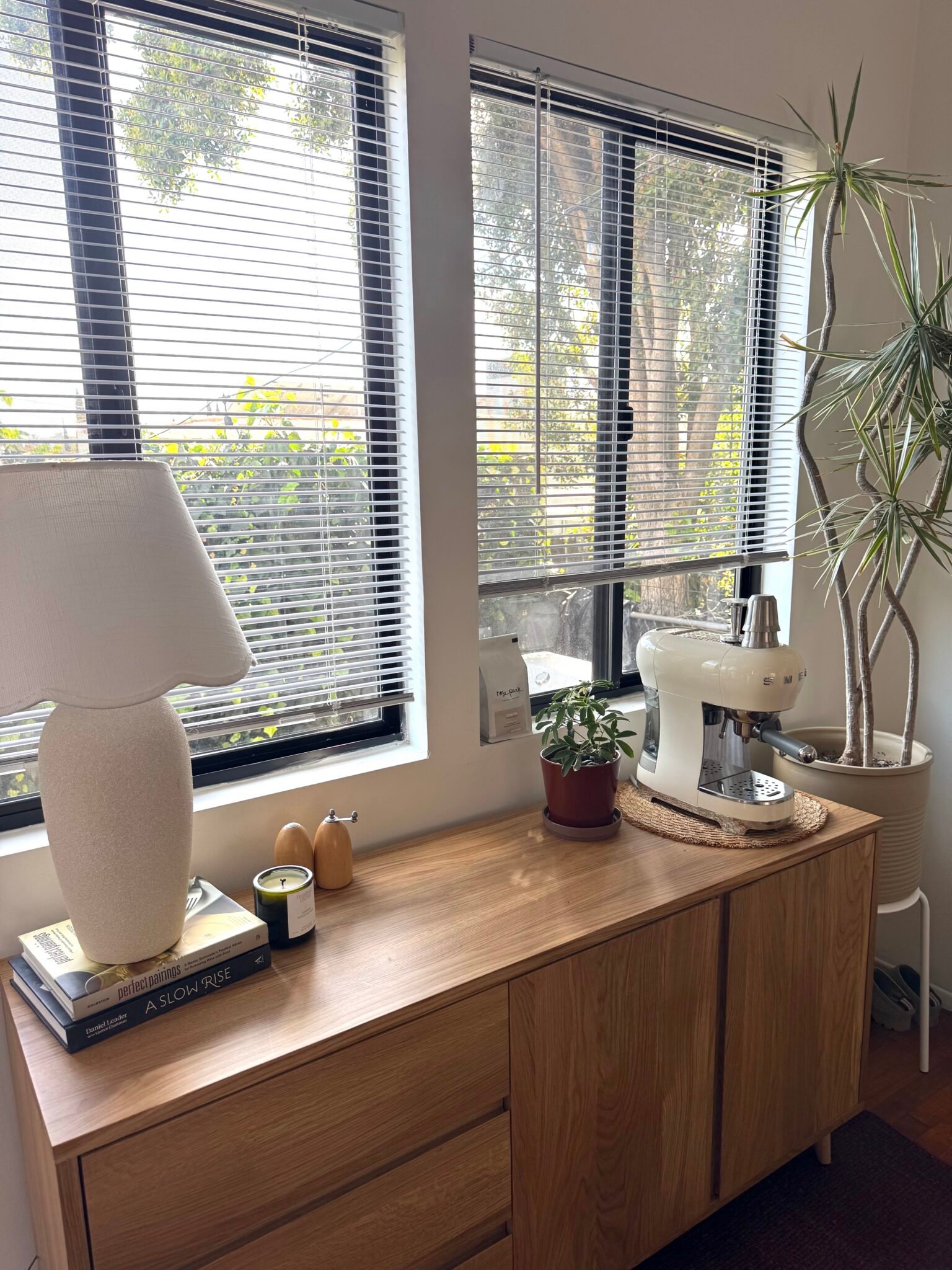
I have a small nightstand that belonged to my grandparents. It’s a simple wooden table with one cupboard. It feels like a relic of my childhood and serves as a reminder of summers spent in the Bay Area, running through the sprinklers with my sister and modeling our grandma’s high heels and jewelry. In the evenings, we ate KFC on TV trays, and my grandpa would drink iced tea, always setting his glass on the side table. I have no idea where they bought it or how long they had it for, but it carries their memory. I plan to hold onto it forever.
I love furniture with a story. I love the richness that pieces can bring to a home. I’ve never been able to afford custom furniture — I’ve relied heavily on thrift shops and secondhand options — but I’ve also always been drawn to the idea of buying something handmade or even custom.
When I learned about Hardman Design, a handcrafted furniture company with roots in Britain (where I went to graduate school and lived for two years) and Berlin, a city I visited while processing a period of deep grief, I felt an immediate connection. Then the brand offered to work with me on a review of one of their sideboards. I, of course, agreed. Here is what it was like to choose a made-to-order piece for my home and why I’m strongly advocating we boycott fast furniture and only buy custom-made moving forward.
About Hardman Design
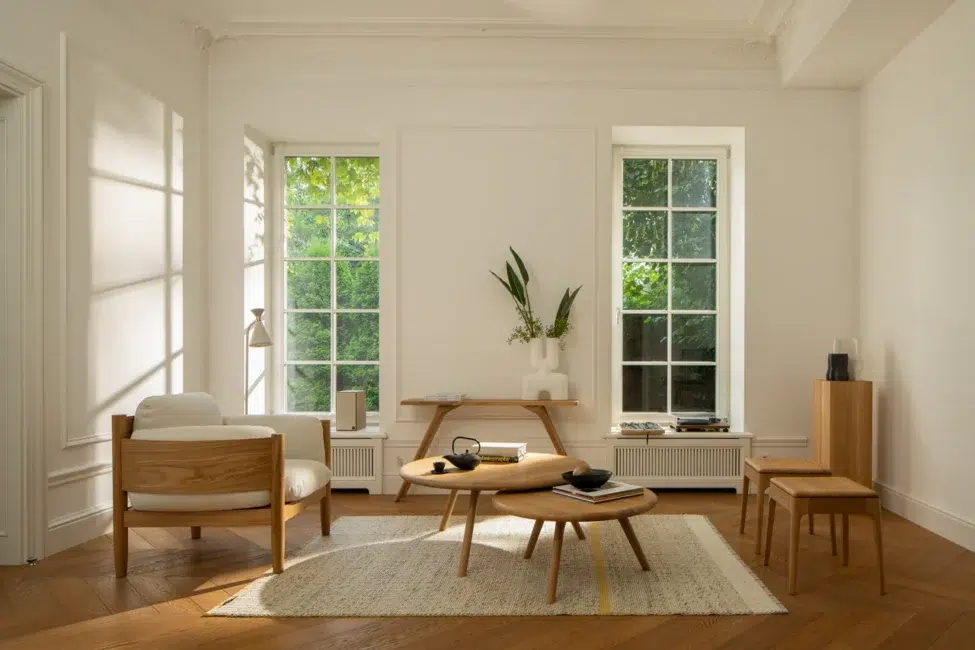
Hardman Design is built around a simple ethos: create handcrafted, sustainable furniture meant to be kept and passed down for generations. Founded in 2012 by British designer Liam Hardman, the company blends German precision with British craftsmanship. Every piece balances warm hardwoods with clean, timeless silhouettes that feel modern and removed from social media trends.
What makes Hardman feel especially relevant today is their made-to-order model. Every piece is built only after it has been purchased, including standard pieces (like the one I received) and custom furniture, which is a perfect option if you want to tailor something specific to your space.
“Rather than adapting your home to fit a standard size or finish, the piece can be adjusted to suit the proportions of the room and the way it will actually be used,” says the Hardman Design team. “That might mean refining the dimensions of a sideboard so it sits comfortably within architectural details, or selecting a finish that responds well to the light in that space.”
There are currently 21 design collections to choose from, with products ranging from dining tables and outdoor seating to bed frames and bookshelves. I selected the sideboard from the METIN collection for our small dining nook.
But first, more on why custom and made-to-order furniture matters more than ever in 2026.
Why custom and made-to-order matter more than ever in 2026
It’s no secret that overconsumption is at an all-time high. It’s estimated that Americans throw out at least 12 million tons of furniture every year. Fast furniture is harmful to the environment and human health, as many cheap furniture options contain VOCs that are released through off-gassing. The industry has made it possible to furnish a home overnight. But that’s not necessarily a good thing.
“We operate at a different pace,” says the Hardman Design team, describing how their production model is built around careful craftsmanship and long-term quality rather than volume or speed.
“Our role isn’t to compete on how fast something can be delivered or how many pieces can be produced… It’s to offer furniture that’s made carefully and intended to become part of the home rather than pass through it,” they say.
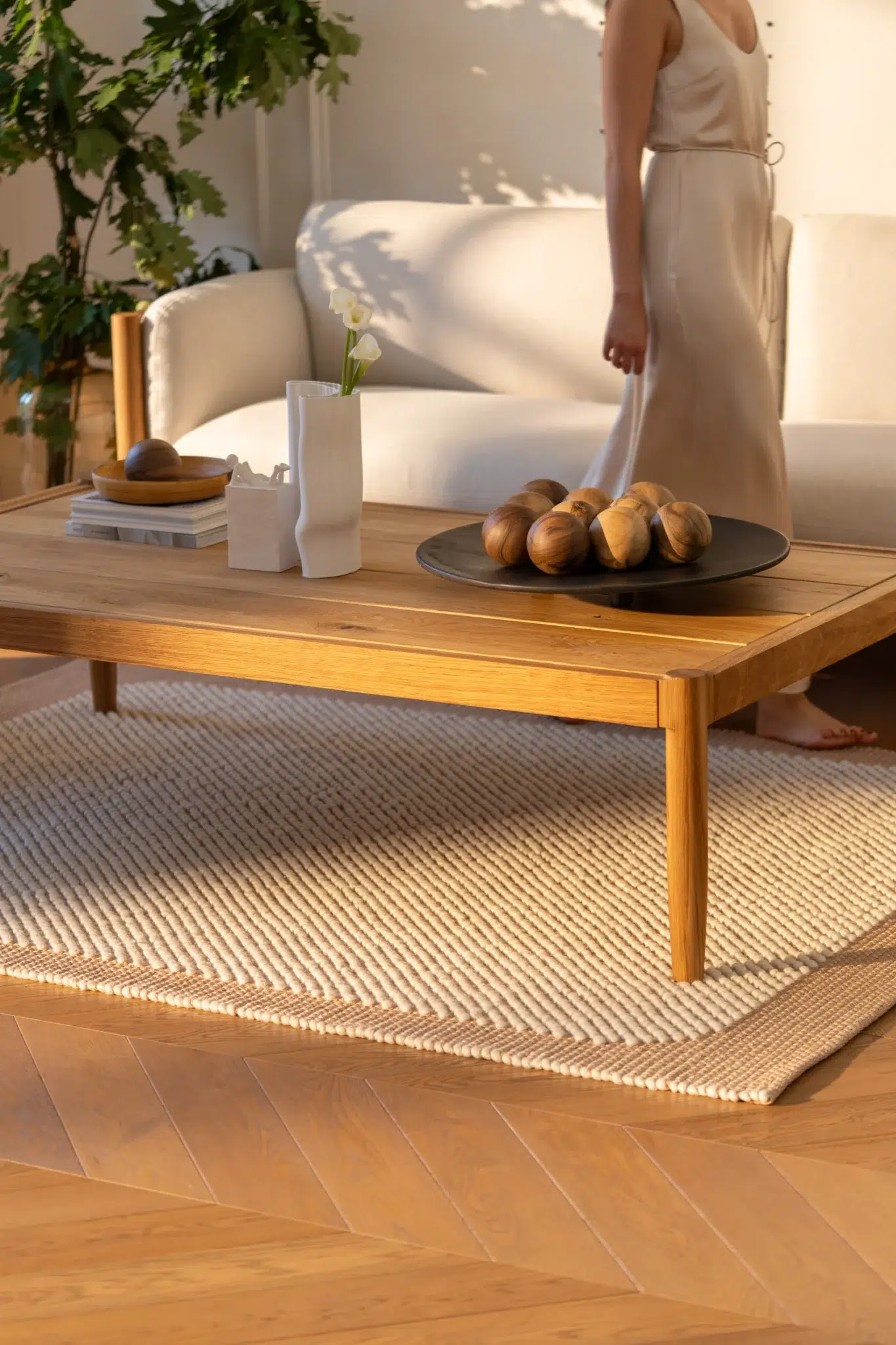
The philosophy extends into material choice and construction. Hardman Design works with sustainably sourced hardwoods, including FSC-certified oak and walnut, materials selected for their durability and natural character.
“Solid hardwood has natural movement, variation, and character,” the team says. “When it’s properly understood and respected in construction, it becomes incredibly durable. We design our pieces to accommodate that movement, keeping them stable through seasonal changes and everyday use.”
Unlike synthetic or veneered materials, which are designed to look new for as long as possible, solid wood is meant to evolve. It develops patina, responds to light, and can often be refinished over decades. “That ability to change is part of what gives the piece a long life,” the team explains. “Craftsmanship is about foresight — thinking about how something will perform ten or twenty years from now, not just how it looks on the day it arrives.”
Still, it’s not always an easy choice. There’s an allure to overnight shipping, and we’re constantly bombarded with shifting design trends. Choosing a handcrafted piece of furniture requires patience, a financial investment, and a willingness to commit before you’ve even touched the finished piece. But there’s also a different kind of satisfaction that comes with it, one that I experienced myself.
Working with Hardman Design
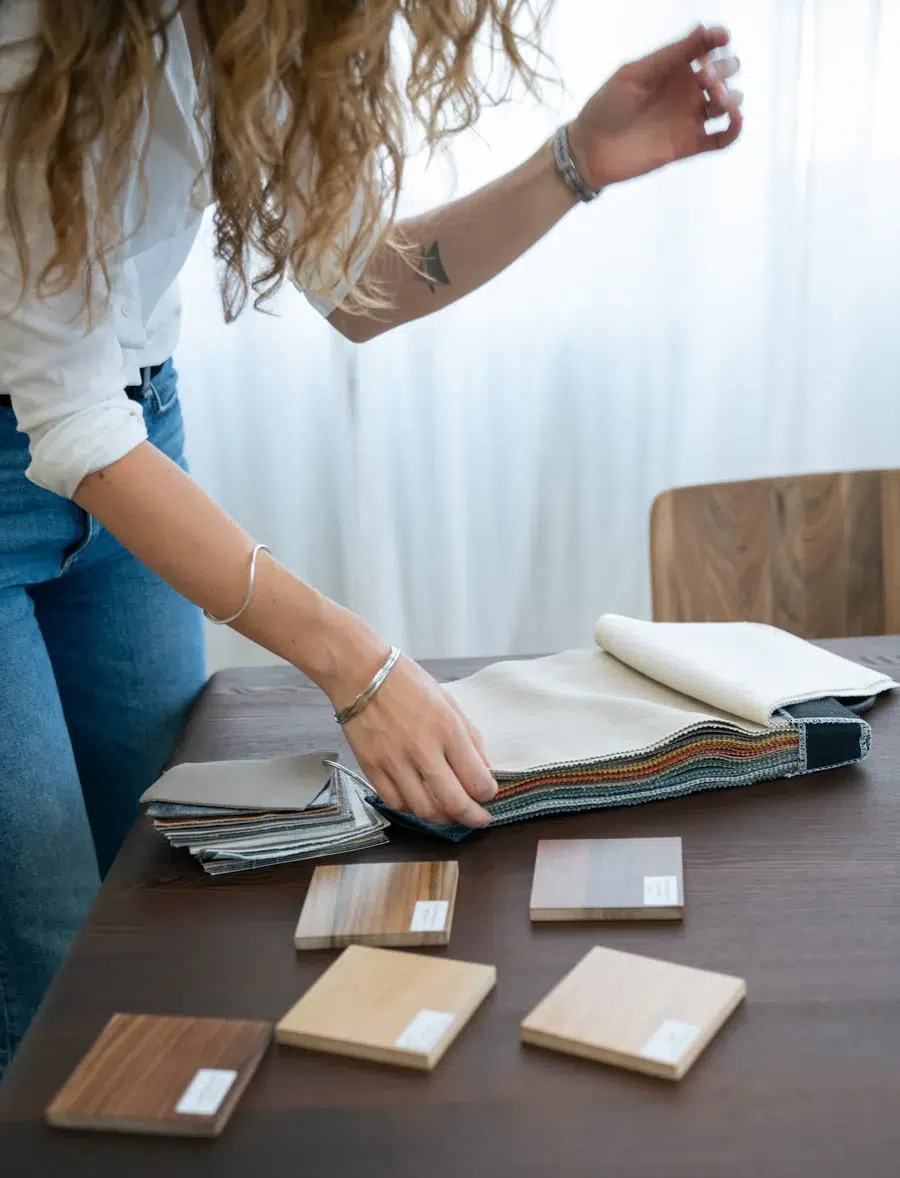
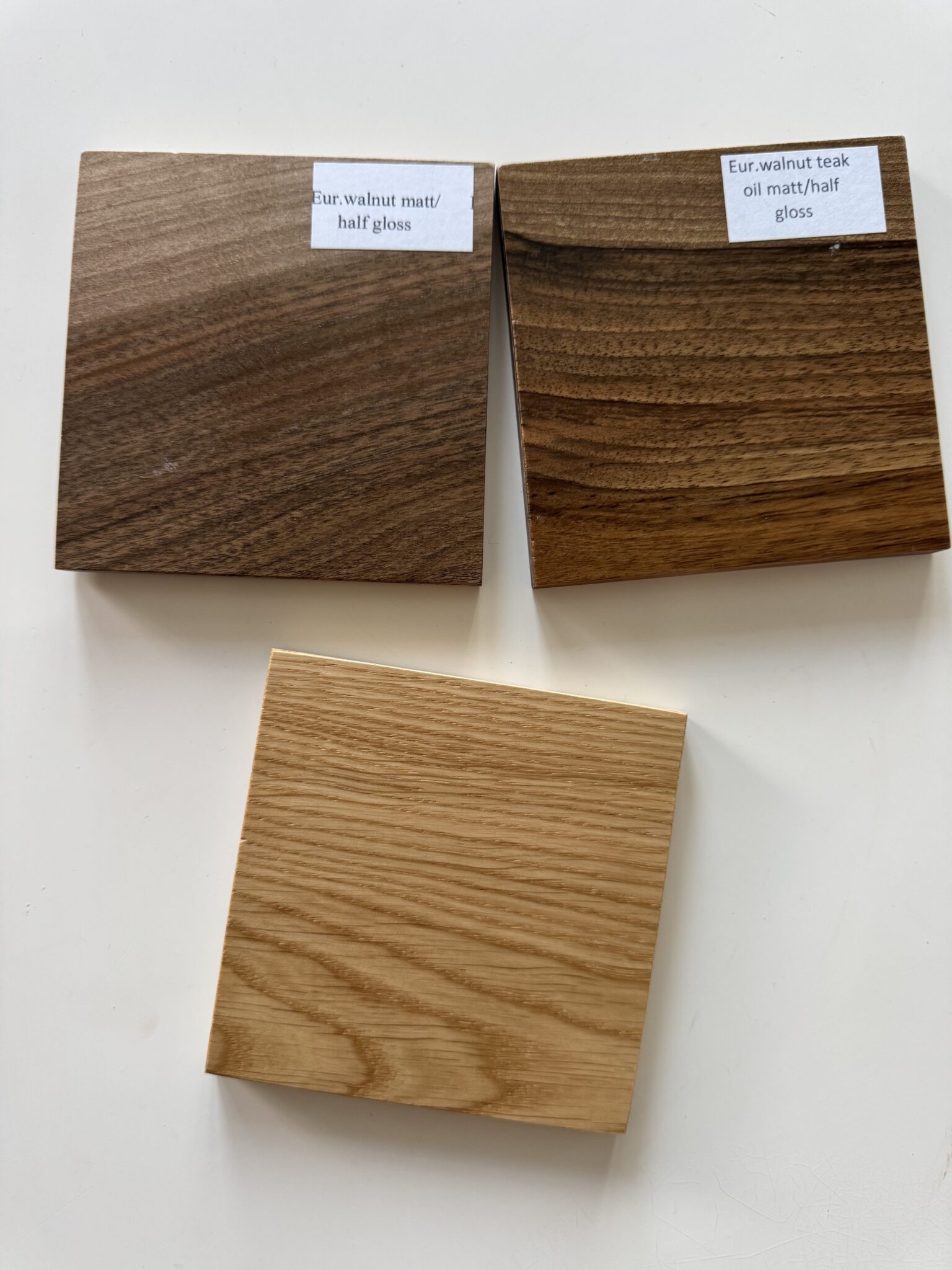
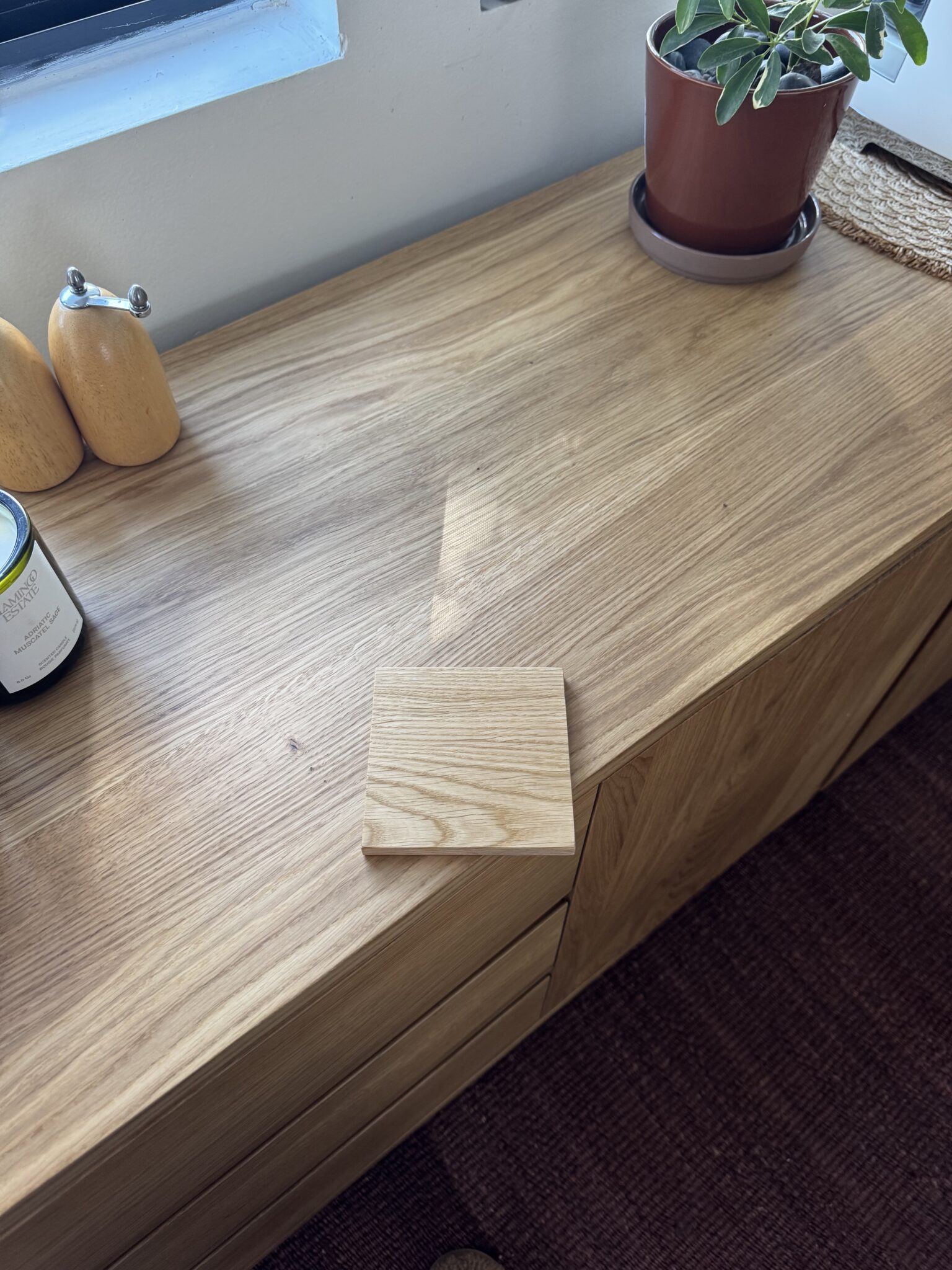
I began working with Hardman Design in the winter of 2025. Once I decided on the METIN Sideboard for our space, the first step was to wait for the wood samples to arrive. The website itself is incredibly easy to navigate, with all the options laid out up front: wood type, finish choices, and a range of sizes. The brand has a showroom in New York City, but I also found their social media helpful for seeing videos of each piece, giving me a better idea of exactly what I wanted for our home.
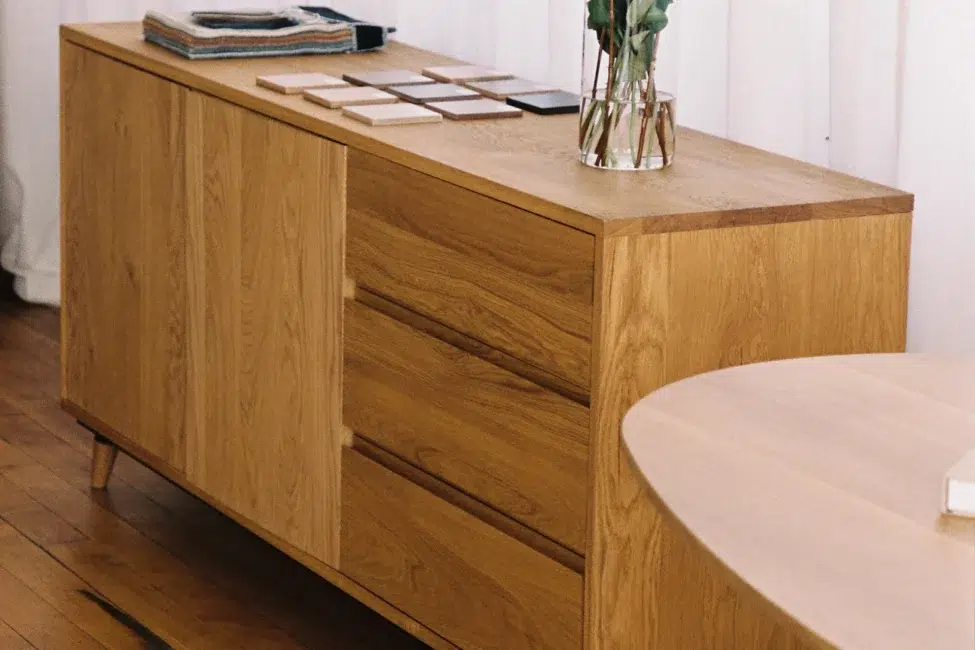
The METIN Sideboard is available in widths from about 43 to 94 inches, all with the same 17-inch depth and 28-inch height. Since our eating area is small, and I wanted something that would provide storage without feeling heavy or oversized, I chose one of the pre-designed configurations rather than creating a fully custom piece. For the finish, I opted for oak because of its warmth and durability. The smallest option starts at $3648.
In terms of timing, Hardman Design is transparent about what to expect: the build time for the METIN Sideboard is around 15–17 weeks, plus another three to four weeks for delivery to the U.S. once it’s completed. It’s a stark contrast to the “two-day shipping” model we’ve all become accustomed to, but I don’t see this as a drawback. Good things take time, right?
Receiving the Metin Sideboard
Fast forward to February 2026. Winter is nearing its end! I received a notification that the sideboard was at London Gatwick Airport (cue nostalgia) and on its way to Los Angeles. It arrived a few days later on a pallet, carefully packaged and then unpacked even more carefully by the white-glove delivery service — I highly recommend this for solid-wood furniture and investment pieces.
Assembly was straightforward, with only minimal steps required to lock the legs in place. In other words, no IKEA allen wrenches.
What surprised me most, apart from how truly beautiful the sideboard looked in our home, was the smell that lingered for 24 hours. It didn’t smell like chemical finish or mass-produced furniture, but rather like real wood, like when my dad used to work on woodworking projects, and the garage would fill with the scent of sawdust. It was unexpectedly luxurious in a very simple way.
A case for investing in made-to-order pieces
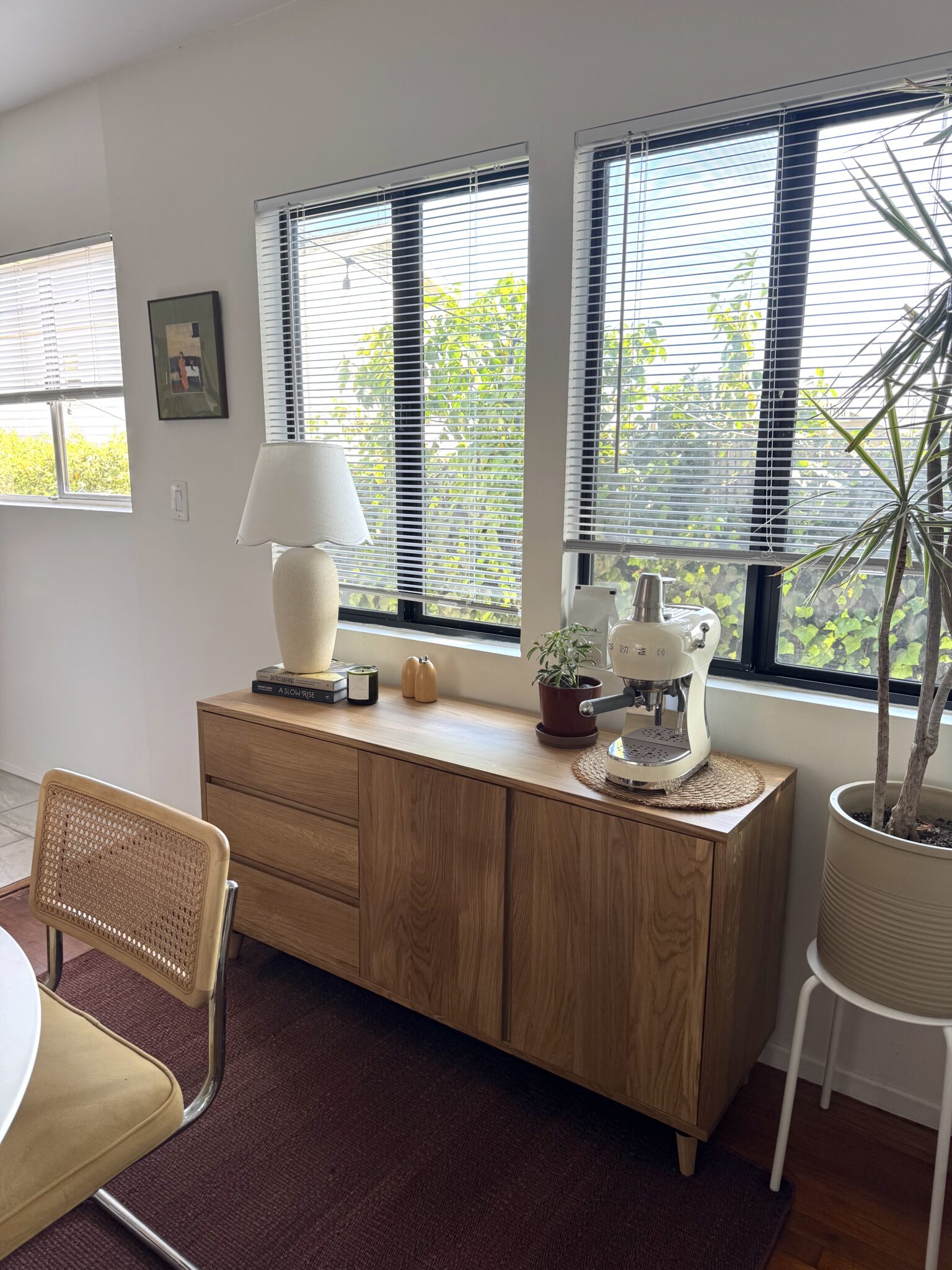
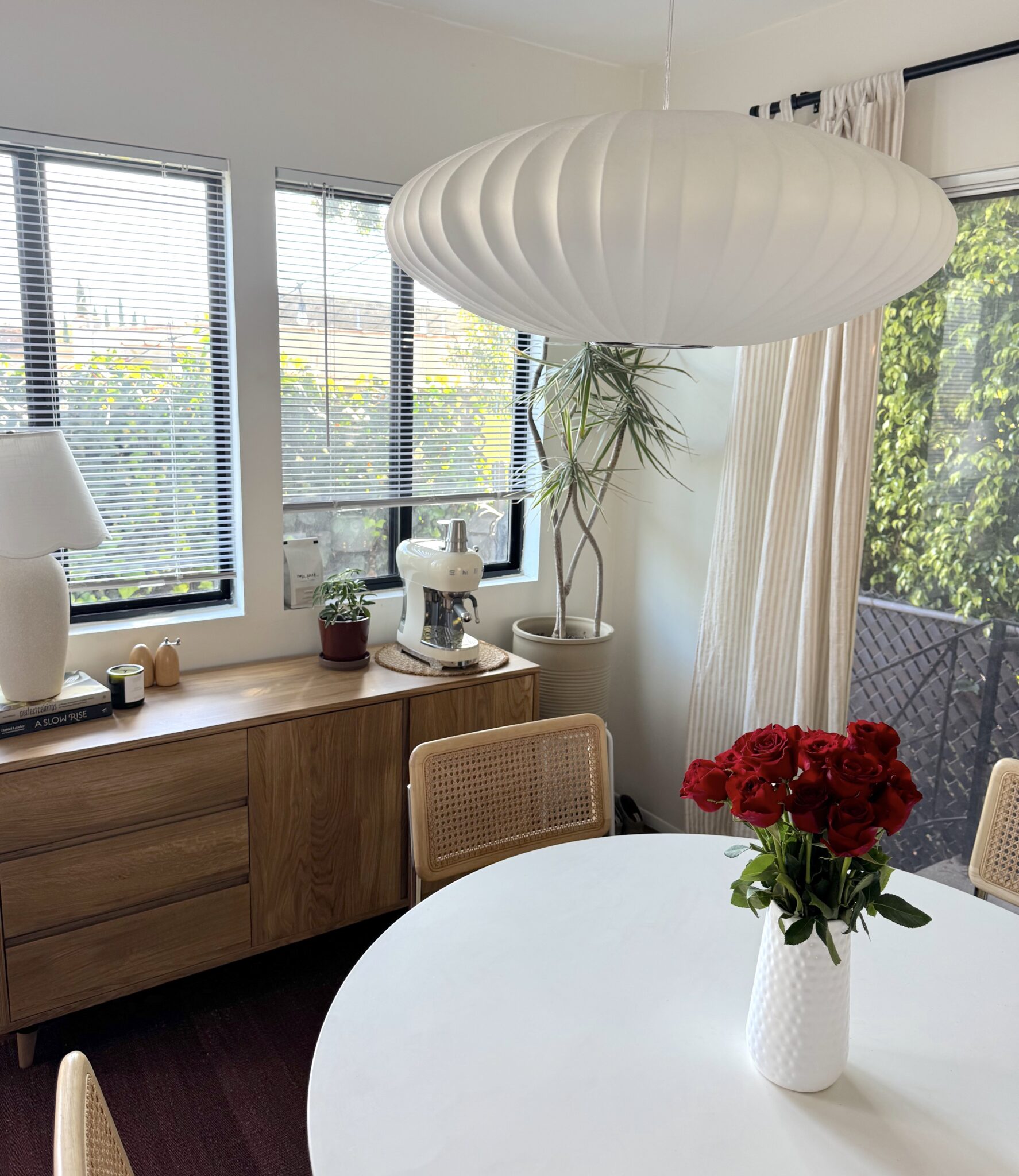
It’s been a few weeks since the sideboard became part of our family, and I really do mean family, because this is a piece we will keep forever. I didn’t realize how beautifully wood could catch morning light until I saw the oak surface glowing softly under the sun. Aesthetically, I love how the piece grounds the room. It’s not oversized, and I actually like that. It sits under the window and does its job well, offering beautiful storage while blending into the background of our home. It makes the room feel warmer and more lived-in. I also love how I can see the German and British inspiration in one piece.
Functionally, the storage is deep and generous. Our microwave fits inside, and there’s plenty of space for dishes and everyday items like linens and coffee mugs. I especially appreciate the soft-close drawers and cabinets. My daughter is learning how to open and close everything she sees, so no smashed fingers, please!
Overall, I’m genuinely so happy with this piece that it’s hard to imagine going back to cheaper particle-board furniture. Investing in made-to-order furniture has helped me rethink what it means to buy something for our home. Good furniture isn’t rushed; it’s built with intention, patience, and care. In a world that moves around instant gratification, choosing to wait feels countercultural, as does spending more than $100 on a piece of furniture. But I have to believe it’s entirely worth it.
This is absolutely a luxury purchase, and I don’t take that lightly. Made-to-order and custom furniture isn’t accessible for everyone, which is why I also love exploring secondhand options.
There is also something to be said for the cost accrued when we replace “cheap” furniture every few years, or more. It does add up. And I like the idea of owning fewer things but keeping them forever. This may not be the way of trends, but it’s the way of intentional and sustainable living.
All this to say, if you can afford to buy a made-to-order or custom piece of furniture, even if it’s just one piece for your home that you choose to keep forever, it’s a truly special process. Hardman Design strikes a beautiful balance of craftsmanship and care, making the journey feel as meaningful as the finished piece.