dailynewsnblog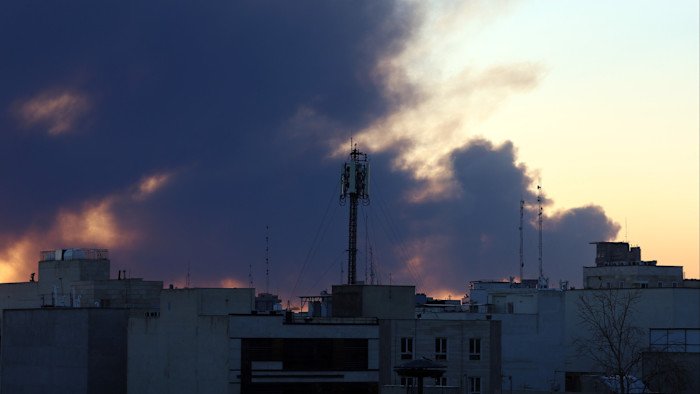
Unlock the Editor’s Digest for free
Roula Khalaf, Editor of the FT, selects her favourite stories in this weekly newsletter.
The writer is author of ‘Blood and Treasure, the Economics of Conflict from the Vikings to Ukraine’
Investors have regularly listed geopolitics as one of the rising top risks to financial markets. It would seem they were correct to do so. The escalating war between Iran and Israel and the US has sent energy prices spiralling and caused both equity and bond markets to sink at the same time.
The global market reaction to Middle Eastern geopolitical events in recent years has followed a familiar script. Outbreaks of tension or open fighting have been met with an initial spike in the price of oil as the risk of a long-lasting disruption to global supplies is priced in, before rapidly unwinding.
Over the course of last June’s 12-day war between Israel and Iran, oil prices leapt from about $65 to $75, only to fall back equally rapidly when the bombing stopped. The ingrained expectation that this time will be no different was evident in US equity markets on Monday as buy-the-dip investors stepped in to snap up shares in afternoon trading.
But this war already looks as though it could be different to the contained conflict last summer. Iran is not following the same script. Unlike in previous conflicts, Tehran has launched direct attacks on energy facilities and other infrastructure across the region, hitting targets in supposedly neutral uninvolved nations. The majority of these attacks have involved relatively low-cost drones, something which even a poor country such as Iran can amass a large stockpile of.
In 2025, markets fretted that shipping through the vital Strait of Hormuz, through which around 20 per cent of global oil and LNG supplies pass, could be disrupted. In 2026 the strait has been in effect closed. Depending on how long the closure lasts for, the world faces an energy price shock potentially as large as that endured in 2022 when Russia invaded Ukraine. Oil analysts are already dusting off analogies with the 1980s tanker war, when during the Iran-Iraq war of that decade, attacks on shipping around the Gulf stepped up considerably. Again though, the existence of a large inventory of Iranian drones makes comparisons with the experience of several decades ago fraught with difficulty.
The IMF estimated in 2023 that a sustained 10 per cent rise in oil prices would reduce global growth by about 0.15 per cent and push up global inflation by about 0.4 per cent. The impact, of course, would vary across countries depending on their domestic energy mix and the balance of energy imports and exports. The largest losers from a global energy price rise are to be found in Europe and Asia.
While markets are not yet fully pricing in a months-long disruption of global supplies, they have already started to scale back expectations of rate cuts from major central banks. In theory, monetary policymakers usually say they aim to “look through” temporary effects of commodity price moves but with consumer inflation expectations still elevated they may prove reluctant to do so. Shifting expectations of future rate cuts are, by turn, putting pressure on government bond prices — especially at the policy-sensitive front end of the curve.
There are, as markets were reminded in 2022, relatively few places to hide during a stagflationary energy price-driven shock. Higher inflation and higher central bank policy rates hit bond valuations, while weaker consumer spending and higher operating costs hit corporate revenues and profit margins, pushing down equity valuations. Just as concerningly, European governments are in a trickier fiscal position than they were in 2022. Borrowing costs and debt levels are higher. There is much less space for the kind of support for households and firms with higher energy costs which was deployed during the last crisis.
Despite being at the very forefront of the geopolitics, the US is better insulated from the resulting economic shock. Prices at the pump could rise for US drivers and export markets could suffer from weaker demand but being a net energy exporter offers protection. Global investors, though, still scarred from the abrupt policy shifts of the past year, seem less keen on US assets than in the past. The dollar may have risen in recent days, but rising Treasury yields suggest the US is not quite the haven for investors it once was.
The real winner, in investment terms, may prove to be defence stocks. The sector is already enjoying something of a boom on the back of European rearmament and war in the Middle East is yet another catalyst. It is hard, though, to be too optimistic for markets in general when war and geopolitics are in the driving seat.