dailynewsnblog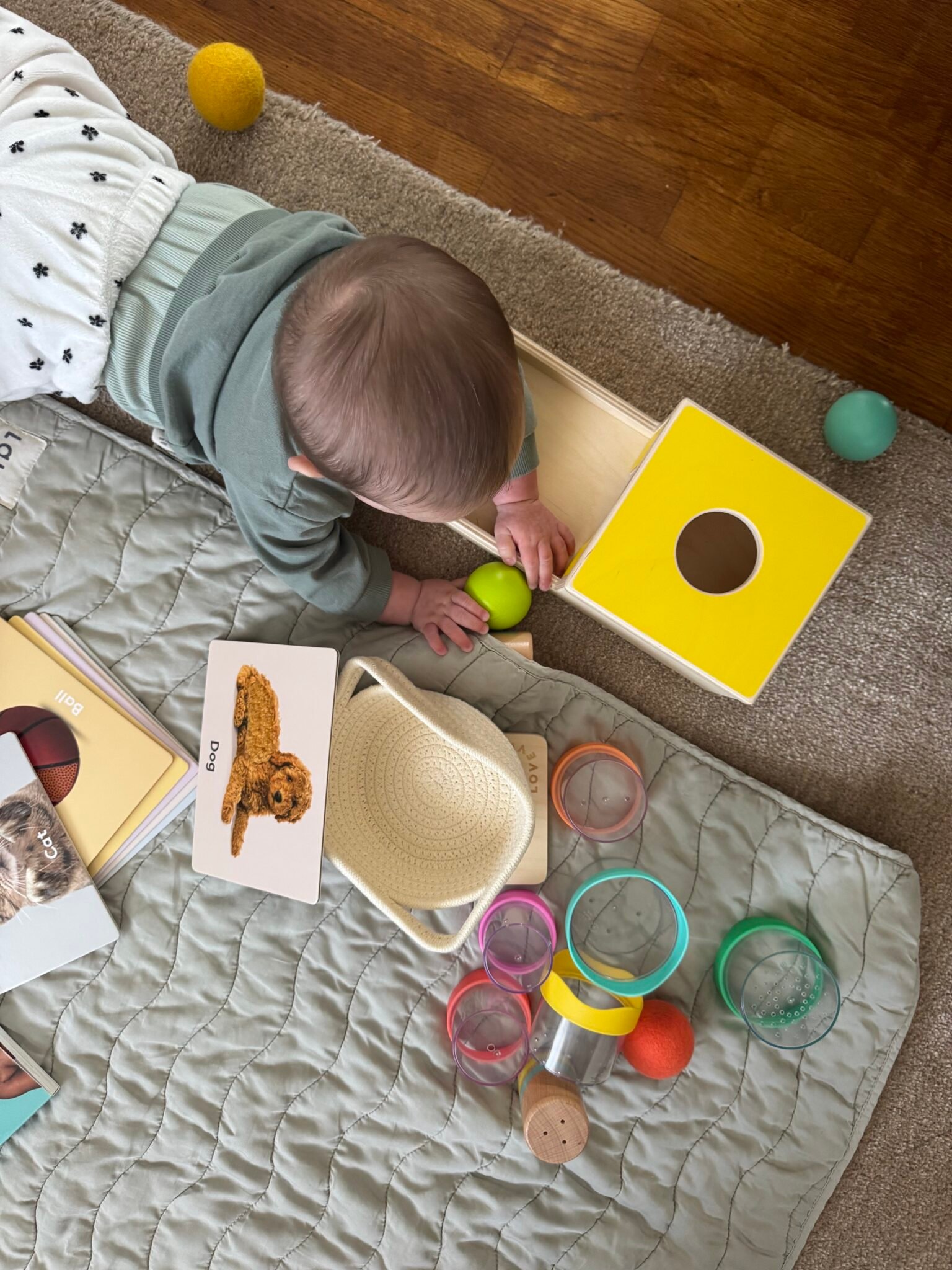
Summary: The Lovevery Play Kit has been a wonderful way to introduce developmentally intentional play into our daily routine without adding clutter to our home. I love the quality, safety, and thoughtful design behind the toys, and I genuinely think it’s a meaningful investment for families who want playtime that grows with their child.
What I Love
- Intentional, developmentally aligned play: Lovevery focuses on toys that support real developmental milestones, so I don’t have to guess what my daughter is ready for.
- Simple, clutter-free setup: The kit arrives with only what we need, minimal packaging, and toys that are ready to use right out of the box.
- Durable, safe materials: The toys are built to withstand daily baby exploration, including chewing, rolling, and general eight-month-old chaos.
Things to Consider
- Premium price point: Play Kits start around $80, so it’s an investment, though the durability and developmental focus help justify the cost.
- Some toys take time to click: Not every item will be interesting right away — the kit is designed to grow with your child.
- Best for curated toy households: If you prefer a minimal, intentional toy approach, the subscription model fits well. If you like having a wide variety of toys available at once, it may feel more structured.
Before having my daughter, I was adamant that our house would not be overrun with toys (said every first-time parent). Part of this was practical — we simply don’t have the space. We rent, and our two-bedroom house serves multiple purposes throughout the day as home, office, and daycare. But it’s also because I grew up with three siblings, and our grandparents loved buying us new things. As a kid, this was the dream. As an adult, though, it’s made me embrace minimalism and be very cautious about excess and clutter.
Similarly, as a new mom who works full-time and is working to rebalance my postpartum hormones, the anxiety is real. I’ve been learning that the less-is-more approach is essential for my mental health and for staying grounded throughout the day. This includes things like clothes — I don’t need more choices; I need reliable, comfortable outfits — and it’s true for our living space as well. I need less stuff, including fewer toys.
“I need less stuff, including fewer toys.”
With a bright-eyed, curious child who wants to put everything in her mouth and loves colors, sounds, and textures, it means finding toys that spark her imagination while also contributing to the clean, organized ethos of our home. Enter, Lovevery.
About Lovevery
Lovevery was founded in 2017 by mom-entrepreneur Jessica Rolph, who started the company after wondering why so many baby toys felt more decorative than helpful for real development. The company is based in Boise, Idaho (fun fact: my in-laws just moved there, and we walked past the HQ while having lunch downtown) and the brand has grown into a favorite with parents for its playkits that emphasize meaningful, science-backed play. Instead of filling homes with a lot of random toys, Lovevery focuses on creating things that actually match how children learn and explore at each stage of development (music to my ears).
“The brand has grown into a favorite with parents for its playkits that emphasize meaningful, science-backed play.”
But back to the Play Kits. You’ve probably seen them on social media, in your parent chat groups, or on Facebook Marketplace being sold secondhand. They are also popular with registries, even before having our daughter, I had heard about the subscription toy boxes. Here’s how they work:
Each kit comes with a carefully selected set of toys along with booklets that explain how to use them and why they matter at that stage of development. For example, the 0–12+ week box is designed to help newborns form new brain connections as they strengthen their vision and build body awareness. It includes sensory toys, black-and-white contrast cards, a rattle, and a few other age-appropriate items. The goal is to take the guesswork out of what a baby should play with (if you’ve ever stood in the toy aisle, you know the feeling) by offering only what children are ready to engage with — whether that’s grasping, stacking, problem-solving, or early language play. It’s a thoughtful little package that supports curiosity and development. Plus, it makes for a fun mail day.
Trying the Lovevery Playkit
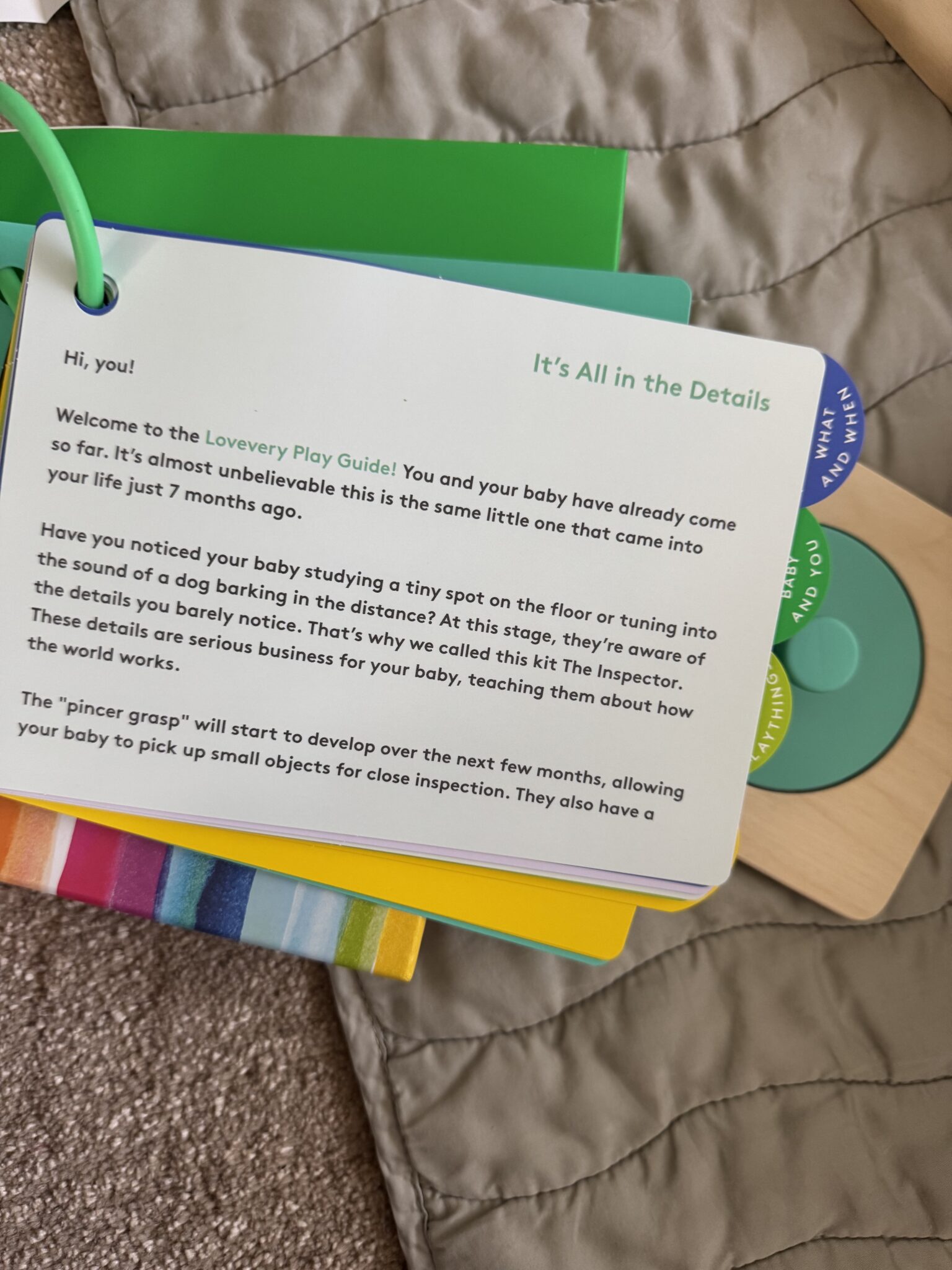
I was really excited to test Lovevery out with our daughter. We kept things fairly basic and soft in her early months (aka the potato period), so receiving the kit felt like a milestone for all of us as we introduced more intentional toys and more vibrant colors. (You can start sooner — Lovevery offers kits from 0+ weeks — we just happened to begin our subscription at the seven-month mark.)
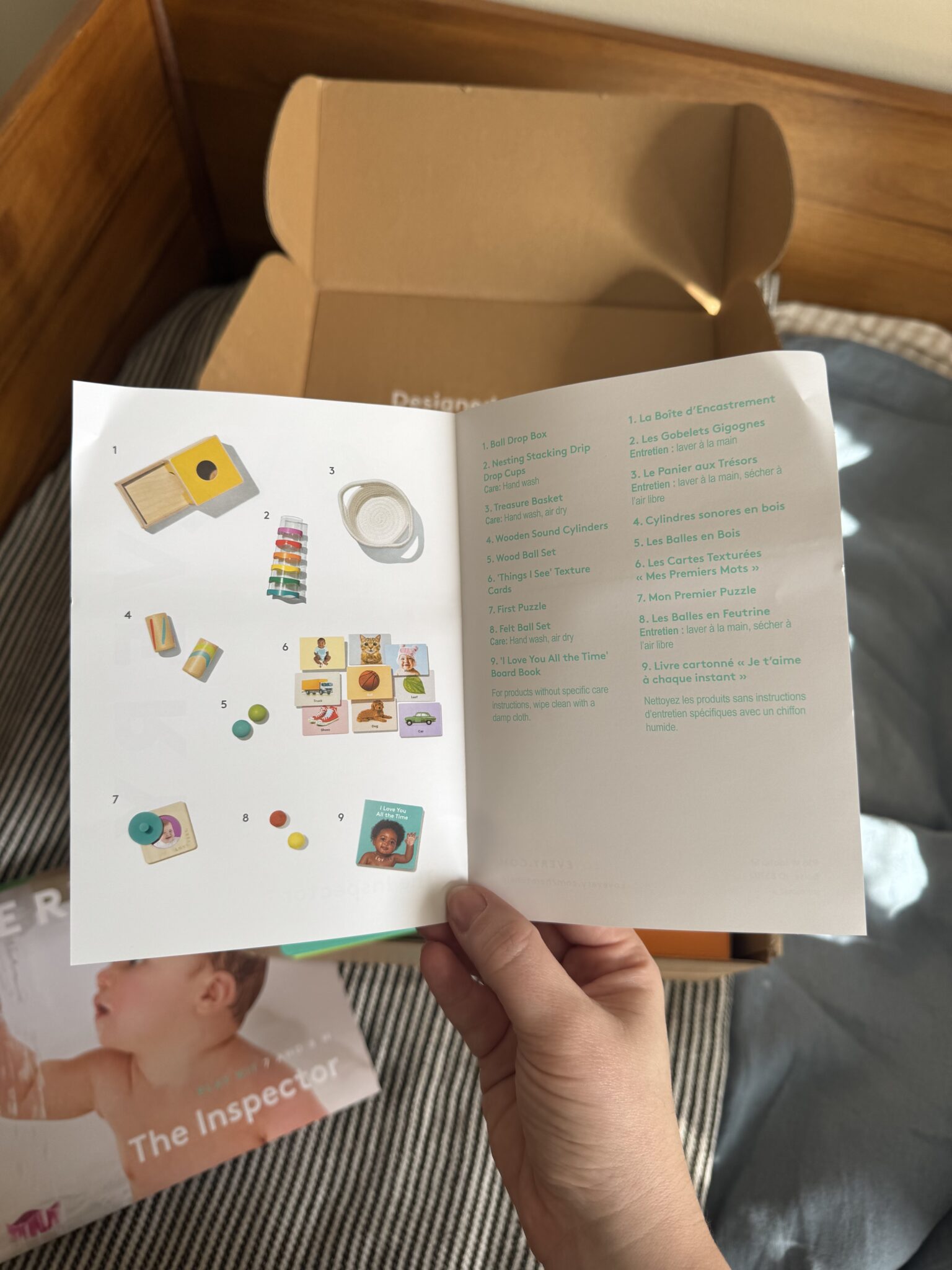
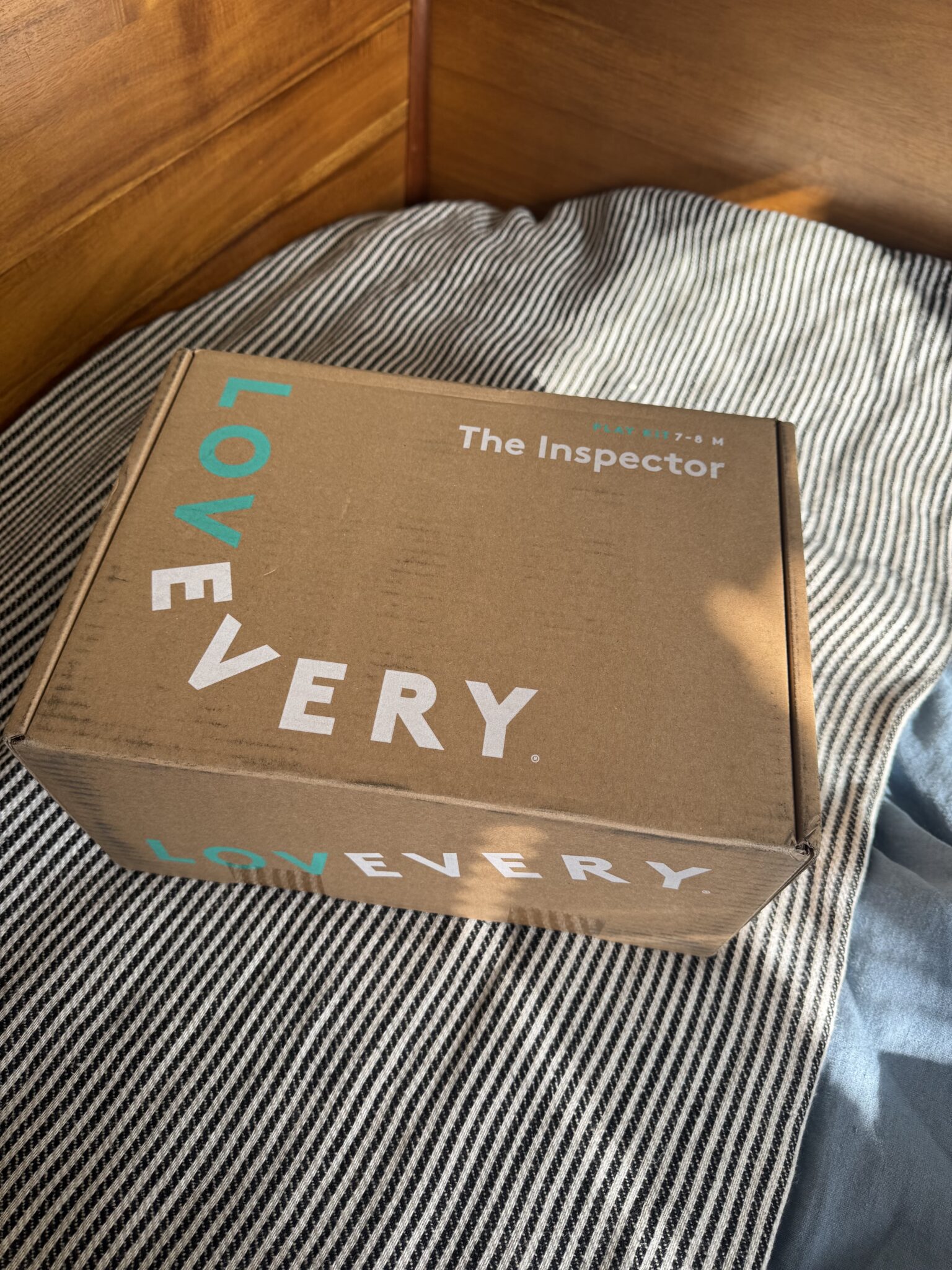
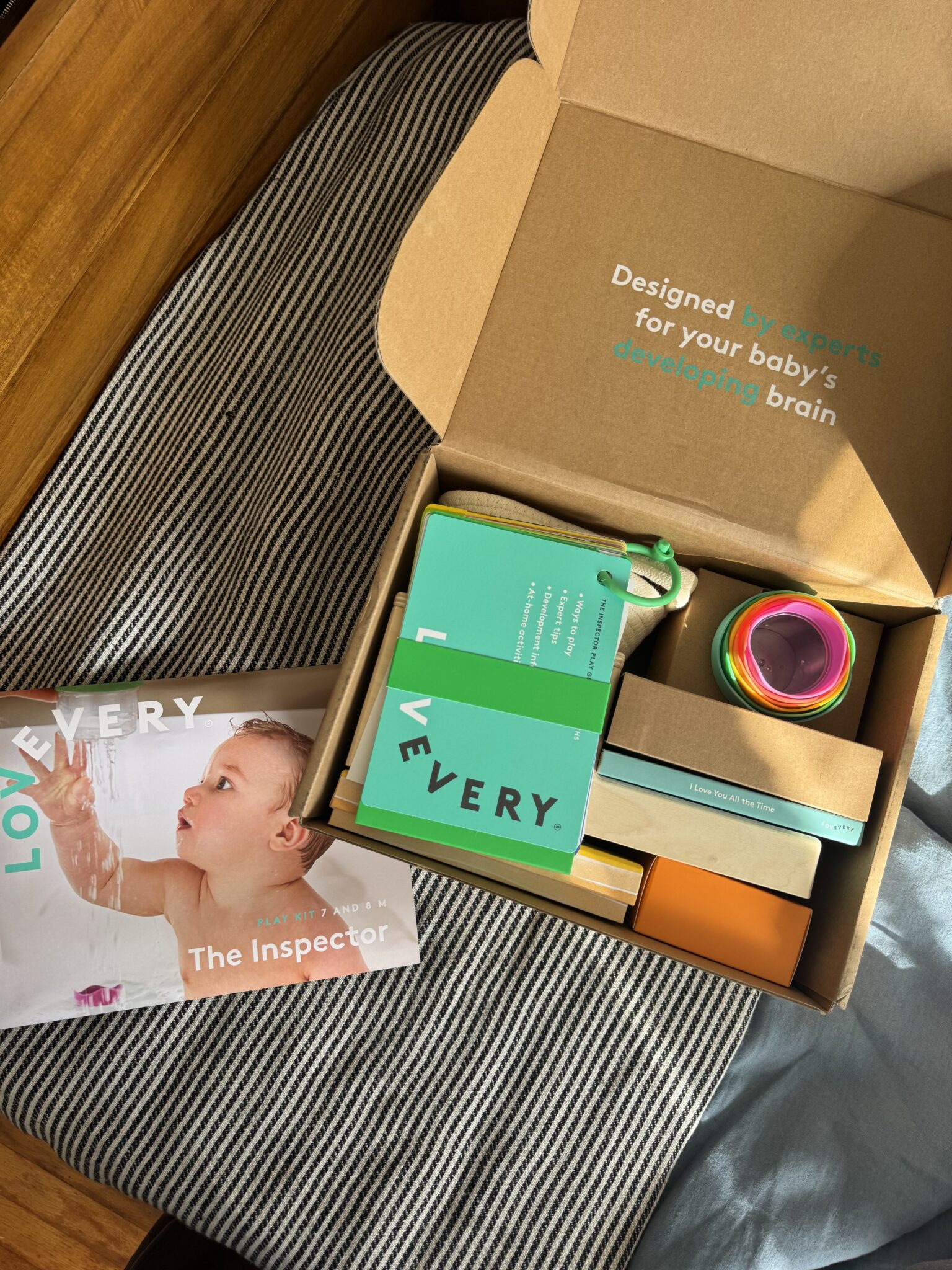
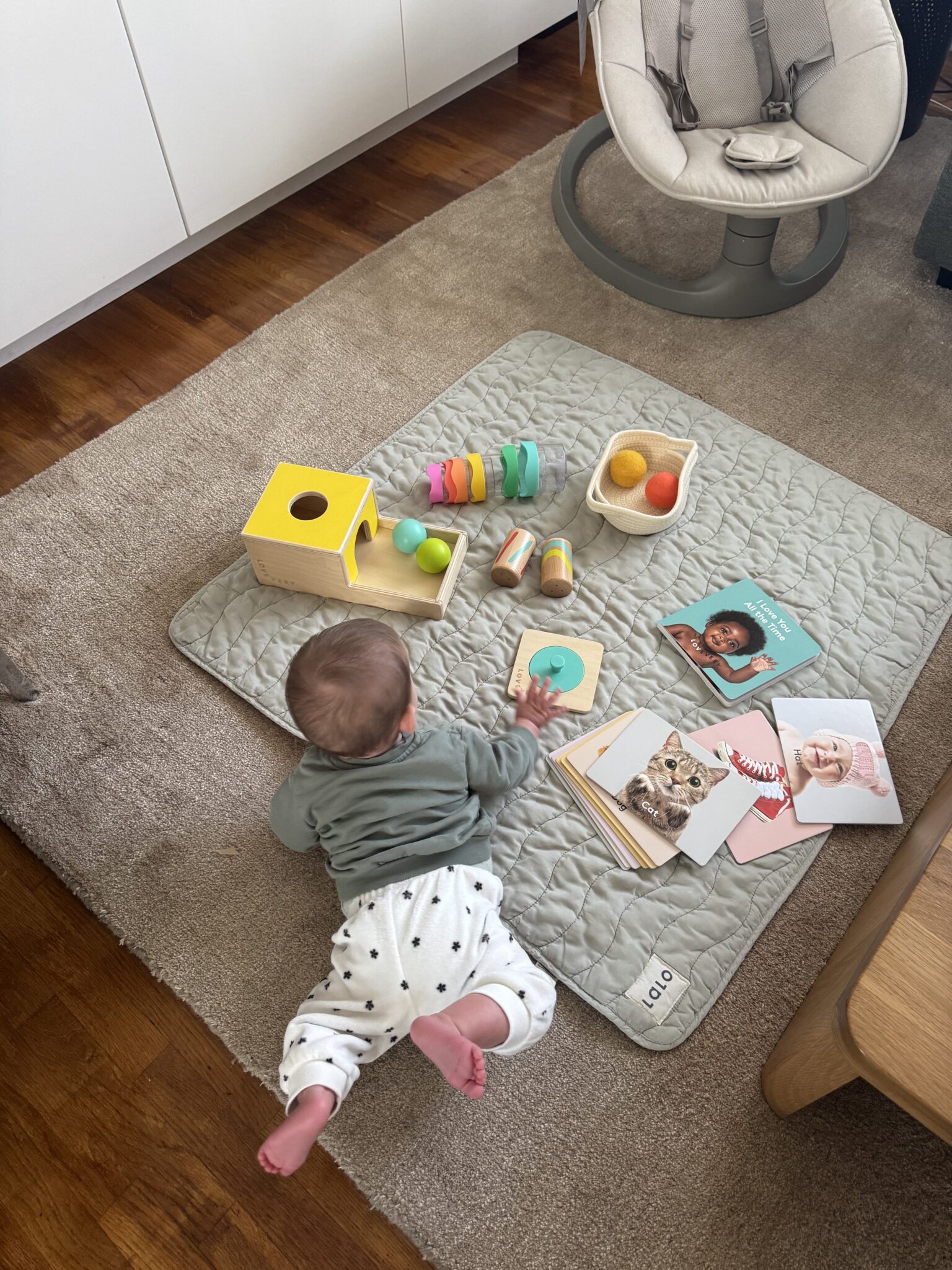
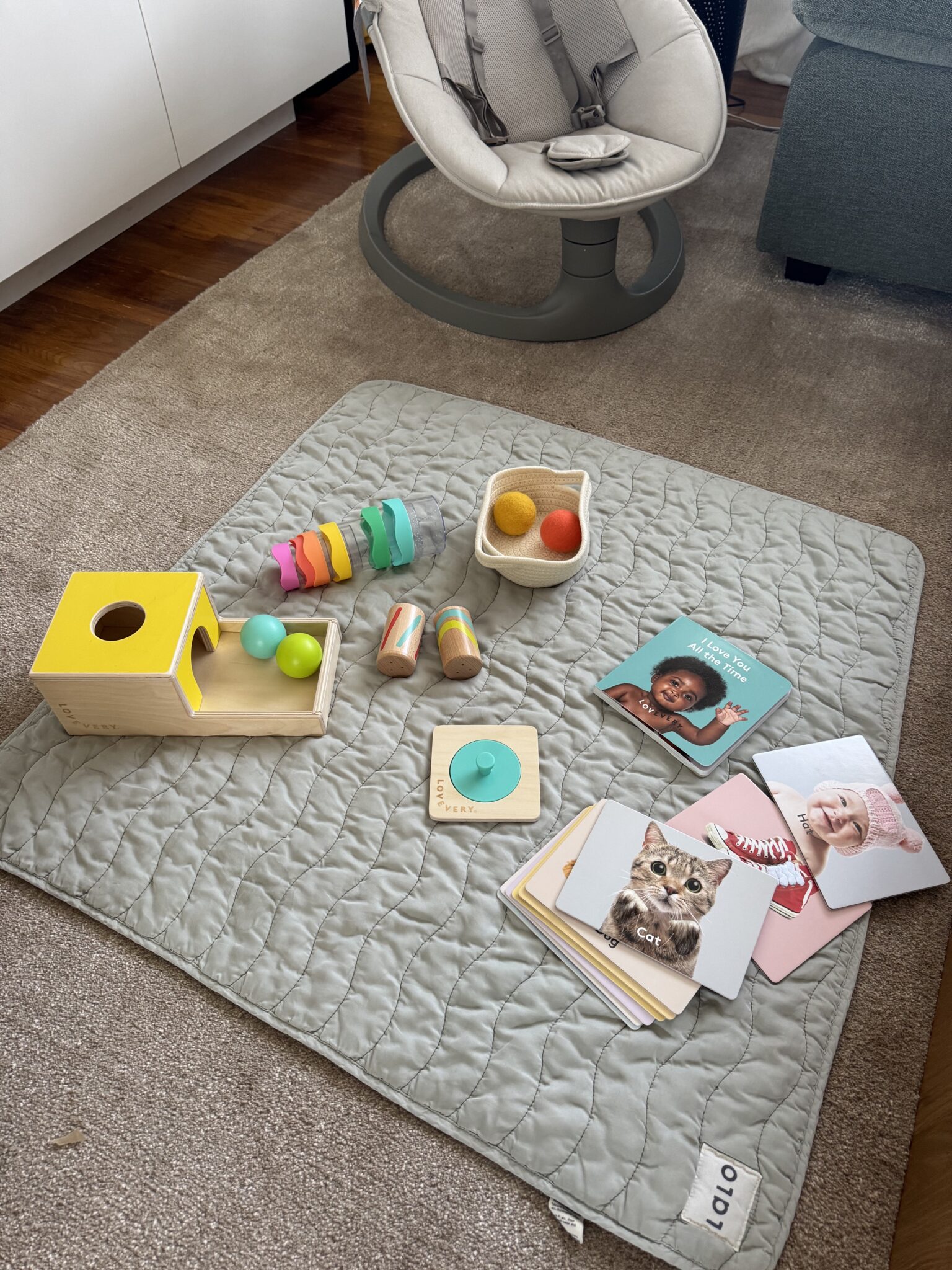
We chose the Inspector Play Kit, and it arrived the week of her seven-month birthday. The kit was described as a way to “watch your baby’s attention and focus grow as they explore nesting, stacking, and new concepts like object permanence.” The kit includes a Ball Drop Box for building gross motor skills and learning that something can exist even when you can’t see it; a set of sustainably harvested wooden balls; the “I Love You All the Time” board book, which pairs sweet reminders with rhythmic language and baby faces; “Things I See” texture cards featuring everyday objects; Nesting Stacking Drip Drop Cups for tower-building, pouring, and containment; a First Puzzle to support fine motor and problem-solving skills; a Montessori-inspired Treasure Basket; a Felt Ball Set; and Wooden Sound Cylinders for exploring similarities and differences in sound — an early skill tied to reading later on.
“The kit was described as a way to ‘watch your baby’s attention and focus grow as they explore nesting, stacking, and new concepts like object permanence.’”
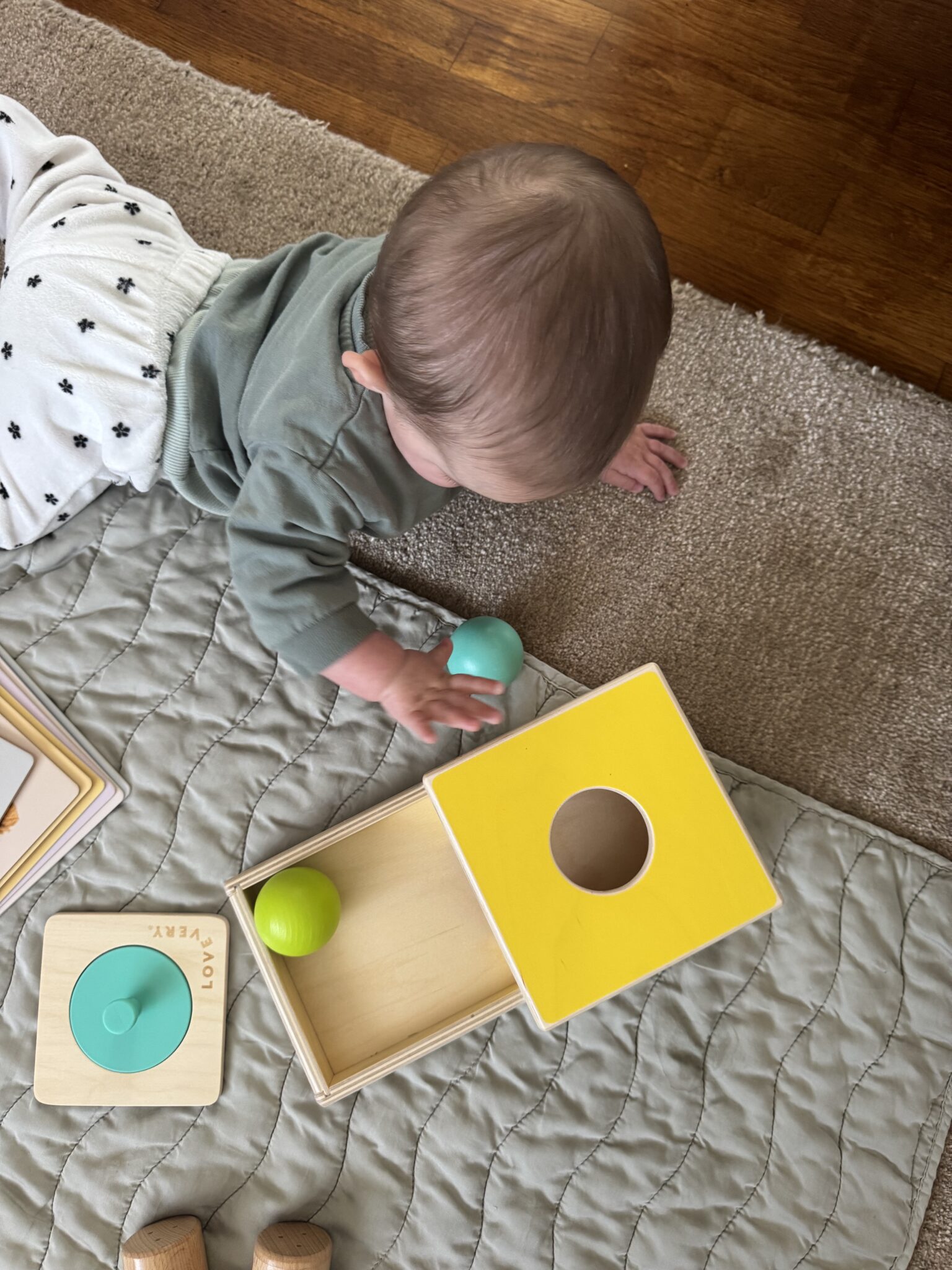
Everything arrived in a small box with minimal packaging. As any parent knows, efficient and straightforward is the name of the game and opening the kit was a true no-fanfare experience. Within minutes of it arriving, I had everything opened and spread out on the floor. The included guide made it easy to understand each object’s purpose, how to introduce it, and the skills it supports. Of course, everything had to pass the mouth test first, so I let her explore (and chew) freely. The wooden balls were an immediate hit.
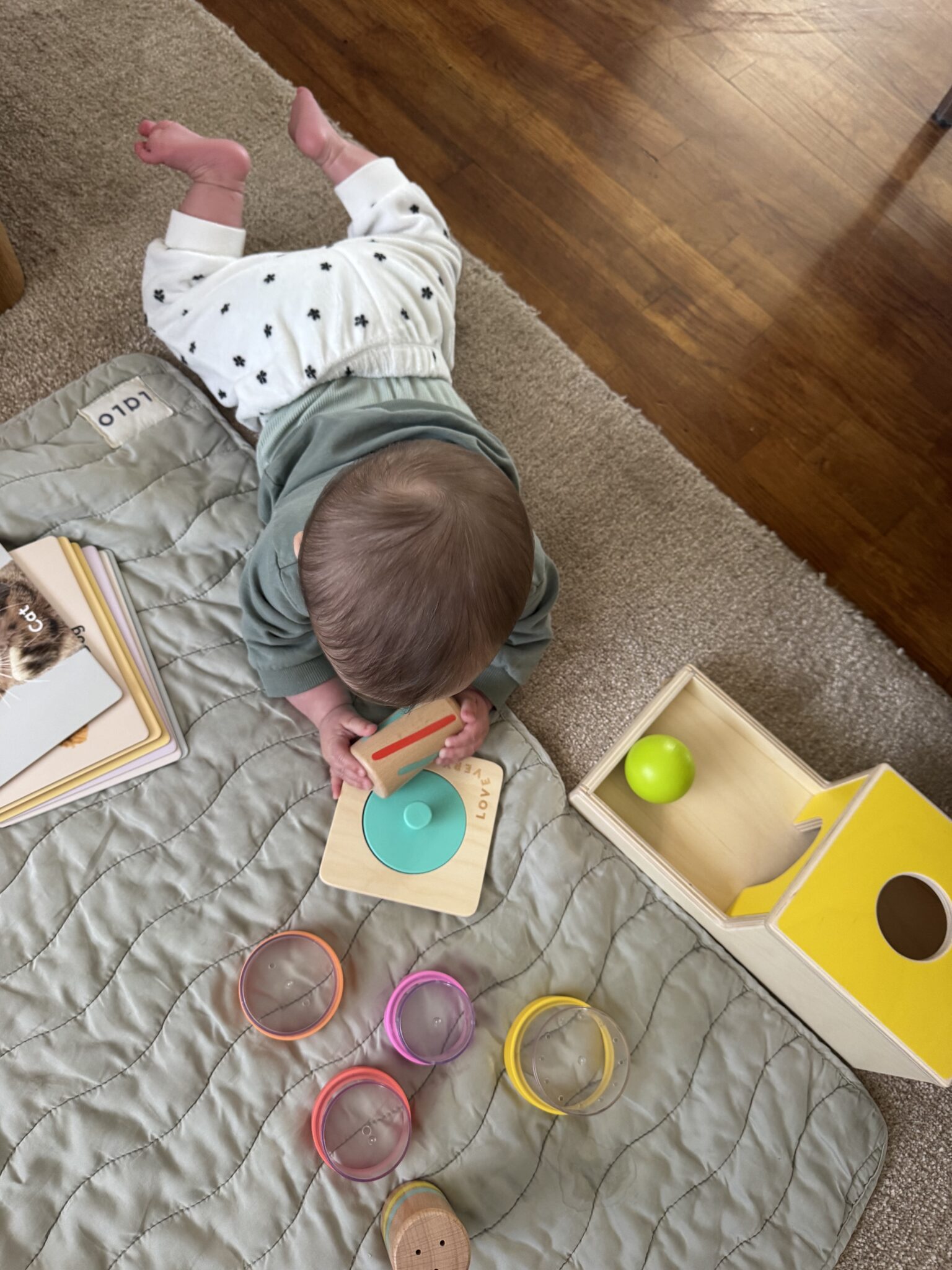
We were so excited that we spent a solid ten minutes playing with everything right away. She was immediately drawn to the wooden and felt balls. The round shapes and contrasting textures fascinated her, and she loved watching them roll across the floor. The nesting cups were also a quick favorite — less for stacking and more for holding and, yes, tasting. She also loved the sound cylinders, and we’ve been practicing shaking them together.
“We were so excited that we spent a solid ten minutes playing with everything right away.”
We’ve had the kit for about a month now (she turned eight months today as I write this), and I’m curious to see how her interest in the toys evolves over the coming weeks. A few items haven’t quite clicked yet. She enjoys watching me demonstrate the ball drop box, but hasn’t figured out how to do it herself. The texture cards hold her attention for about 30 seconds before heading straight to her mouth, and the first puzzle hasn’t sparked much interest so far. The basket gets used for storage and as a hat while she delivers very passionate speeches to her stuffed animals. Welcome to the babbling era.
Final thoughts: Are the Lovevery play kits worth it?
While we only tried the Inspector Play Kit, Lovevery offers kits for infants, babies, and toddlers. The range goes far beyond subscription boxes, too — from tummy time mats and play gyms to play kitchens and Montessori-style bookshelves. There are bath toys and blocks, a music set, and even a monthly book club for early readers. It doesn’t feel like just a toy company; it feels more like a hub for science-backed learning, with thoughtful resources to help parents feel equipped and confident.
“It doesn’t feel like just a toy company; it feels more like a hub for science-backed learning, with thoughtful resources to help parents feel equipped and confident.”
A few other things I appreciate: The brand prioritizes sustainability and nontoxic materials. Products are designed by experts in the United States and manufactured with partners in Asia who adhere to high sustainability and labor standards. The main facility where products are assembled and quality-checked is powered by 200,000 square feet of solar, and renewable, bio-based, and recycled materials are used whenever possible.
There’s also a preloved shop, where you can buy gently used kits or resell your own once your child has outgrown them. And for families who need additional support, Lovevery offers disability resources and customized kit options to meet children where they are developmentally.
Finally, I love how flexible the brand is with subscriptions, single purchases, and gifting. Kits start at $80, but you don’t have to commit to a subscription if you’d rather buy a Play Kit on its own. The site also makes it easy to gift a subscription to new parents or send a gift card so they can choose what works best for their family.
“Lovevery is a worthwhile investment given the quality and intentionality of its products.”
Overall, Lovevery is a worthwhile investment given the quality and intentionality of its products. Everything is designed to support my daughter’s development and help her build real skills. I appreciate that the toys are made with safe, sustainable materials and that they’re durable enough to save for future children or pass along to friends.
When you consider how much money can go toward random toys in those early years — or well-meaning gifts that don’t quite hit the mark — Lovevery just makes sense. It keeps things age-appropriate, thoughtful, and refreshingly clutter-free. We’ll definitely be trying The Explorer Play Kit when she moves into the next stage.
Kayti Christian is a Senior Content Strategist at The Good Trade. With an MFA in Nonfiction Creative Writing, her work has appeared in TODAY, Shondaland, and The New York Times. Since 2017, Kayti has been uncovering and reviewing the best sustainable home brands and wellness products. Her personal journey through four years of fertility treatments has inspired her to write extensively about women’s healthcare and reproductive access. Beyond her work at The Good Trade, Kayti is the creator of phone notes, a Substack newsletter with 7,000 subscribers, and the cohost of the FriedEggs Podcast, which delves into IVF and infertility.