dailynewsnblog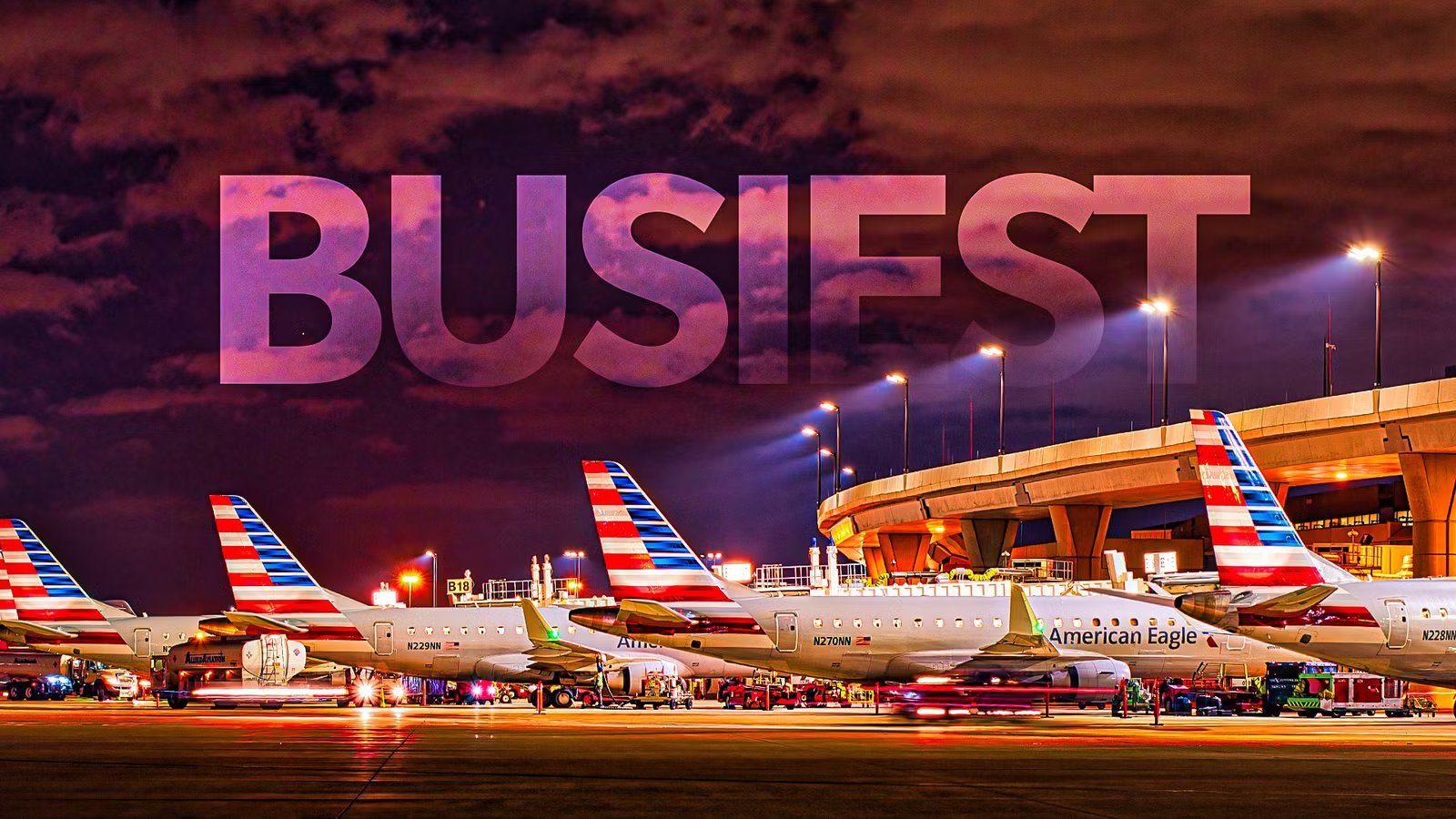
The major cities in the US state of Texas are Houston, Dallas, San Antonio, Fort Worth, and Austin. San Antonio International Airport is primarily served by Southwest Airlines, while Austin Bergstrom International Airport not only hosts a major Southwest operation but is also a battleground between American Airlines and Delta Air Lines, which have both set up focus cities in this fast-growing market. Houston George Bush Intercontinental Airport, meanwhile, is a United Airlines hub and was formerly the home of Continental Airlines.
But then, there’s  Dallas/Fort Worth International Airport. The Dallas/Fort Worth metropolitan area is the largest in Texas, and Dallas/Fort Worth International Airport is the busiest airport in the state. But while Houston, the state’s other major hub, is a busy and well-connected airfield, it pales in comparison to DFW. It’s the largest hub for American Airlines, which also has its corporate headquarters in Fort Worth, and is also ranked as the second-busiest airport in the US, in addition to being ranked fourth in the world.
Examining Dallas/Fort Worth International Airport

Dallas/Fort Worth International Airport is the main airfield serving the Dallas/Fort Worth metropolitan area. Dallas Love Field is the other main commercial airport serving the area, but it’s far smaller and only receives domestic flights. DFW first opened in 1974, and American Airlines officially opened its DFW hub in 1981. In 1979, Congress enacted the Wright Amendment, which essentially limited air service at Dallas Love Field in order to encourage airlines to serve DFW instead.
 American Airlines is by far the largest carrier at DFW. Combined with its regional subsidiaries, American Airlines carries over 75% of the airport’s passengers. In addition, DFW used to be home to a Delta Air Lines hub, but the Atlanta-based carrier closed this hub in 2004, leaving American largely unchallenged. With high local demand and American’s massive connecting network, DFW has become a global hub for oneworld carriers as well, and the alliance’s headquarters is located in Fort Worth.
DFW operates with seven runways, and currently features five passenger terminals (A, B, C, D, E), with a sixth, Terminal F, under construction. There are nearly 200 passenger gates, and the airport accommodates over 85 million passengers every year. Not only is it one of the busiest airports in the world, but it’s also the second-largest airport in the US by land area, behind only Denver International Airport, and is even assigned its own postal code and USPS city designation.
American Airlines’ Operations At DFW

Data from Cirium, an aviation data analytics company, shows that American Airlines has scheduled 630,710 flights to depart or arrive at DFW in 2026. On average, this works out to over 860 daily departures, although the number of daily departures varies significantly by day and by season. During peak days, the carrier schedules as many as 930 departures, making it American’s busiest hub. The only other airline hub that beats it is Delta’s Atlanta hub, and the two are in a league of their own compared to the rest of the nation’s hubs.
American bases all of its mainline aircraft types (Airbus A320, Boeing 737, 777, 787) at DFW. Like most large airline hubs, American banks its daily schedule at DFW. With a banked schedule, airlines schedule a high number of flights to arrive or depart at the same time, which decreases connecting times. In between the banks, flights are more limited. In December 2025, American Airlines announced that it would revise its schedule in and out of DFW to create 13 daily banks, up from nine.
American Airlines Pilot Bases | Aircraft |
|---|---|
Boston | 737 |
Charlotte | A320, 737, 777 |
Chicago | A320, 737, 787 |
Dallas/Fort Worth | A320, 737, 777, 787 |
Los Angeles | A320, 737, 777, 787 |
Miami | A320, 737, 777, 787 |
New York | A320, 737, 777, 787 |
Philadelphia | A320, 737, 787 |
Phoenix | A320, 737 |
Washington DC | A320, 737 |
American Airlines operates out of all five terminals at DFW, and carries up to 100,000 passengers every day. In addition to its mainline operations, DFW is also home to a hub for American Eagle wholly-owned subsidiaries Envoy Air and PSA Airlines. Although American’s Dallas/Fort Worth hub is only slightly behind Delta’s Atlanta hub in daily departures, Delta Air Lines carries more overall passengers through Atlanta as a higher proportion of its flights are operated by larger mainline aircraft.

LAX’s 5 Largest Airlines Based On Market Share
The airport handles millions of passengers annually.
American Airlines’ Network Out Of DFW

Dallas/Fort Worth International Airport is American Airlines’ largest hub, largely due to its location. The state of Texas is well-positioned to take advantage of connecting flows between the western part of the United States and the southeastern US, collectively known as the Sun Belt. In addition, DFW is located far enough north in Texas that American can offer convenient connections to potential customers in areas north of the Sun Belt, a challenge that United can face with its Houston hub, which is located further south.
While American Airlines’ long-haul network is limited compared to its rivals, the carrier’s route map out of DFW is perhaps the most impressive out of any of its hubs. Although Miami is the carrier’s primary Latin America hub, Dallas still has a significant network to the Caribbean and to major South American cities, along with a substantial European network. In addition, American serves Tokyo-Haneda, Tokyo-Narita, Seoul, Shanghai, and Brisbane, making it the only one of American’s hubs to be connected to four different continents.
American Airlines Hubs | Continents Served |
|---|---|
Charlotte Douglas International Airport | Europe |
Chicago O’Hare International Airport | Europe |
Dallas/Fort Worth International Airport | Asia, Europe, Oceania, South America |
Los Angeles International Airport | Asia, Europe, Oceania |
Miami International Airport | Asia, Europe |
New York JFK International Airport | Asia, Europe, South America |
New York LaGuardia Airport | Domestic only |
Philadelphia International Airport | Asia, Europe |
Phoenix International Airport | Europe |
Washington National Ronald Reagan Airport | Domestic |
Dallas, as a city, has high, growing business demand, and the size of American’s hub means that it can support significantly more air service than other hubs. In cities such as Los Angeles and New York, demand is overall higher, but American Airlines faces stiff competition and largely relies on local traffic. With DFW, American is the only major player, while the connections make flights more viable. The increasing local demand is further driving the expansion of DFW’s network.
Foreign Airline Service To DFW

Dallas/Fort Worth is the largest hub for American Airlines, and American Airlines is the largest airline in oneworld. As such, DFW is a major hub for oneworld carriers, receiving significant service from American’s alliance partners. This includes daily British Airways Airbus A380 service during the summer, or Qantas’s Airbus A380 flights to Sydney. Essentially every major oneworld airline serves DFW, as it has huge feed from American’s operations as well as strong local demand.
Despite the heavy  oneworld presence, Dallas/Fort Worth still receives significant air service from competing airlines. This includes year-round Lufthansa service to Frankfurt, daily EVA Air flights to Taipei, year-round Air France flights to Paris, and daily Emirates services to Dubai. In addition, American Airlines and Korean Air also codeshare on the route between Dallas/Fort Worth and Seoul Incheon International Airport, despite being members of competing alliances.
Six out of the ten busiest international routes out of DFW are to destinations in Mexico, and Dallas is also served by Aeromexico, Viva, and Volaris. In addition, DFW receives flights by Avianca and its El Salvadorian subsidiary. However, local demand for Latin America is overall limited in Dallas/Fort Worth. Furthermore, LATAM (South America’s largest airline) is no longer a oneworld member, as it now partners with Delta Air Lines, which has hurt the viability of American’s routes to the region. The carrier now has to solely rely on its own connecting network in Dallas, so service to Latin America is less thorough than from a city such as Miami.

These Are United Airlines’ Leading Hubs By Passenger Numbers
Newark is the main United hub, while it has other major hubs in other airports across the country.
Comparing DFW To Delta’s Atlanta Hub

Within the US, the only hub comparable to American’s DFW hub is Delta’s hub in  Hartsfield-Jackson Atlanta International Airport. But whereas Dallas/Fort Worth International Airport is the world’s fourth-busiest airport due to the size of American’s hub, Atlanta is the world’s busiest airport. Apart from 2020, Atlanta has remained the world’s busiest airport by passenger numbers for decades, and this is entirely due to Delta’s hub. The carrier operates nearly 1,000 flights out of this airport, and it’s largely considered to be the US’s first mega-hub.
Atlanta is located further east than DFW, but the eastern part of the US has a higher population, and Atlanta is also located further north than DFW. As such, it’s perfectly located to capture huge levels of connecting traffic between major population centers, more so than other airline hubs. Delta’s domestic network out of Atlanta is staggering, and the airline also has a large transatlantic network that complements its services out of New York-JFK. In addition, Atlanta is Delta’s main Latin America gateway and has service to Tokyo-Haneda as well as Seoul.
While  Delta Air Lines has long had a major presence at Atlanta, the carrier only really grew the hub to the size that it is in the 1990s and 2000s. Delta formerly competed with Eastern Air Lines in Atlanta, but Eastern went out of business in 1991, leaving a void that was filled by Delta. Furthermore, Delta Air Lines closed its hub in DFW in the 2000s, which allowed the carrier to focus its resources on other hubs like Atlanta. Delta’s exit from DFW also allowed American Airlines to further grow its hub.

![Luxair’s Massive Expansion: 11 New Routes Launching In 2026 [Map]](https://dailynewsnblog.com/wp-content/uploads/2026/07/shutterstock_2493499699_cropped.jpg)