dailynewsnblog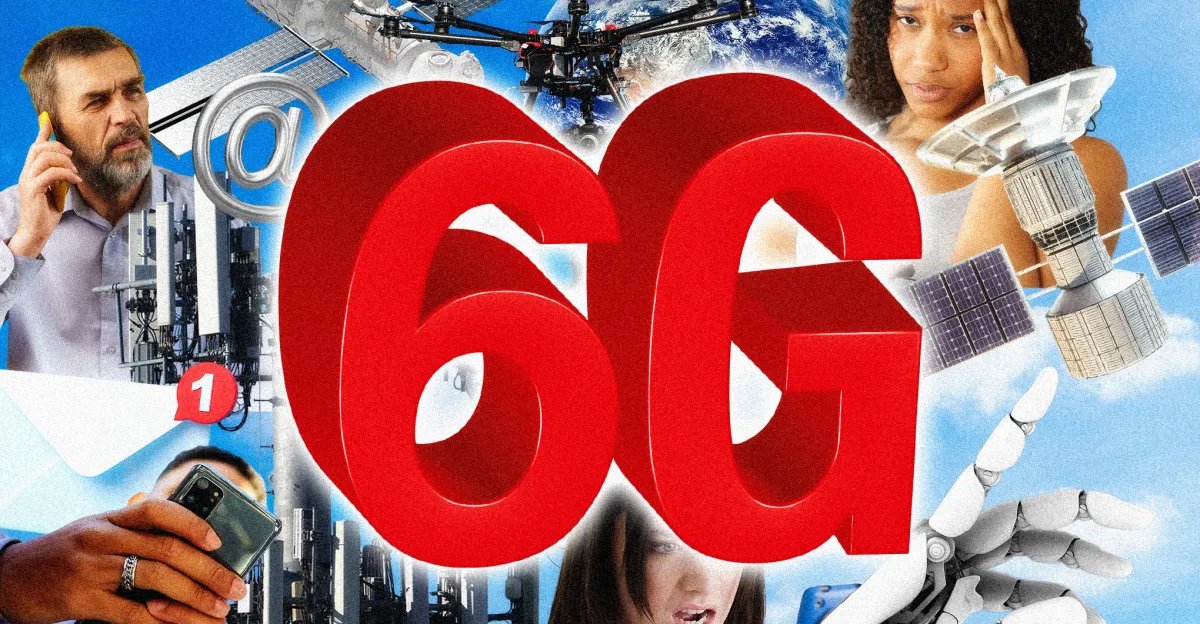
It brings me no pleasure to say this, but friends: The next G cometh.
The standard formally known as 6G is still being established, but it’s going to be a major topic of discussion at Mobile World Congress 2026, which gets started today in Barcelona.
5G arrived back in 2019, but also, did it, entirely? You may have noticed a distinct lack of the robot surgeons and streets dominated by autonomous vehicles that standard was supposed to enable in your daily life. Like the Gs that arrived before, 5G continues to evolve through new “releases” every few years — a case of incremental progress that couldn’t possibly live up to all that hype. That 5G icon in the corner of your phone screen was never meant to signal the full arrival of 5G, but the hype around it sure made that point confusing.
Nevertheless, a new hype cycle looks to be brewing. This time, you’ll hear a lot about seamless connectivity between satellites and smartphones, wireless networks that can sense things in the physical environment, and naturally, AI — both helping to run the network and inside the network itself.
Exactly what 6G encompasses is still being defined by a specialized agency within the United Nations; it’s not a fully formed resource that’s been discovered and studied
It’s all still a long ways off, but the communications industry orients itself around these 10-year increments, so that’s why we’re all going to start hearing about 6G even though the emergence of 5G feels like a recent memory. Right now 6G is in a “study phase,” with commercialization planned for 2030. That’s worth bearing in mind, and something I found myself running up against every time I asked a researcher or analyst, “Can 6G really do that?” The answer is an unsatisfying “Maybe.” Exactly what 6G encompasses is still being defined by a specialized agency within the United Nations; it’s not a fully formed resource that’s been discovered and studied. It’s evolving, and will continue to do so well beyond 2030.
But whether we’re ready or not, 6G is indeed taking shape, and it’ll be upon us just as fast as you can say “2028 Los Angeles Summer Olympics.” Here’s what you can expect.
Wait, what do the Olympics have to do with it?
More than one expert that I talked to brought up the Summer Games in LA as a key stage to demonstrate 6G to the world. Qualcomm’s VP of engineering, John Smee, says that the company “will be heavily present at the LA ’28 Olympics.” Ian Fogg, a wireless network research director at CCS Insight, also sees the timing of the Olympics driving companies to prep now for pre-commercial activities. “People like showing off,” he says. Is this desire to demo 6G here guided by the same minds that brought us the nonsensical “race to 5G”? Probably. Does it make any sense to orient technological progress around an international sporting event? I don’t know, man. Just consider yourself warned.
Warning noted. Anyway, networks will be able to… sense stuff?
When I started talking to experts about the kinds of things we might expect to see from 6G, one capability stood out to me as the wildest — and possibly most dystopian: sensing technology built right into the wireless network. And not just the ability to sense connected devices. Network base stations may be able to sense any kind of object using the radio frequency signals that wireless internet travels on. This is called Integrated Sensing and Communication, or ISAC, and frankly it sounds bonkers.
Okay, but why would we want this?
“You can do things like detect traffic patterns,” Fogg tells me, listing a few other examples. “But one of the real things that’s focused around that is drone detection.” Remember the New Jersey drones? Nobody could offer a decent explanation for the mysterious UAVs partly because we couldn’t really pin them down. Drones are very small and fly at low altitudes, making them a difficult target for traditional radar. ISAC could do a much better job of detecting them, especially since RF signals have the advantage of being able to penetrate buildings and objects in the way.
Fogg points to public safety and national defense applications for ISAC, which makes a ton of sense. The potential for lucrative government contracts seems like plenty of incentive for wireless network operators to pursue the technology. But Petar Popovski, a professor and researcher with Aalborg University in Denmark, speaking over email, notes the huge privacy concerns. “You can opt out of communication by turning off your phone, even removing the battery. Opting out of being sensed by a base station is a very different matter.”
Yeah, and it gets wilder. Imbuing base stations with the ability to sense the physical world around them could turn them into a kind of gateway, a “point where signals from the physical world enter the digital one,” says Popovski. He says this could give rise to something called physical AI, where AI models gain a better understanding of what’s going on in the real world.
That makes my head hurt. Is there something less terrifying that 6G can do for us?
Ironically, the more down-to-earth application of 6G goes beyond terrestrial networks: satellite connectivity. It’s the single use case that experts seemed to agree would be the most impactful for actual people.
Fogg explains that there are broadly two ways of connecting phones to satellites: directly through satellite spectrum, as Apple is doing with Globalstar, or by using cellular spectrum bands a la T-Mobile and Starlink. 6G could set a standard for seamless switching between cellular and satellite using a bit of both: “The standard’s focus is very much on an idea of using the satellite spectrum bands alongside the cellular.”
He likens the current satellite experience to using Wi-Fi compared to cellular data: move between cell towers and your connection switches seamlessly, but when you move away from a Wi-Fi signal, “you are very acutely aware that you might drop a Wi-Fi access point and pick up another … It doesn’t work as well.” He says the standards bodies are focused on developing a way of making that connection everywhere — via cell tower or satellite — so that “it just works.”
Neat, but do we really need all that?
There are valid reasons to want that connectivity away from cell towers. Being able to send a message from an area without signal could mean fewer interruptions of service for people who live in places that lack good coverage. It’s not always practical — or possible — to go through the motions of locating a satellite using a GUI on your phone to send a text; a connection that switches between cellular and satellite and back again without your input could literally be a lifesaver.
It’s no small challenge, Fogg emphasizes. Phones have comparatively small antennas and batteries compared to purpose-built equipment for communicating with satellites. A phone can’t require a huge battery pack to work; you can’t affix it to the top of your house. But Popovski agrees that solving those pain points would make a huge impact. “My expectation is that consumers will actually feel the arrival of 6G the moment their device maintains seamless internet connectivity on a plane, a boat, or in a sparsely populated area.” And that will be the difference-maker compared to the last G, he says. “There was not a similar, tangible and concrete promise with 5G.”
Okay, I’m down with satellites. What else you got?
Well, this won’t come as a surprise, but AI is involved. Another concept that came up a bunch is an “AI-native” network.
What does that even mean? I can already run ChatGPT on my phone.
Right right. What’s under consideration now is building AI compute right into the network itself. The idea is to use AI to help optimize network operations, but also to equip base stations with more powerful processors and use them as mini data centers to run more AI applications. With general-purpose processors installed in base stations — rather than proprietary telecom equipment used now — it would be possible to run communication workloads as well as functioning as “a nice complement” to actual data centers, according to Qualcomm’s EVP of technology, Durga Malladi. “What you end up having is what we are calling a continuum of compute that straddles everything from data centers to the 6G network all the way to devices as well.”
I can see the case for AI helping operators determine which levers to pull in order to keep the network chugging along. But I’m having a harder time understanding the need for a GPU in every base station around the world. If it’s a matter of building AI into the network so wireless operators can develop features like real-time language translation (and presumably charge us for them eventually), then it seems we don’t really need 6G to do that: T-Mobile is already offering such a feature running on its 4G network. Malladi notes that we “shouldn’t be surprised to see leading telco operators bringing AI services into the network” ahead of and during the transition to 6G. That will put them in a better position to “harness all the benefits of 6G,” he says.
“You don’t want to have to wait five or 10 seconds,” he says. “You want it to come back as quickly as if it was on your device in the first place.”
AI in the network could be much more than that, too. “Using AI at both the device and the network level, we can create genuinely new multimodal user experiences, something qualitatively different from the smartphone paradigm that has dominated for two decades,” Popovski tells me. Fogg describes something similar, in a format like augmented reality glasses displaying real-time information about the world around you. It wouldn’t be practical to have all of that information saved on the phone that your glasses are connected to — there’s too much of it and it’s always changing — and having to fetch it all from a data center would be slow enough to make for a frustrating experience. “You don’t want to have to wait five or 10 seconds,” he says. “You want it to come back as quickly as if it was on your device in the first place.” If network providers can process information in a base station that’s closer to the user, the promise of augmented reality starts to look a little more, well, realistic.
Okay, but now I’m getting flashbacks to 2016. Is this just going to be the 5G hype cycle all over again?
Maybe! But it might help to understand why 5G fell so short of all the lofty promises. Fogg recalls Mobile World Congress 2016 being filled with fantastic 5G use cases at every booth. “What actually happened was that 5G launched with non-standalone, and most of those things you couldn’t really do until you had the 5G standalone core.” T-Mobile got a big head start in that department thanks to Sprint’s spectrum, which was ideal for 5G. Verizon and AT&T are still, slowly, rolling out standalone 5G — meaning 5G radios are in use right now, but most of the computers that run the network, or the “core,” are still based on 4G.
David Witkowski, CEO of Oku Solutions and a senior member of the IEEE, sums it up nicely: “5G definitely had sort of a ‘ready, fire, aim’ deployment.’” And given that kind of rollout, he’s skeptical that the network operators will be in a rush to upgrade to 5G when 6G is so close. “Are we going to skip 5G core and go straight to 6G core? If I were a betting man? I would say yes.”
There’s a bit of a precedent for that kind of move, too. “3G was what some people refer to as a skip standard.” Witkowski says. “We did some 3G, but realistically we were just biding our time and waiting for 4G, because that’s where the real value came into play.” Maybe we’re in for some 5G deja vu with 6G, or maybe 5G will just fade into the background, just like 3G or an even-numbered Star Trek movie — an observation Witkowski also makes. “We don’t talk about the odd-numbered Gs, right? There’s sort of a notion that we’re just going to skip 5G and wait until everything comes together for 6G. I think that’s the best-case scenario,” he says. Based on the preview I’ve gotten about what 6G could be, then maybe that’s not such a bad outcome after all.