dailynewsnblog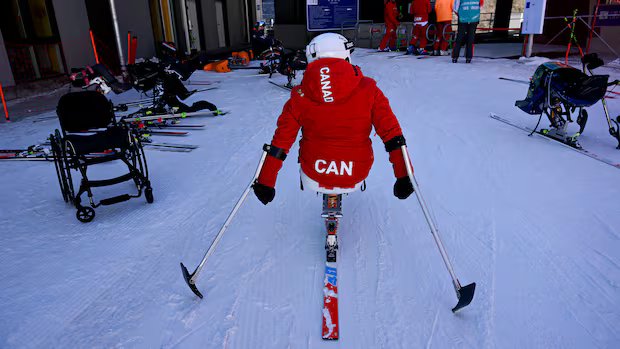
For decades, paralympians have been landing on the podium with help from advances in prosthetics, including lighter, more flexible materials. But while similar technology is often available to many people living with disabilities, high costs can put it out of reach.
Prosthetic limbs have evolved over the years. Carbon fibre has made some devices lighter and more energy efficient, and digital design allows fittings to be tailored to a person’s body, improving stability and control.
Some prosthetics also include electronic components — often in joints or hands — that use sensors to react in real time. If someone trips, for example, some prosthetic knees can detect it and lock to help prevent a fall.
“The knee and foot that Terry Fox was using, what we have now is just night and day different,” said Shane Glasford, a certified prosthetist and team lead of prosthetics at Sunnybrook Health Sciences Centre in Toronto.

Glasford, who fits prosthetics for people who have lost limbs — mostly through injury or disease — said hands are another area of advancement. Older prosthetics could move only a few fingers and manage simple grasps. Newer versions can form multiple positions with all fingers moving.
“We can do a grasp where the hand will conform to just a point, so if they need to get to an ATM machine, point [their finger] and hit their buttons as they enter the code,” said Glasford.
Paralympic snowboarder Tyler Turner, a gold medallist heading to this year’s Milano Cortina games, said he noticed the technology “changing so fast,” especially in prosthetic feet.
Turner, a double leg amputee, uses feet designed to absorb shock and pressure — essential in a high-impact sport like snowboarding.
“It feels so natural,” he said. “When I’m snowboarding, you can’t tell I’m snowboarding in prosthetics, because the feet are that advanced.”

Improvements to the way prosthetics are designed and manufactured are also changing the game.
These include digital scans of a person’s amputation site, rather than a physical mould, and using software to design a prosthetic specific to a person’s body.
Researchers have also been experimenting with artificial intelligence to develop and produce more responsive limbs. But, for the Paralympics, the International Paralympic Committee prohibits equipment that is “automated, computer aided, or robotic devices.”
3D printing holds promise for future prosthetics
Another emerging technology for prosthetics is 3D printing.
While 3D-printed prosthetics have already made their debut at the Rio Paralympics in 2016, they aren’t common among athletes.
And some Canadian amputees are already using 3D-printed prosthetics in their daily life. Holland Bloorview Kids Rehabilitation Hospital in Toronto said the technology is still in early stages but is already being tested by some of the children they see.
“Now that we’re incorporating things like 3D scanning, digital designing and 3D printing, we are just allowing for more customization and more personalization,” said Elaine Lorette, a certified prosthetist at Holland Bloorview.

Combined with lighter and stronger materials, she said, the technology can help prosthetists design devices for daily function and athletic performance.
“These are things we could only dream of a number of years ago,” said Jan Andrysek, senior scientist at Holland Bloorview’s research institute.
“We can totally rethink how we design and build the prosthesis. We can make them more flexible, we can make them more comfortable for kids and those are sort of key elements that really allow a child to be able to partake in activities.”
Some research suggests 3D printing could reduce costs by using cheaper materials and less labour, but Andrysek said researchers are still studying whether that holds true.

Even so, the promise of lower costs is driving innovation, and prosthetists say that price remains a major barrier for people.
High costs, uneven coverage
The cost of a prosthetic depends on a number of factors, including who it is for, what it is being used for and whether it includes a joint, experts say.
Prosthetists who spoke to CBC News estimated that costs in Canada can range from about $5,000 to more than $100,000. Brittany Pousett, director of clinical research at Barber Prosthetics Clinic in Vancouver, B.C., said a prosthetic can last between three to five years, depending on use.
Research suggests that coverage for prosthetics varies widely across Canada. Provincial programs in British Columbia and Ontario, for example, cover prosthetics for basic function, while some East Coast provinces, including Nova Scotia and Prince Edward Island, offer little to no support.
Pousett, who has worked as a prosthetist for more than a decade and is studying this topic as part of her PhD at the University of British Columbia, said she sees the impact of limited access.
“It impacts their physical health, their mental health, impacts what they can do on a daily basis,” she said.
“When you don’t have the tools to do what you need to be able to do, it really affects all of you.”
She pointed to a U.S. initiative called So Everybody Can Move, which aims to change state and federal laws to expand coverage for prostheses used for fitness and sports.

Ontario resident Sam Paulos, who had to amputate one of his legs after a severe bacterial infection in 2011, paid about $12,000 for his skiing leg. He said more support is needed during rehabilitation.
“We’ve started to see physicians prescribe activity … participating in sport or any kind of movement is truly beneficial for more positive outcomes for people in their rehabilitation journey,” Paulos said.
“Not only that, but from a mental health perspective, who doesn’t enjoy being outside, who doesn’t enjoy going back to the activities or the sport that they maybe did before their injury.”