dailynewsnblog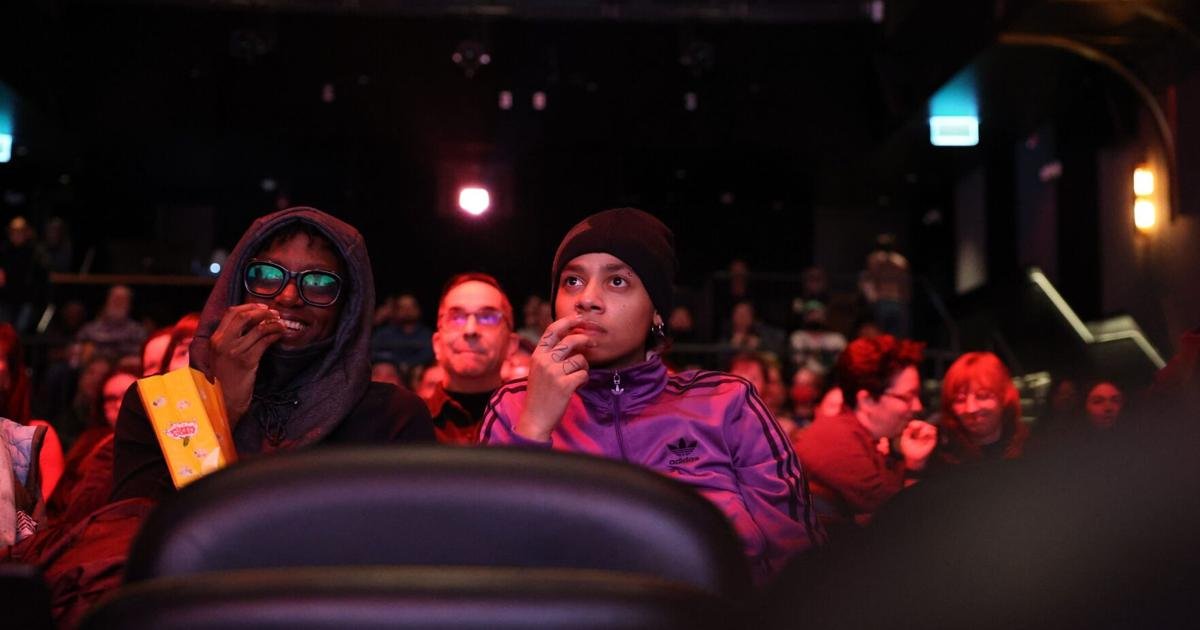
The movies first came to Toronto in the late summer of 1896, as the Lumière Cinématographe flickered away under a tent at the Industrial Exhibition (now the CNE). In the 130 years since, scores of cinemas have lined Toronto’s streets, some closing down, others resurrected thanks to the repertory and art-house scenes of the 1960s and ’70s.
Unlike multiplexes, these screens weren’t chasing opening-weekend grosses. They were showing Ingmar Bergman and Bruce Lee, experimental films and cult classics, restored prints and midnight horror — all of which gave the city a unique movie culture.

The Lumière Cinématographe attracts audiences at the CNE in 1899.
CNE Archives
Some of these theatres have survived every supposed death knell: corporate consolidation, multiplex creep, cable television, home video, streaming, the COVID pandemic. And despite Cineplex recently shuttering its Beaches location and posting a fourth-quarter profit of $369,000, down from $3.3 million a year earlier, Toronto’s independent and repertory houses are not in retreat, they’re thriving.
Many of the indie single-screen theatres still in operation — Revue, Paradise, Hot Docs Ted Rogers (formerly the Bloor), Fox and Kingsway — were once part of the Festival Cinemas chain, offering members access to multiple venues.
When I moved to Toronto in summer 2000, I prioritized renting an apartment near a movie theatre. I settled on Broadview Avenue, around the corner from the Danforth Music Hall, which then operated as a second-run cinema under the Festival banner. The day I signed the lease, I walked over to the Music Hall, bought a membership, and took in an Indiana Jones adventure in this enormous movie palace, built in 1919, which had seen better days. Later, I briefly ran the Revue, Toronto’s oldest operating cinema.
Talking about movie theatres really lights people up. Mention a long-gone neighbourhood cinema and suddenly someone’s telling you about the sticky floors and velvet curtains of their childhood, the first matinee they attended alone. Sometimes you’ll hear a short elegy. And if the venue is still standing, brace yourself for the diehards, fiercely loyal to their screen of choice. It’s part nostalgia, part civic pride, part deeply personal memory.
Repertory cinemas go boom
Frequent filmgoer Gregory Dalgetty sees lines around the block at various venues on a weekly basis. “There’s a huge renaissance happening right now,” he told the Star. “People are clearly starved for this kind of experience. Repertory cinemas feel like they’re in a boom, and I think it’s partly a reaction to streaming — which a lot of people don’t want.”
For film critic, programmer and Star contributor Saffron Maeve, a Mississauga native who relished childhood visits to the Revue, sitting among others in a movie theatre “activates parts of the film you might have otherwise not reacted to.”
“I enjoy hearing other people’s reactions,” she said. “There’s something phenomenal about sitting beside someone, breathing beside them, while you’re watching the same movie.”
As a programmer herself — she curates the “Contours” series at the Paradise (films about art) and “Apparatus Theory” at the Revue (films about filmmaking) — she’s struck by how varied audiences are. For her, that range is proof that repertory cinema isn’t niche — it’s drawing people of all ages and sensibilities.
“The megaplex and the rep cinema are different cultural products,” Sonya William, executive director of the Network of Independent Cinema Exhibitors, told the Star. “They are both important. “The megaplex can show the big new movie that is in the zeitgeist. Whereas the rep cinema is a place that values cinema as art and offers its audience a personalized touch.”
Beyond inventive programming, these cinemas sometimes offer custom posters designed by local artists and specialty zines. Some series, like the Revue’s “Black Belt Cinema” and “Neon Dreams,” sell their own branded merch.
William also said that Letterboxd, the cinephile’s favourite social media app, has also helped cinemas and programmers connect with their audience: “We have some members all over the country who check out who logged a film they have just shown, see their reviews, their wish lists, and try to show films that their audience are interested in seeing. It’s a great motivator.”
Sure, you may be able to stream a particular vintage or cult movie at home. But you can’t stream a sold-out 35-mm restoration, a filmmaker Q&A or a drag-hosted screening — many of which can be had at the following cinemas (as well as TIFF Lightbox, Hot Docs Ted Rogers Cinema and Innis Town Hall).

The Fox Theatre, which opened in 1914, is one of the last remaining neighbourhood screens in the east end.
R.J. Johnston/Toronto Star
Fox Theatre
Origin story: The Fox opened in 1914 as The Theatre Without a Name, was once affectionately known as “The Morgue,” and more than a century later remains one of the city’s last neighbourhood picture houses east of the Don Valley. Once you’ve passed the street-facing box office, its doors open beneath a glowing stained-glass panel featuring one of the theatre’s former names, “Prince Edward,” casting warm light over red carpets and framed posters. Past the spacious lobby, where the snack bar gleams under soft bulbs, a long, patterned corridor guides moviegoers toward the auditorium.

Inside the Fox, a stained-glass panel features one of the theatre’s former names: Prince Edward.
R.J. Johnston/Toronto Star
Andy Willick and Daniel Demois bought the theatre in 2007. “It’s not a very glamorous business,” Willick said. “There’s this perception that it’s all fun and games and you get to watch movies all the time, but it’s kind of relentless. You’re constantly programming for the future and there’s a lot more marketing work required these days.”
Still, Willick is optimistic about the road ahead for independent cinemas. “COVID was such a terrifying time, and I felt like it was over for us. But we’ve rebuilt the business and the audience supported us — there was a genuine outpouring of love for the theatre, and that feels really good.”
Shirley Hughes, a resident of the Beach, considers the Fox her go-to and plans her monthly movie-going around the cinema’s calendar.
“It’s an incredibly important space,” she told the Star. “I’m starting to see regulars in the line all the time. It feels a little family-like. They’re also doing some new and interesting things with their programming.”
What’s new: Over the past year, The Fox has expanded its slate of new independent and international films. Willick grew up seeing foreign-language titles at the now-closed Cumberland in Yorkville and believes those films are underserved in Toronto. “It’s been such a strong year overall for international films,” he said, “and they’re breaking into the mainstream in a bigger way.”
Coming attractions: “Romy and Michele’s High School Reunion,” with live BoylesqueTO show (March 6); “Jesus Christ Superstar” singalong (April 5).
Carlton Cinemas is one of Toronto’s repertory cinemas, playing cult classics, vintage Hollywood, avant-garde and international films.
Andres Valenzuela/Toronto StarCarlton Cinemas
Origin story: The Carlton opened in 1981 as part of Cineplex’s expanding multiplex empire. At first, its screens focused on action films because of its proximity to Maple Leaf Gardens, but it quickly shifted to art-house and foreign films because of neighbouring Toronto Metropolitan University (then known as Ryerson) and the Village. The art-house strategy continues to this day under the Imagine Cinemas banner, offering many Canadian films their only theatrical venue.
Stefan Kern, operations manager for Imagine Cinemas, said the narrative that theatrical exhibition is on life support doesn’t square with what he’s seeing. Imagine Cinemas, which also operates the six-screen Market Square on Front Street, as well as theatres in Windsor and Timmins, is “on pace with pre-COVID numbers,” he said.
When the Hollywood pipeline was disrupted by the pandemic and strikes, the Carlton leaned harder into repertory programming and international and indie releases. At first, it was experimentation — “throwing everything at the wall and seeing what stuck.” Now, he said, those screenings — and the discounted “Rewind and Replay” throwback series of nostalgic ’80s and ’90s fare — are doing very well.

The Carlton Cinemas offer “Rewind and Replay” throwback screenings at discounted prices.
Andres Valenzuela/Toronto Star
The audience has shifted, too. With TMU next door, Kern said, the repertory crowd skews heavily Gen Z — and, notably, young women.
The audience speaks: When Alison Lang first moved to Toronto, she gravitated toward the Carlton Cinemas.
“I grew up with multiplexes around me — I was in the suburbs — and I just thought the cinema experience was like that: cookie-cutter,” she said. “The Carlton was amazing because it was so affordable.” The nine screens, which show a mix of Hollywood fare and independent and older titles, offer five-dollar admission on Tuesdays.
An author and editor of the zine Movies Men Ruined for Me, Lang still visits the Carlton monthly. What keeps her coming back, she said, is the atmosphere. “It has a distinct esthetic. The velvet rope. Everything feels so warmly antiquated. The staff are always amazing.”
Coming attractions: “Enter the Dragon” (March 6-12); “There Will Be Blood” (March 20-26).
Paradise Theatre
Origin story: After Festival Cinemas shut down in 2006, the Paradise Theatre sat dark for 13 years. Built in 1937, the theatre was revived in 2019 by winery magnate Moray Tawse, who wanted to see his childhood cinema flicker back to life. It reopened three months before the pandemic closed cinemas across the country.

The Paradise Theatre’s Alex Beck prepares popcorn ahead of a recent “Carrie” screening.
Sophie Bouquillon for the Toronto Star
Today, the Paradise boasts some of the most imaginative programming in the city. There’s the Canada-focused “Desire in Motion” series; the Queer Cinema Club, a communal living room for Toronto’s LGBTQ audiences; “Eastern Promises,” showing the best of East Asian cinema; and programming director Lucy Walker’s monthly spotlights on themes ranging from working class-struggles to the telephone as a dramatic motif. It is also home to the Toronto Film Society, established in 1948, which screens classic films from the 1920s to the ‘70s.

The Paradise on Bloor screened Italian films throughout the ’60s and ’70s, and in the ’80s became a porn theatre.
Sophie Bouquillon for the Toronto Star
The Paradise has cycled through multiple identities. It screened Italian films throughout the ’60s and ’70s, and in the ’80s became Toronto’s last outpost of the national Eve chain of adult cinemas. It closed in 1990 before reopening under Festival Cinemas.
Film fans: Burak Batu Tunçel, who co-programs the Free Friday Films series at Innis Town Hall, moved to Toronto from Istanbul three years ago. “When I first came here, I was so overwhelmed by the amount of films I could see,” Tunçel said. “Every month I look at what the cinemas are offering, and sometimes they shed a light on films you’ve never heard of.”
He attends the Paradise regularly. “I love the old-school marquee and billboards that light up after dark. I find myself so distracted these days, and going to the Paradise, I’m immersed.”

Ellie Chesnutt and Andrew Lochhead take in the first night of the Paradise’s Stephen King film series.
Sophie Bouquillon for the Toronto Star
Local filmmaker Kire Paputts recently premiered his new movie, “Junkie Run,” at the Paradise. “Some of my favourite film screening experiences have been at Toronto rep cinemas,” he said. While promoting the screening, Paputts evoked the spirit of the east end’s late Roxy Theatre (now a Circle K and Tim Hortons), which became a hotbed of counterculture in the ’70s, introducing Toronto moviegoers to the films of trash auteur John Waters. “I’ve always gravitated toward counterculture cinema,” Paputts said, “and you just don’t find that at Cineplex.”
Revue Cinema
Origin story: On a recent cold Sunday afternoon, the 504 streetcar stopped in front of the 114-year-old Revue Cinema. Riders disembarked and got in line for a free community screening of the Oscar-winning 1942 drama “Casablanca.” Inside the auditorium, Roncesvalles resident Jennifer Taylor, who first attended the Revue in 1998, found her regular seat — close to the screen, to the left of the middle section. “I grew up in a really small village in Eastern Canada and there was no movie theatre to go to,” she said. “I’ve always thought the movie theatre experience was a bit of a magical treasure.”

The Revue Cinema, in Toronto’s west end, is the city’s oldest operating theatre.
Sophie Bouquillon for the Toronto Star
Toronto’s oldest operating movie theatre, which survived a lease dispute in 2024, is now a registered charity and recently installed a 70-mm projector — one of the few places in the city to offer what was once a common movie-going experience. But the Roncesvalles institution started off on shaky ground, as civic groups opposed its construction in 1911 because of its proximity to a school, concerned about the supposed moral corruption of the movies.
In the 1960s, the Revue screened German films, at a time when many neighbourhood cinemas catered to the cultural diversity of its residents. (The Brighton, a few blocks south, screened Polish films, and is now a convenience store.) Cemented as a go-to art-house destination in the ’70s, thanks to former managers Paul Ennis and Bob Huber, the Revue was revived as a not-for-profit in 2006, and is an electric space many nights of the week, with queues curving around the corner onto Howard Park Avenue.

The Revue sold special posters at the recent “Wings of Desire” screening.
Sophie Bouquillon for the Toronto Star
Inside, the concession line spills out of the modest lobby, snaking its way down to the front of the auditorium. The green reclining seats, installed in the ’90s, are overdue for renewal, but the energy in the cinema on a busy night is a shared pulse that makes the worn upholstery beside the point.
Get with the programming: Established series like “Dumpster Raccoon,” “Designing the Movies,” “Black Belt Cinema,” “Drunken Cinema” and “Nightmare Alley” have dedicated audiences. New series like “Apparatus Theory” and “Psych-Out Cinema” are gathering their own devoted crowds.
Whitney took over programming in 2020, steered the cinema through the pandemic, and isn’t too worried about the existential threat of a potential Warner Bros. merger with Netflix or Paramount. Indie cinemas are creatures of survival, she said.
“It can be challenging when you don’t have access to certain catalogues or titles, but indie theatres have always found ways to be creative and get past that.”
She did note, however, that programming a theatre is exhausting. “Most people aren’t aware of how much work goes into programming and running a theatre. So much planning, way in advance, to make sure we can build up the excitement for movies people want to see,” Whitney said. “I’m really proud of the community we built.”