dailynewsnblog
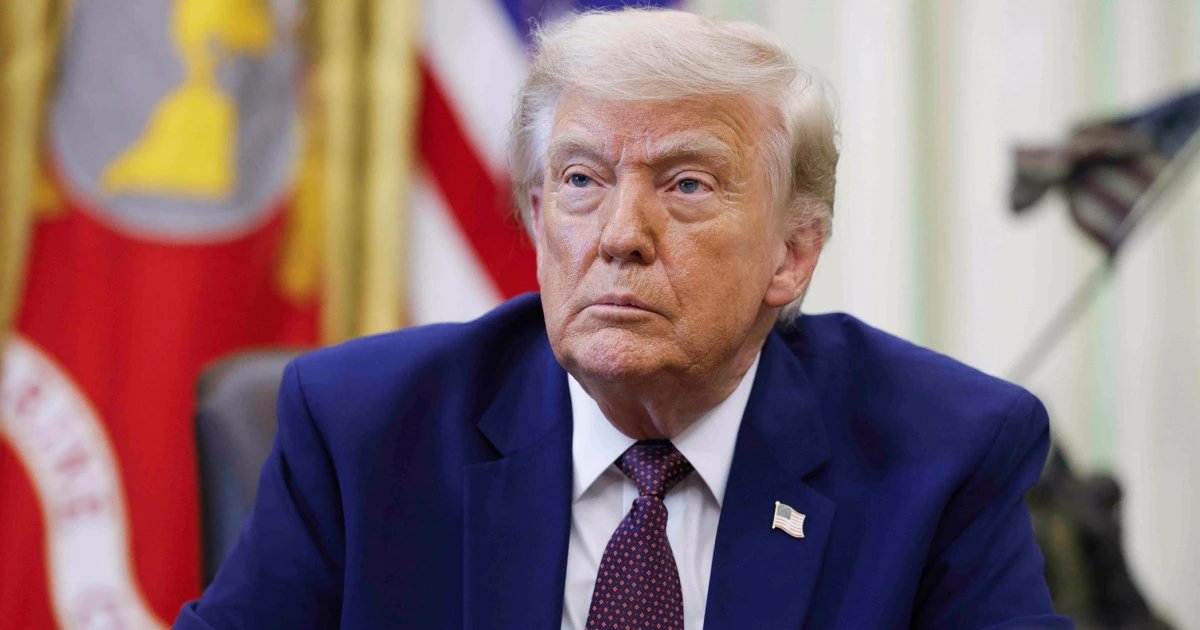
WASHINGTON (AP) — President Donald Trump, his Treasury secretary and his choice to lead the Federal Reserve believe they can coax the U.S. economy into partying like it’s 1999.
They are putting their faith in artificial intelligence to duplicate what happened when another technology arrived in the 1990s: the internet. Back then, the American economy surged as businesses became more productive, unemployment tumbled and inflation remained in check.
Trump is confident that his nominee to become Fed chair, Kevin Warsh, can unleash an even greater economic bonanza by jettisoning what the president sees as the central bank’s hidebound reluctance to slash interest rates.
Many economists are skeptical.
The world looks a lot different today than it did when the Spice Girls ruled radio and “Titanic’’ dominated the box office. And the story the Trump team is telling — that a visionary Fed chair, Alan Greenspan, fueled the ‘90s boom by keeping interest rates low — is incomplete at best.
“The administration is offering a rather distorted version of what actually happened in the 1990s,’’ economist Dario Perkins of TS Lombard said in a commentary.
Nonetheless, the Trump administration believes history can repeat itself. All that’s been missing, in the president’s view, is a Fed chair with Greenspan’s foresightedness.
AI’s influence over interest rates
Trump has repeatedly attacked current Fed chief Jerome Powell, whose term as chair ends in May, for his reluctance to lower rates aggressively while inflation hovers above the central bank’s 2% target. Treasury Secretary Scott Bessent said on social media in January that the president sought to replace Powell with someone with “an open, Greenspan-like mind.”
“Our nation can see productivity boom like we did in the ’90s when we are not encumbered by a Federal Reserve which throws the brakes on,” Bessent said.
On Jan. 30, Trump said he was picking Warsh.
In speeches and writings, Warsh has argued that AI-driven improvements in productivity could justify lower interest rates.
These views align with Trump’s desires for Fed rate cutes but mark a break with Warsh’s own past as an inflation hawk. In the aftermath of the 2007-2009 Great Recession, Warsh — then a Fed governor — objected to some of the central bank’s efforts to help the struggling economy by pushing down rates even though unemployment exceeded 9%. Warsh warned then, wrongly, that inflation would soon accelerate.
At issue now are gains in productivity and the possibility that AI will make them bigger — much bigger.
To economists, productivity improvements are almost magical. When companies roll out new machines or technology, their workers can become more efficient and produce more stuff per hour. That allows firms to earn more and to raise employees’ pay without raising prices. In short: Surging productivity can drive economic growth without spurring inflation.
Greenspan and the internet
In the mid-1990s, Greenspan was contending with a strange set of economic circumstances: Wages were rising, but inflation wasn’t heating up.
Big productivity gains might have explained things, but government data showed no sign of them. Other Fed policymakers worried that surging wages and tame inflation couldn’t co-exist and that higher prices were coming. They wanted to raise interest rates.
But Greenspan suspected the official productivity numbers were missing something. For one thing, they didn’t jibe with the amazing tales of efficiency improvements the Fed was hearing from companies investing in computers and turning to the internet.
So he ordered his lieutenants to dig through decades of productivity numbers. The official statistics they assembled told an implausible story: Services firms — from retailers to legal practices — had supposedly seen productivity fall over the years, despite intense competitive pressure and massive investments in technology.
Greenspan didn’t believe it. He persuaded his Fed colleagues that the government’s numbers were wrong and were understating productivity. They agreed in September 1996 to hold off on raising rates.
The economy took flight.
Tardily, productivity advances began to show up in the official data. Overall, American economic growth surpassed 4% every year from 1997 through 2000, something it would do again only once in the next quarter century. The unemployment rate plunged to 3.8% in April 2000, lowest in three decades. Inflation stayed in its cage, coming in below 2% — later the Fed’s official target – for 17 straight months in 1997-1999.
History repeats itself … maybe?
American productivity certainly looked strong in the second and third quarters of 2025, and some economists attribute the improvements to early adoption of AI; they see bigger gains and stronger economic growth ahead.
Others aren’t so sure.
Joe Brusuelas, chief economist at the consulting firm RSM, wrote that the 2025 productivity improvements “are not because of artificial intelligence’’ but reflect investments in automation that companies made when they couldn’t find enough workers during and after the COVID-19 pandemic. “Those investments are starting to pay off,’’ Brusuelas wrote.
Economist Martin Baily, senior fellow emeritus at the Brookings Institution, believes it will take time for AI to have a big impact on the way companies do business and on the nation’s productivity.
“Companies don’t change that fast,” said Baily, chair of President Bill Clinton’s Council of Economic Advisers. “It’s expensive to change. It’s risky to change. The managers don’t necessarily understand the new technology that well. So they have to learn how to use it. They have to train their staff. All that stuff takes a long time.’’
A productivity boom can raise the economy’s speed limit — how fast it can grow without pushing prices higher. But it might not justify lower interest rates, Federal Reserve Gov. Michael Barr said in a speech earlier this month.
Businesses will borrow to invest in AI, putting upward pressure on interest rates. Likewise, American workers and their families likely would save less and borrow more in anticipation of higher wages, the payoff for being more productive; that would put still more pressure on rates to rise.
Bottom line, Barr said: “The AI boom is unlikely to be a reason for lowering policy rates.’’
Even Greenspan’s Fed eventually came to the same conclusion, reversing course and starting to raise its benchmark rate in mid-1999, taking it from 4.75% to 6.5% in less than a year. (The rate Trump complains about now is around 3.6%.)
“Warsh and Bessent talk only about the dovish 1995/96 version of Greenspan; they overlook the hawkish 1999/2000 variant,’’ Perkins wrote.
Then and now
Many of Warsh’s potential future colleagues on the Fed’s interest-rate setting committee see the late 1990s experience differently than he does, setting up what could be a clash at the central bank if the Senate confirms Warsh as chair.
Austan Goolsbee, president of the Federal Reserve Bank of Chicago, said earlier this week that “the analogy to the late 90s is a little harder for me to understand.” Greenspan’s insight was that productivity gains meant the Fed could hold off on raising rates, not that it should slash them, Goolsbee noted.
“It wasn’t, ‘Should we cut rates because productivity growth is higher?’” he said.
The economic backdrop that awaits Warsh is also far less friendly than the one Greenspan enjoyed.
Greenspan was avoiding rate hikes at a time when the usually profligate U.S. government was running rare budget surpluses and didn’t need to borrow so desperately. Now, after a series of spending hikes and tax cuts, deficits are piling up year after year, and the Congressional Budget Office expects federal debt to hit a historic high of 120% of America’s GDP by 2035.
Nor was productivity the only thing controlling inflation in the 1990s. Countries were lowering tariffs and dismantling trade barriers. Immigration was surging.
Now, thanks largely to Trump’s own policies, notably his sweeping taxes on imports and his crackdown on immigration, the world is much different. “Trade barriers are going up,’’ Perkins wrote. “Globalization has given way to de-globalization.’’
“That benign era is clearly behind us,’’ said Michael Pearce, chief U.S. economist at Oxford Economics.
____
AP Economics Writer Christopher Rugaber contributed to this story.
Paul Wiseman, The Associated Press