dailynewsnblog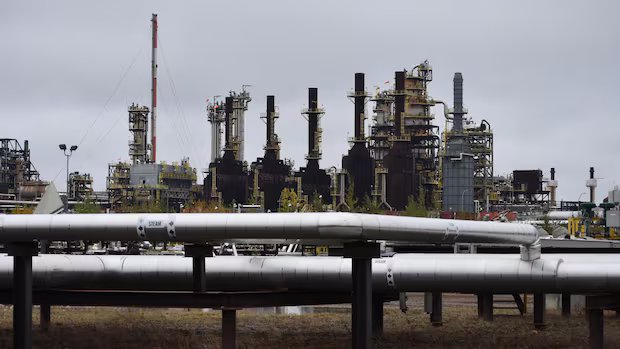
The budget released Thursday by Premier Danielle Smith’s United Conservative government made waves for running major deficits for the next four years.
At the root of those deficits are low global oil prices.
As has been the case for decades, the Alberta government continues to lean heavily on royalties from the oil and gas industry while keeping taxes low.
At $13.2 billion, non-renewable resource revenues for the next fiscal year account for 18 per cent of the government’s expected revenues.
That makes it the third-largest source of revenue — after personal income tax ($15.9 billion) and federal transfers ($13.7 billion) but ahead of corporate taxes ($7.3 billion).
The stakes are high for those royalty predictions: Every dollar that oil prices fall below what is forecast in the budget this year will cut around $680 million from the province’s total income.
Price predictions
West Texas Intermediate (WTI) prices are currently around $66 US per barrel, which is up slightly since December but way below the $120 US high in 2022.
The government’s expectation, according to the budget, is for global oil prices to average $60.50 US per barrel in the 2026-27 fiscal year, rising to $67.50 US per barrel by 2028-29.
To balance the budget, the per barrel price would have to be somewhere in the mid-70s.
The budget also counts on increases in both oil production and exports, estimating an additional 700,000 barrels per day in pipeline capacity by 2030.
Energy expert Richard Masson didn’t take issue with those projections.
“They look reasonable, maybe even a touch conservative,” said Masson, former CEO of the Alberta Petroleum Marketing Commission.
He noted that the added capacity in the budget didn’t require a new pipeline but was in line with planned expansion of existing Trans Mountain and Enbridge lines.
“Certainly we’ve had a lot of uncertainty globally recently and energy prices have been down,” said Masson.
“There has been a big expectation that there would be oversupply resulting in weaker prices. Then when the U.S. is threatening Iran, prices have gone back up. So, it’s really hard to tell what’s going to happen.”
‘Are we a bit over-optimistic?’
Charles St-Arnaud, chief economist for Servus Credit Union, said the estimate for this year was reasonable.
He is more concerned about the forecast prices for 2026-27.

While the Alberta budget is projecting $67.50 US per barrel, private forecasters are putting the number in the low 60s.
“Are we maybe a bit over-optimistic on that front?” said St-Arnaud.
Ian Sanderson, a senior analyst in the Pembina Institute’s oil and gas group, agreed.
“I would put them on the optimist side of things,” he said.
“Looking at a collection of forecasts from banks and the resource sector, $50 to $60 US seems to be the range there.”
The budget includes high and low scenarios for oil prices, ranging between $51.50 and $70 US per barrel this fiscal year. Sanderson notes that the difference between the low scenario and the government’s predicted price is a shift of roughly $6 billion in revenue.
“For Albertans, the bigger concern should be, why are you picking the optimistic side of things?” said Sanderson.
“Basing your budget off of an optimistic assumption is not the way to be looking at balancing a budget going forward.”
Global factors
There are a multitude of factors affecting global oil prices.
Venezuela, with the largest proven oil reserves in the world, had its leadership changed in dramatic fashion when its president was captured by the United States in a military operation. Now, with the U.S. exerting direct influence on policy, production has increased.
The budget deems a rapid recovery of Venezuelan production unlikely, given years of underinvestment, which Masson and St-Arnaud concur with.
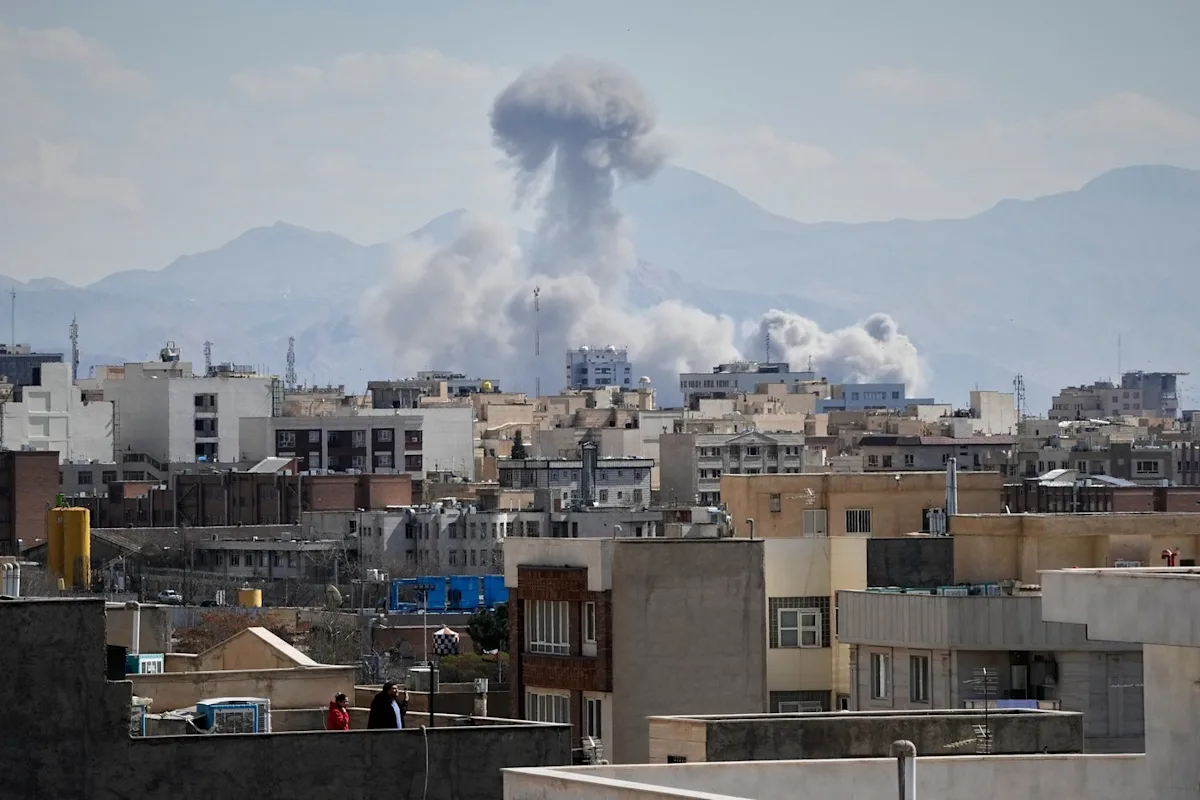
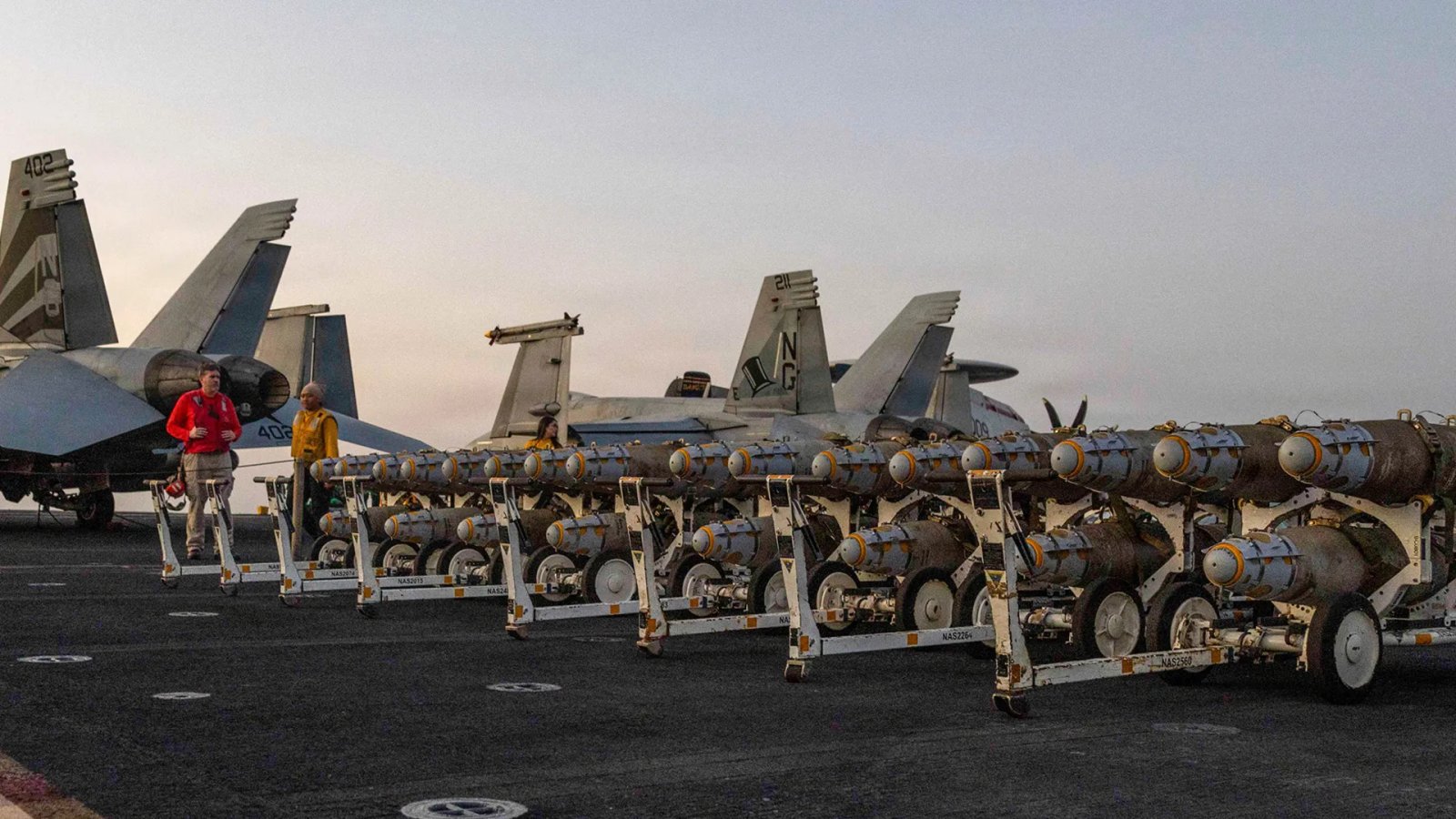
An American attack on Iran, a major oil producer, would also have an effect on prices.
“If things go bad in the world, prices can go up quickly,” said Masson.
“I mean, it’s possible they’ll go down, but there’s also a high probability that they could go up…. This is probably why Alberta has taken the position that they don’t want to make drastic cuts. They just want to see if they can ride this out.”
Future reliance
St-Arnaud pointed to the gap between the price of oil needed to balance the budget and the reality of recent trends.
It’s a perennial problem, leaving the provincial government of the day with the same short-term options: cutting services, running a deficit and raising taxes.
“So we have to start wondering, if that is that break-even price of oil needed to balance a budget, is it too high? Are we too optimistic on that front? And that’s what leads to having, in some ways, what I would call a structural deficit,” he said.
St-Arnaud, Sanderson and Masson all say Alberta needs to get off the roller-coaster of volatile oil prices. For that to happen, something needs to change.
Sanderson said that economic diversification needs to be more than just a buzzword.
“I think a story we are told is that if we just increase production going forward, this will solve our budgetary problems,” he said.
Despite record production, however, the budget is far from balanced.
“It’s a pretty risky bet to continue to be relying on this as your source of revenue to to balance your budget,” said Sanderson.
Masson said governments needed to do a better job of saving money during good times to offset the volatility of resource revenues.
“I’ve been watching this for close to 40 years now,” he said. “We end up doing OK when prices are high, we end up with small surpluses. But as soon as prices go down, we end up with big deficits. And it’s not a happy situation for anybody. We need to find a way to get a better revenue structure.”