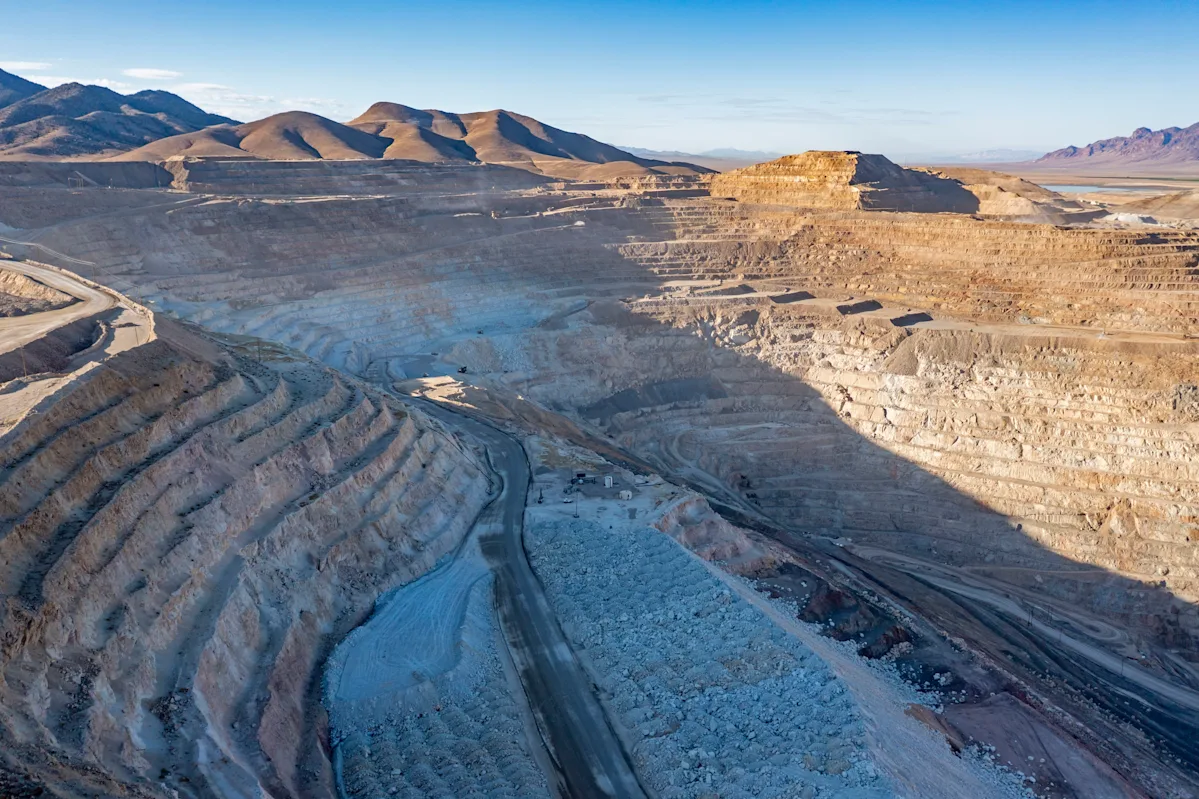
Mining stocks are the new market darlings, fueled by geopolitical risks and AI demand


For the first time in at least three decades, geopolitical risks are triggering a jump in mining stocks rather than a sell-off.

The shift marks the sector’s transformation from a bet on industrial growth into strategic investments linked with security, supply control, and state power, according to Jefferies analysts.

The reversal highlights a broader change in global markets. Where geopolitical risks once meant weaker growth expectations and lower demand for raw materials, investors are increasingly treating conflict as constraints on physical supply — and as a reason to own the assets that produce it.

Over the past six months, investments in the S&P 500 (^GSPC) have returned roughly 8%. Over the same period, the US mining sector (XME) has gained 48%, while internationally, the sector (PICK) has rallied by 57%.

Historically, mining stocks have been connected to global growth, leaving them vulnerable during periods of volatility. Trade wars, military conflicts, and sanctions typically tighten financial conditions, slow emerging-market demand, and delay capital expenditures — all negative for metals consumption and mining companies’ margins.

That relationship has broken down over the past year. The war in Ukraine and the White House’s tariff regime have disrupted global metals flows, while tensions in the Middle East have raised risks around energy and shipping. The ongoing trade war between the US and China has triggered export controls on critical minerals and industrial technologies.

New supply has been constrained by tighter environmental policies in Western countries and resource nationalism movements in Latin America and Africa — such as in the Democratic Republic of Congo, which controls roughly three-quarters of cobalt mined globally.

At the same time, governments are pushing to secure domestic access to metals tied to defense, the energy transition, and electrical infrastructure.

“Geopolitical risk no longer signals falling consumption and instead tends to signal tighter supply, export controls, sanctions, and inventory hoarding,” Jefferies analysts Christopher LaFemina and Giovanni Holmes wrote in a recent client note. That “raises scarcity premiums and effectively reduces miners’ cost of capital.”

Data center expansion has fueled a rise in metals demand. (Myung J. Chun / Los Angeles Times via Getty Images)
Data center expansion has fueled a rise in metals demand. (Myung J. Chun/Los Angeles Times via Getty Images) · Myung J. Chun via Getty Images

Mining stocks are also benefiting on two fronts from the AI boom.

A widespread “AI scare trade” rotation has driven investors out of soft assets — such as software, real estate, and financial services — and into those tied to energy, materials, and physical production.

UBS Wealth Management’s Ulrike Hoffman-Burchardi said on Wednesday that her bank is shifting portfolio allocations away from software and toward mining, power generation, and heavy machinery manufacturing.

Meanwhile, AI infrastructure build-out has sent demand for metals ranging from copper and steel to aluminum and gold surging. Manufacturers are racing to produce data center cooling racks, GPU chips, electrical transformers, and other metals-dependent components.

The convergence of AI demand and geopolitical risks has effectively placed a floor under metals consumption even as global growth remains uneven, analysts argue. The market darlings of the past, software and digital services, can scale with relatively little physical input. But the systems that support AI — power generation, transmission, cooling, and security — cannot.

In a note to clients on Tuesday, strategists at Goldman Sachs argued that sectors heavy on assets but low on obsolescence — so-called HALO businesses — should be a focus for investors. They cited industries like energy grid and pipeline development, transport infrastructure, and long-cycle industrial capacity, such as mining.

“Markets are rewarding capacity, networks, infrastructure and engineering complexity — assets that are costly to replicate and less exposed to technological obsolescence,” the Goldman strategists wrote.

In short, mining is now valued as long-duration strategic infrastructure — assets embedded in power generation, defense supply chains, grid expansion, and the physical backbone of the AI economy.

“Grids, AI data centers, defense, and digital infrastructure all rely on copper, aluminum and other metals,” Jefferies analysts wrote.

StockStory aims to help individual investors beat the market.

Jake Conley is a breaking news reporter covering US equities for Yahoo Finance. Follow him on X at @byjakeconley or email him at jake.conley@yahooinc.com.

Click here for in-depth analysis of the latest stock market news and events moving stock prices

Read the latest financial and business news from Yahoo Finance


Source link

  • Related Posts

    US Job Growth Seen Moderating After Robust January

    (Bloomberg) — US payrolls growth probably settled back in February after the strongest month of hiring in a year, returning to a more moderate and likely sustainable pace of hiring.…

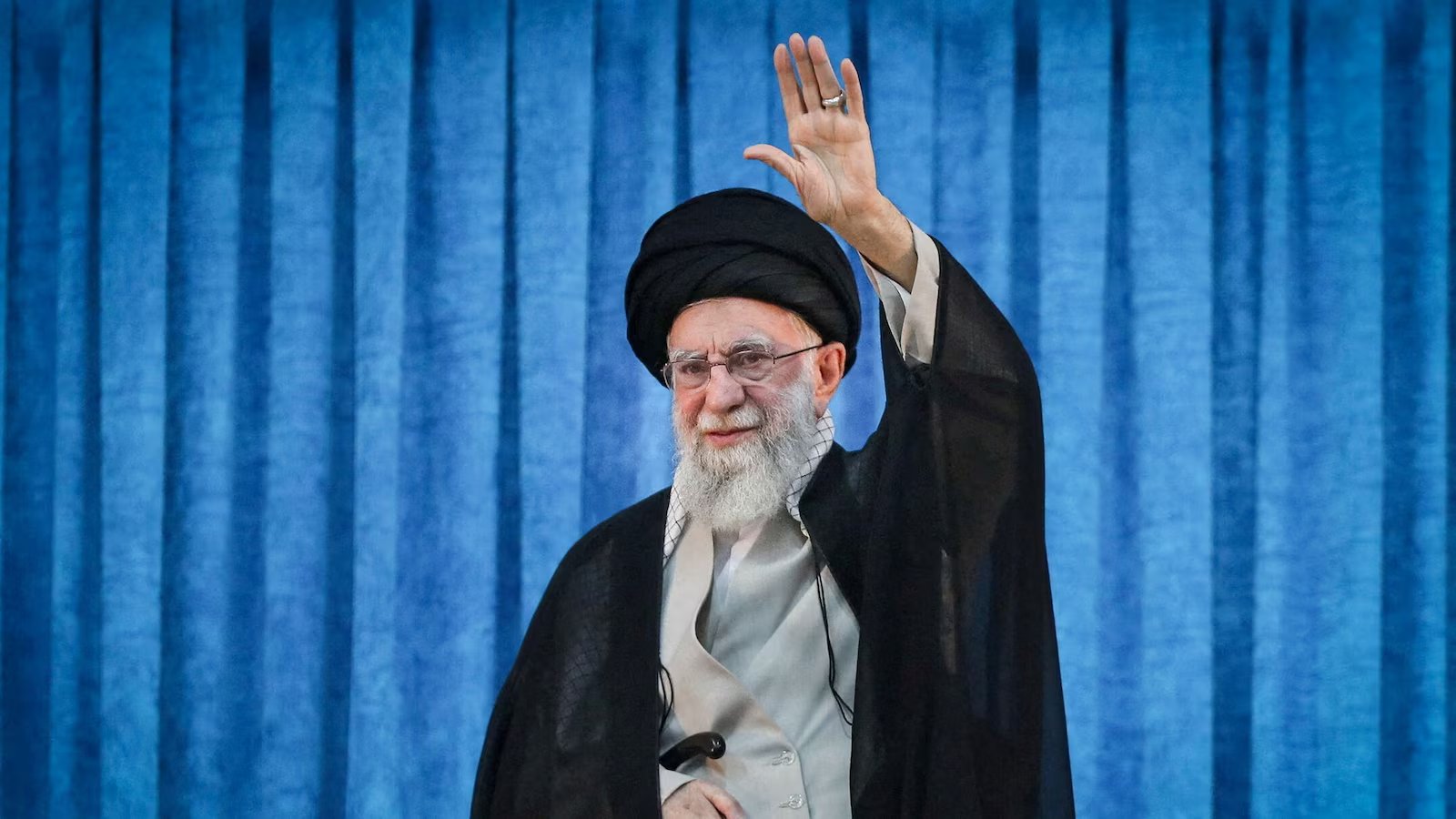
    Trump says Ayatollah Ali Khamenei is dead

    IE 11 is not supported. For an optimal experience visit our site on another browser. Now Playing Trump says Ayatollah Ali Khamenei is dead 00:23 UP NEXT Protesters against attack…

    Leave a Reply

    Your email address will not be published. Required fields are marked *

    You Missed

    A Bloodborne Remake From Bluepoint Could Have Happened, But From Software Reportedly Said No

    A Bloodborne Remake From Bluepoint Could Have Happened, But From Software Reportedly Said No

    US Job Growth Seen Moderating After Robust January

    Israel targeted multiple sites where Iranian officials had gathered

    T20 World Cup: Sri Lanka’s Dashun Shanaka raises then dashes hopes of a win over Pakistan

    T20 World Cup: Sri Lanka’s Dashun Shanaka raises then dashes hopes of a win over Pakistan

    Ayatollah Ali Khamenei, Iran’s supreme leader, is dead, Trump says

    Ayatollah Ali Khamenei, Iran’s supreme leader, is dead, Trump says

    Trump says Ayatollah Ali Khamenei is dead

    Trump says Ayatollah Ali Khamenei is dead