dailynewsnblog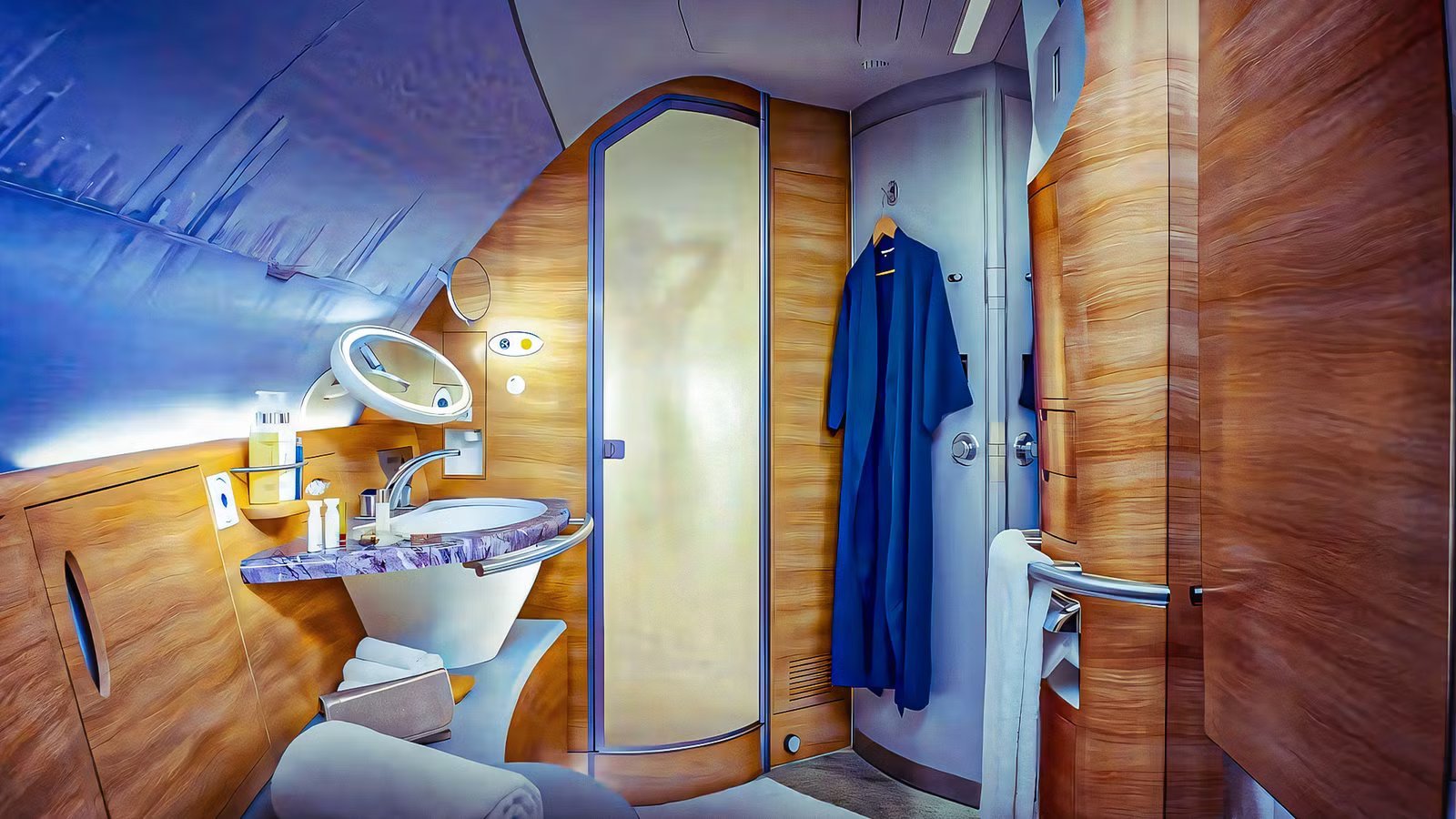
The true meaning of first class has shifted from a premium seat to a holistic, private, and personal experience onboard and off. For the high-net-worth traveler navigating transpacific routes from New York or the heavy-traffic lanes from Los Angeles to the Middle East, the choice usually boils down to the best of the best, widely considered to be  Emirates,
  Qatar Airways, and
  Singapore Airlines. These carriers have spent billions to turn the front of the plane into a sky-high luxury apartment, pushing the boundaries of what is possible at 35,000 feet.
As the Boeing 777-9 finally nears entry into service and the Airbus A380 continues its exit from service as the world’s most beloved giant, the stakes have never been higher for airlines trying to secure the loyalty of the elite. This article will explore the specific advantages of each, clarify the best first class title in a landscape where preferences vary as much as ticket prices, and see how these icons stack up against the rising stars.
3 Airlines, 3 Worlds

There is no single, clear winner in the first class war because the crown depends entirely on what a passenger values most. If you are a traveler who prioritizes physical space and the novelty of a double bed in the sky, Singapore Airlines would be the leader. However, for those who crave the theatricality of an onboard shower and a vibrant social bar, Emirates offers a wow factor that remains unmatched by its competitors.
From a supporting perspective, the choice often comes down to the specific aircraft rather than just the brand name. Flying Singapore’s A380 Suites is a vastly different experience from their 777 first class, just as Emirates’ 777 suites offer a level of privacy that their older A380s lack. Qatar Airways, meanwhile, has positioned itself as the leader for service and dining, often winning over travelers who find the Emirates gold-trimmed aesthetic too loud or the Singapore service too clinical.
Historically, this no-clear-winner scenario is a result of airlines diversifying their strengths to avoid direct, identical competition. Singapore Airlines has leaned into its ‘home away from home’ philosophy with a focus on understated elegance and the ‘Book the Cook’ culinary program. Emirates has doubled down on being a lifestyle brand, turning the flight into a destination itself. Qatar, under new leadership, has recently pivoted back to first class 2.0, focusing on a private jet feel that targets the absolute top 1% of the market, ensuring that each of the 3 carriers holds a distinct, unshakeable niche.
A Difference In Offerings

When deciding which airline is the better option, it is always useful to break down the individual products into four sections: hardware, soft product, ground experience, and route consistency. In general, the hardware often dictates the choice as the physical dimensions of the suite matter most for those 15-hour hauls. Singapore Airlines wins on pure square footage with its A380 Suites, which are essentially small rooms with a separate swivel chair and a standalone bed. However, Emirates counters this with its ‘game changer’ 777 suites that offer floor-to-ceiling privacy and virtual windows for middle-aisle passengers, a technical marvel that uses fiber-optic cameras to beam the outside view into the suite.
The soft product is where the philosophies diverge. Singapore Airlines relies on its “Book the Cook” service, allowing passengers to pre-order lobster thermidor or authentic Japanese kyo-kaiseki meals 24 hours before departure. Qatar Airways, meanwhile, has mastered the on-demand concept with a level of flexibility that feels more like a private chef than an airline galley. Emirates leans into the theater, with service built around the shower spa at 40,000 feet and the Hennessy Paradis cognac, luxuries that prioritize the spectacle of travel over the quiet refinement of its rivals.
Feature | Emirates (777 ‘Game Changer’) | Singapore Airlines (A380 Suite) | Qatar Airways (A380 First) |
Suite Privacy | Floor-to-ceiling doors (Total) | Sliding doors (High privacy) | Open-aisle (Privacy screens only) |
Bed Concept | Integrated lie-flat (Zero-G) | Separate bed and armchair | Integrated lie-flat |
Unique Hero Feature | Virtual Windows | Double Bed (for couples) | Largest onboard social bar |
Dining Philosophy | Theatrical / Multi-course | ‘Book the Cook’ / Personalized | Private Jet / Dine on Demand |
Some might find the Singapore Airlines service familiar in its precision, but the Emirates aesthetic can feel jarringly loud compared to the minimalist luxury of other airlines. This influence of regional taste cannot be overstated, and so the winner is often decided by whether a passenger wants to be wowed or left alone in the most luxurious way possible.

What Are The Benefits Of Flying First Class?
Discover the secrets of first class travel and whether its perks extend beyond mere indulgence.
The Biggest Private Jets In The Sky?

Currently, first class is undergoing a massive ‘private jet-ification’. Badr Al Meer, the CEO of Qatar Airways, recently made headlines by reversing the previous administration’s plan to phase out first class. He has championed a reinvented concept for the upcoming Boeing 777-9 fleet, stating that the demand for ultra-luxury has never been higher. According to Al Meer, the goal is to blend the reliability of a commercial airline with the intimacy of a private jet, a move that experts see as a direct shot at the Emirates’ dominance in the region.
Leading reviewers often emphasize that while the hardware is a contest of inches, the human element is where the winner is actually decided. Reviews frequently highlight that Singapore Airlines crew members are trained to anticipate a passenger’s needs before they are even voiced, a level of invisible service that is a hallmark of Asian hospitality. In contrast, some point out that Emirates relies on its celebrity status, using its brand power and high-octane marketing to convince travelers that the flight itself is a bucket-list event.
Leaning into their specific niches, Singapore on service, Emirates on spectacle, and Qatar on the culinary experience, these airlines are forcing competitors to either innovate or retreat. For the traveler, this means the best airline is no longer a static ranking but a moving target based on whether you want a world-class meal or a world-class nap.
Rising Stars

What many consider to be the absolute pinnacle of luxury currently often belongs to a dark horse that trades gold leaf for European restraint. That is  Air France La Première. Marketed as the world’s most exclusive boudoir, it achieved legendary status by perfecting a boutique experience rather than a massive one. With only 4 suites per aircraft and a signature floor-to-ceiling thick-suede curtain instead of a mechanical door, Air France offers a level of quiet luxury tailored to the US-Europe elite. The true winner for those who value time is the ground experience at
  Paris Charles De Gaulle, where passengers are driven across the tarmac to the aircraft in a Porsche, ensuring a frictionless journey that remains the benchmark for personalized travel.
Over in Asia, Japan Airlines has revolutionized the first class experience with its Airbus A350-1000, featuring the world’s first headphone-free first class seat with integrated headrest speakers that create a personal sound bubble. Not to be outdone, All Nippon Airways continues to offer The Suite on its Boeing 777-300ER, boasting a 43-inch 4K monitor which effectively turns the cabin into a private cinema. These Japanese products represent a masterpiece of precision engineering, prioritizing a silent, minimalist environment that stands in stark contrast to the theatricality of their Middle Eastern rivals.
If the social energy of an onboard bar or the spectacle of a shower at 40,000 feet is the priority, Emirates remains the undisputed choice. However, for those flying the 13-hour haul from JFK to Haneda who prioritize a productive, hushed sanctuary where the staff anticipates every need with invisible service, the Japanese and French options are currently outperforming the others in elite rankings. This shift suggests that today, first class is no longer a single-tier competition of hardware, but a choice between the high-octane celebrity experience of the Middle East and the refined, bespoke intimacy of the European and Asian market leaders.

The 7 Most Luxurious Long-Haul First Class Seats You Can Book Today
Discover the world’s seven most luxurious long-haul first class seats: ranked from JAL’s serene suites to Singapore Airlines’ unmatched A380 palaces.
Complications With First Class

The greatest risk to a first class traveler is, as always, the equipment swap possibility. The top-tier products are only available on a fraction of their respective fleets, and booking a ticket won’t necessarily guarantee the desired option. For instance, Emirates only has fully enclosed 777 suites on a handful of aircraft, and if the aircraft is changed, the airline is under no legal obligation to refund the fare difference. Similarly, the Qatar A380 is the only way to experience their first class, but as the airline awaits the delayed Boeing 777-9, those aging superjumbos are prone to maintenance delays that can result in a downgrade to the still excellent Qsuite business class.
Singapore Airlines and Emirates offer world-class lounges, but the sheer size of Dubai, Doha, and Changi can make a connection feel like a mile-long trek. For the traveler who prizes efficiency, the sprawling nature of these mega hubs can feel more like an upscale shopping mall than a luxury experience. This is where the East Asian carriers like JAL and ANA at Haneda win. They offer a compact, surgical efficiency that gets a passenger from the lounge to the gate in minutes, a stark contrast to the 45-minute transit times often required in the desert hubs.
Many of the features we associate with peak first class, such as the Emirates shower and the Singapore double bed, are tied to the Airbus A380, an aircraft no longer in production. As these planes age, the soft product often has to overcompensate for hard product wear and tear. There has been a rise in reports of non-functional seat motors or lagging IFE screens on older superjumbos.
A Personal Preference

Regarding which airline is truly the best, it’s an open-ended answer as it reflects what you, the passenger, value at that specific moment. If the goal is an unadulterated spectacle and a story to tell at a cocktail party, Emirates remains the king. No amount of minimalist design can compete with the visceral thrill of showering at 40,000 feet or drinking Hennessy Paradis at a semi-private bar. Singapore Airlines captivates customers with its space, and Qatar sets the bar high with its soft product.
Conversely, for the high-altitude purist who views a flight much more critically, the East Asian and European leaders offer a superior product. Air France La Première and JAL’s A350-1000 have successfully decoupled luxury from bling, focusing instead on acoustic privacy, frictionless ground transfers, and a level of service that feels intuitive rather than scripted.
The best airline is the one that actually flies its flagship product on your specific route without the threat of a last-minute equipment swap. Convenience always remains the highest priority for any traveler in first class and, as the lines of premium offerings become ever more distinct, each airline provides something unique. In a world where the hardware is reaching its physical limits, the true luxury is no longer just the seat; it’s the certainty of the experience.