dailynewsnblog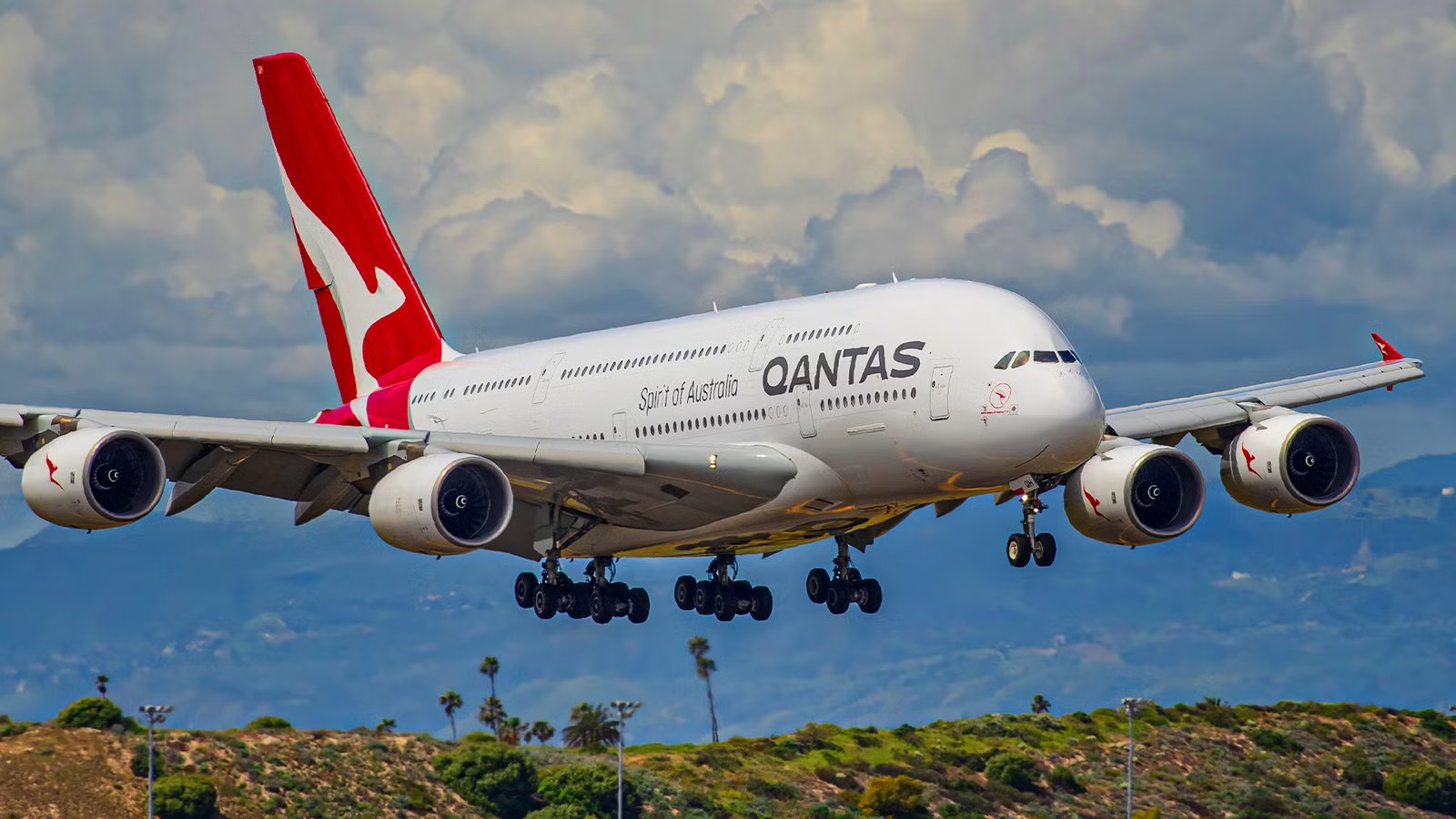
The Airbus A380 was once destined for the scrap heap, but in 2026, it has staged an improbable comeback, serving as the ultimate canvas for aviation luxury. Airlines that operate the type are returning to the idea of mastering the onboard experience, meaning that an interesting competition is starting to unfold. The competition between Qantas,  Emirates, and
  Singapore Airlines represents a particularly interesting battle, where each carrier uses the double-decker’s immense real estate to project a different vision of luxury, making the choice between them a pivotal decision for anyone embarking on a 14-hour transpacific or kangaroo-route journey.
This article will dive deep into the specific nuances of the A380 experience across these three titans, moving beyond the surface-level marketing to look at the reality of their 2026 operations. As Emirates reshapes its highest-capacity cabins and Qantas completes the return of its entire 10-plane fleet to active service, the A380 experience has evolved into a key outlier for airlines, offering something that few airlines have the ability to do.
Distinct Methods For Passenger Experience

The choice between Qantas, Emirates, and Singapore Airlines on the A380 is a difficult one, especially as these airlines offer distinct travel experiences. Singapore Airlines is the space king, offering suites that are beyond those of other airlines in terms of size. However, if the journey is defined by eccentric, almost extravagant features, such as a fully-staffed onboard bar and shower spa, Emirates provides a spectacle that neither of its rivals can match. For the traveler seeking a balanced, refined middle ground, Qantas has successfully used its recent fleet-wide refresh to offer a boutique, high-service environment that combines an excellent first class suite with one of the most comfortable business class seats currently flying.
Singapore Airlines has optimized the A380 by moving its ultra-exclusive suites to the front of the upper deck, creating a quiet, residential atmosphere that feels entirely removed from the rest of the aircraft. Emirates, by contrast, uses the upper deck as a social engine, connecting its 14 first class suites to a lounge that serves as a communal hub for business class passengers. Qantas has carved out its own niche by being premium-heavy, outfitting its superjumbos with 70 business class seats and an expanded upper-deck lounge that prioritizes work and quiet social interaction over the party-like atmosphere found on Emirates.
Historically, these carriers have kept the A380 going by doubling down on these niche strengths. While other airlines retired their A380s during the pandemic, these airlines spent billions on retrofits to ensure their fleets remained competitive through 2030 and beyond. Emirates is currently executing a massive $5 billion program to refresh interiors and add premium economy, while Qantas has reactivated its entire 10-plane fleet to meet surging transpacific demand. This persistence has turned the A380 into a living museum of high-end aviation, where the choice isn’t just about getting from point A to point B, but about which version of the golden age of travel you wish to inhabit.
Premium Heavy Configurations

The wow factor of a shower or a double bed often grabs the headlines, but the day-to-day reality for a frequent flyer usually comes down to the density of the cabin and the reliability of the tech onboard. For instance, a Singapore Airlines suite offers unrivaled square footage, but if you are a business traveler needing to stay connected over the Pacific, the Emirates rollout of Starlink throughout 2026 might be the deciding factor that outweighs a larger seat.
Singapore Airlines and Qantas have optimized their A380s to be premium heavy. Singapore features just 12 suites and 78 business seats, ensuring a high crew-to-passenger ratio. Emirates, conversely, operates several configurations, including high-density versions that can feel more crowded in the lower deck. If you view a 14-hour flight as a networking opportunity or a chance to stretch your legs, the Emirates horseshoe bar is the best option. Qantas offers a more subdued, productive lounge environment, while Singapore has largely moved away from centralized social hubs in favor of absolute in-suite privacy.
Emirates is currently leading the connected sky race with its fleet-wide refresh, while Qantas A380s, despite their excellent seats, still face criticism for a lack of consistent high-speed Wi-Fi on certain long-haul sectors. The influence of route reliability cannot be overstated in the current landscape. As highlighted by recent fleet data, Singapore Airlines has condensed its A380 network to just a few flagship routes like London and Sydney. If your destination is a secondary hub, you are far more likely to be downgraded to a smaller aircraft. Qantas has taken a different approach by dedicating its 10 superjumbos to a fixed schedule of high-capacity routes to  Los Angeles,
  Dallas, and
  London, providing a higher level of schedule certainty for passengers booking months in advance.

What Are The Benefits Of Flying In Emirates’ Business Class On The World’s Largest Commercial Aircraft?
From private pods to onboard lounges, Emirates’ A380 business class is the epitome of luxury.
Big Investments

Airlines are no longer apologizing for the A380’s fuel consumption and are now treating it as a high-capacity experience project on their most profitable routes. As reported by The Chronicle, Vanessa Hudson, CEO of Qantas, recently confirmed that the return of the entire A380 fleet was the largest engineering project in the airline’s history, requiring over 100,000 hours of maintenance per airframe. Hudson has stated that while the upcoming Airbus A350-1000 will eventually lead Project Sunrise, the A380 remains the foundational lift for the high-demand Sydney-to-London and Sydney-to-Dallas routes, providing a level of premium density that smaller aircraft cannot match.
At Emirates, the strategy is even more aggressive. President Sir Tim Clark has committed to a plan that will see 110 operational A380s flying by the end of 2026. He has publicly noted that while competitors are waiting for delayed Boeing 777-9 deliveries, Emirates is doubling down on its self-manufactured interiors. This includes the new Astrova IFE system and Starlink connectivity, demonstrating a move to make the A380 feel more technologically advanced than the newest twin-engine jets.
Airline | Executive Focus | Key Data Point |
Qantas | Fleet Reactivation / Resilience | 10 aircraft fully refurbished and active |
Emirates | Consistency at scale | Goal of 110 active A380s by year-end |
Singapore | Digital agility | S$1.1 billion tech & cabin overhaul |
Expert reviewers often emphasize that while the hardware is a contest of inches, the soft product is where the human element decides the winner. Recent coverage suggests that Singapore Airlines has pivoted its 2026 strategy to focus on invisible service, using AI-driven cabin management to anticipate passenger needs before they are voiced. Conversely, reviewers of the Qantas A380 comeback have praised the airline’s decision to keep its first class suites open rather than fully enclosed, a move that experts say fosters a more personal, less claustrophobic interaction with the crew, a hallmark of Australian hospitality that stands in contrast to the more scripted service on Emirates.
Experience Vs. Capacity

When comparing these A380 products to the broader market, a significant luxury gap has emerged between experience-led carriers and high-capacity operators. While airlines like  British Airways and
  Lufthansa continue to fly the superjumbo, their products are increasingly positioned as premium utility rather than flying hotels. British Airways is currently rolling out its new first suite, featuring a 36.5-inch wide seat and 4K screens, but it lacks the Emirates shower or the Singapore double bed. This has created a two-tiered A380 market where the experience-focused Emirates, Singapore, and Qantas are contrasted by high-volume shuttles that prioritize seat count over social space.
The most formidable competition for the A380 comes from the new era of composite jets, specifically the Airbus A350-1000 and the Boeing 787-10. These newer aircraft offer a distinct biological advantage where they can maintain higher cabin humidity and a lower effective cabin altitude of 6,000 feet, compared to the A380’s 8,000 feet. For the traveler, this translates to measurably less jet lag and dehydration after a 14-hour haul. However, these twin-engine jets are physically incapable of hosting the social infrastructure that defines the A380. A 787 simply does not have the floor real estate for a horseshoe bar or a multi-room first class apartment.
Ultimately, choosing an alternative like the A350 is a vote for efficiency and wellness, whereas sticking with the Qantas, Emirates, or Singapore A380 is a vote for grandeur. We are seeing a shift toward further enhancing the private experience with the upcoming 777-9, which  Qatar Airways claims will benchmark a new level of digital luxury. Yet, the A380 remains the only commercial aircraft that feels like a destination in its own right. Airlines have successfully turned the superjumbo’s inherent inefficiency as well as its vast, unused corner spaces into its greatest luxury asset, ensuring that for those who value the journey as much as the arrival, the double-decker remains second to none.

Why Does Emirates Keep Upgrading Its Airbus A380s?
This article explains why the carrier has chosen to commit so strongly to the A380.
High Profile Charters?

Despite the renewed luxury of the A380, flying the superjumbo carries specific operational risks that can occasionally turn a dream trip into a logistical headache. The most significant exception to the A380 experience is the equipment swap. Generally, airlines operate relatively small fleets of A380 aircraft, Qantas with 10, Singapore with 12. A single mechanical issue can force the airline to swap the A380 for a smaller Boeing 777 or Airbus A350. While these are modern jets, the downgrade is felt immediately, losing the onboard bar, the shower, or the massive Singapore suite in favor of a standard, though still high-quality, first-class seat. In early 2026, Singapore Airlines faced criticism for removing the A380 from its Frankfurt and New York routes, reminding travelers that even flagship schedules are subject to network optimization.
Mechanical reliability remains the aircraft’s Achilles’ heel as the airframes age. Airbus has mandated a critical engine software update for Q1 2026 to address loss of thrust control incidents in the Rolls-Royce Trent 900 engines, a fix that is causing temporary ripples in flight schedules as planes are taken offline for the patch. The sheer size of the A380 makes it a target for unusual operational demands. A very intriguing example occurred in February 2026, when the Puerto Rican artist Bad Bunny chartered a Qantas A380 nonstop flight from São Paulo to Sydney. While this has inevitably brought international attention to Qantas, such massive private charters use up precious airframe hours and engineering resources that could otherwise support the scheduled commercial network.
The A380’s environmental footprint is a growing drawback in a more green-conscious travel market. The four engines of a superjumbo burn significantly more fuel than the newest twin-engine jets. While travelers love the space, corporate travelers whose companies have strict carbon-neutral mandates may look away from such a fuel-thirsty aircraft. Additionally, the A380’s ground experience can be less than luxurious, especially when boarding and deplaning 485 passengers often leads to longer wait times at immigration and baggage claim compared to the more agile 250-seat A350s.
Bigger Is Better?

The Airbus A380 has defied its earlier demise to become the ultimate strategic utility for Qantas, Emirates, and Singapore Airlines. While the aviation industry pivots toward the efficiency of smaller twin-engine jets, the superjumbo remains the only platform capable of delivering the luxury scale that premium travelers now demand. The winner of this three-way battle ultimately depends on your personal definition of luxury.
The golden age of the A380 is arguably happening right now, but it comes with a shelf life. With retirement windows moving ever closer, and the Boeing 777-9 and Project Sunrise A350s arriving in 2027, the opportunity to experience this level of grandeur is narrowing. It remains to be seen if any aircraft in the future will be able to be a like-for-like replacement.
Ultimately, the A380 represents a final frontier where space is not just a metric, but a feeling. Whether it be in an 80-inch Qantas bed, enjoying invisible service on Singapore Airlines, or networking at the Emirates bar, you are participating in a unique chapter of aviation history. In an era of increasingly densified cabins and digital-first service, the superjumbo remains the most soulful way to cross an ocean, reminding us that sometimes, bigger truly is better.