dailynewsnblog
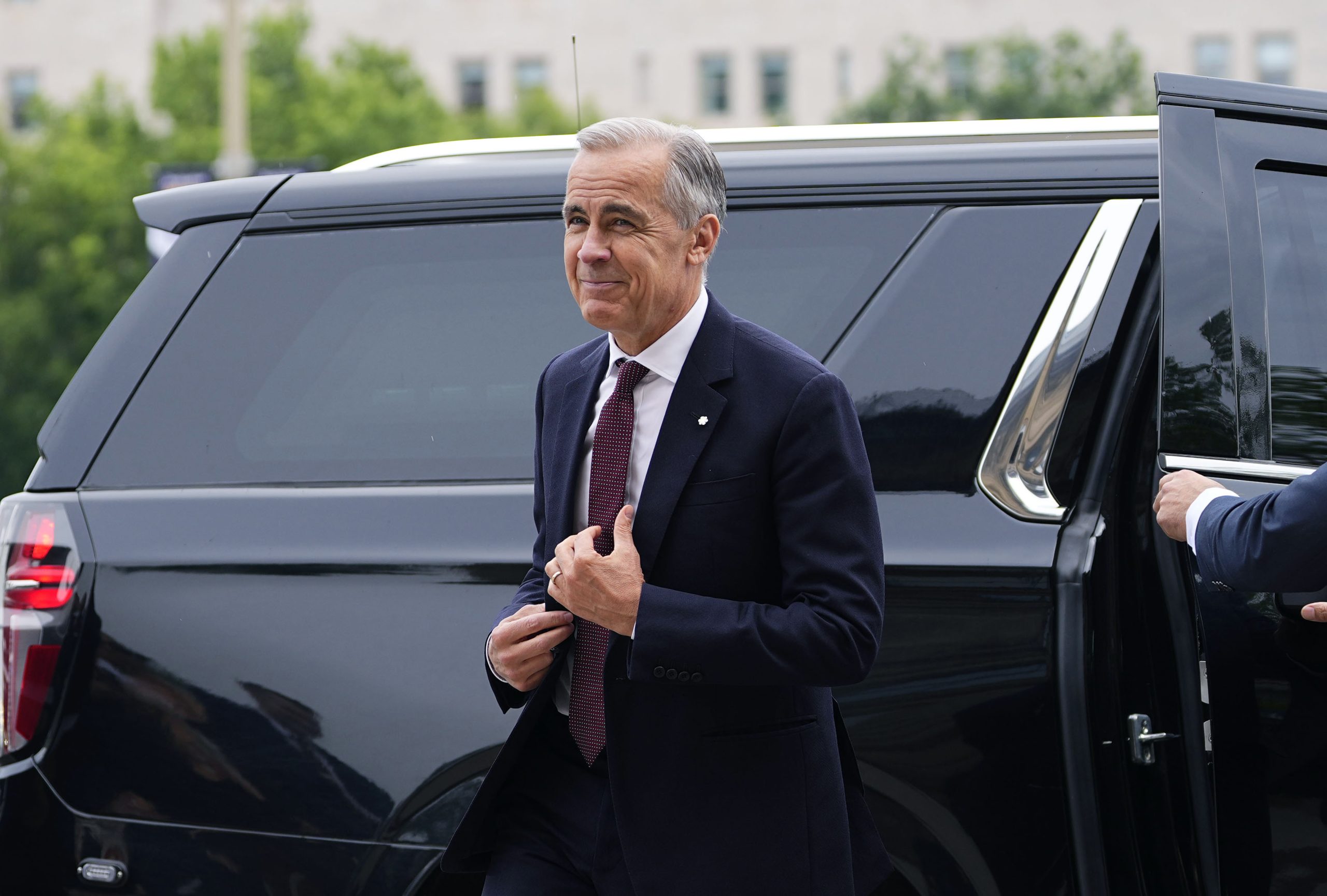
The Carney government’s new electricity strategy remains under wraps, but Energy Minister Tim Hodgson offered a clue as to what the focus might be during an IEA panel: “We are not going to constrain or shrink our way to energy transition.”
Welcome back to Adjournment Proceedings, our weekly long read series. We publish a new edition every Friday. In this week’s edition, we look at how a growing focus on massive nation-building projects could sideline the less glamorous work of saving energy.
Missed a week? Take a look through our archives here.
If you were watching the Winter Olympics in Ontario, you’re likely to have come across the Ford government’s TV commercials touting the plan to protect the province against U.S. tariffs.
The taxpayer-funded ad campaign showed images of highways and pipelines, along with the building of a nuclear facility promising high quality jobs.
There’s a reason the commercial showed the inside of a power plant instead of smaller-scale contractors working to install solar panels or heat pumps.
“Supply side is politically compelling because building new, big, clean energy projects responds to the moment we’re in where Canadians are looking for economic security and future prosperity,” says Amber Bennett, head of Re.Climate, a centre for research and strategy on climate change communication.
The Carney government has leaned into this messaging from the get-go.
“We are going to build great things for Canadians, on a scale and at a speed never seen before – and this is just the beginning,” promised Prime Minister Mark Carney as he began referring projects to the newly created Major Projects Office last fall.
This vision is set to shape the upcoming federal strategy on how to double electricity generation by 2050 to keep pace with projected demand.
That strategy has, so far, been kept under wraps.
Energy minister spokesperson Carolyn Svonkin says it will be released this year, and it will aim to “harness clean energy, decarbonize other sectors, reduce emissions, drive growth, and improve affordability.”

It’s unclear how that differs from the clean electricity strategy released in late 2024, which aspired to do exactly that.
It’s also hard to argue the Trudeau-era strategy is outdated or poorly executed – it accounts for artificial intelligence, and was developed after consultation and engagement with more than a hundred stakeholders, including experts and Indigenous groups.
Treat demand and supply equally
A key principle of the 2024 strategy is the equal treatment of demand and supply: for every effort to boost generation, there must be a push to curb consumption through efficiency and conservation.
Will we see the same principle in the upcoming electricity strategy?
Recent comments by Energy Minister Tim Hodgson at the IEA suggest there could be more of a focus on the supply-side of things.
“We’re going to have to grow our way to energy transition,” he said. “We’re not going to be successful telling our citizens you can’t have X because we need to reduce carbon footprints.”
And he’s onto something, according to Bennett.
“I think talking about increasing supply is smart, strategically. It’s what the government can do,” she said. “And so is being careful about what you’re asking people to do, especially if it’s something they can’t. Strict mandates like the scrapped EV mandates is just not of this moment. Governments are vulnerable to perceived overreach.”
Prioritizing supply plays to federal strengths
Ottawa can tap into taxpayer dollars to help build massive infrastructure like interprovincial transmission lines, while the granular work of demand management – like efficiency programs and local rates – typically falls under provincial and utility control.
Throwing the weight behind boosting supply also makes sense in terms of absolute dollars, as building up supply will cost a lot more than dropping demand.
But demand side policies cannot be neglected, argues Brendan Haley, director of policy strategy at Efficiency Canada.
“Expanding the electricity grid without an equally enthusiastic agenda to save electricity means higher costs for consumers and more pollution from things like gas plants,” he tells iPolitics.
Energy consultant Philippe Dunsky, who is a member of the organization’s governing council, put it this way during a Canadian Climate Institute event on Wednesday:
“We’ll be hamsters on a wheel if all we do is build as fast as we can, but then we keep wasting all this electricity, so we have to close those gaps,” he warned.
The cheapest megawatt is the one never generated
Electricity Canada estimates that a $2 trillion investment will be needed to meet the needs of 2050.
“Sounds expensive? It’s beyond the scope of the traditional utility funding model,” writes the organization in its latest state of the industry report.
The national producers’ group says ratepayers can’t fund this expansion alone, and tax dollars will be needed to bridge the gap.
Higher energy bills going forward are an unavoidable reality, which is bad news for the 34 per cent of Canadians who already struggle to cover electricity costs.
In Ontario, electricity rates jumped by 29 per cent last fall, despite the billions of dollars the Ford government spent to subsidize hydro rates.
The province’s energy board said the increase was caused by higher than anticipated costs in the nuclear sector and higher spending on electricity conservation programs.
And the bill increases won’t stop there. Ontario Power Generation is seeking to double payments for the electricity produced at its nuclear power stations, up to $207 dollars per megawatt hour, as early as next year, reports the Globe and Mail.
In contrast, Haley with Efficiency Canada says that programs and incentives to reduce electricity consumption cost about $30 to $50 per megawatt hour.
“Saving electricity is the lower cost option,” he insists.
Are Canadians willing or able to use less?
Communicating the value of “less is more” can be a challenge, it’s often mistaken for a call for austerity rather than a smarter way to use power.
It’s also a matter of optics, whether for nation building projects or for more local initiatives.
Global facility management firm Equans operates and maintains mechanical systems in commercial, industrial and institutional sectors.
The company’s director of energy transition services, Nicolas Lacroix, tells iPolitics that clients are often drawn to the idea of adding a renewable power source rather than doing an energy audit.
“Installing solar panels might look better for the image of a business, rather than reducing the energy use,” he said.
“Sometimes, having something more flashy is very appealing. But then you show the economics, it makes sense to start with energy sobriety first.”
The key to widespread adoption of technologies that help manage demand – heat pumps, solar panels, battery storage, insulation, smart appliances and thermostats, for example – is making them accessible financially.
“You don’t have to persuade people. You need to make it easier for them to make change,” said Bennett.
“To some degree, technologies are just getting better, and we don’t even need to talk about the climate.”
She adds research has shown it is easier and more effective to do one high-value change (like buy an EV) than it is to make daily changes to one’s energy habits.
Through the new electricity strategy, program designs, and stricter efficiency standards, the federal government has the power to reduce demand for electricity.
Investment tax credits and utility incentives are particularly important, as the move to certain technologies could be financially out of reach for most, especially in a cost of living crisis.
For a federal government with finite resources, the new electricity strategy will be a difficult balancing act.
Boosting supply through new mega projects and an east-to-west grid will require an enormous amount of resources that could easily eat into government supports for less politically compelling demand-side policies.
So how should the Carney government approach this dilemma?
And what role should “using less” play in the upcoming electricity strategy?
Dunsky had a good rule of thumb for how to strike a balance between demand and supply:
“Everything that we can do to free up electrons that costs less than what it costs to build new, we should be doing.”