dailynewsnblog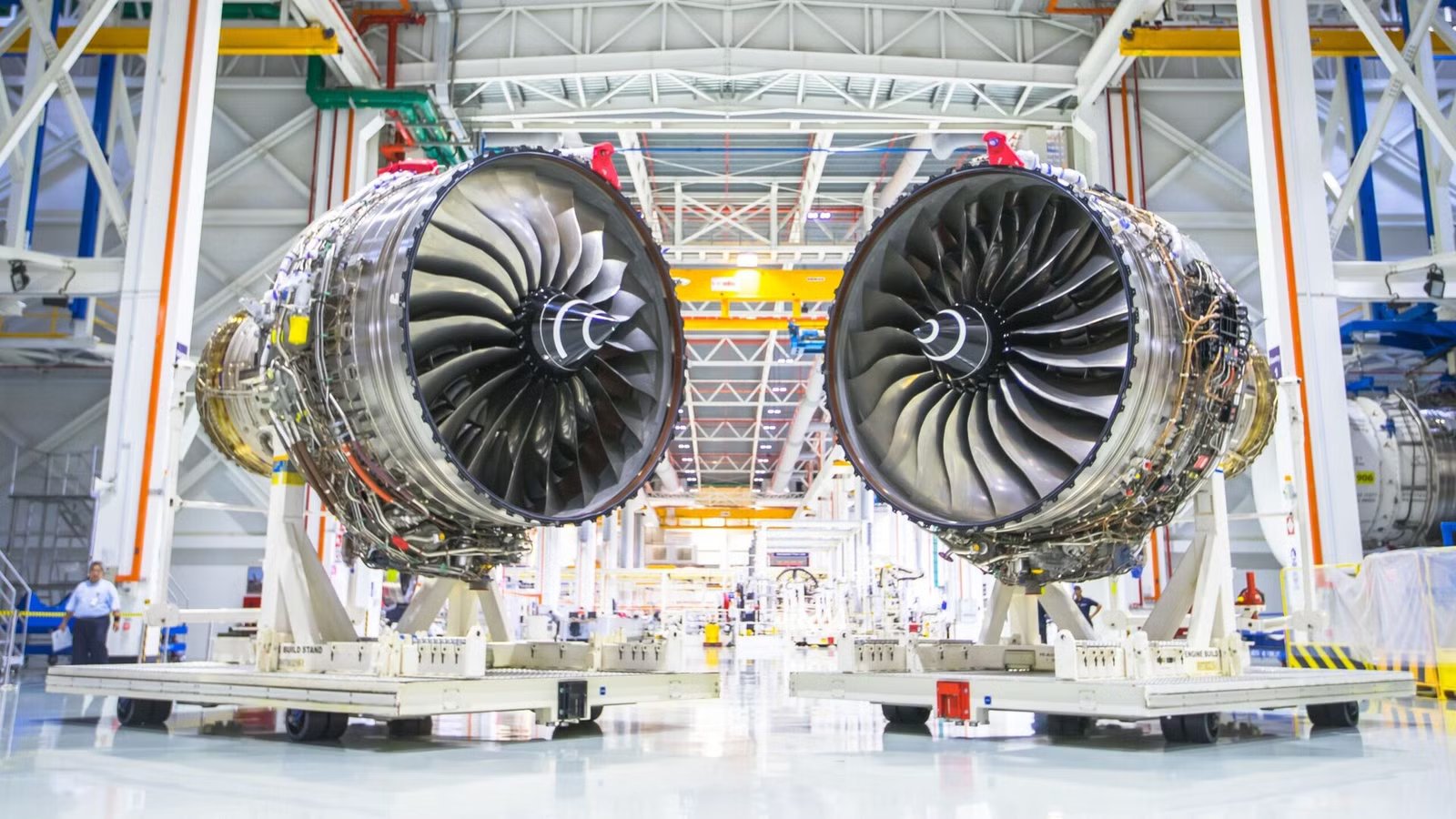
When Rolls-Royce presented its 2025 full-year results yesterday, it was packed with investor-friendly headlines — profits were up, cash is up, and there is renewed focus on shareholder returns. But the most aviation-relevant line wasn’t about margin or guidance. It was a strategic breadcrumb: a clear signal that Rolls-Royce is seeking a route back into the Narrowbody engine market, and that it’s thinking about doing it without going fully solo.
That matters because single-aisle aircraft are aviation’s volume engine. If Rolls-Royce can credibly position an UltraFan-derived propulsion system for the next narrowbody cycle (the aircraft that will replace today’s A320neo and 737 MAX families), it isn’t just “re-entering a segment.” It’s angling for the biggest prize in commercial aerospace, using partnership as the lever that unlocks scale, reduces risk, and makes airlines believe the support ecosystem will be there when the first jets hit the line.
Why Rolls-Royce Isn’t In Narrowbodies Today

Rolls-Royce didn’t drift out of narrowbodies — it exited on purpose. Its last major foothold in mainline single-aisle engines was through the V2500, built by the International Aero Engines (IAE) consortium, and widely used on the Airbus A320ceo family. But as the industry pivoted towards a new narrowbody era, Rolls-Royce chose a clean break, completing a restructuring that removed it from IAE and, with it, a meaningful seat at the narrowbody table.
Today’s narrowbody engine landscape is effectively dominated by two camps: CFM (the GE/Safran joint venture) and Pratt & Whitney. CFM’s LEAP family is exclusive on the 737 MAX and an option on the A320neo family, while Pratt’s geared turbofan (GTF) family is the other A320neo option and the sole engine line on aircraft like the Airbus A220 and Embraer’s E2 jets.
Aircraft | Engine(s) | Who makes It |
|---|---|---|
Airbus A320neo family | LEAP-1A / PW1100G GTF | CFM / Pratt & Whitney |
Boeing 737 MAX family | LEAP-1B | CFM |
Airbus A220 | PW1500G GTF | Pratt & Whitney |
Embraer E-Jets E2 | PW1900G GTF | Pratt & Whitney |
COMAC C919 | LEAP-1C | CFM |
Yet the narrowbody segment is where aviation’s volume lives.  Boeing’s latest long-range outlook projects 33,380 single-aisle deliveries between now and 2043. The comparable forecast from Airbus calls for roughly 33,510 new passenger single-aisle aircraft over the next 20 years. It’s a market that dwarfs widebodies in unit count, and it’s the market Rolls-Royce has watched from the sidelines for more than a decade.
But not any longer. The Rolls-Royce’s reporting contained a remarkably direct statement:
“We see an opportunity to re-enter the large and growing narrowbody market based on our UltraFan technologies. We would look to address this opportunity through a partnership.”
This isn’t corporate posturing, it’s a commitment made to shareholders, a statement of strategic intent for Rolls-Royce over the course of the next decade. So let’s take a closer look at the technology and the potential partnerships that could provide the wedge to get the manufacturer back into the narrowbody market.
UltraFan: Providing The Technological Leverage

UltraFan isn’t a catalog engine that airlines can select tomorrow. It’s Rolls-Royce’s next-generation architecture demonstrator, combining a geared turbofan layout with a large composite fan system, advanced materials, and a new core concept aimed at a step-change in efficiency. The fan system matters because weight is a hard constraint in short-haul economics: a big efficiency gain that comes with too much mass can be self-defeating on single-aisle missions.
The headline enabler is the power gearbox. A geared design allows the fan and the core to run at their most efficient speeds rather than being mechanically locked together. In theory, that means a slower-turning fan for propulsive efficiency and a faster (or otherwise optimized) core for thermodynamic efficiency—without forcing a compromise between the two.
Rolls-Royce is reportedly already working on an UltraFan single-aisle demonstrator engine, and has tentatively scheduled ground testing for 2028. Its possible entry into service is targeted for the early 2030s, right on time for the next generation of narrowbodies. But while UltraFan gives Rolls-Royce a credible technical platform, its partnership approach will be crucial to solving the industrial and support side without pretending it can simply “widebody its way” into the single-aisle world.

Why This Monster Jet Engine Is Crushing Boeing’s Mounting Competition From Airbus
The Rolls-Royce UltraFan could be the powerplant of choice for next-generation aircraft.
The Partnership Play Is The Tell

Rolls-Royce believes the next narrowbody cycle is a window where efficiency and emissions will be central, and where aircraft manufacturers and their airline customers will welcome credible propulsion competition. This is especially the case after the events of recent years, where engine availability, shop capacity, and supply chain bottlenecks have become strategic constraints.
To get there, Reuters has reported that Rolls-Royce is already seeking funding from the UK government for what it is framing as a £3bn ($4bn) new engine project. It wants to start with up to £200 million ($270 million) for the demonstrator, with the promise of more than 40,000 jobs and “massive economic returns.” But beyond that, it will also be looking for a credible manufacturing partner, one that can help make a new engine bankable at narrowbody scale.
MTU Aero Engines is likely at the top of that list of potential partners. It would be an ideal Rolls-Royce collaborator to push UltraFan into narrowbodies because it combines three things that would rapidly make the program credible: deep, proven experience in geared architectures at narrowbody scale, an established industrial footprint for high-rate production and assembly, and a mature aftermarket/MRO platform that airlines care about as much as the engine itself.
So what can we expect in the months ahead? Certainly not splashy headlines. The early signals will be quieter: partner selection (and workshare), demonstrator milestones, government support decisions, and — most revealing — how Airbus and Boeing start talking about propulsion choices for their next single-aisle moves.
Rolls-Royce has already put the concepts on the record: UltraFan technologies, narrowbodies, partnership. The next chapter is whether it can turn those words into a coherent strategy and an industrial system that airlines will trust.