dailynewsnblog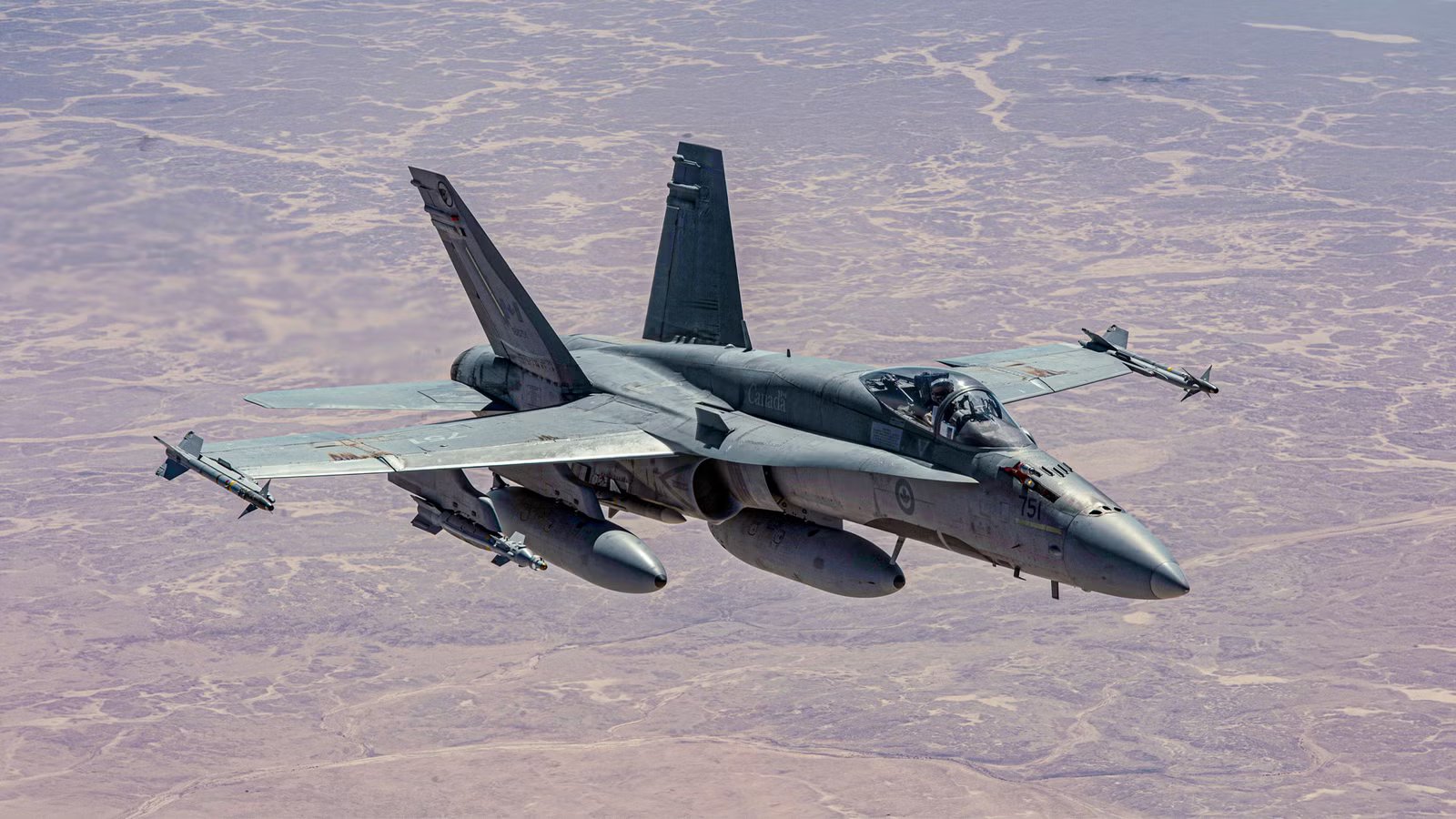
Fighter pilots are among the most visible faces of the Royal Canadian Air Force (RCAF), but their compensation is far less than that of a Hollywood superstar, and details on it are easily available to the public. Pay guides are published by the Canadian Armed Forces (CAF), with compensation rising with rank and years of service. It is also supplemented by targeted allowances and a robust benefits package built around mobility, readiness, and long careers. In 2026, a salary is usually discussed as a monthly base pay in Canadian dollars tied to rank, alongside occupation-specific rates once a member is winged and employed as aircrew.
The government’s most recent adjustments include additional pension benefits and a new Military Service Pay lump sum tied to years served. This also matters because it lifts baseline earnings for all involved and rewards experience in a retention-challenged labor market. The latest published CAF pay tables are effective April 1, 2025, and remain the official baseline used heading into the next annual revision, which will take place this year. We will look to map the RCAF as an organization and explain the main pilot streams, break down junior and senior fighter-pilot pay bands, and then eventually translate the invisible part of compensation, which includes pensions, healthcare, housing support, paid leave, training, and family services. It is thus a timely lens as Canada aims to continue modernizing its fighter jet fleets and competes for aviator talent with the private sector.
A Brief Overview Of The RCAF As An Organization

The RCAF is the air and space element of the Canadian Armed Forces, and it aims to defend and protect Canadian and North American Airspace in partnership with the United States, all while contributing to international peace and security through deployments, exercises, and allied commitments. Structurally, the service is organized around an RCAF headquarters, supported by major divisions and a network of fighter wings and combat squadrons spread all across Canadian territory. After the United States and Russia, Canada has the largest amount of airspace of any nation, giving the RCAF a large-scale and critical air defense mission.
These three divisions report to RCAF headquarters alongside the RCAF Warfare Centre, and the force is built around 15 wings located from coast to coast, with many co-located at Canadian Forces Bases. From an operational perspective, this translates into a mix of standing missions and expeditionary outputs. Examples of the former include aerospace control and air sovereignty management under NORAD, with Search & Rescue (SAR) efforts also falling into this category. Air mobility, surveillance, and combat-capable detachments abroad all fall into the second category.
As of 2026, the RCAF is in the middle of its modernization cycle, with the organization operating legacy aircraft while planning replacements for older jets. Training capacity, instructor pipelines, and retention in specialist trades (such as fighter pilots) are strategic objectives. Thus, fighter pilots are just one piece of a very large and very complex moving system, which includes air defense, training, and space-oriented operations, which are all competing for the same talent pool.
Different Kinds Of Pilots In The RCAF

There are multiple kinds of pilots in the Royal Canadian Air Force. For starters, there are flight officers who operate across different kinds of aircraft, serving different missions, and with completely different career rhythms. After an officer has completed basic officer training and primary flying training, cadets are quickly streamlined into one of a few different advanced paths. Rotary Wing, Multi-Engine, or Fast Jet are all options available to these cadets. Though preferences are taken into account, the decision as to where cadets are funneled is mostly made based on performance, and it largely determines a pilot’s operational track.
Rotary-wing pilots support domestic and expeditionary needs in helicopter fleets, including everything from tactical lift and utility to maritime helicopter operations in support of the Navy. Multi-engine pilots are the backbone of enabling missions, including missions like transport, long-range patrol or surveillance, and air-to-air refueling. Fast-jet pilots will be the topic of this piece, and they are involved in air sovereignty and combat airpower situations, and they are trained for high-performance fighter operations and integrated air defense tactics.
Search & Rescue (SAR) pilots are also important not to ignore, as they form another high-tempo community, and they can be deployed pretty much anywhere in Canada to respond to distress calls, often in difficult conditions. What unifies these different kinds of pilots is a long pipeline of training, with cadets moving to an Operational Training Unit (OTU) to qualify on their aircraft before joining an operational squadron.

What Is The Typical Salary For A Fighter Jet Pilot In The US?
Fighter pilots are exceptionally well-paid.
What Does Pay Look Like For Junior Pilots?

At the junior end of the pay spectrum, an RCAF fighter pilot’s salary depends on where they are in the training-to-operations pipeline. Candidates typically begin as officer cadets or junior officers on the standard officer pay tables before shifting to the pilot occupation pay table once they have received their wings and are formally employed as aircrew. This can be a lengthy process, but this is the place where pilots will really begin to see their earnings grow.
On Regular Force tables, effective April 1, 2025, Second Lieutenants are capable of earning around $5,000-$9,000 per month, depending on their pay level and seniority, with Lieutenants seeing that increase to around $5,400-$11,000. Once a pilot is posted into an operational flying job, the place where most fighter pilots sit, the pilot occupation rates apply at the rank of Captain and above. For Captains on the Pilot scale, base pay starts at $8,861 per month and rises through annual increments.
On an annual basis, this is roughly $106,000 to $144,000 in base pay. Most qualified aircrew will also receive stipends, which sit at around $600 per month. It is also important to note that compensation varies quite significantly depending on an individual pilot’s education, training, and operational placement. Fighter jet pilots may see salaries towards the top end of that range, but this is not true in all cases. Some have consistently argued that higher salaries can be found in the private sector.
How Does Pay Scale For Senior Officers?

At more senior levels, fighter pilots are majors and lieutenant colonels, with flight leads, instructors, operations officers, and squadron-level leadership being their day-to-day roles. The Canadian Armed Forces publishes a separate pilot pay table for pilots who are approaching senior ranks. According to the latest documents, a major will receive $14,644 per month and climb through increments, reaching $18,357 at the top of the scale.
Lieutenant colonels on the pilot scale see even higher monthly checks, starting at $18,172 per month and rising as high as $18,990 across published increments. This translates to an impressive $176,000 to $220,000 per year in base pay, with Aircrew Allowances made available when applicable. Once an officer is promoted to colonel, pay will genuinely be governed by the standard officer pay table rather than anything pilot-specific.
Colonels are listed at around $15,600 to $17,500 per month, and salaries for generals only climb higher from there. In practice, many senior aviators are flying less and leading more, with more experienced pilots taking on standard office roles and leadership positions. Military Service Pay, a “time served” form of compensation, is also offered to these members with many years of service.

A Look At The Salaries Of Commercial Airline Pilots In The US In 2026
Salaries in the industry have continued to rise.
Non-Cash Benefits For RCAF Fighter Pilots

For many RCAF fighter pilots, the biggest value is not the flying pay add-ons but rather the non-cash package that makes this kind of long career very appealing. For starters, pilots get extensive amounts of free time off and healthcare benefits, with CAF recruiting materials highlighting comprehensive health, dental, and vision coverage as well as roughly four to six weeks of paid vacation annually and continuous training from day one.
Then there is the question of pensions. Regular Force members participate in a defined-benefit plan designed to provide retirement income based on pensionable service and age at release. Housing and mobility supports are central because pilots move very often. The Canadian Forces Housing Differential is designed to help members adjust to different kinds of housing markets across Canada.
Education is another hidden benefit that comes along with the program. The Regular Officer Training Plan can cover university costs while paying a salary during training. The CAF ecosystem also provides family support, including Military Family Resource Centers, subsidized fitness and recreation, and structured career-long professional development benefits that rarely show up in head-to-head salary comparisons.
What Is Our Bottom Line?

At the end of the day, being a fighter pilot in the RCAF is an impressive, high-achieving, and high-yielding profession. However, it is very difficult to simply reduce a pilot’s salary to just one number, especially given the amount of variability that goes into the headline figure that enters a serviceman’s account.
Furthermore, there are appealing cases for becoming a fighter pilot for a few years, as well as turning it into a long-term career. Fighter pilots at early stages of their careers have access to impressive and extensive personal and professional development resources. Later on, there are real opportunities to move into leadership roles.
There are still pieces of the story and the argument that relate to whether or not one actually wants to become a fighter jet pilot. Cash compensation is just one of the reasons to take on the job, but it is important to understand that fighter pilots are well compensated because their job is demanding and requires unrelenting commitment.