dailynewsnblog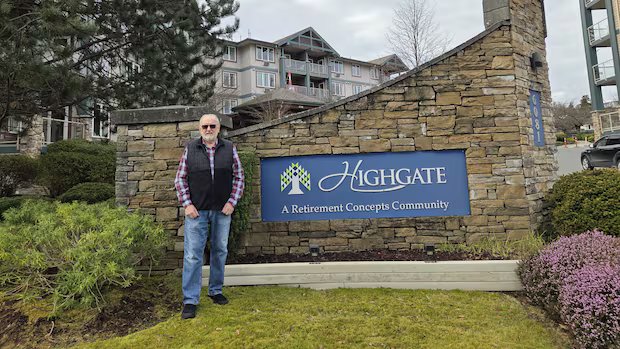

Listen to this article
Estimated 4 minutes
The audio version of this article is generated by AI-based technology. Mispronunciations can occur. We are working with our partners to continually review and improve the results.
When Shane Conn’s rent went up significantly a year after moving into a Nanaimo independent living facility, he was concerned.
The next year, it happened again. He read a pamphlet from B.C.’s Office of the Seniors Advocate suggesting the increases might not be legal.
So he challenged them at the Residential Tenancy Branch, and won.
But the benefits from that win — nearly $9,500 in rent deductions to cover the overpayments and limits on future increases — apply only to him. They don’t apply to any of his neighbours, unless they too go through the same months-long administrative process Conn did.
Which, for the 80-year-old, was a challenge.
“They request a whole variety of different documentation such as a copy of your lease, a copy of our letter explaining why the rent increases had been, I thought, illegal, some rent statements, and I sent that into them,” Conn said. “It’s a long, complicated process. It’s not easy for seniors.”
Conn’s case may have implications for other B.C. seniors in independent living facilities.
Here’s how it played out:
The issue
B.C.’s Residential Tenancy Act limits how much rent can be increased each year for existing tenants. In 2023 and 2024, the facility increased Conn’s rent by six per cent and 5.4 per cent, respectively, according to the RTB decision.
The maximum allowable rent increases in those years under the Act were two per cent for 2023 and 3.5 per cent for 2024.
Conn argued the increases to his rent were more than what was allowed under the Act.
The response
Retirement Concepts, which runs the Nanaimo complex where Conn lives, argued his unit was part of a health facility that provided hospitality and personal health care, a type of residence that is exempt from the Act.
The residence runs on a campus of care model, which means there are independent living, assisted living and long-term care residences within the same community, the company said in its response.
The decision
Conn argued he and his wife live in the independent living section of the community, which means they receive meals and light housekeeping as part of their rent. They do not receive support with health care, such as transportation to and from appointments or assistance with medication. Therefore, he argued they do not live in a health facility and the Act should apply.
The adjudicator agreed.
“I did not find the Landlord’s arguments that the rental unit is located in a Health Facility and that it provides Personal Health Care to be particularly compelling and note that the Landlord indicated that they also operate an assisted living facility and a long-term care facility which neighbour the rental unit. In summary, I find that it can be inferred from the Landlord’s materials and conduct that it was familiar with the Act and aware that the Act likely applied but remained silent in this regard,” the adjudicator said.
Retirement Concepts did not respond to a request from CBC News for comment by deadline.
The adjudicator ordered the company to deduct $9,480 in overpayments from future rental payments and to limit future increases to the amounts permitted under the Residential Tenancy Act.
The reaction
However, this ruling applies only to Conn’s unit. Anyone in the same situation must go through a separate Residential Tenancy Branch process, which for Conn, took a year and a half.
B.C. Seniors Advocate Dan Levitt called the process “cumbersome and very involved.” The fact that seniors have to pursue it individually is disappointing, he said.

“This person might be living in a building, say, with another 99 other seniors … and that the same operator may operate multiple sites. But it only applies to that one person.”
The branch could be more proactive by visiting those sites to find out if the landlord is following the Act with respect to all independent living units, he said.