dailynewsnblog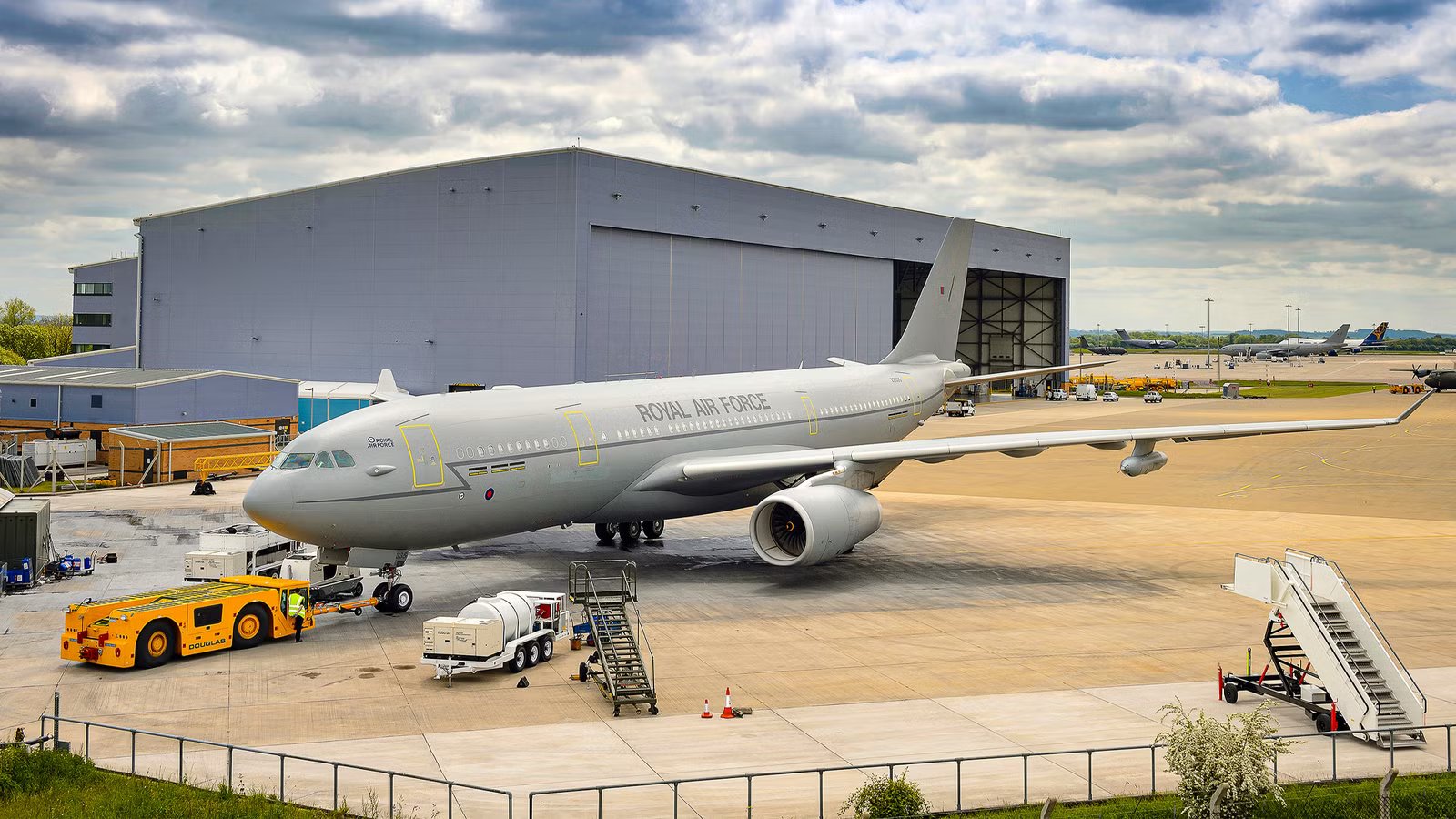
The United States’ growing concern over air base capacity and access in the United Kingdom reflects more than a disagreement between allies over a single military contingency. It highlights a deeper structural issue in how US power is projected overseas: modern American military reach depends not only on aircraft, weapons, and logistics, but on political consent from the host nations. When that consent becomes uncertain, even among close allies, it introduces friction into planning assumptions that have shaped US strategy for decades.
Recent tensions surrounding potential military action against Iran have brought this vulnerability into sharper focus. British reluctance to authorize the use of RAF bases for offensive operations has underscored the difference between physical capacity and political access. For US defense planners, the issue is not simply whether British bases exist or are well-equipped, but whether they can be relied upon in a crisis. This uncertainty carries significant implications for deterrence, alliance cohesion, and future conflict planning.
Strategic Geography: Why The United Kingdom Remains Central To US Airpower

The United Kingdom has occupied a central place in the United States’ military planning since the Second World War, serving as a key transatlantic bridge for operations in Europe and the Middle East. During the Second World War, Britain functioned as the primary staging ground for Operation Overlord in 1944, with over 1.5 million US troops transiting through the country before the Normandy landings. This role was later formalized through NATO and bilateral defense agreements, embedding the UK into the US force network as a dependable base area rather than a temporary wartime convenience.
Its geographic position between North America and Eurasia allows US forces to deploy across long distances without relying exclusively on forward bases in politically volatile regions. Long-standing access to installations such as RAF Lakenheath and RAF Mildenhall has enabled sustained fighter, bomber, intelligence, and aerial refueling operations since the Cold War. While the UK’s overseas territory at Diego Garcia has extended US reach into the Middle East and South Asia. This network provides a rare combination of proximity to likely theaters, hardened infrastructure, and political reliability that few other allies can match.
From an operational standpoint, geography directly affects combat effectiveness. Shorter flight distances from the UK allow aircraft to carry heavier weapons loads, conserve fuel, and reduce dependence on aerial refueling, an especially critical factor given the chronic strain on tanker fleets. Because of these advantages, US contingency planning has long treated the UK as a secure rear-area hub for command, logistics, and power projection rather than a frontline base. When access to that hub becomes uncertain, it undermines assumptions built into decades of doctrine, forcing planners to reevaluate deployment timelines, force distribution, and escalation control at moments when speed and predictability are decisive.
Physical Capacity Exists — Political Authorization Does Not

RAF bases hosting US forces are among the most capable air facilities in Europe. They feature long runways capable of handling heavy bombers, secure fuel and munitions storage, advanced communications infrastructure, and hardened shelters designed for sustained operations. For example, RAF Fairford, the forward operating location for US B-52 and B-1 bombers, has a runway of just over 10,000 feet (about 3,000 meters), suitable for fully loaded strategic bombers. RAF Lakenheath operates a runway of roughly 8,900 feet (about 2,700 meters), while RAF Mildenhall supports tanker and special operations aircraft with similar runway length and extensive ramp space.
However, military capacity alone does not determine usability. Under UK law and bilateral agreements, US forces stationed in Britain cannot conduct offensive combat missions without explicit approval from the British government, as confirmed in recent reports on the Iran contingency. As a result, even the most capable runways operate within a political framework that can constrain or delay their use, introducing uncertainty that US planners must weigh alongside purely operational factors.
For US planners, this distinction introduces strategic uncertainty. A base that exists physically but cannot be assumed politically becomes a conditional asset. In crisis scenarios, that uncertainty complicates operational planning and limits the ability to respond quickly to unfolding events.

How Strategic Air Force Bases Anchor American Air Power In The Pacific
This article will take a look at the utility of US main operating bases and the USAF strategy in the Indo-Pacific.
Domestic Legal And Political Constraints In Britain

British decision-making on military access is shaped by legal frameworks that differ significantly from those in the United States. Allowing foreign forces to launch strikes from UK territory can be interpreted as direct participation in hostilities, potentially triggering obligations under international law as well as domestic legal scrutiny. Unlike the US system, where executive authority is broader, British governments must consider whether basing approval could expose the UK to legal responsibility for the consequences of military action.
Political constraints further narrow the decision space. Since the Iraq War, successive British governments have been wary of appearing to support military operations without a clearly articulated legal basis and, in many cases, parliamentary backing. Public opinion, intense media scrutiny, and the possibility of judicial review all weigh heavily on decision-making, making authorization a politically high-risk choice even when no British forces are directly involved, as in the current Iran case, where Prime Minister Keir Starmer cited breaches of international law.
These pressures are magnified in scenarios involving Iran, which has explicitly warned that countries facilitating attacks could be treated as legitimate adversaries. For British leaders, granting basing access therefore carries not only legal and political risk but also the possibility of drawing the UK into a conflict it did not initiate, transforming a support role into unintended involvement.
Consequences For US Operational Flexibility

US airpower strategy is built around flexibility, the ability to deploy forces rapidly, shift operational emphasis, and sustain pressure over time. Bases in the United Kingdom play a critical role in this model by allowing aircraft to launch closer to operational theaters while remaining outside the most immediate threat environments. This balance enables faster response times while protecting high-value assets such as bombers, intelligence platforms, and refueling aircraft.
When access to these bases is restricted, US forces must compensate by operating from more distant land bases or relying more heavily on carrier-based aviation. Both alternatives impose operational costs. Longer flight times reduce time on station over targets, increase aircrew fatigue, and require more complex mission planning. Carrier aviation, while flexible, is limited in sortie generation and constrained by deck space, weather, and competing mission demands.
Aerial refueling becomes a particular bottleneck under these conditions. Tanker aircraft are finite, high-value assets, and increased dependence on them reduces the number of missions that can be flown simultaneously. Strategically, this constrains both the speed and scale at which the United States can apply airpower, limiting its ability to rapidly dominate the operational environment in the early stages of a conflict.

Why This US Air Force Base Is Considered Unstoppable
Eglin AFB’s massive range, advanced testing and multi‑domain integration make it unmatched in proving and refining US airpower.
Alliance Signaling And The Risk Of A Domino Effect

The United Kingdom’s decisions carry weight far beyond its own territory. As one of Washington’s closest and most militarily capable allies, British hesitation sends a powerful signal that even deep, long-standing partnerships have political limits when it comes to supporting offensive military action. For US planners and adversaries alike, UK caution challenges assumptions about automatic allied alignment in high-risk scenarios.
Other host nations may interpret this stance as precedent-setting rather than exceptional. Governments facing domestic opposition, legal constraints, or fears of regional retaliation may feel validated in imposing their own restrictions if they see Britain doing so without severe diplomatic or security consequences. This is particularly relevant for states hosting US forces under politically sensitive arrangements, where public opinion or regional pressure already constrains decision-making.
From the US perspective, alliances are most effective when access and cooperation are predictable rather than negotiated under pressure. When that predictability erodes, adversaries may calculate that political fragmentation will constrain American responses, weakening deterrence before a conflict even begins and increasing the risk of miscalculation.
Long-Term Strategic Implications For The United States

At a broader level, concerns about basing access in the United Kingdom highlight a structural challenge in US global power projection. While the United States retains unmatched military capabilities, its ability to employ them effectively increasingly depends on political consent from partner governments. Access that was once assumed as a function of alliance membership is now contingent on domestic Politics, legal interpretations, and risk tolerance in host nations.
This reality is pushing US planners to invest more heavily in alternatives designed to reduce reliance on host-nation approval. These include long-range strike systems, expanded carrier aviation, and autonomous or unmanned platforms capable of operating from greater distances. While these options provide strategic flexibility and political independence, they come with significant tradeoffs in cost, sustainment, and operational efficiency compared to land-based air operations.
Ultimately, the issue is not about a single crisis or country. It reflects a future operating environment in which access to allied infrastructure can no longer be taken for granted. For the United States, adapting to this reality means reshaping strategy, force posture, and deterrence planning around a world where political permission is as critical to military effectiveness as raw capability.