dailynewsnblog
Argentina’s senate is poised to approve a sweeping overhaul of labour laws aimed at weakening trade unions and lowering labour costs for businesses.
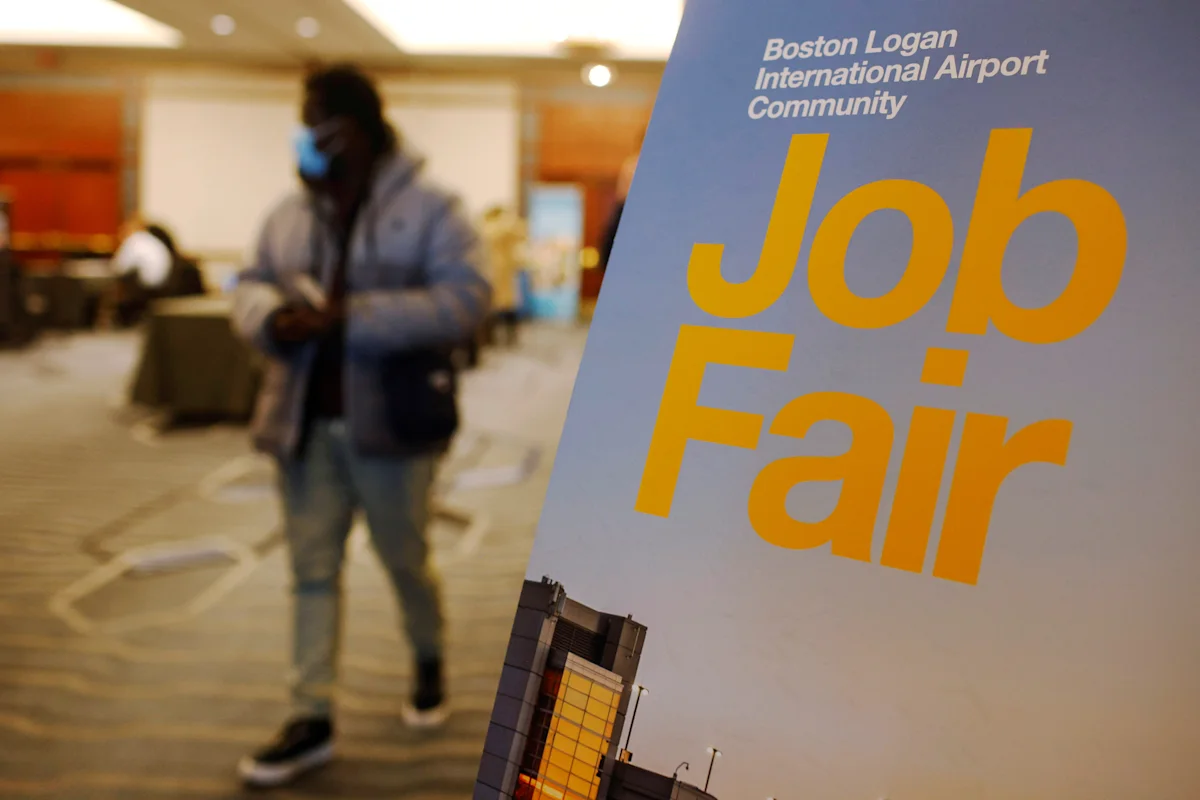
The government of the self-styled “anarcho-capitalist” president, Javier Milei, says the initiative will help revive formal employment, after 290,600 registered jobs were lost between December 2023, when he took office, and November 2025.
But opponents say the measure – which includes cuts to severance pay and extends the maximum working day from eight to 12 hours – would neither increase employment nor improve job quality.
Informal employment is now at its highest level since 2008, affecting more than 43% of workers. The so-called “labour modernisation act” would overhaul longstanding labour legislation shaped by Peronism, the movement that brought Gen Juan Perón to power in 1946.
“It is pro-business, pro-employment and pro-employee. It is anti-trade union and anti-labour lawyers,” said Francisco Paoltroni, a senator from Milei’s ruling party, La Libertad Avanza (LLA).
Juan Manuel Ottaviano, a labour lawyer and academic, described the bill as “unconstitutional”. “It imposes severe limitations on individual rights in the workplace and weakens their protection through trade unions,” he said.
After making gains in October’s midterm elections, Milei’s party secured congressional backing for the reform. The bill has already passed both houses and returns to the senate because of an amendment introduced in the lower chamber – the elimination of a widely repudiated article that reduced wages during sick leaves, even in cases when workers were suffering from life-threatening conditions.
The legislation would allow companies to negotiate directly with employees, potentially overriding sector-wide collective agreements. In Argentina, unions typically represent workers nationwide within each industry, seeking to standardise wages and benefits across regions. The reform would also reduce dismissal costs by creating a severance fund partly financed by the state and by excluding bonuses from compensation calculations.
It would eliminate specialised national labour courts and introduce an “hour bank” system that limits overtime pay. Although the weekly working limit would remain 48 hours, daily shifts could be extended to as long as 12 hours with a mandatory 12-hour rest period.
The vote comes as manufacturing struggles amid import liberalisation and weak domestic demand. According to the national statistics institute, factories are operating at just 53% of installed capacity.
On the eve of the bill’s debate in the lower house last week, the 86-year-old tyre manufacturer Fate announced it would shut down.
“We are talking about lengthening working days while the most advanced countries are reducing them,” said Alejandro Assumma, a worker at the plant and representative of the tyre workers’ union, Sutna. “This reform means more exploitation and fewer rights,” said Assumma, adding that some of his fired former colleagues are now Uber drivers or resellers.
Martín Rappallini, head of the Argentine Industrial Union (UIA), which represents manufacturers and helped draft the bill, said protests would be “very, very limited – they will not be able to occupy factories or block access”. Such actions, he added, had been common under “the previous regime, where excesses and far-left situations were allowed”.
Rappallini acknowledged that the reform “won’t create jobs overnight” but said it would provide “predictability for labour relations in Argentina”.
As Congress debated the legislation over the past two weeks, clashes broke out in the streets. Police fired rubber bullets at protesters and journalists, while some demonstrators threw a molotov cocktail near officers. Last week, the country’s main trade union confederation, the General Confederation of Labour (CGT), called a general strike. Carlos Alberto Dawlowfki, a 76-year-old retiree, was among dozens detained in the demonstrations in front of Congress.
“It was very painful to see them shooting young people who were 18 or 20,” Dawlowfki said. “They grabbed them with rubber-bullet shotguns – boom, boom, boom – they shot them.” None of the bill’s more than 200 articles, he added, “are for the worker”.