dailynewsnblog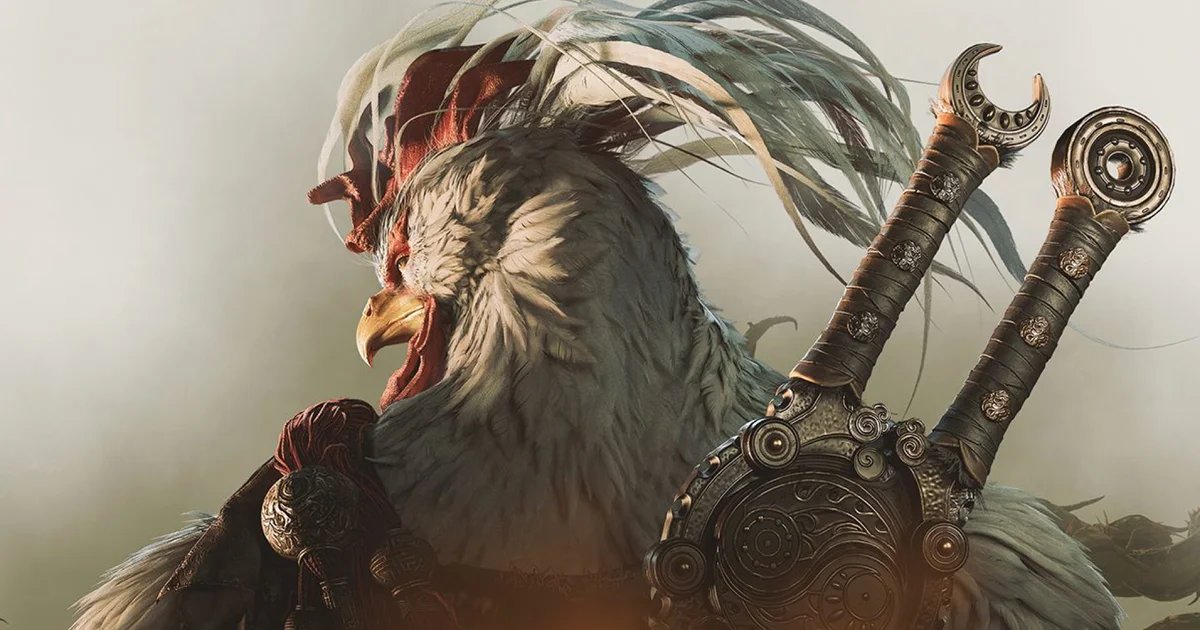
If you’re not up on your South Korean pop culture, there’s a decent chance you might have been a little surprised to see a musclebound bipedal chicken take centre stage when publisher Krafton unveiled Project Windless earlier this year. But if you’re already familiar with author Lee Youngdo’s wildly popular (in South Korea, at least) high fantasy series The Bird That Drinks Tears, it probably made a lot more sense. That lack of global familiarity with Project Windless’ source material is something Krafton is all too aware of, and something it’s eager to remedy. Which is why – despite Windless seemingly still being some way off – I recently found myself having a chat with project lead and veteran Far Cry series director Patrik Méthé to find out more.
Windless is not – despite having its origins in a hugely popular high fantasy series that’s yet to break the west – the “Korean Witcher”. Yet that’s how the project first caught Méthé’s eye after he left Ubisoft. “It’s a long story, he explains. “It was purely a classic case of someone poking me on LinkedIn… and there was a link in the contact… and it brought me to an article [which said] something like, ‘The creator of PUBG is looking to do the Korean Witcher’, and for me, it was like, ‘Whoa, okay. I’m very interested in that.'”
Watch on YouTube
Project Windless reveal trailer.
As it happened, those press comparisons were a little premature. Méthé eventually learned that while Krafton had secured the rights to The Bird That Drinks Tears series (the publisher’s CEO is reportedly a big fan) the specific direction of the project had yet to be determined. “Basically,” Méthé explains, “Krafton launched [the Montreal studio where he now works] because they wanted our expertise… They were like, look, we have this IP – what can you do to bring it into the Western world, knowing that in Korea, it’s already very well known? What can you do to bring it to as many people as possible, so that everyone discovers this incredible universe?” And from there, Methe and his team were given “a lot of freedom” to shape the game.
This would be Methe’s first encounter with The Bird That Drinks Tears; a series that, having now read a “very rough” in-house English version, he calls, “so far from the tropes that we know from more Western culture” and “fresh.” And as to how that might translate to a video game, the team “considered different approaches,” he explains, but the decision to focus on the series’ bird-like race, known as the Rekon, came about surprisingly organically. “At the time [we were brainstorming],” Méthé continues, “the studio was very, very young. So every week we were interviewing candidates to join the adventure. And we had different books, concept art about the novel… and every time a candidate would come, they would look at the book, and look at some of the characters of the story, and they would say, ‘No matter what, I hope I can play this character’. And it was a Rekon, everyone was really intrigued by this huge, half-bird humanoid, so it helped us refine [our angle]. There was one very mythic [Rekon] in the universe… so that’s where we slowly but surely started to lean toward this idea.”
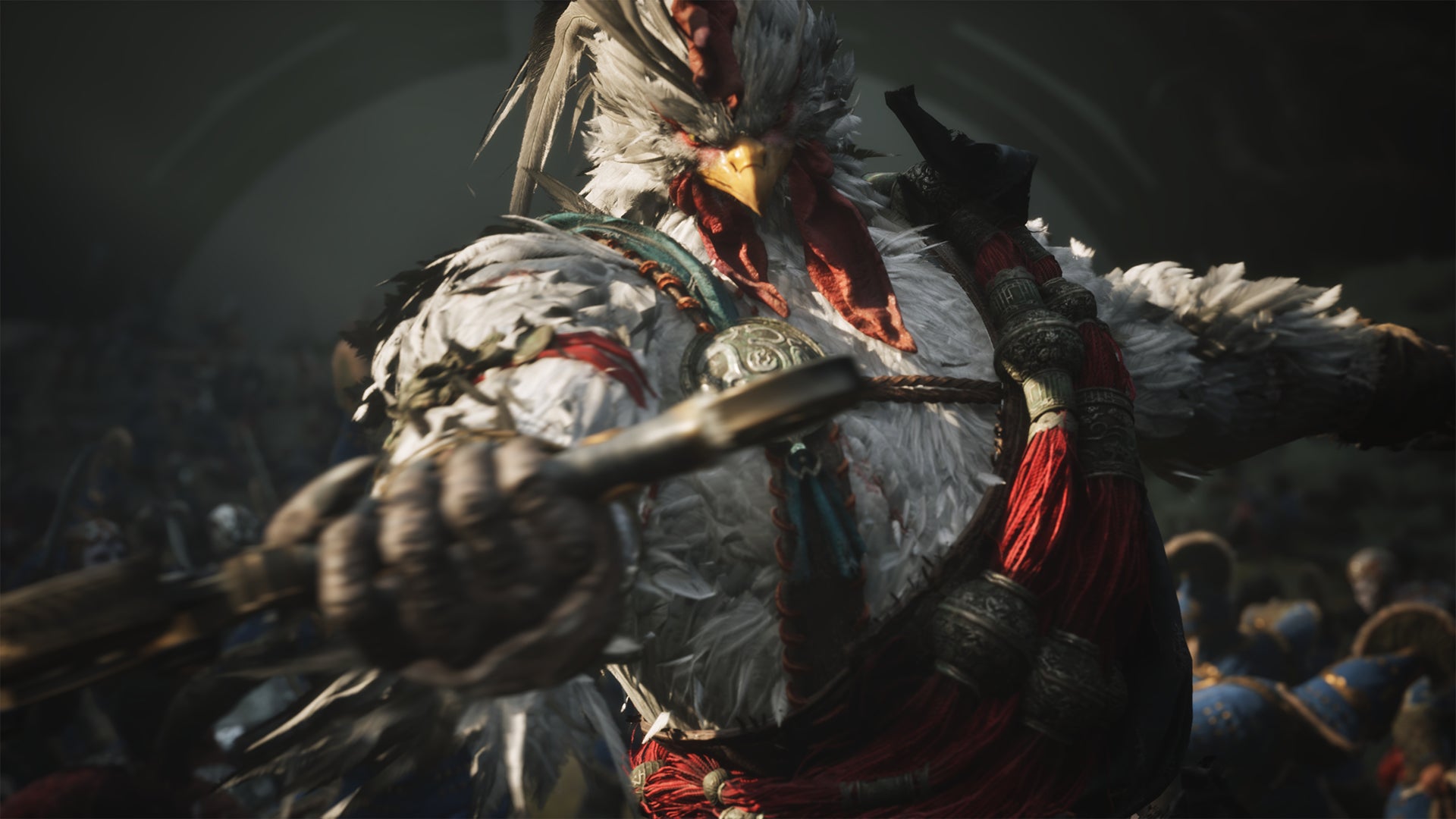
Officially, Project Windless is an open-world adventure with “one-versus-many combat fantasy”, and its debut trailer immediately drew comparison with the likes of God of War and Dynasty Warriors. But Méthé says that while he can “understand” how people might have reached that conclusion, he still feels “that we’re very different from these games”. And one major differentiator is that fact Project Windless is “a game about war” and “not just [as] set-dressing”.
“For us,” Méthé explains, “it’s part of the economy of the game. Every action that you’ll do, every action that you won’t do, will have an impact on the outcome of what’s going on on-screen. And you are very, very powerful as a Rekon [but] you’ll still need the help of other people. So it’s the universal need of helping each other and creating those alliances that will help you prevail.”
And more than that, players “are creating [their] own myth.” Project Windless’ protagonist, the Hero King, isn’t just strong, he’s the “mightiest of them all” and so the team is playing into the “notion of being a myth”. 1000 years after his time, the Hero King remains the stuff of legend, but “everything that he did, and the order in which he did it is unknown”. This allows Project Windless to give players “as much freedom and liberty as in open world games, but all of that while having huge impact and having to face huge armies like you see in other types of games.”
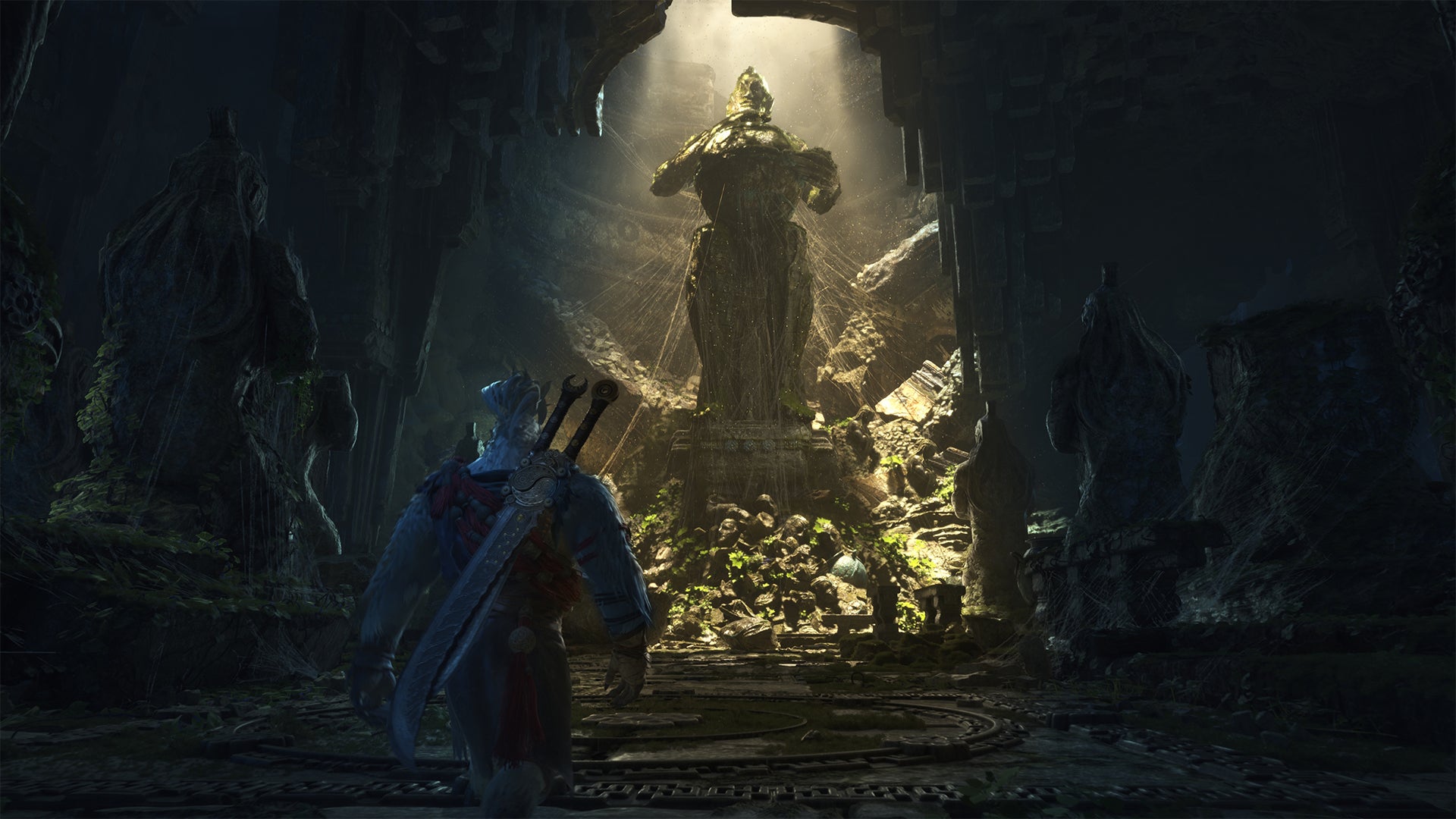
And then there’s the Hero King’s inherent strength. When you’re playing someone who’s the “mightiest”, says Méthé, “it’s a really different mindset. So the first time you take the controller and you start to turn the corner and you see 100 units rushing at you, your reflex is to back up a bit, and then you realise, ‘Oh no, okay, I’m a legend.’ Which isn’t to say you can’t become more of a legend. “You’ll still have your progression,” explains Méthé. “You’ll still unlock new abilities, new equipment. But the main difference is that, right from the get go, you can take on 30 enemies at once, and it’s not such a big challenge.” All of this together, says Méthé, creates “a mix we’ve never seen – at least I’ve never played that kind of game where the combination of those ingredients creates that feeling.”
As for the kind of rhythm players can expect from Project Windless’ action, Méthé is only willing to share a little right now. “I don’t want to spoil too much at this point,” he says, “but once again, for us, respecting the notion of a true world at war is very important. So there’s the [reptilian] Nhaga army that’s invaded the place… and at first you’re quite alone, because the army [has] succeeded at overwhelming the humans and… a few of the Rekon. And it’s up to you to decide, okay, what do I do? If I go to the east, I know there used to be a tower in that direction. Maybe I can find an ally over there. There used to be a huge human settlement… Maybe I will go there, because [their] catapult could help me later on, and each player will then figure out and create and carve their own journey, to find the best way to repel – or at least to try to repel – the enemy army.”
As a veteran director on Ubisoft’s Far Cry series, Méthé does, of course, know his way around an open-world game, and I ask him how his experience is helping shape Project Windless. For him, it’s not just about knowing what to do in an open-world game, but what not to do too. “So one thing we’re discussing every week,” he elaborates, “[is] we want to make sure that nothing is imposed on the player. We don’t want a checklist. We create the world, we create the context – the war is happening – and we want to let the player be as free as possible while doing that.” But beyond that, Méthé says it’s also crucial to make players care. “And to care,” he continues, “means that the protagonist, their motivation, needs to resonate with you as a player. But also it means the antagonist needs to be someone that you love to hate. And those are the two elements I would say we’re always keeping in mind and working on.”
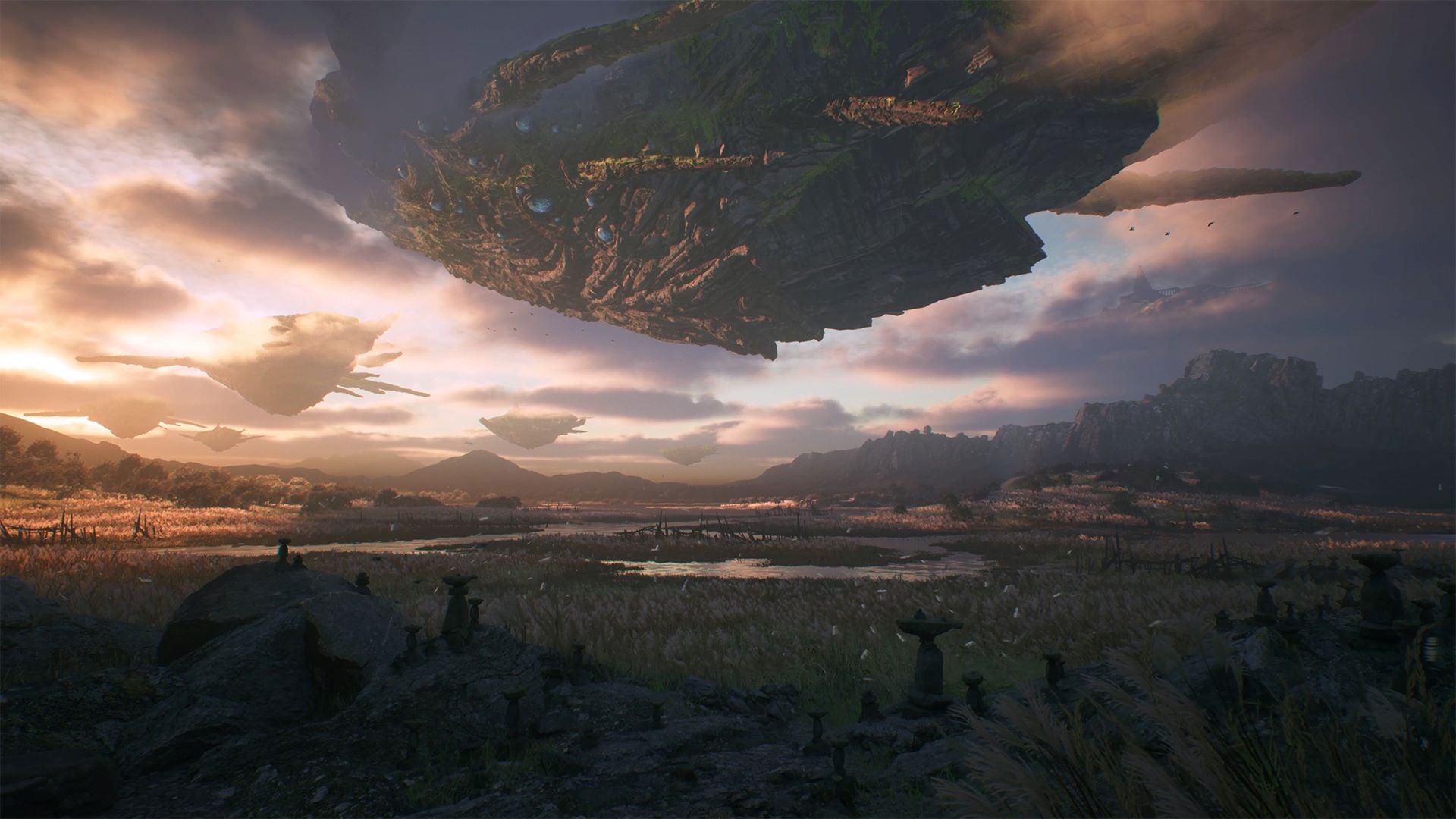
How all this will come together in the end? It may be a while before we find out. Project Windless (officially just a codename at present) has been in development for “a few years” and is currently “somewhere between conception and alpha”, or “pre-alpha” as Méthé puts it. Even so the team is “super proud” of the public reception to Windless’ debut trailer. “We’re a mix of veterans and people working on their first game,” he explains. “So for me it was almost emotional to see the reaction of some of our members, and realise, wow, it’s the first time that they’re seeing [this], because at the end of the day, we do this job [to create emotions among players]. And we got a lot of [positive] emotions following the release, so we couldn’t be more happy.”
When we’ll see more of Project Windless is unclear, but for those interested in its origins, The Bird That Drinks Tears’ English translation releases this June.