dailynewsnblog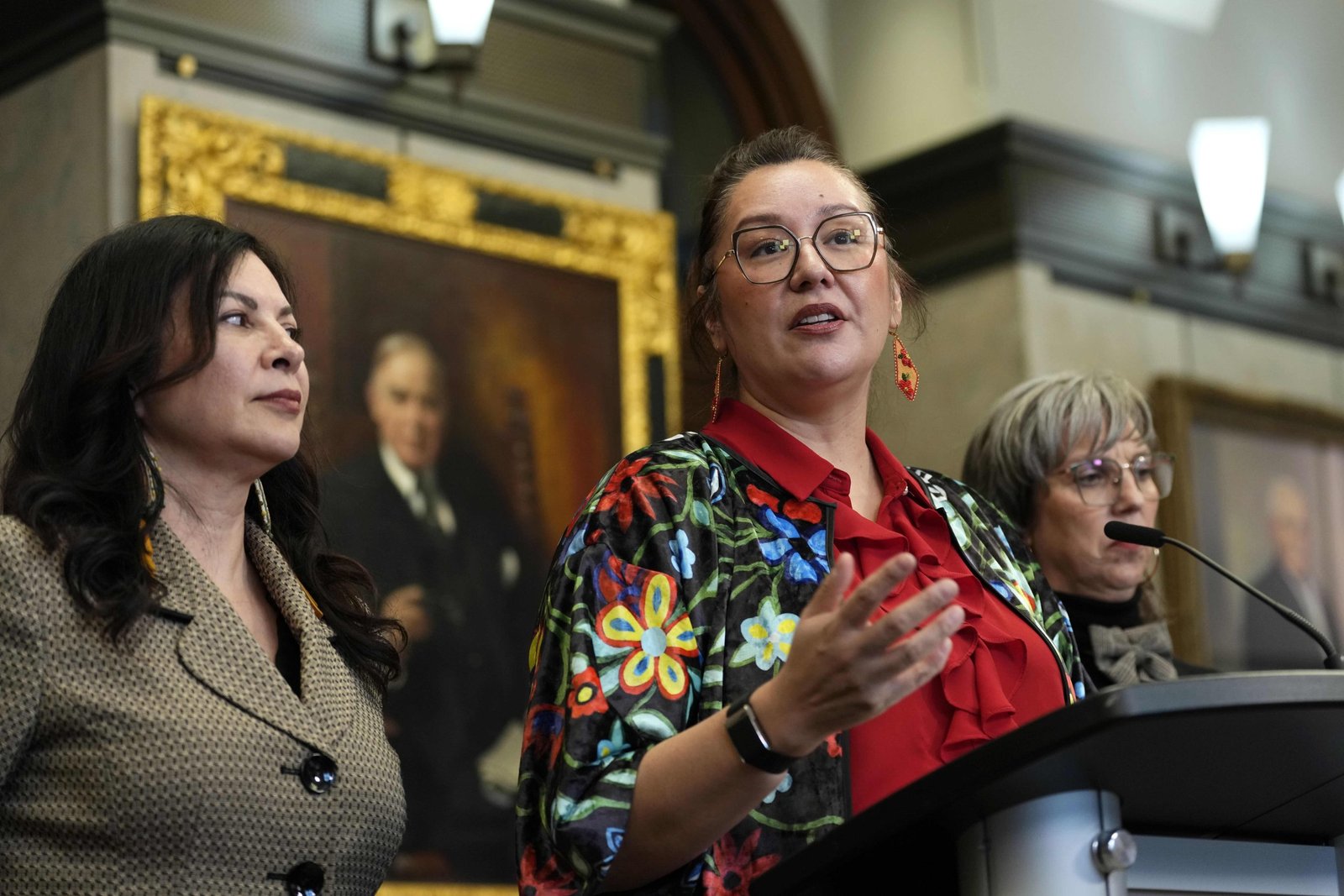
Speaking to reporters on Thursday, she said it was important for the government to move ahead with consultations with First Nations on the issue but refused to disclose if the Liberals would remove the Senate amendments now that Bill S-2 has been sent to the House of Commons.
Indigenous Services Minister Mandy Gull-Masty says the Senate introduced “a very complex and intricate dialogue” by making changes to government legislation to end the controversial second-generation cutoff.
Speaking to reporters on Thursday, she said it was important for the government to move ahead with consultations with First Nations on the issue but refused to disclose if the Liberals would remove the Senate amendments now that Bill S-2 has been sent to the House of Commons.
“We need to hear from First Nations. I hope that they will come and participate to witness at the committee study,” she said in response to a question from iPolitics.
“It is a really important bill. There’s going to be big decisions to be made.”
The second-generation cutoff denies Indian status to people who had a non-First Nation parent and grandparent. It has been criticized as a colonial policy that allows Ottawa to determine who qualifies as Indigenous and designed to limit the government’s obligations to status peoples.
It was introduced in amendments to the Indian Act in 1985 that ended the practice of enfranchisement, whereby First Nations people who wanted to own land, vote or enjoy other rights had to give up their status.
But those changes didn’t allow people whose ancestors were enfranchised to obtain status or pass it down to their descendants.
The Liberals introduced legislation in 2022 to repeal this rule but it died on the order paper when Parliament was prorogued in early 2025.
As originally drafted, Bill S-2 was virtually identical to the previous legislation.
But senators passed amendments that would end the second-generation cutoff and allow status to be passed on to a child if at least one of their parents were recognized as having status.
The amended bill was tabled in the House in December and second reading debate is set to begin on Friday.
The House’s Indigenous and northern affairs committee began a study earlier this month on issues related to the Indian Act registration. It remains unclear how or if that will tie into the House’s work on S-2.
The Liberals haven’t signalled if they will support the Senate changes and said more time is needed to consult with First Nations rights-holders.
The government has started seeking submissions on the issue that they say will then be reviewed by a panel of First Nations experts. Once completed, the submissions would then be packaged into a guide for consultations at a series of First Nations-led events that are expected to start in the spring.
Critics accused the government of using the consultations as a delay tactic, with other changes in S-2 facing a looming court-imposed deadline.
A B.C. Supreme Court ruling last summer found the existing rules on enfranchisement violated the Charter and gave the government until the end of April 2026 to end the practice.
Gull-Masty said Thursday that the court deadline was the main driver in tabling S-2 and the government’s goal remains to “ensure that we’re supporting that community and those members to be able to receive their status.”
She said it will be up to the House Indigenous committee to determine the fate of the bill.
“What the outcome is and what the vote of that bill is going to be, I’m looking forward to seeing it.”
One of Canada’s largest Indigenous groups has already pulled out of consultations on the second-generation cutoff, accusing the government of working to delay ending the contentious law.
In an email sent last week and shared with iPolitics, the Union of British Columbia Indian Chiefs called the justification for further consultation “extremely unclear” and expressed concerns about the “further politics of delay, which only serves to enrich Canada financially.”
“The consultation process is a clear conflation of status, membership, citizenship, and self-government, which are all separate legal issues,” read the email, attributed to UBCIC president Grand Chief Phillip Stewart, vice-president Chief Linda Innes and secretary-treasurer Chief Marilyn Slett.
Gull-Masty said the consultations are needed because there are “varied” perspectives on the rule amongst First Nations.
Some First Nations supported the Senate changes to bring in a one-parent rule, while others were in opposition “because they want to do the important work of identifying their membership list,” she said.
with files from Sydney Ko