dailynewsnblog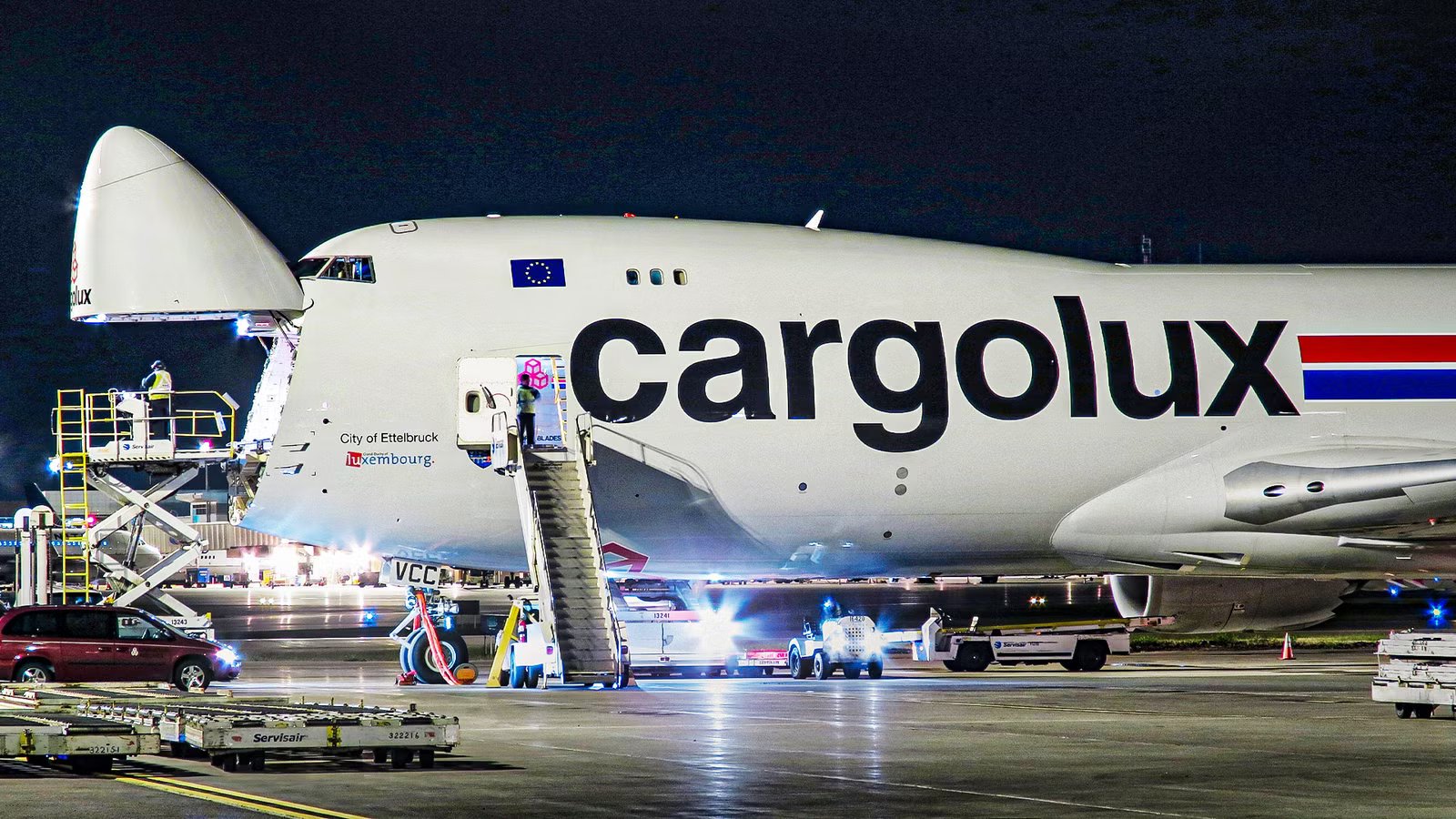
While the sleek lines of modern twin-engine jets dominate today’s taxiways, the Boeing 747 Freighter remains an unmistakable titan of the skies, largely due to its massive, upward-swinging nose door. This specialized entrance allows the Queen of the Skies to swallow everything from industrial turbines to 40-foot pipes, serving as a critical link in the global supply chain that most other airframes simply cannot replicate.
The origins of this unique feature date back to the mid-1960s, a period when Boeing’s engineers were gripped by the belief that subsonic passenger travel would soon be rendered obsolete by supersonic transport. This guide explores the engineering genius and the historic gambles that led to this design, explaining why this 60-year-old concept remains the industry favorite for heavy-lift logistics.
Origins Of The Hump

The development of the Boeing 747 was less about creating a passenger icon and more about surviving a perceived shift in aviation technology. In the mid-1960s, the industry was convinced that the future of travel was supersonic, leaving the 747 as a temporary solution for the mass market. Consequently, Joe Sutter and his team designed the airframe with a cargo-first mentality, ensuring that even if passengers moved to faster jets, the 747 would have a second life as a premier freighter.
This is the primary reason the 747 looks the way it does. Engineers realized that to maximize cargo efficiency, the aircraft needed to be loaded from the front to accommodate long, indivisible loads. However, placing a door at the nose meant the cockpit couldn’t stay in its traditional position. By moving the flight deck above the main deck, they created the famous hump, allowing the entire nose to hinge upward and provide a direct path into the cavernous hold. This was a radical departure from the narrow-body freighters of the era, which relied on restrictive side-loading doors.
The gamble paid off in ways  Boeing never fully anticipated. While the supersonic dream largely stalled due to high costs and noise regulations, the 747’s front-loading capability became a monopoly in the heavy-lift sector. In markets where high-tech manufacturing requires the rapid export of massive precision machinery, the nose door has become an essential piece of infrastructure. It transformed the 747 from just another widebody aircraft into a specialized tool that has outlasted almost all of its contemporaries, including the very supersonic jets that were supposed to replace it.
Space For Any Type Of Shipment

The nose door itself is a marvel of heavy-duty engineering, designed to withstand the immense pressure differentials of high-altitude flight while remaining easy to operate on the ground. Unlike a standard passenger door that plugs into the fuselage, the 747’s nose is a massive motorized component that hinges upward, clearing the way for a 10-foot-high opening. This mechanical feat requires a complex series of actuators and locking pins that ensure the structural integrity of the aircraft’s pressurized nose cone is never compromised during transit.
When the door is fully retracted, it reveals a straight-in loading system equipped with motorized rollers embedded in the floor. This allows ground crews to drive massive pallets and large containers directly from the nose to the back of the aircraft. For example, a 40-foot shipping container or a jet engine can be slid into place with inches to spare. This maneuver would be physically impossible via the 90-degree turn required by a traditional side-loading door. This straight-through capability significantly reduces the risk of cargo damage and speeds up the loading process at busy international hubs.
Feature | Nose Cargo Door | Side Cargo Door |
Max Clearance Height | 98 inches (2.49 meters) | 120 inches (3.05 meters) |
Max Clearance Width | 104 inches (2.64 meters) | 134 inches (3.40 meters) |
Loading Orientation | Straight-in (Longitudinal) | 90-Degree Turn (Lateral) |
Maximum Cargo Length | Up to 185 feet (56.4 meters) | Limited by door width (~11 feet) |
Best Used For | Oil pipes, wings, turbines | High-cube pallets, engines |
Beyond its sheer size, the safety mechanisms of the nose door are what make it a masterpiece of redundant engineering. Each time the door closes, a series of heavy-duty hooks and pins engage, creating a seal that can withstand the 8.9 psi of pressure at 35,000 feet. If the door isn’t perfectly aligned and locked, the aircraft’s sensors will notify the pilots of the misconfiguration. This level of security is why, despite the massive size of the moving part, the 747 has maintained an exemplary safety record in the cargo sector for over half a century.

Why 4 Engine Aircraft Could Go Back Into Production
Are quadjets coming back?
Modern Jets Can’t Compare

While the side cargo door is commonplace for standard pallets, the nose door is a huge reason the 747 remains indispensable for specialized large shipments. Certain items, such as 40-foot drill pipes for the energy sector or long composite wing sections for other aircraft, simply cannot make the 90-degree turn required to enter through the side of the fuselage. The nose door removes this geometric constraint, allowing for a linear loading process that turns the entire length of the 747’s main deck into a single, continuous hangar.
This capability is particularly critical for high-value industries in the US and East Asia. For example, during the construction of major semiconductor plants or aerospace projects, precision machinery often arrives in single, monolithic crates weighing dozens of tons and spanning the length of a school bus. Utilizing the nose door, these un-loadable items can be rolled directly onto the aircraft’s power drive unit system. This straight-in approach relies heavily on the load’s physics, ensuring the center of gravity is maintained without complex pivoting maneuvers that could risk damaging delicate, multi-million-dollar components.
The versatility provided by the nose door also allows for a split-loading strategy that maximizes turnaround efficiency. While standard cargo is processed through the side door, specialized long-lead items can be simultaneously fed through the nose. This dual-entry system is a luxury that modern competitors like the Boeing 777F or the upcoming Airbus A350F cannot offer. In a world where time is money, especially in the fast-paced logistics hubs of the Pacific Northwest and Japan, the ability to utilize every inch of the airframe through two massive entry points keeps the 747 at the top of the list for cargo operators.
The Need To Master The Aircraft

The most recognizable feature of the 747, its iconic second-story hump, was never intended to be the luxury lounge for passengers that many airlines utilized it for. While it eventually housed piano bars and first-class cabins, the hump was fundamentally an engineering workaround to facilitate the nose door. By elevating the flight deck, Joe Sutter’s team ensured that the cockpit and its complex control cables would not interfere with the upward-swinging nose, allowing cargo to flow directly beneath the pilots’ feet.
From a technical lens, this relocation presented significant challenges for the flight crew, particularly regarding taxiing and ground visibility. Sitting nearly 30 feet above the tarmac, pilots have a unique perspective that requires specialized training to master, especially when maneuvering at tightly packed cargo ramps in places like Anchorage or  Chicago O’Hare. Despite the height, this design choice allowed for a completely unobstructed main deck that runs from the nose to the tail, a feat of clean-sheet engineering that hasn’t been replicated in a nose-loading format by any other Western manufacturer.
Relocating the flight deck also necessitated the development of the internal ladder, a distinct feature of the 747 freighter that allows crew members to move between the cargo deck and the flight station. In a modern 747-8F, this area is strictly functional, housing a small galley and two bunks for long-haul transpacific missions. It serves as a constant reminder that the Queen of the Skies was, at its heart, a worker designed for heavy lifting, with its majestic silhouette being a secondary byproduct of the need to load shipments up to 140 tonnes.

Over 13 Hours: The World’s Longest Regularly Scheduled Boeing 747 Route
A 13-hour marathon that pushes the Queen of the Skies to its limits. Discover the route that stretches the 747’s endurance like no other.
The Operational Reality

How long does it actually take to swing open the face of a jumbo jet? This is what cargo operators need to factor into loading preparations, because every minute the aircraft sits idle is a drain on profitability. The 747’s nose door is operated by a small, dedicated electric motor that drives two flexible threaded shafts. Under normal conditions, the entire process of unlatching the 16 safety pins and lifting the nose to its fully retracted position takes approximately one to two minutes. This rapid access is a stark contrast to the manual labor required by older, smaller freighters.
At major transpacific gateways, ground handlers utilize specialized high-loaders that align perfectly with the nose aperture. While the nose door is busy receiving machinery or long-lead aerospace parts, the side cargo door is simultaneously processing standard ULD pallets. This dual-stream loading can effectively halve the time required to load a full payload compared to a single-door aircraft like the Boeing 777F. For operators like Atlas Air or Cargolux, this efficiency is the difference between making a tight departure slot and facing cascading delays across their network.
Operational Metric | 747-8F (Nose + Side) | 777F (Side Only) |
Opening/Closing Time | ~2 Minutes | ~1 Minute |
Simultaneous Loading | Yes (Two Points) | No (Single Point) |
Max Linear Cargo Length | ~185 Feet | ~40 Feet (Limited by door width) |
Typical Hub Turnaround | 2 – 4 Hours | 3 – 5 Hours |
The mechanical simplicity of the electric motor is backed by a rugged redundancy system. If the motor fails, ground crews can manually crank the nose open using specialized rods inserted into the gearboxes. While this manual process can take over an hour of grueling physical labor, the fact that it exists at all highlights the 747’s original design philosophy. In the remote regions often served by heavy-lift freighters, from the Alaskan interior to the industrial heartlands of East Asia, this mechanical reliability ensures that the cargo always moves, even when ground support equipment is at its most basic.
Still In Demand

Today, the 747 is no longer in production, but the demand for its unique nose-loading capability shows no signs of slowing down. Modern twin-engine freighters like the upcoming 777-8F and A350F are undoubtedly more fuel-efficient, yet they are structurally incapable of swallowing the oversized, linear cargo that the 747 handles with ease. This has created a secondary market for the 747-8F and even older -400F models, where the aircraft are treated not just as transport, but as essential infrastructure for the global energy and aerospace sectors.
The lack of a successor with a nose door means that for the foreseeable future, the Queen of the Skies will remain the only viable option for moving items such as full-sized helicopter fuselages or 50-foot oil and gas equipment. For cargo hubs across the world, this creates a long-term operational requirement to maintain the specialized ground equipment and high-loaders necessary for front-end access.
Ultimately, the massive nose door of the Boeing 747 is a testament to the longevity of good design born from necessity. What started as a hedge against a supersonic future became the feature that ensured the 747’s relevance for over half a century. As long as there is a need to move the world’s largest and most awkward freight across the oceans, the sight of a 747’s nose swinging open at a midnight cargo ramp will remain a common and vital sight in global commerce.

![Toronto’s New Nonstop Flights: 10 Long-Haul Routes Launching Summer 2026 [Full List]](https://dailynewsnblog.com/wp-content/uploads/2026/06/westjet-toronto-to-glasgow-relaunch-1.jpg)