dailynewsnblog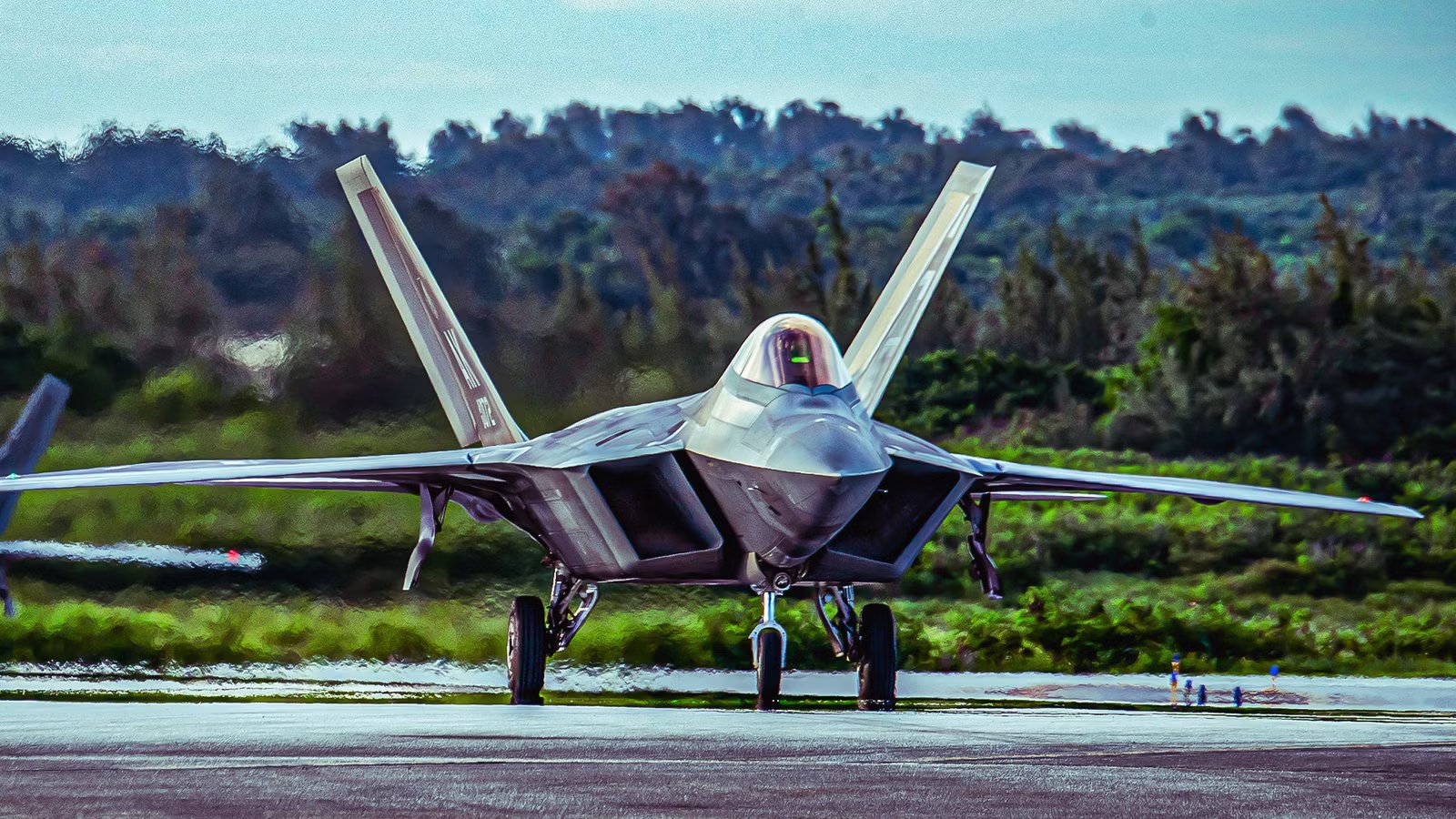
While some may point to the limited production run and costs of maintaining the Air Force’s fleet of F-22 Raptors, that’s likely not the biggest issue that will ultimately cause the Raptor to retire. The Raptor currently fills a role no other aircraft can, and that is a capability the Air Force is more determined than ever to maintain.
The question of how long the F-22 Raptor remains in service is arguably not so much about expense, but its obsolescence and replacement options. Until there are options, the Air Force is stuck with the F-22, regardless of the price tag of sourcing replacement parts and sustaining them. If there is a grim future for the Raptor, it will be the successful development of the next-generation Boeing F-47.
The F-22 Combat Fleet Might Grow

Does the Lockheed Martin F-22 Raptor face a grim future? Sort of, not really. The aircraft type is limited by the number of airframes built and the consequences of having a shutdown production line. But it’s more complicated. The Air Force is heavily investing in upgrades to its existing fleet to keep them at the cutting edge into the 2030s and relevant into the 2040s and beyond.
Furthermore, of the around 183 airframes still around, around 32 of them are Block 20 training variants. The Air Force has been trying to retire these airframes for years, as they are not combat-coded. The Air Force has a combat-coded fleet of around 143 jets and is upgrading these jets with new avionics, stealthy drop tanks, and more. They are set to be the first fighter jets to receive next-generation loyal wingman combat drones by the end of the decade.
Unable to retire the 32 Block 20 aircraft, the Air Force is saddled with them. Lockheed Martin is pushing to upgrade these training aircraft into combat-coded aircraft. The upgrades will not be cheap, but they will grow the fleet and offer a greater number of high-end air dominance aircraft as a bridge until the F-47 enters service in the mid 2030s. So while the number of flyable F-22s will not grow, there is still scope for the number of fighting F-22s to grow.
Upgrades To Keep F-22 Relevant

The F-22 is regarded as the tip of the spear of the United States Air Force’s air superiority and dominance. The development of better radars, better air defense missiles, and new fighter jets like the Chinese J-20 doesn’t negate the F-22’s advantage. However, they do erode it over time. The F-22 entered service 20 years ago, and it was so dominant in the air-to-air role that on the rare occasion another jet bested it in exercises became reported news.
Reporting on a German Eurofighter beating a Raptor is an excellent example of the exception proving the rule. In January 2026, Lockheed Martin received a contract to integrate embedded Tactical Infrared Search and Track (TacIRST) sensors into the Radar. These will provide passive, long-range infrared threat detections, missile launch warning, and enhanced survivability and lethality against IR-guided threats. Its stealth “paint” or Radar-Absorbent Material (RAM) coatings are to be upgraded with a more durable, lower-maintenance type, similar to that used on the more modern F-35.
New missiles for the F-22 (e.g., the AIM-260 Joint Advanced Tactical Missile), are being developed, while continued improvements to its AN/APG-77(V)1 AESA are ongoing, as is work on a new Infrared Defensive System (IRDS). It will receive upgrades in its electronic warfare, a new Helmet-Mounted Display (HMD), new jam-resistant navigation, improved connectivity and networking, and more. Pratt & Whitney has received a multi-billion-dollar contract to sustain and modernize its F119 engines.

Why Can’t An F-22 Raptor Land On An Aircraft Carrier?
Discover why the world’s first fifth-generation fighter will never be deployed from a carrier.
Ending Production Doesn’t Necessarily Doom An Aircraft

Ending production of an aircraft type typically leads to a shortage of spare parts as production lines close and subcontractors go out of business or move on. The need for spare parts often drives the cannibalization of aircraft to keep an ever-dwindling number of aircraft in service. To be fair, this is likely to be an issue that will affect the F-22, especially if measures aren’t taken to ensure production of limited specialized parts.
But there are examples to the contrary. Ironically, the longest-lived aircraft that has a shot at serving the Air Force for 100 years is one of the aircraft with the shorter production runs. The Boeing B-52 Superfortress was produced between 1952 and 1962, meaning the type has been out of production for 64 years, and yet the Air Force keeps a fleet of 76 examples flying and plans to continue flying them into the 2050s.
The B-52’s longevity can be partially credited to being able to cannibalize other B-52s for parts. Perhaps more important is the fact that the aircraft is relatively simple and crude, meaning its parts are comparatively easy to produce or otherwise reverse engineer. Key to keeping the B-52 flying is upgrades that replace difficult-to-maintain systems with new systems. The current upgrade is to replace the aging Pratt & Whitney JT3D engines with modern Rolls-Royce F130 engines.
Pressure To Remain At The Cutting Edge

The example of the B-52 is of only limited relevance to the F-22. The B-52’s current role is that of a lumbering missile truck; it doesn’t need to be cutting edge, the F-22 absolutely does. The F-22 is designed to be the tip of a spear. It is intended to be an air dominance fighter without equal. It is ill-suited to any other role than that of air superiority. Upgrade programs may be able to replace some Raptor systems that have become difficult to maintain with new ones whose parts are available.
Importantly, when programs remain in production for decades, they are continuously upgraded. This allowed the F-15 Eagle family to “come back from the dead” and remain in production. The F-22 was meant to replace the F-15 Eagle, but it only partially replaced it, forcing the Air Force to fall back on it with the upgraded F-15EX. The F-15 is perhaps a better analogy to the B-52; its role has also morphed into a missile truck of sorts. However, that is a role the F-22 will never be able to fill.
Lockheed Martin F-22 Raptor (per Lockheed, US Air Force) | |
|---|---|
Data built | 1996 to 2011 |
Entered service | 2005 |
Number built | 187 (serial production) |
Number combat coded | 143 |
Block 20 variants | 32 |
Put another way, sustaining the parts for an out-of-production, limited-run, highly-specialized, top-tier aircraft like the F-22 is difficult, but anything is possible if the funds are available. The F-22 was never intended to be a cheap aircraft; it was the no-expenses-spared Gucci aircraft. After all, that’s why its production was so limited in the first place. After the collapse of the USSR, there was no adversary that justified it.

The US Air Force Bases Assigned F-22 Raptors
From the heartland to global deployments, the F-22 Raptor provides air superiority, supporting US troops and allies worldwide.
All Depends On The F-47

It is fair to say that the future of the F-22 Raptor is now linked with that of the F-47 next-generation air dominance fighter jet. This is similar to how the B-2’s future is now linked to that of the B-21 Raider. The Air Force wants to have a strategic stealth bomber capability, and so can’t retire its B-2s until there are enough B-21s available to ensure no capability gap.
The Air Force wants a top-tier air dominance fighter, and it can, and is, upgrading the F-22 to ensure it maintains an overmatch advantage. At the same time, it is going “all in” on developing the F-47 to replace it in that role. No matter how much the Air Force upgrades the F-22 with next-gen technologies and manned-unmanned teaming, it will not be as good as a purpose-built aircraft designed from the ground up for that role.
The Air Force is currently building the first F-47 demonstrator, which is expected to fly around 2028 and enter service by around the end of the decade. How long the Air Force keeps the F-22 in service will depend in large part on how soon the F-47 enters service, how long it takes to meaningfully mature and integrate the aircraft, and how fast they can be produced. More broadly, it also depends on funding and perceived threats.
The Cost Of Air Dominance Until Replacement

To say the F-22 faces a grim future is an overstatement. It is currently undergoing its midlife upgrades to keep it relevant through the 2040s, possibly as far as the 2060s. Being out of production can result in a parts shortage and significant costs to restart a limited production run. But at the end of the day, industrial limitations are mostly a matter of financing.
The limited availability of affordable replacement parts can make commercial aircraft financially unviable, leading to their retirement and replacement. Something similar is true of 4th-generation fighter jets; there are plenty of other 4th-generation fighter jets on the market. So, if a country’s fleet of existing jets becomes prohibitively expensive to maintain, they can be replaced.
But this reasoning does not apply to the F-22 Raptor. Without the F-47, there would be no replacement for it in the air dominance role. The F-35 may come the closest, but it’s not the Raptor. Until the Raptor can be replaced, whatever the cost of sustaining it is just the cost of keeping that silver bullet air dominance capability.