dailynewsnblog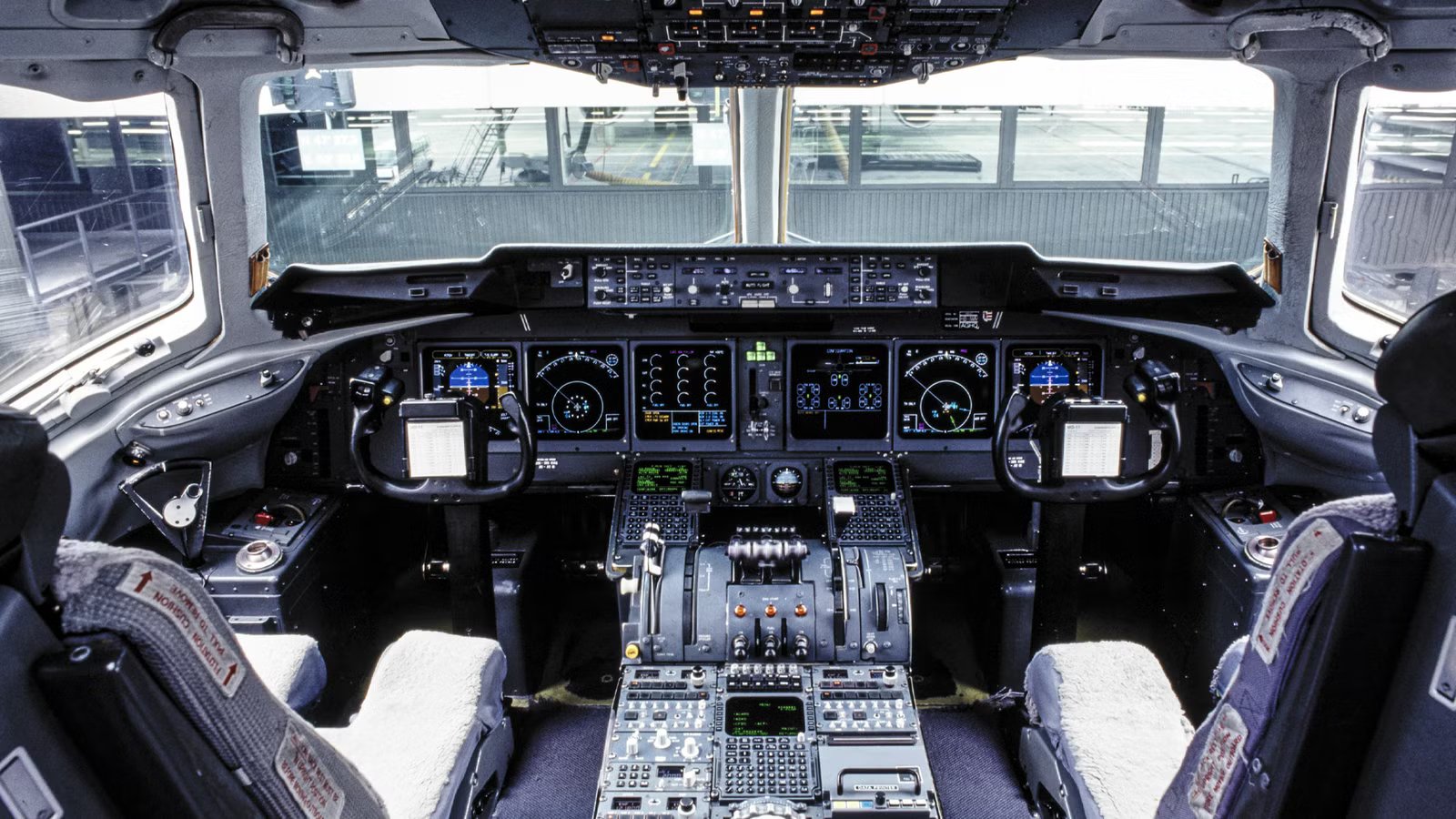
The McDonnell Douglas MD-11 continues to be a unique aircraft in global aviation as it is one of the last trijets developed. It continues this philosophy of widebody aviation, combined with modern aerodynamics and avionics. Compared with its predecessor, the DC-10, the aircraft came with a fuselage extension, wings with winglets, incredible fuel efficiency, and superb reliability across both transcontinental and intercontinental routes. The performance upgrades extended to a cutting-edge glass cockpit, giving the pilots who flew it a new experience and making the role of the flight engineer redundant. This technology began to grow from the 1980s, making it still highly advanced when introduced with the MD-11 on its first flight in January 1990.
The MD-11’s glass cockpit was a huge leap forward for McDonnell Douglas, but it failed to ensure the aircraft’s success or the company’s survival. The aircraft was let down by a failure to live up to performance expectations and the outdated nature of tri-jets. That makes you wonder how much more of a failure the jet might have been with an analogue display and a three-member cockpit.
The Pilot Experience

The glass cockpit was the main revolution brought into McDonnell Douglas’s wheelhouse by the MD-11. Aircraft like the DC-10 needed a three-person crew. The pilot and first officer would handle flying the aircraft, while the flight engineer would monitor and manage the plane’s systems. A crew reduced by a third could operate the MD-11. Known as the ‘Advanced Common Flightdeck’ (ACF), the MD-11 had an entirely glass cockpit, making the analogue displays aboard the McDonnell Douglas DC-10 digital, spread across six Cathode Ray Tube (CRT) displays, showing electronic flight instrument systems (EFIS).
The main advantage of this glass cockpit technology was the elimination of the need for a third crew member. Flight engineers could be made redundant or reshuffled, drastically cutting operating costs.
The changes weren’t just about cutting staffing costs. Pilots were further assisted by advanced flight management systems and autoland technology. The stabilizer, trim, and spoiler systems also became computer-controlled. These new automated systems made the aircraft safer and easier to fly.
Benefits Of The MD-11’s Glass Cockpit

The MD-11’s cockpit was era-defining because it brought a tremendous range of advantages to pilots flying McDonnell Douglas aircraft. Crowded, chaotic analogue displays took time to interpret, hindering situational awareness. Meanwhile, digital displays took up less room and could be read quickly. Their numerical nature also removed parallax, an effect that reduces the accuracy with which analogue displays can be read. The digital screens were also linked to computer systems, which could efficiently process data from multiple sources simultaneously. All this helps pilots reach the right decision more quickly.
Glass cockpits also open up new ways to display data. An example is weather graphics, which ensures pilots can navigate through storms without painstakingly dealing with meteorological data or trusting forecasts provided before flight.
Glass cockpits also improve flight safety by providing redundancy. If an analogue dial breaks, pilots have to go without it, a huge issue while flying in poor visibility. On the other hand, glass cockpits have built-in backups.

The Striking Differences Pilots Notice Between The McDonnell Douglas DC-10 & MD-11
A tale of two jets: the striking differences pilots notice between the McDonnell Douglas DC-10 and MD-11.
The Glass Cockpit Was Already Becoming Expected

The MD-11’s glass cockpit was new to McDonnell Douglas, but not to the broader aviation industry. The technology had been present in military aircraft since the late 1960s, and the need for its expansion emerged in the 1970s, facilitated by improvements in computer technology and necessitated by ever-increasing aircraft complexity. Over 100 cockpit instruments were present on many transport aircraft. NASA began researching and designing displays that could present all of this information in a digestible way.
The first airliner with a full glass cockpit was the Airbus A320, which also integrated fly-by-wire technology. It was introduced in 1988. Airbus decided to color-code the displays to make it easier for pilots to consume the information. Previous airliners, such as the Boeing 767 and 757, had begun using CRT screens but remained far from what is now considered a glass cockpit. Likewise, Airbus’s A310 and the A300B4-200FF integrated some digital elements.
Paul Howard, a former British Airways aviator, recalls the disorienting changes his colleagues and he experienced with the replacement of analogue cockpit Classic Boeing 747s with glass cockpit Boeing 747-400. “It was a bit strange to start with because I was so used to being able to turn back to the engineer to chat about technical issues. In the end, we got used to the two-man operation but flight engineers were greatly missed as part of the crew and were the salt of the earth.”
Glass cockpits have now become an industry standard. Pilots expect them on the latest airliners, like the 777X, 737 MAX, and Airbus A321neo. However, it is notable that, although modern 737 variants have advanced far beyond their analog-cockpit forebears, these jets retain a legacy-inspired cockpit layout.
MD-11 Development

McDonnell Douglas had its glass cockpit because the development program was launched in 1986, a time when digital displays were becoming increasingly significant in the aviation industry. The manufacturer went beyond previously imagined stretched derivatives of the DC-10 to design a new aircraft with significant technological advances. However, innovation couldn’t quite reach the speed needed for a truly successful aircraft due to the firm’s declining cash flow.
The table below shows key specifications for the MD-11 according to Skybrary.
Wingspan | 169 ft 7 in (51.7 m) |
|---|---|
Length | 200 ft 9 in (61.2 m) |
Powerplant | 3 x General Electric CF6-80C2 or Pratt & Whitney PW4000 producing 61,598 lbf (274 kN) |
Cruising speed | Mach 0.83 |
Maximum takeoff weight | 602,523 lbs (273,300 kg) |
Takeoff V2 | 160 knots |
McDonnell Douglas launched the MD-11 in December 1986, having received 52 firm orders and 40 options across passenger, combi, and freighter versions. Orders came from carriers like Alitalia, British Caledonian, Dragonair, and Federal Express. Once the dust had settled, the program cost $1.5 billion ($500 million in development). The 52 orders were worth $5 billion, with each aircraft costing an average of $95 million, significantly higher than the Airbus A340.

Here’s Why The McDonnell Douglas MD-11’s Tail Engine Is Different Than Other Trijets
The aircraft offers some impressive capabilities.
The MD-11 Failed Regardless Of Its Glass Cockpit

Despite its era-defining cockpit and revolutionary design, the MD-11 failed to be a commercial success. It sold just 200 units, far less than the 380 Airbus A340s and well over 1,700 Boeing 777s sold so far. This failure wasn’t due to limitations with the glass cockpit. However, it reduced the industry impact the glass cockpit could have.
The poor sales were primarily due to performance shortfalls. McDonnell Douglas initially advertised that the aircraft would have a range of 7,000 nautical miles (13,000 km), making it the ultimate ultra-long-haul airliner of the 90s. Yet, it could only cover around 6,460 nautical miles (11,963 km) with a standard load due to unexpectedly high fuel burn and aerodynamic issues. The low range meant it couldn’t fly as far as the A340 and had substantially higher operating costs than the Airbus A330 on shorter routes. Carriers began to shy away from the MD-11. In one particularly embarrassing moment, Singapore Airlines canceled its 20-plane order. Multiple Performance Improvement Projects (PIPs) and the MD-11ER, an attempt to deal with the range issues, couldn’t get airlines back onside.
The MD-11 was also outdated simply because it was a trijet. The Boeing 767s’ extraordinary ETOPS (extended-range twin-engine operational performance standards) ushered in an era of long-haul twinjet aviation. This philosophy, rather than twin or quad-jet flying, is now pursued by manufacturers of long-haul aircraft, including the Airbus A350 and the Boeing 777X.
The Future Of The MD-11

The MD-11 has seen a resurgence in recent years as a freighter. However, things are not looking bright for the MD-11’s glass cockpit. As 2025 drew to a close, a UPS-operated MD-11 crashed near Louisville. On November 4, the jet suffered a catastrophic failure shortly after takeoff that led it to crash into ground facilities. In the blaze that followed, 15 people died, and at least 23 were injured.
The result has been the grounding of all aircraft of this type while investigators and regulators work on the matter, determining what testing will be needed to ensure all remaining MD-11s can fly safely. This could be the accident that grounds the MD-11, an aircraft unique in the contemporary aviation era, for good. The question is made even more relevant by the aging nature of these jets, which forces the few remaining operators to deal with extended downtime.
Huge freight firms like  UPS Airlines and FedEx should be able to shrug off these problems. They have large spare parts banks to repair any aircraft found faulty during inspections, and can replace routes previously served by MD-11s with alternative jets from their large fleets. Meanwhile, smaller freight companies find themselves unimaginably exposed.