dailynewsnblog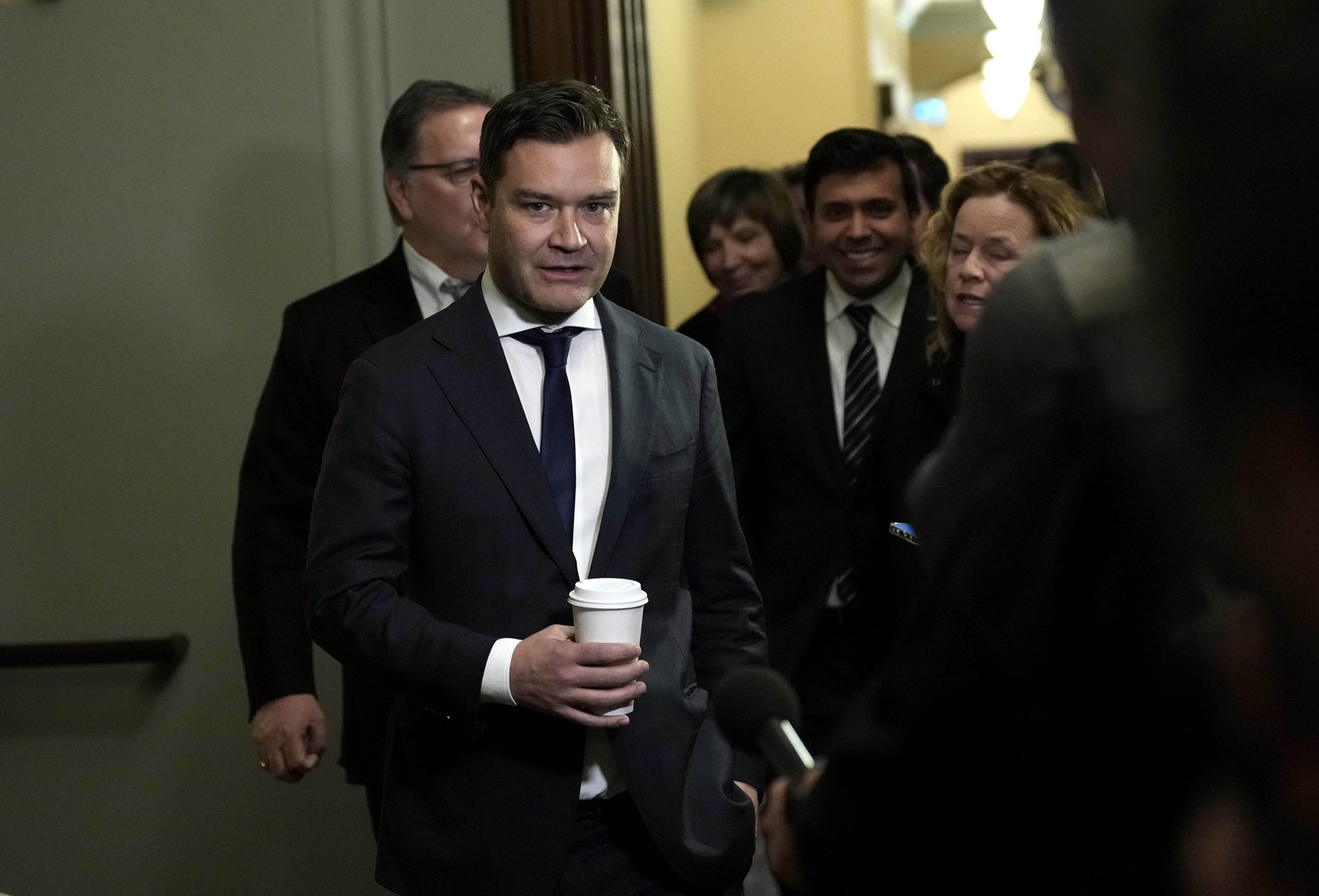
A timely deep dive into parliamentary procedure.
Within moments of Prime Minister Mark Carney’s surprise mid-week reveal that now former Conservative MP Matt Jeneroux — who, for those who may have lost track, had reportedly been in talks with the government to cross the floor last fall, but instead served notice that he would be leaving federal politics entirely this spring — would be joining the Liberal team after all, Official (and unofficial) Ottawa was flooded with a fresh wave of speculation that the minority Liberal government could claim majority control of the House of Commons without a return trip to the polls.
There is, however, a critical mathematical caveat to take into account when plotting out mostly-but-not-entirely theoretical scenarios that could see Team Carney claim majority control of the House of Commons without a return trip to the polls: The magic number — which isn’t actually particularly magical, but we’ll get to that later — of yeas or nays needed for the Liberals to override the combined might of the opposition parties is 172, which would give the government a one-vote margin of victory in the event that all 342 MPs show up to be counted, whether in person or via remote voting app.
(Before going any further, let the record show that all of the above calculations are outlined in this excellent piece by former senior political staffer Eric-Antoine Menard, which — spoiler alert — comes to precisely the same conclusion as Process Nerd, who, for the record, got there independently, albeit belatedly.)
As of right now, the Liberals hold 169 seats, but one is effectively out of play, as it belongs to House of Commons Speaker Francis Scarpaleggia, who, by long-standing parliamentary convention, only casts a vote in the event of a tie.
Even then, he wouldn’t necessarily align himself with his fellow party members, as that same convention dictates that he vote to either allow the debate to continue, or, if that’s not an option, to preserve the status quo.
There are also three vacancies, all of which are in ridings that were previously held by the Liberals, and two of the three — University-Rosedale and Scarborough Southwest — are all but guaranteed to remain in the red column.
The third, however, is in Terrebonne, Que., where rookie Liberal candidate Tatiana Auguste’s photo-finish single-ballot win over Bloc Québécois incumbent Nathalie Sinclair-Desgagné was subsequently deemed null and void by the Supreme Court of Canada over printing errors that led to some mail-in ballots not being counted, including at least one for the Bloc Québécois candidate.
Even if the Liberals manage to win all three byelections, that would still put them one seat shy of the 172 vote threshold required for what Menard describes as a “functional procedural majority,” which, as he notes, is also the baseline number needed to make any substantive changes to the current minority configuration.
Which, of course, leads into the other, more existential point that seems to get lost amid the swirl of speculation over ‘majority status’: namely, that, at least as far as what happens in the chamber itself, doesn’t automatically extend any particular power or authority to the government that it can’t already claim if it has sufficient votes to do so.
Our parliamentary system may have a complex institutional memory, courtesy of literal centuries of precedents and procedural fine tuning, but when it comes to real-time decisions, all that matters is the outcome of that specific vote.
A minority government may sail through a confidence test on Monday, but if a fresh challenge arises on Tuesday, they need to win that one too — every one is a make-or-break count, with no provisions for a rematch or a best-out-of-three total.
There are also no bonus points for doing so without opposition support — it’s purely a numbers game, with no differentiation between members when tallying up the final score.
From the government’s perspective, it’s undoubtedly much easier to manage the legislative agenda when you know you can win any vote without relying on outside support, but that’s purely an operational advantage, and not an underlying parliamentary mechanic.
There is, of course, one very big exception to that rule: namely, at committee, where, as detailed in Process Nerds passim, the standard formula for allocating slots, not only puts the Liberals one vote shy of a working majority, but leaves the seven New Democrats and lone Green Elizabeth May off the seating plan entirely due to their lack of official party status.
Even if the Liberals add another member to their overall roster, the committee makeup — which is established at the start of every Parliament — would remain unchanged without a House vote to rejig the numbers, which, even with a technical majority, would like trigger a full-scale cross-aisle showdown that could tie up both the main chamber and committees for weeks, if not months.
In any case, as of right now, the only ones not openly discussing a potential ‘path to majority’ would seem to be the minority Liberals themselves, who seem to be learning to live within their democratic means, at least for the moment, although if they were able to pick up one or two more floor-crossers — or scoop up an opposition-held riding in a byelection, all bets would be off.