dailynewsnblog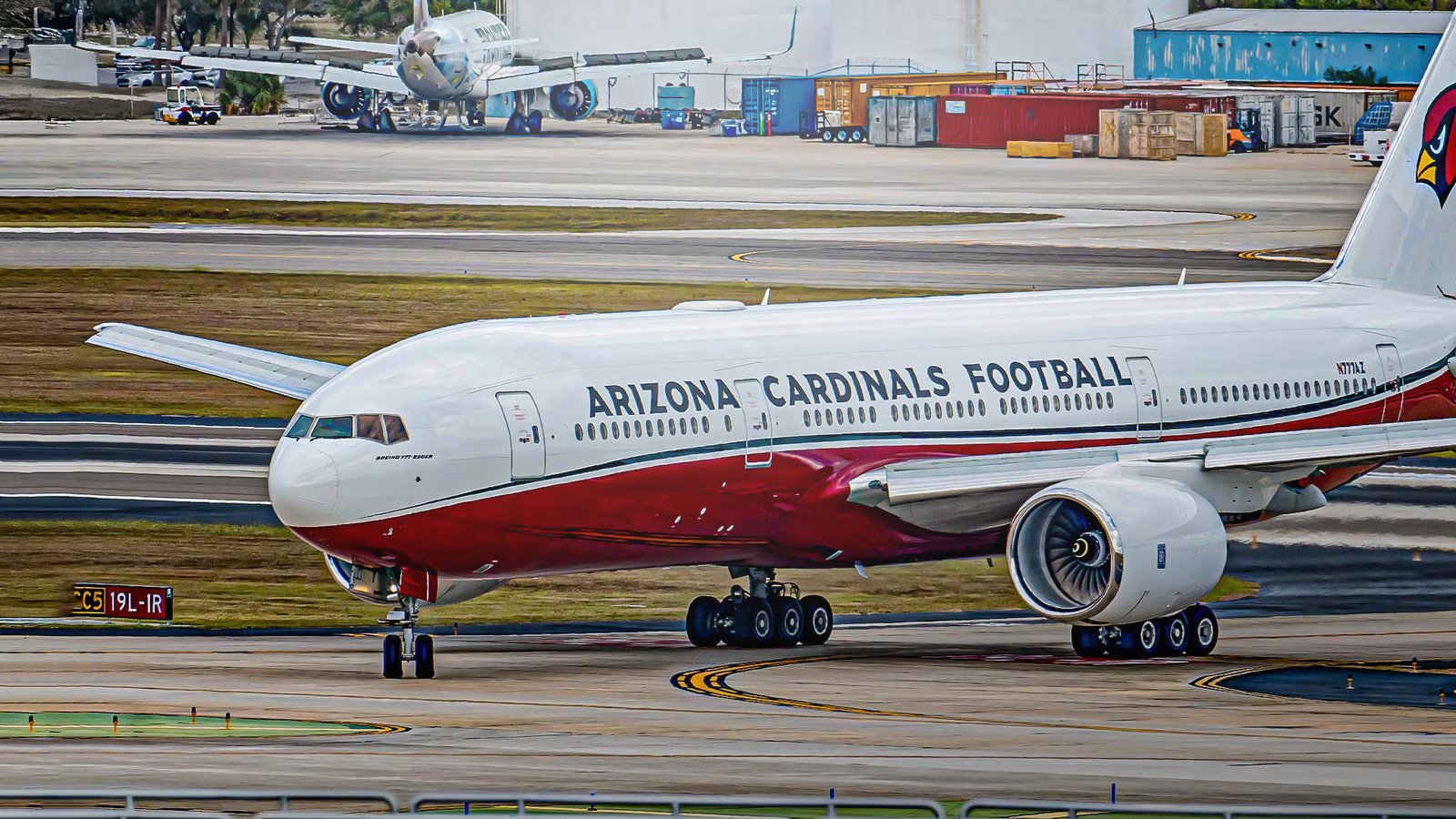
In the world of widebody commercial aviation, every design detail serves a critical purpose. One such detail that often sparks curiosity is the 12-tire main landing gear configuration found on the Boeing 777.
Let’s examine how the Boeing 777’s landing gear configuration impacts the aircraft’s performance. This article will also discuss the technical requirements of its weight and range, and provide insight into the design evolution that led to this solution.
The Boeing 777 Family & Its Mission

The Boeing 777 was introduced in the mid-1990s as the world’s largest twin-engine jet, designed to bridge the capacity gap between the 767 and the 747. It is capable of flying ultra-long-haul routes while delivering impressive payload, range, and operational efficiency. Today, it exists in several passenger variants: the 777-200, 777-200LR, 777-200ER, 777-300, 777-300ER, and the new-generation 777X family.
These aircraft operate across the globe in various configurations. The 777-300ER, for example, is widely used by international carriers like Emirates, Cathay Pacific, and American Airlines for long-haul services with high passenger loads. Elsewhere, the 777F (freighter) serves as a backbone of global air cargo networks due to its payload capability and fuel efficiency.
A key design challenge for the 777 was finding a way to support its massive maximum takeoff weight, which ranges from approximately 545,000 lbs (777-200) to over 775,000 lbs (777-300ER), without overwhelming airport infrastructure. This led to the development of a 12-tire landing gear system, providing the strength, stability, and ground pressure distribution necessary for such heavy aircraft.

The Story Of The Boeing 777 Family
The Boeing 777’s story began in the 1980s and will continue for years to come as Boeing develops the next generation Boeing 777X.
Why 12 Main Gear Tires: Engineering Considerations

Aircraft tires are more than just oversized rubber wheels: they’re vital components that absorb landing forces, enable braking, and support the weight of the aircraft during taxi, takeoff, and landing. The number of tires on an aircraft is determined by factors like maximum takeoff weight, braking requirements, and airport compatibility.
The Boeing 777’s landing gear includes two six-wheel bogies on the main landing gear (12 tires total) and a two-wheel nose gear, for a total of 14 tires. This configuration distributes the aircraft’s weight evenly across a wide surface area, minimizing the pressure each tire exerts on the runway, which is crucial for operating at airports with varying pavement strength ratings. The 12-tire layout offers several operational benefits beyond just weight distribution, as detailed in the table below.
Benefit | Description |
|---|---|
Redundancy |
If one or two tires fail or deflate during landing or takeoff, the aircraft can still maintain structural integrity and safe braking. |
Improved Braking |
With more tires come more carbon brake discs. This enables the aircraft to stop safely even at maximum landing weights. |
Lower Ground Pressure |
The design reduces stress on airport surfaces, making it easier to operate at more airports worldwide. |
Stability On Uneven Surfaces |
More points of contact improve taxi performance and reduce risks during rough or sloped ground operations. |
Had Boeing used a four-wheel or even a two-wheel bogie like on smaller aircraft, the stress on each tire would have been too high, increasing the risk of runway damage and reducing tire lifespan. The six-wheel bogie system, inspired by designs used on aircraft like the Boeing 747, ensures that even at high takeoff weights, the aircraft can operate safely on standard-length runways.
How The 777 Compares To Other Aircraft

The 12-tire main gear configuration of the Boeing 777 sits on the upper end of modern twin-engine aircraft, though it’s not the most tire-heavy jet in the skies. The table below details comparisons with other widebody aircraft, according to data from Boeing and Airbus.
Aircraft Model | Main Gear Tires | Maximum Takeoff Weight | Tire Pressure Distribution |
|---|---|---|---|
Boeing 737-800 |
4 |
~174,000 lbs |
High |
Boeing 767-300ER |
6 |
~412,000 lbs |
Medium |
Boeing 777-200ER |
12 |
~545,000 lbs |
Moderate |
Boeing 777-300ER |
12 |
~775,000 lbs |
Moderate |
Airbus A350-1000 |
12 |
~700,000 lbs |
Moderate |
Boeing 747-400 |
16 |
~875,000 lbs |
Lower |
Airbus A380-800 |
20 |
~1,235,000 lbs |
Very Low |
While not the most in terms of total tire count (the 747 and A380 exceed it), the 777’s tire setup is optimized for its size and engine configuration. It was the first aircraft to achieve this level of takeoff weight using only two engines, a milestone made possible by advanced aerodynamics, materials, and the 12-tire gear system.
Tire Lifespan & Maintenance Cycles

Boeing 777 tires undergo immense stress every flight, but they’re built for durability. According to Monroe Aerospace, most landing gear tires on commercial airplanes last for about 200 to 400 landings on average before needing replacement. Airlines monitor tire wear closely and use digital tracking systems to predict when changes are required, and maintenance crews regularly inspect for cuts, flat spots, or under-inflation.
Tire wear on the Boeing 777 is influenced by several operational factors that collectively determine how quickly each tire reaches the end of its service life. One of the most significant factors is landing speed and aircraft weight. Heavier landings and higher approach speeds exert greater stress on the tires, increasing heat generation and tread wear during touchdown and rollout. Another important consideration is the runway length and surface condition.
Maintenance Factor | Typical Range/Standard |
|---|---|
Average Tire Lifespan |
200 to 400 landings |
Nose Gear Tire Pressure |
~200 psi |
Main Gear Tire Pressure |
~220 psi |
Inspection Frequency |
After each landing |
Replacement Frequency |
Per tire, not always a full set |
After all, shorter runways require more aggressive braking, which can accelerate tire degradation. Similarly, rough or grooved runway surfaces introduce more friction, hastening wear compared to smooth, well-maintained surfaces. The frequency of short-haul versus long-haul operations also plays a key role.
Indeed, aircraft used for shorter segments tend to experience more frequent landings, resulting in more cycles and, consequently, faster tire replacement. In contrast, long-haul flights might have fewer cycles but operate at higher gross weights, which also affects wear rates. Braking intensity, particularly in challenging weather conditions such as rain or snow, can rapidly wear down tire tread, as wet or contaminated runways require a greater use of the aircraft’s braking system, which increases the thermal and mechanical load.

How Are Aircraft Tires Changed?
In general, this is done every 150 to 400 flight cycles
What Happens If A Tire Fails?
_landing_at_Manchester_Airport_(1).jpg?q=49&fit=crop&w=500&dpr=2)
Despite rigorous inspection routines and high manufacturing standards, tire failures can still occur on the Boeing 777, particularly during high-stress phases of flight such as takeoff or during a high-speed rejected takeoff. These events place extreme loads on the tires, especially if the aircraft is operating near its maximum takeoff weight or on shorter runways. In the event of a tire blowout or deflation, pilots rely on a combination of fail-safe systems.
These are designed to maintain control and protect the airframe, as noted by the Sydney Morning Herald. One key safeguard is the use of multiple hydraulic braking channels, which ensure that even if one brake line fails, others remain active to provide sufficient stopping power. Additionally, the aircraft is equipped with anti-skid braking systems, which modulate brake pressure to prevent wheel lock-up, especially important on slippery or uneven surfaces.
This feature not only protects the tires, but also helps maintain directional control during deceleration. Another essential component is the landing gear strut dampers, which absorb and distribute shock loads from the runway surface, minimizing stress on individual wheels and tires, according to Skybrary. These systems work in concert to keep the aircraft stable and safe during abnormal tire events, underscoring the importance of the 777’s robust landing gear design.
The 12-tire configuration helps prevent a single tire failure from escalating into a larger issue. Aircraft can land with one or two tires deflated, and the other tires share the load. In such cases, airports may temporarily close the runway to inspect for debris or rubber deposits, but the aircraft typically remains structurally sound.

How Do Pilots Handle Burst Tire Incidents?
What happens when a tire burst during landing or take-off? Let’s find out!
A Foundation For Future Development: The 777X

The new Boeing 777X family, which includes the 777-8 and 777-9, continues this tradition. These next-generation aircraft will maintain the 12-tire main gear structure, despite advancements in composite materials and wing-folding technology. This continuity shows just how effective and well-optimized the original landing gear design was.
Even as engines become more efficient and cabins are reconfigured (such as dense layouts of over 400 seats), Boeing has kept the 12-tire layout because it balances weight, safety, and airport compatibility. The fact that the 777X will be the largest twin-engine passenger aircraft in the world, and still use this setup, speaks volumes about its design efficiency.
The Smart Engineering Behind 12 Tires

The Boeing 777’s 12-tire main landing gear may seem excessive at first glance, but it’s a highly calculated engineering decision. It allows the aircraft to carry immense loads, operate from a wide variety of airports, and maintain high safety margins, even in the event of a tire failure.
With its success carried forward into the 777X, the 12-tire design has become one of the many unsung yet vital aspects of what makes the Boeing 777 such a powerful and reliable aircraft family. Whether you’re sitting in seat 44A or watching from the tarmac, now you know: those tires aren’t just there for looks: they’re part of what keeps the 777 airborne and on time.