dailynewsnblog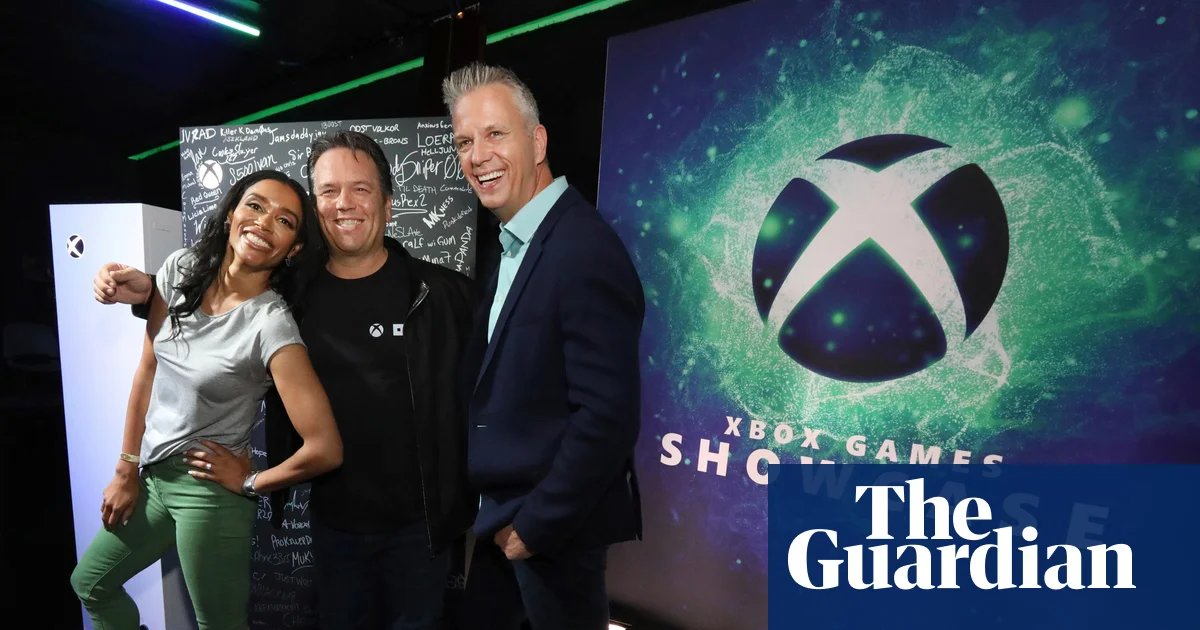
And so it’s all change at Xbox. Last Friday it was announced that the CEO of Microsoft’s gaming division, Phil Spencer, is to retire, while its president Sarah Bond is resigning. In their place, a new partnership: Xbox Game Studios head Matt Booty is promoted to chief content officer, while the new CEO is Asha Sharma, who moves from her post as president of Microsoft’s CoreAI product.
In a company-wide email, Spencer stated that he would stay on until the summer in an advisory role before, “starting the next chapter of my life”. For her part, Bond issued a statement on her LinkedIn account: “I’ve decided this is the right time for me to take my next step, both personally and professionally.” It was all extremely good natured, but its doubtful these airy missives tell the full tale.
For 25 years, Xbox has been a monolithic presence in the games industry. It continually challenged PlayStation as the most popular, technologically advanced console, it revolutionalised online gaming, and it brought us multimillion-selling titles such as Halo, Gears of War and Forza Horizon. And for most of that time, Spencer has been the machine’s figurehead.
In charge of Xbox since 2014, Spencer inherited the PR disaster that was the Xbox One announcement. From here, he embraced new innovations such as cloud gaming and subscriptions, turning Xbox into a multi-platform app and ushering in Game Pass, giving owners access to new and legacy games for one monthly fee. He also oversaw a period of massive development expansion, buying ZeniMax Media for $7.5bn in 2020 and then Activision Blizzard for an astonishing $69bn in 2023, thereby securing Call of Duty, World of Warcraft and Candy Crush for the empire.
But it’s also been a period of job cuts across Microsoft’s gaming division, as well as waves of studio closures and game cancellations. Tango Gameworks, The Initiative and Arkane Austin were shuttered, and the Perfect Dark remake was cancelled, as was Rare’s intriguing eco adventure Everwild.
“Spencer leaves Microsoft with Xbox in something of a quandary,” says games analyst George E Osborn, whose book Power Play: Video Games, Politics and the Battle for Global Influence is out in June. “Its hardware sales have dropped considerably in recent years, but the dream of delivering a cross-platform game subscription service to rise up in its place hasn’t been delivered. He leaves the business with Xbox in a confusing position, simultaneously establishing it as one of the top three video game publishers in the world by revenue but lacking clarity about where it goes next.”
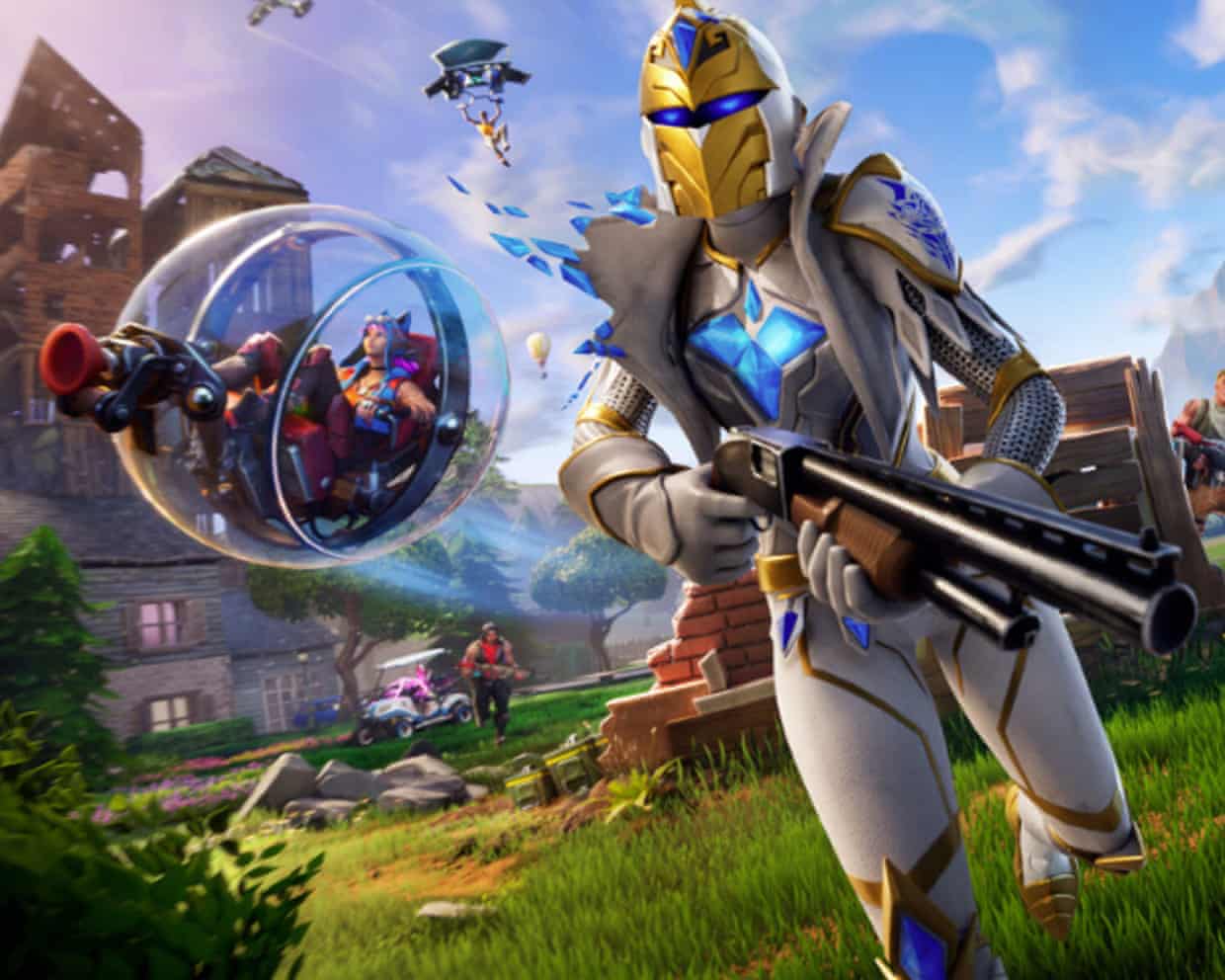
There is concern about Sharma’s redeployment from the AI division – is she there to cut costs further by green-lighting more studio redundancies in favour of gen AI? In her letter to staff, she assured them “we will not chase short-term efficiency or flood our ecosystem with soulless AI slop […] I want to return to the renegade spirit that built Xbox in the first place.” But can that spirit, which saw a small team of wild-eyed engineers take on the opaque, Orwellian edifice of Microsoft, really be recaptured in our era of mass global consolidation? We live in the age of the forever game, the mega vertical – Roblox, Fortnite, Minecraft, Genshin Impact, Honor of Kings; billion-dollar games that require multimillions to create, market and maintain.
Might it be tempting for Microsoft to just quietly phase out Xbox entirely? That’s exactly how Xbox co-creator Seamus Blackley put it in an interview on Monday, telling Gamesbeat: “Xbox, like a lot of businesses that aren’t the core AI business, is being sunsetted. They don’t say that, but that’s what’s happening. I expect that … her job is going to be as a palliative care doctor who slides Xbox gently into the night.”
As the current annual games industry report from analyst Matthew Ball shows, record revenues might have been achieved in 2025, but the sector is losing its share of the attention economy to social media, sports betting, “content creators” and other zippy interactive experiences. So it’s worth asking: what role do games really play in the future of this three trillion-dollar corporation? “The appointment of a new leader who has a background within AI suggests Microsoft may well be thinking much more intensely about how Xbox serves its wider ambitions, rather than how Microsoft can serve Xbox’s growth,” says Osborn. “And while that might make sense when it comes to building a corporate structure, it runs the risk of dampening the kind of creative risk taking that is necessary to succeed within the video game industry.”
Spencer always said he loved games – and the few times I met him, I believed him. But there’s no guarantee his successors will feel the same – do they love games enough to back weird new experimental projects? Would they support another Minecraft or Sea of Thieves? Those are big, brave gambles and the casino looks very different from when the dice were first rolled on Xbox many years ago.
What to play
Imagine if golf was a really interesting and exciting sport. To this frankly ridiculous proposition comes Super Battle Golf, an eight-player online sports sim where everyone has to try to get the ball into the hole at the same time while violently sabotaging the efforts of their competitors.
You can hit people with your nine iron, mow them down in your golf cart or obliterate them with an orbital death laser, all while contending with the usual challenges of spoiling a good walk. The cartoonish visual style recalls other knockabout multiplayer titles such as Gang Beasts and Fall Guys, and the range of courses brings true depth and challenge to the carnage. It’s like the PGA Tour sim series crossed with Worms – no wonder it was downloaded by 100,000 people in its first week on sale.
Available on: PC
Estimated playtime: 20-plus hours
What to read
It’s always interesting to see video games being critically reappraised. In this piece for AV Club, Bee Wertheimer argues that although it was an indie darling 10 years ago, Firewatch may have been as toxic as the masculine gaming fantasies it sought to counter.
Ubisoft CEO Yves Guillemot spoke to Variety about the future of Assassins Creed and Far Cry, and about how the company is restructuring into five semi-autonomous “Creative Houses”, each in charge of different brands. It sounds like something out of Game of Thrones, but Guillemot hopes the plan will steady the company after a difficult period.
Valve is facing a lawsuit in the UK courts over the revenue share it takes from game sales on its Steam platform. Digital safety campaigner Vicki Shotbolt contends that Valve is taking advantage of UK gamers: “Steam is a big and important platform for a big and important ecosystem – it needs to cooperate fairly, and it’s clearly not,” she tells GamesIndustry.biz.
What to click
Question Block
This week’s question comes from Andrew in Liverpool:
“Despite starting gaming in the 1980s, I had never really played games with turn-based combat, the few RPGs I played were always of the action variety. Last year I tried Persona 4 Golden and loved it, although I had to turn the difficulty right down. Can you recommend games that are a good entry point for learning the systems and concepts? There are so many that I don’t know where to start and worry that picking the wrong one might put me off completely.”
This is tricky to answer as all role-playing games have a different approaches to combat rules and systems, so it’s difficult to recommend one that will give an authorative overview. Apart from trying the other titles in the Persona series (especially Persona 5 Royal), you could go for an actual remake of a classic title, something like Dragon Quest III HD-2D Remake, one of the greatest entries in the formative Dragon Quest series, which has a lovely combat system. The recent Final Fantasy VII titles Remake and Rebirth may work, too.
You could also try a modern game that seeks to explore the classic era – Sea of Stars for example. But if you love the look and feel of Persona 4, the excellent Metaphor: ReFantazio is a sort of spiritual companion to the Persona series and you can dial down the difficulty in the settings. I also love Yakuza: Like a Dragon and Like a Dragon: Infinite Wealth from Sega, which utilise lots of familiar systems – they’re so silly and endearing, and the learning curve is generous. I know a lot of players who started their turn-based journeys with last year’s acclaimed Clair Obscur: Expedition 33, although it has a lot of real-time elements too.
Hopefully, there’s something here to tempt you!
If you’ve got a question for Question Block – or anything else to say about the newsletter – email us on pushingbuttons@theguardian.com.