dailynewsnblog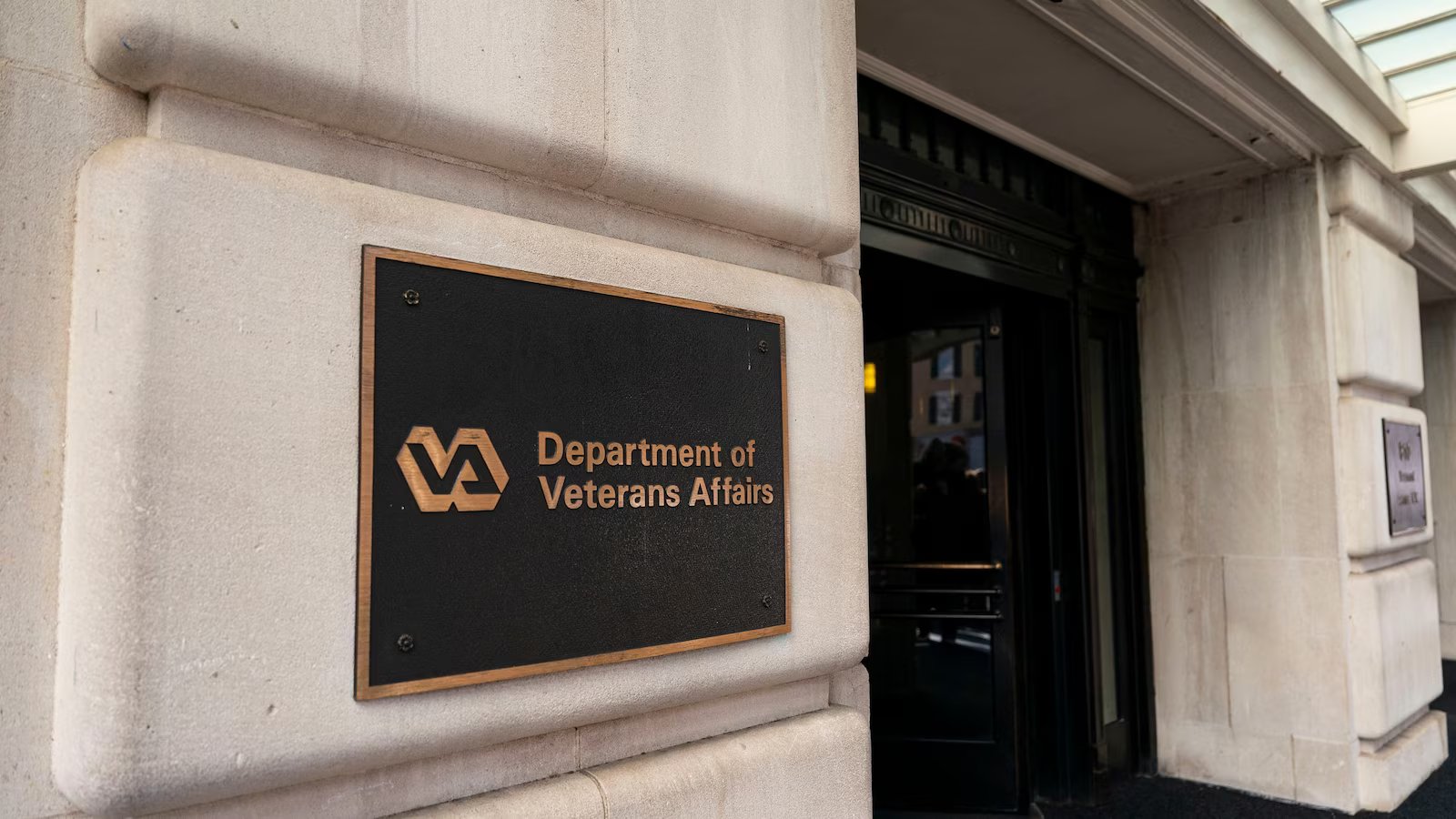
Democrats are pressing Veterans Affairs Secretary Doug Collins to permanently abandon a policy that would recalibrate disability ratings based on how effectively a veteran’s condition responds to medication.
The department has said only that it is pausing the plan, which could reduce benefits and healthcare for millions of veterans whose symptoms are managed with treatment.
In a letter reviewed by ABC News, Democrats on the House and Senate Veterans’ Affairs committees pressed the VA for confirmation by Monday that the rule is dead, along with a detailed timeline for its withdrawal and a full explanation of why the department bypassed traditional rule-making procedures.

The Department of Veterans Affairs headquarters in Washington, D.C., Feb. 13, 2025.
Al Drago/Bloomberg via Getty Images
“The lack of transparency and lack of communication before its roll-out indicates this rule is a political maneuver aimed at cutting costs by abdicating VA’s obligation to service-disabled veterans,” the letter, signed by 21 Democrats and Independents, said.
The VA did not return ABC News’ request for comment.
Among those signing the letter are Sen. Richard Blumenthal of Connecticut and Rep. Mark Takano of California, the ranking Democrats on the Senate and House Veterans’ Affairs committees. Republican leadership of the committees did not return ABC News’ request for comment.
On Feb. 17, the VA directed its medical examiners to evaluate a veteran’s level of impairment as it presents while the individual is taking medication and possibly while undergoing other treatments, rather than rating the raw severity of the underlying condition. Veteran advocacy groups quickly denounced the guidance, arguing it would open the door to reducing or stripping benefits from veterans whose symptoms are controlled, but hardly cured.
“While VA does not agree with the way this rule has been characterized, the department always takes veterans’ concerns seriously,” Veterans Affairs Secretary Doug Collins wrote on social media last week, announcing the department would pause enforcement. The regulation itself, however, remains on the books.
The rule was drafted in part as a response to a 2025 federal court ruling and came suddenly and without warning to veteran groups and Congress, a break in longstanding norms for significant changes to benefits. In Ingram v. Collins, the court found that VA examiners must set aside the stabilizing effects of medication when evaluating a veteran’s condition, judging the disability as it would present without treatment.
The department bristled at the decision, calling it a misreading of its policies that would sharply expand eligibility and drive up costs. The VA spent $195 billion last year on disability programs.
Veterans receive a disability rating from zero to 100%, a figure meant to quantify how severely a service-connected condition disrupts daily life. Hitting certain thresholds unlocks broader access to health care and can bring ancillary benefits like property tax relief in some states.
The monthly payments themselves vary widely, from roughly $180 at the low end to nearly $5,000 for the most severely disabled veterans, with higher sums tied to the number of dependents and the depth of impairment.

V.A. Medical Center in Kansas City, Missouri.
Michael Siluk/UCG/Universal Images Group via Getty Images
“Our intention was to put out a rule that we believed would clarify our processes,” VA Deputy Secretary Paul Lawrence said Sunday at a conference hosted by Disabled American Veterans, a Washington, D.C.-based advocacy group. “But obviously, it did not. So we withdrew the rule. And candidly, we have no intention of ever doing anything or talking about it ever again.”
Other conditions, including traumatic brain injuries and a range of mental health disorders, rarely present the same way two days in a row. Symptoms flare, recede, then return without warning.
Advocates warned that a single exam conducted on a relatively stable day, a best-case snapshot, risks flattening that reality, overlooking the harder stretches and the cumulative toll on a veteran’s quality of life. The VA’s nearly 7 million disabled patients already undergo reviews of their disability rating; it’s unclear how many would be affected by the VA’s new regulation, but some 5 million veterans receive prescriptions from the VA, according to 2019 agency data.
Robert Evans, an Iraq war veteran who now operates Hots & Cots, a Yelp-style website compiling reviews of housing and dining conditions on U.S. military bases, said he receives disability compensation from the Department of Veterans Affairs in part for post-traumatic stress. Returning to civilian life proved difficult, he told ABC News, adding that medication eased the symptoms, making daily life more manageable. Over time, he said he no longer needed the prescriptions.
“It’s nice knowing that’s still an avenue if I need to,” Evans said. “But I’m going to second-guess taking those prescriptions if it’s going to impact my benefits.”




![17-Hour Nonstop Flights: American Airlines’ Ultra-Long Routes In 2026 [Map]](https://dailynewsnblog.com/wp-content/uploads/2026/06/823-american-airlines-boeing-787-9-austin-deppe-_-shutterstock-1.jpg)