dailynewsnblog
There’s a moment during Resident Evil Requiem — actually, no, several moments — in which I laid the controller on my lap and just stared at the screen in awe. Over the last decade, the series has reclaimed its throne as the king of the survival horror genre, but Requiem pushes the quality bar higher than ever, presenting an experience that is equal parts fresh and nostalgic. For long-time fans who cut their teeth on the original ‘Raccoon City’ trilogy, this is a love letter that celebrates RE’s origins; one that will have you grinning from ear to ear until the credits roll.
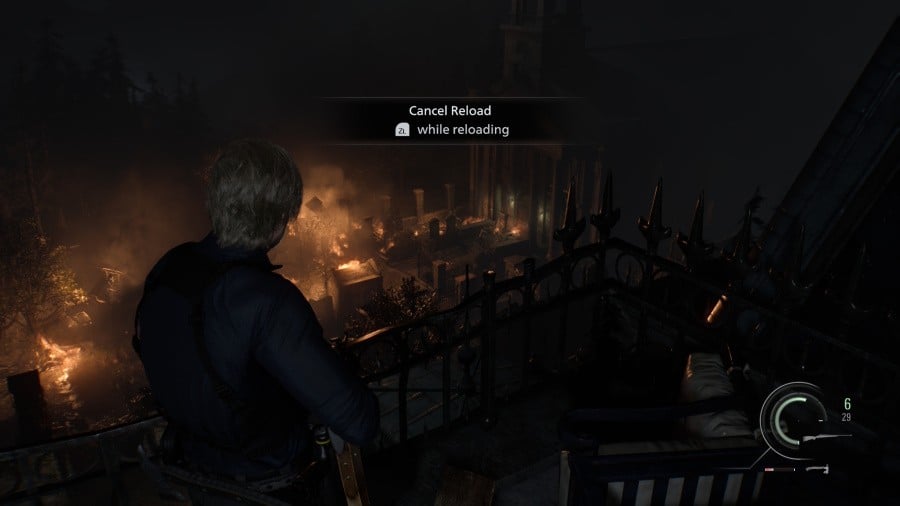
Requiem stars two playable protagonists: FBI agent and ‘scaredy-cat’ (Capcom’s words) Grace Ashcroft and series veteran Leon Kennedy, who’s still busy serving the Division of Security Operations. Together (well, mostly separately), they work to uncover a bunch of mysteries linked to the Umbrella Corporation, with newcomer and excellent antagonist Victor Gideon driving the narrative.
And make no mistake, Requiem’s narrative is utter nonsense in the best way. The way it rewrites a lot of the series’ backstory may drive a few die-hard fans ’round the bend, but I loved every second. RE7 and Village, as good as they are (particularly the former), were so tangentially connected to the wider narrative that they could have been named something completely different. Requiem is easily the most lore-heavy entry since RE5, one that goes back to corrupt corporations and deranged scientists while laying foundations for future games.
However bonkers the story is, it’s exceptionally well-told, with some wonderful voiceover work from Nick Apostolides as Leon, Angela Sant-Albano as Grace, and Antony Byrne as Gideon. Similarly, the music is consistently excellent, from the subtle, calming Save Room theme to the frantic numbers in the action sequences.
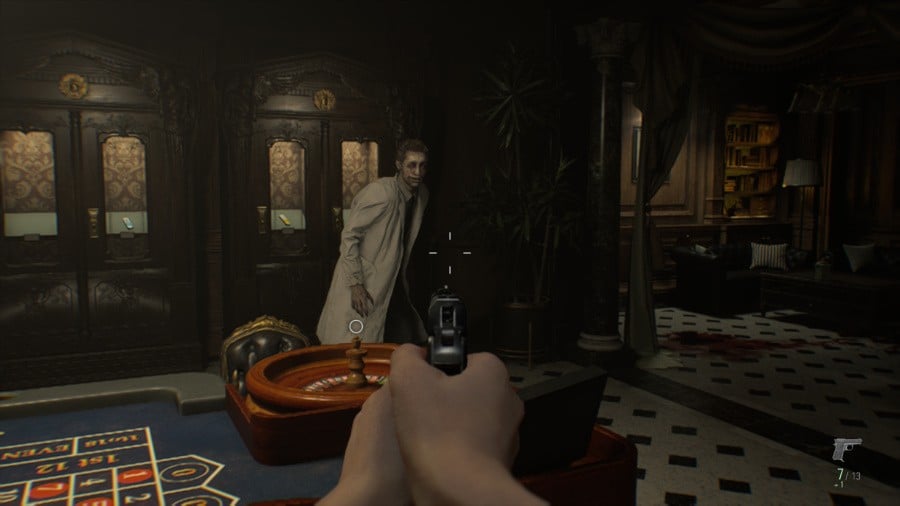
The story bounces between Grace and Leon from start to finish, with key narrative beats signalling a character switch. That said, the first half largely belongs to Grace, with Leon concentrated primarily in the latter half. Grace’s gameplay is the quintessential survival horror experience, focusing on limited inventory space, scarce ammo, and brutal, relentless enemies.
I played on ‘Standard (Classic)’ difficulty, which brings back ink ribbons for Grace’s sections, an additional, limited-number item that you’ll need to save your progress. Naturally, being able to put the Switch 2 in sleep mode without losing progress does nullify the need for ink ribbons somewhat, but they do still offer severe consequences if you die, so their inclusion absolutely forces you to be more cautious.
Crafting also returns, and here it’s tied entirely to the collection of blood samples found throughout the environment or from your fallen foes. By holding ‘A’ next to samples, Grace can use a dedicated item to extract the blood, with larger enemies providing a greater supply. By combining this with herbs and bits of scrap, you can create all sorts of useful items like med injectors, ammunition, steroids, and more.
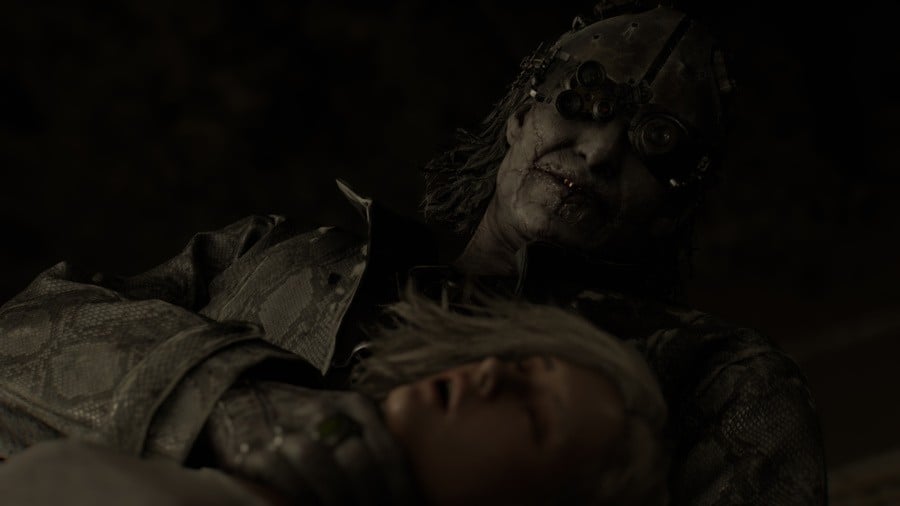
And yes, empty ink ribbon tins can also be found in the environment, so you can craft full ink ribbons too; definitely handy if you find yourself in need of one.
By having enemies provide essential blood samples, Requiem encourages you to kill them if you want to craft certain items. Like all great survival horrors, however, there are downsides to this. If you leave your fallen enemies lying on the ground too long, they’ll morph into Blister Heads (a clear nod to REmake’s Crimson Head zombies), which are generally much faster and more aggressive than their standard counterparts.
You can mitigate this by using craftable Hemolytic Injectors to make their bodies explode, or if you’re feeling particularly brave, you can sneak up on a zombie and use the injector instantly while they’re up and about. Again, though, it’s yet another item you’ll want to keep handy whenever possible, taking up a precious slot in your already-limited inventory.
The balance is simply fantastic and it makes for the purest survival horror experience since RE7. But of course, that’s just one half of the story.
Leon’s sections are a more direct evolution of the action-horror seen in RE4. Ammunition is much more plentiful, while the inventory system is a spin on the ‘attaché case’ approach seen in RE4 and Village, meaning you’ve instantly got a lot more space to play with.
Enemies are also more plentiful, with the game often putting you in situations in which you’re forced to fight off waves of zombies. Roundhouse kicks are back, of course, and Leon can make use of various melee weapons, picking up spears and hurling them at distant foes, or turning the tables with his very own chainsaw. It’s about time he got to wield one of those things, right?
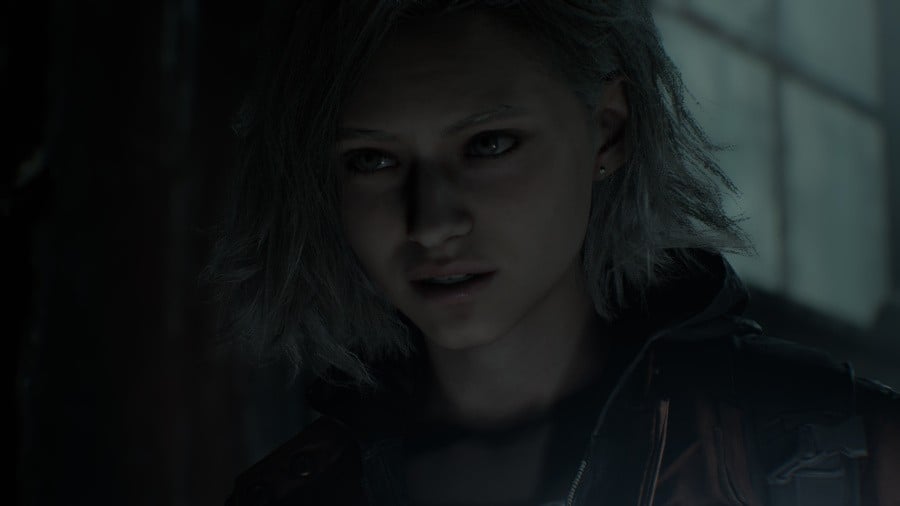
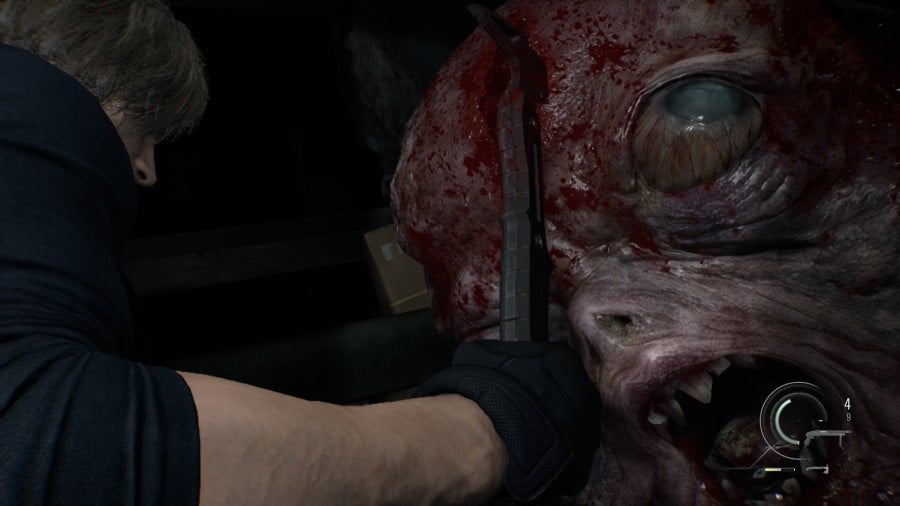
In addition to one-time melee weapons, Leon has a dedicated hatchet that you keep sharp by pressing ‘L’ and ‘Y’ together. It functions just like the defensive knives in RE4, meaning you can either use the hatchet directly against enemies at close range, or keep attacks at bay, with context-sensitive button prompts popping up to save your skin at the last second. It’s a great addition, and being able to sharpen it on the fly means you’re not limited to restoring its functionality at in-game shops.
The shops are indeed back, though. There’s no swashbuckling merchant in Requiem, but instead you’ll come across dedicated crates with a multitude of new weapons, armour, and recovery items. Currency isn’t located in the environment, but rather accrued automatically by killing enemies. Leon’s sections really encourage you to be as aggressive as possible, and you’ll find you have credits in the tens of thousands in no time at all, letting you boost your arsenal very quickly.
Much like Grace, Leon can also craft essential items, but given the swift nature of the gameplay, this isn’t tied to the collection of blood. Instead, you head into the crafting menu and combine the ingredients you wish to use. Simple.
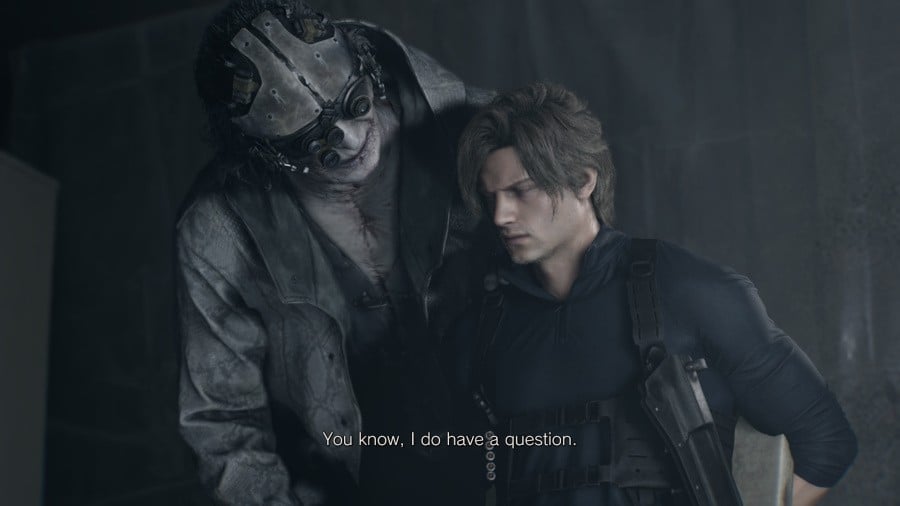
There were moments during Leon’s sections in which the action gets dangerously close to the frantic gameplay seen in RE6 – thankfully, however, it never quite reaches the same heights (or lows, if you like). Whenever things get a little too over-the-top, Capcom wisely pulls back to keep everything grounded.
All told, by combining Grace’s survival horror gameplay with Leon’s more action-focused affair, the pacing is pitch-perfect. I simply never felt bored, and with a sprinkling of nostalgic easter eggs throughout the latter half (which no, I won’t spoil here), it made for one of the most exhilarating entries in series history.
There’s plenty of replay value, too. I won’t go through exactly what’s unlocked upon completion (which, for the record, took me just under 12 hours), but needless to say you’ll have plenty of extra goodies to play around with to incentivise multiple campaign runs.
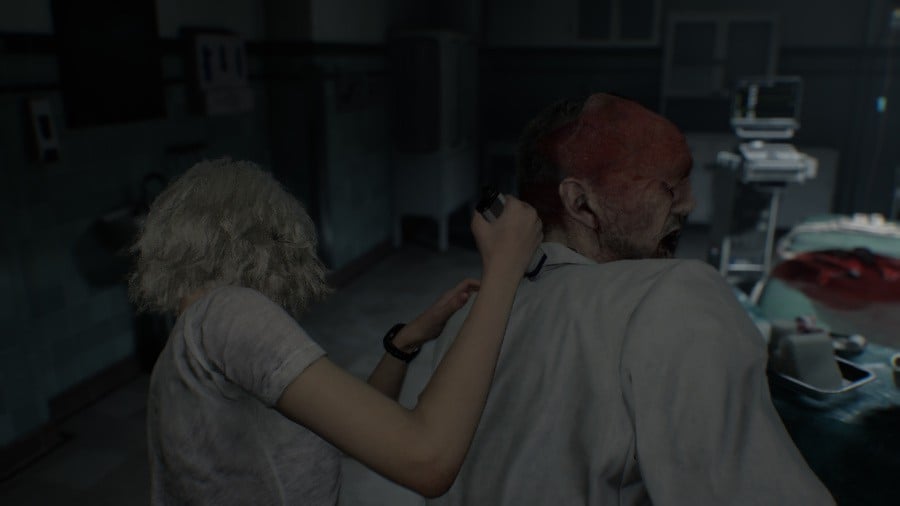
You can also play around with the camera on subsequent playthroughs (or your first, if you wish). Requiem recommends playing Grace’s sections in first-person and Leon’s in third — which I did on my first runthrough — but you can switch these around however you like for some interesting results. Sadly, there’s no Mercenaries Mode here, which seems ridiculous given the fast, addictive nature of Leon’s sections, but I suspect this might be added as DLC.
On Switch 2, Requiem mostly runs very well. Visually, it often looks incredible, with the environments in particular being a true standout thanks to excellent lighting and shadow effects. Things falter slightly with characters and items: hair often looks a little dodgy, while items picked up or examined will display some off-putting aliasing around the edges. These are cutbacks that I didn’t really notice with RE7 and Village, and it’s perhaps an indication of the advancements made with the RE Engine for Requiem.
Similarly, though frame rate is often gunning for a slick 60fps, there are moments in which it will become quite inconsistent when there’s a lot going on – usually during specific scenarios in which fire is heavily present in the environment. In my experience, this tends to be more noticeable during handheld play, but even then, I wouldn’t say it occurs enough to dampen the experience.
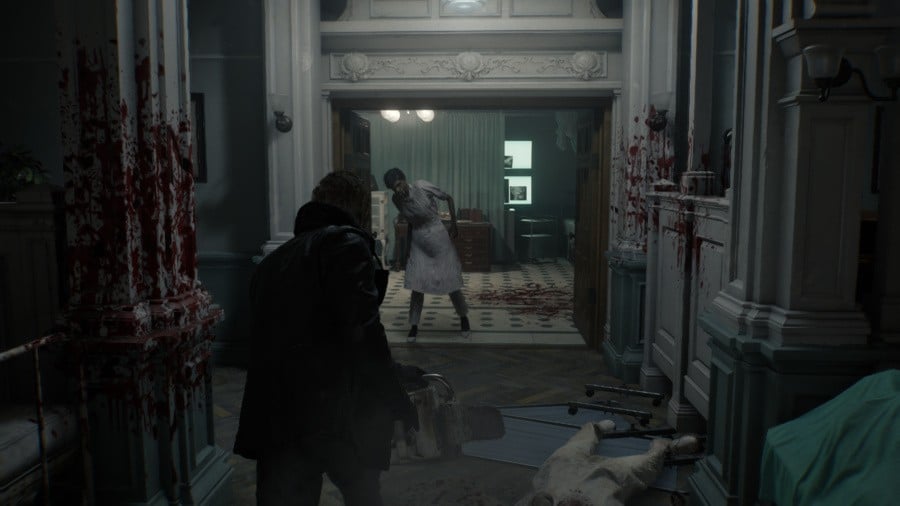
Ultimately, the Switch 2 can’t provide the most technically advanced version of Requiem, but the fact that Capcom got it running as well as it does is commendable.