dailynewsnblog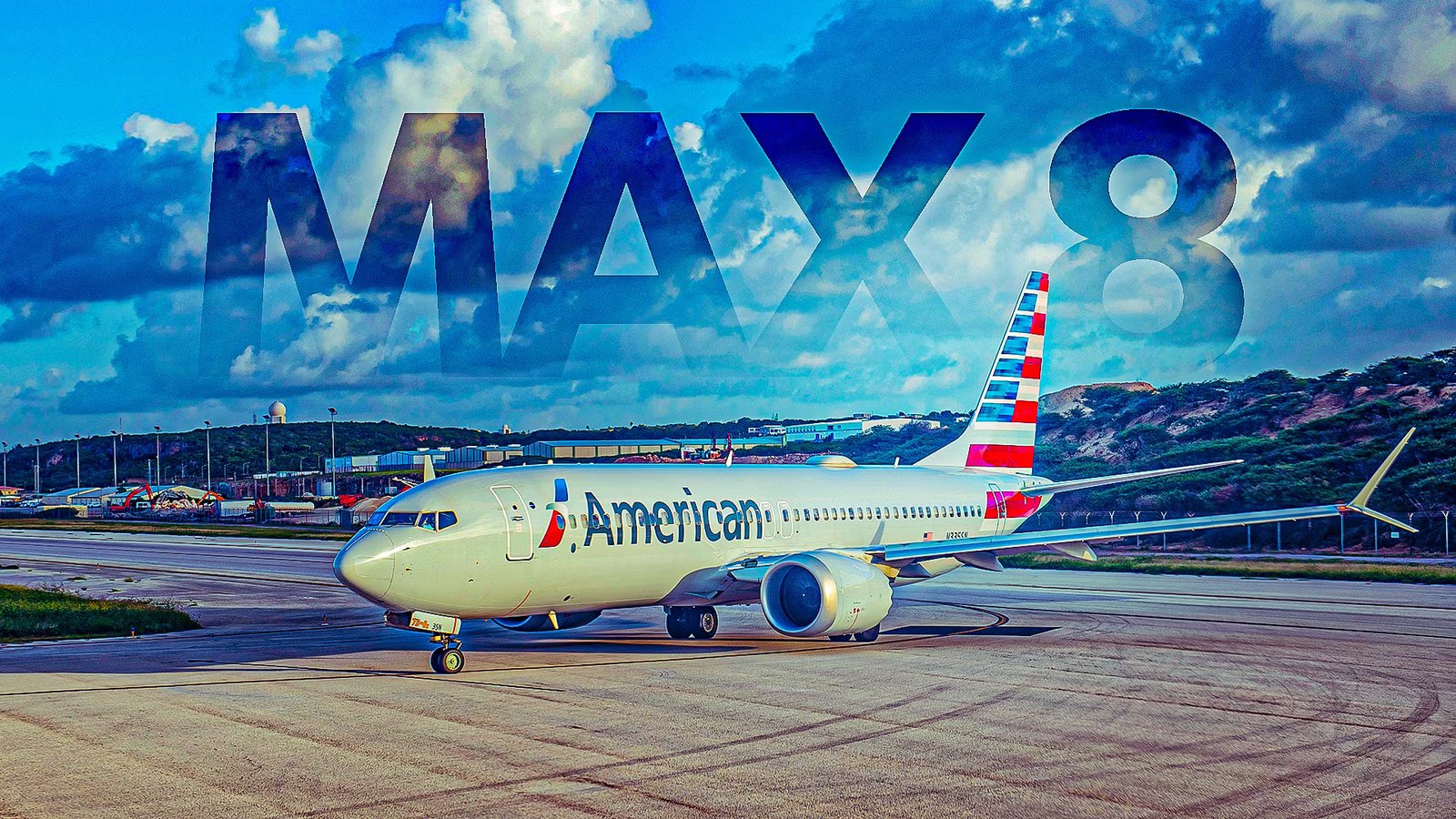
The right aileron of  American Airlines Flight 924 was found with gunshot holes after landing at
  Miami International Airport (MIA) on Monday. The extent of the damage has yet to be confirmed from what information is publicly available, but the continued operation of the Boeing 737 MAX 8 suggests that it may not have suffered substantial harm.
Tail number N342SX has since flown from Miami to Dallas-Fort Worth International Airport (DFW), where it will be taken in by American’s substantial maintenance facilities for comprehensive inspection and repair. According to FlightAware, no public records show the plane flying on any other missions since setting down at DFW on Monday.
A Public Menace To Safe Skies

It was early on Monday morning when the ill-fated jet took off from Medellin Airport (MDE) in Colombia. It landed in Miami at 10:30 AM and, according to the New York Post, this is when the ground crew discovered bullet holes in the plane’s wing. The aircrew reported no issues in flight despite the damage.
There were no flight handling problems or injuries to the more than 160 passengers on board reported after flying a normal profile, with a cruising level above 30,000 feet. Notably, this is the second time in recent years that an American 737 MAX 8 has been struck by gunfire in the region, with a 2024 incident happening in Haiti.
Colombian authorities suspect the aircraft was hit while landing in Medellín on Sunday. They are presently looking into a suspected criminal organization that might be responsible for the gunshots. Following the event, American Airlines issued a short statement to the New York Post:
“The aircraft was immediately removed from service for further inspection and repair. We will work closely with all relevant authorities to investigate this incident.”
Keeping Flyers In The Air

Once the Boeing 737 Max 8 airplane arrives at the Dallas-Fort Worth repair depot, American Airlines personnel will conduct a thorough inspection and analysis of the damage. This crew will next implement repair methods to guarantee that the jet is not only safe to fly but also behaves exactly as it did before being damaged by gunfire.
The assessment area is much larger than the visible puncture, and gunfire can cause radiating cracks beyond the bullet hole. To avoid stress concentrations at sharp corners, the affected area is cut out, typically in the shape of an oval or circle. Because the 737 MAX 8 is made of a combination of composite and aluminum, the repair technique varies depending on the aileron’s particular material.
If the damaged piece is made of metal, a reinforcing plate is cut and welded over the hole to repair structural integrity. If the aileron skin is composite, technicians employ taper sanding to smooth out the edges of the hole before attaching fresh layers of carbon fiber and resin.
The movement of the aileron is tested after the physical patch is finished to make sure it stays precisely balanced and reacts to pilot commands. The aircraft is repainted to match its livery and put back into regular service once the repair has been confirmed to meet FAA Airworthiness Standards.

How Long Did American Airlines Take To Repair Its Gunfire-Struck Boeing 737 MAX 8?
It took several days to return the Boeing jet to service.
Spillover Of America’s Intervention

There is no direct connection between the incident with American’s jetliner that was shot this weekend, however, this incident did take place during a period of extreme regional instability. On the same weekend that NS432SX was hit, Mexico saw widespread armed violence by drug cartel gangs following the killing of a drug kingpin: ‘El Mencho’ of the Jalisco New Generation Cartel (CJNG).
Just last month, President Donald Trump’s administration initiated a military intervention in Venezuela with the use of US Army special forces. Colombia, a vital US partner in the region, mobilized its armed forces along the Venezuelan border in response to worries of retaliation or a refugee problem in the aftermath of Nicolas Maduro’s kidnapping.
American Airlines’ presence in the region was further highlighted by the recent announcement that it would resume flights to Venezuela for the first time since 2019. Cross-border operations are carried out by cartels such as CJNG, which also maintain partnerships with indigenous armed groups in Colombia. Aggression against alleged representations of US and state authority has escalated throughout Latin America as a result of Mexico’s battle with cartels.