dailynewsnblog
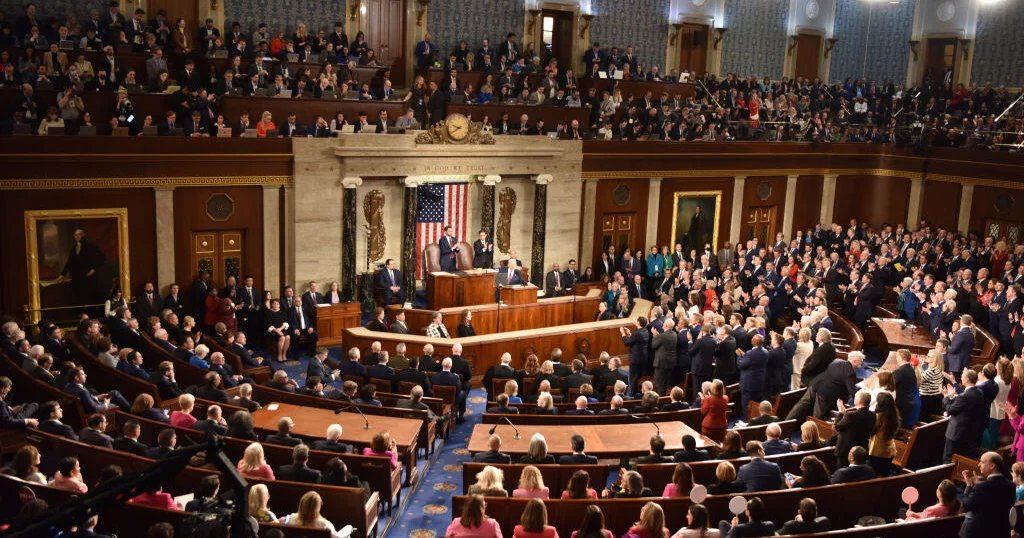
President Trump is expected to focus on the economy during his 2026 State of the Union address on Tuesday evening — an urgent topic of concern for millions of Americans who say they’re worried about everything from the price of food to spiraling health care costs.
The address, which will air at 9 p.m. EDT, will highlight the strength of the U.S. economy, with White House spokeswoman Karoline Leavitt saying on Tuesday morning that the president will outline plans to “make the American dream more attainable.”
By conventional metrics, the economy looks resilient. Unemployment remains low at 4.3%; inflation is cooling; and GDP is expanding, with the U.S. largely shrugging off the impact of tariffs that economists feared could trigger a recession. Consumers — whose spending keeps the economy humming — also report feeling more confident of late amid a burst in January job creation.
At the same time, many households still report grappling with stubbornly high prices for essentials like food, housing and health insurance, a disconnect that underscores the challenge Mr. Trump faces in touting his economic record.
Mr. Trump has offered a range of proposals to address affordability issues. Yet some of the most visible initiatives, such as a push to cap credit card rates at 10%, have yet to show benefits, Bankrate senior economic analyst Mark Hamrick said in an email.
Americans polled by the Pew Research Center in January said their top economic concerns are the cost of food, housing and health care.
Food prices
The cost of food has been a flashpoint for consumers since inflation soared to a 40-year high in 2022. High food prices also bedeviled former President Biden, prompting Mr. Trump to vow while on the campaign trail that he would end the “inflation nightmare.”
Since Mr. Trump returned to office in 2025, food prices have continued to climb, although at a slower pace than under the Biden administration, when pandemic-related supply disruptions drove price hikes.
But economists have long noted that shoppers tend to be more focused on the prices they see on store shelves than the rate of inflation. Although food costs are rising more slowly, prices of some staples have continued rise sharply in the past year: Ground beef has jumped 17.2% from a year ago, while coffee has surged 18.3%.
The Trump administration has sought to counter rising food prices in part by exempting beef, coffee and bananas from tariffs. Earlier this month, Mr. Trump also said he would boost U.S. imports of beef from Argentina in an effort to ease prices.
Because beef imports from Argentina represent only 0.6% of the overall U.S. beef supply, that policy is unlikely to move the needle on prices, experts have told CBS News.
Housing affordability
More than 8 in 10 Americans say it is harder today to buy a home than it was for earlier generations, according to a CBS News poll that surveyed consumers in early February. Pew also recently found that 62% of Americans report feeling concerned about the cost of housing.
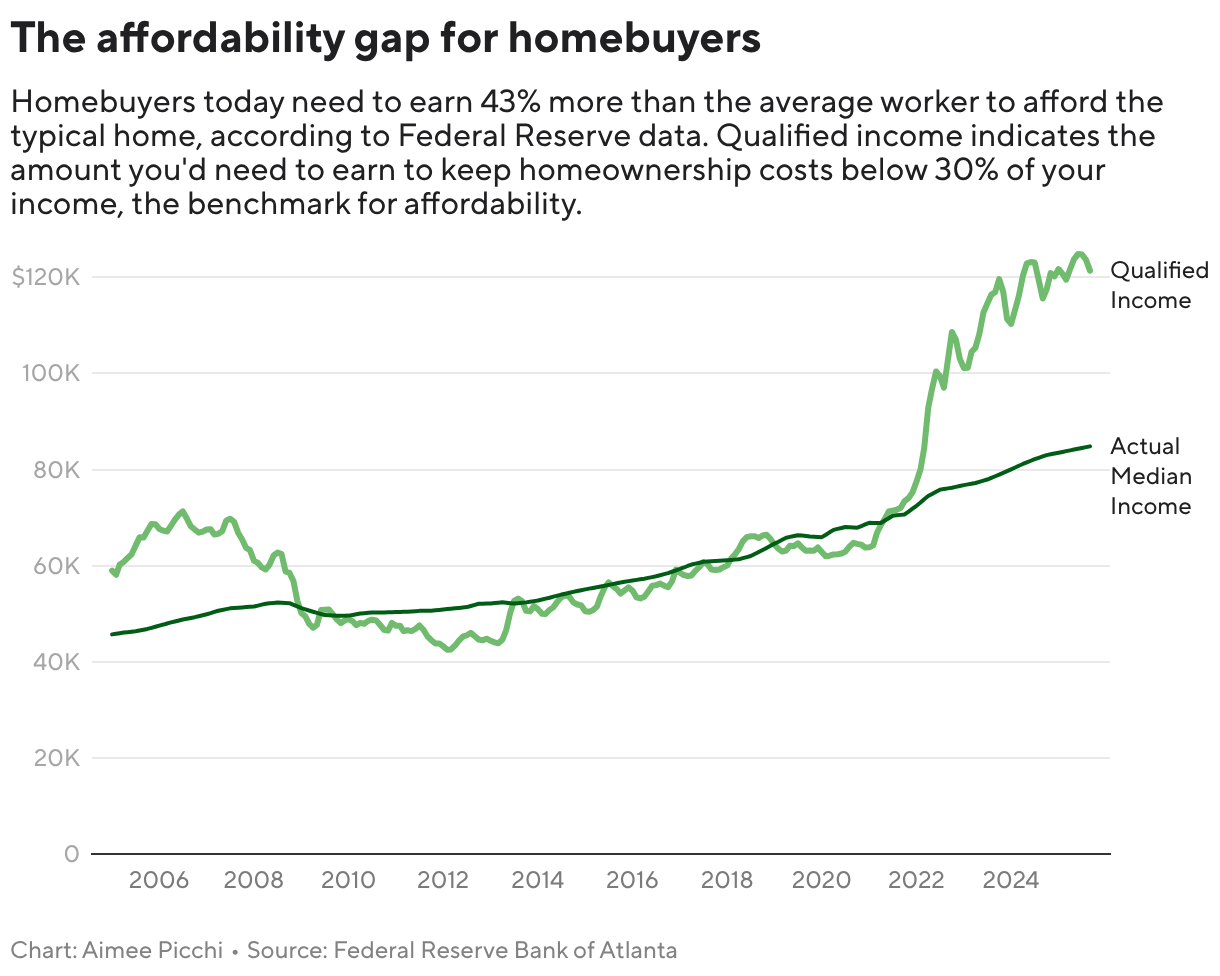
The Trump administration has proposed several remedies, including banning institutional investors from purchasing single-family homes. The president has also directed the federal government to buy $200 billion in mortgage securities, a move that could help lower the cost of home loans.
Experts say that those ideas may provide some relief, but aren’t likely on their own to address the deeper issue behind rising home prices: a shortage of affordable housing. Homebuilding cratered after the Great Recession in 2008-09 and has never caught up with demand.
The U.S. would need to build as many as 4 million additional homes beyond the normal pace of construction to significantly reduce the housing shortage, Goldman Sachs analysts estimate.
Health care spending
Paying for health care has emerged as Americans’ top financial worry after Congress failed last year to extend some Affordable Care Act subsidies, triggering premium spikes for millions, health policy research firm KFF found in a recent poll.
Meanwhile, workers with employer-sponsored health insurance face increases of about 6% to 7% in 2026 — more than double the current rate of inflation. Since 2008, the cost of private health insurance has roughly doubled, KFF found.
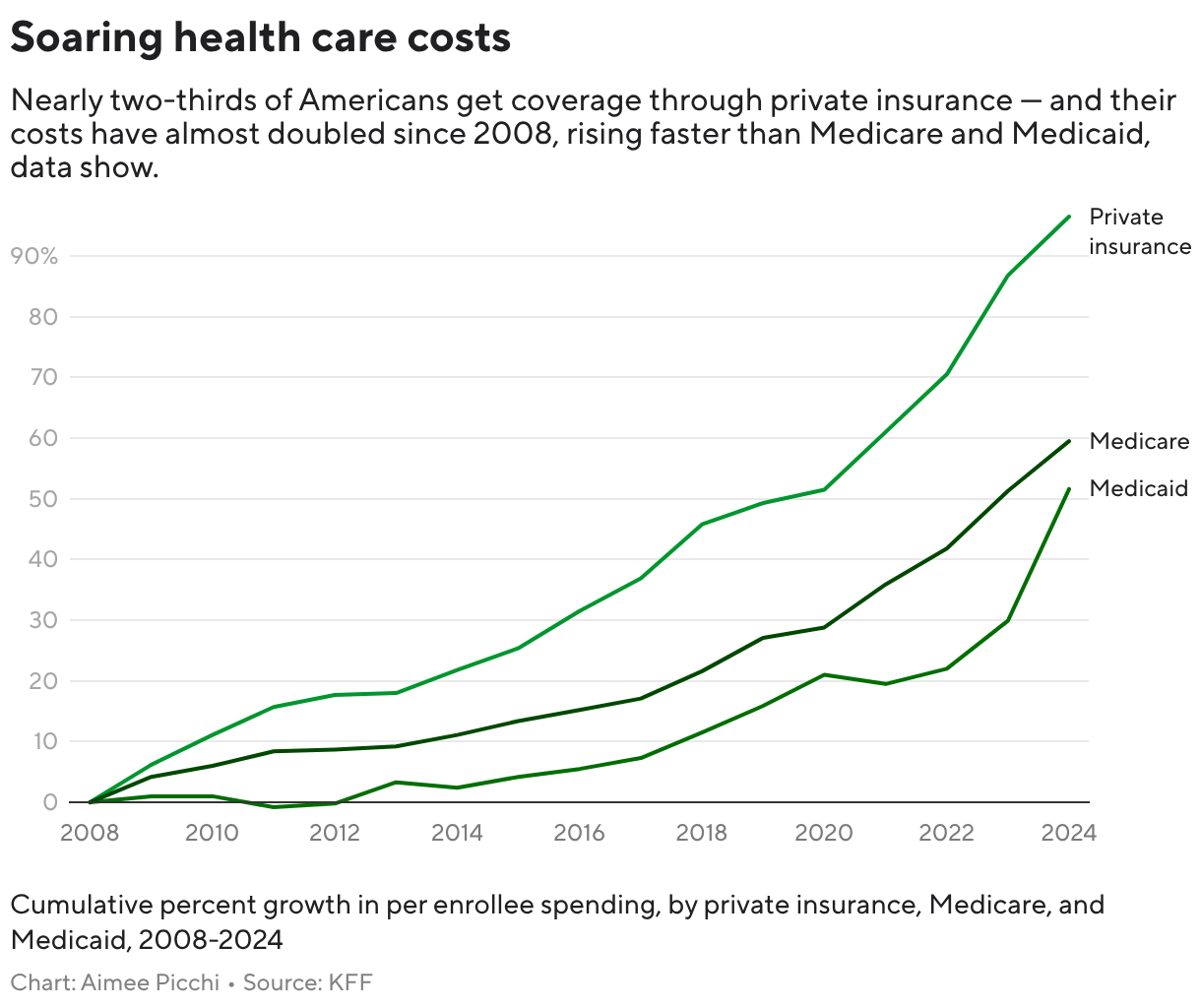
Millions who rely on the Affordable Care Act marketplaces for insurance plans faced even sharper spikes after Congress failed to extend enhanced premium subsidies, which expired Dec. 31. Some Americans told CBS News they planned to skip coverage this year because they couldn’t afford their soaring premiums.
The Trump administration is tackling drug costs through its new TrumpRx website, which lists lower direct-to-consumer prescription prices. Mr. Trump described the site as “one of the most transformative health care initiatives of all time.”
But experts note that the site is geared to consumers who pay out of pocket, meaning that it doesn’t help people with insurance and won’t count toward meeting a consumer’s health plan deductible.
The Republicans’ “big, beautiful bill” act also paid for tax cuts by significantly trimming spending on Medicaid and other social programs, Vanessa Williamson, senior fellow at the nonpartisan Urban-Brookings Tax Policy Center, noted in an email.
“When you add to that the refusal to extend the Affordable Care Act credits, which caused health insurance premiums to double for millions of Americans, and the cuts to affordable energy programs, you can see Americans were really hit in their wallets over the last year,” she said.