dailynewsnblog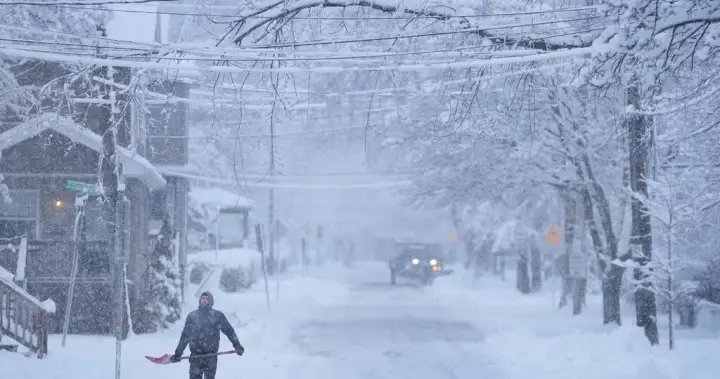
Workplace injuries related to winter weather are up about 40 per cent compared to last year in Nova Scotia.

And according to the Workers’ Compensation Board of Nova Scotia (WCB), the three days following a storm are when those injury claims typically spike. This is important to note, as the province cleans up from yet another nor’easter that swept through the region Monday.

“We can’t prevent the weather, but we can prevent weather-related injuries,” said Shelly Dauphinee, WCB’s chief engagement officer, in a release.
“As this storm passes, we want everyone to be mindful of their safety, especially over the next few days.”

Get weekly health news
Receive the latest medical news and health information delivered to you every Sunday.
WCB, which is the province’s provider of workplace injury insurance, says its data shows the overall rate of injuries that cause time loss from work is at an all-time low.
However, the claims registered due to weather-related injuries are higher this year.
As of Jan. 30, WCB received 278 snow and ice-related injury claims this season. That’s compared to 197 during the same timeframe in 2025, and 217 the year before that.
The board says if the pace holds through, this winter is on track for an above-average winter of weather-related injuries.


WCB adds that an analysis of 1,700 claims across the last three winters showed that two-thirds of winter workplace injuries are trips, slips and falls — often on icy sidewalks and unshovelled walkways.
During the past three winters, including this current one, 121 people reported broken bones and 58 experienced head injuries, including concussions.
WCB is encouraging employers to consider flexible schedules when conditions are hazardous and to provide proper equipment and training for snow removal.
Workers are also advised to wear winter boots, slow down and pace themselves when shovelling.

© 2026 Global News, a division of Corus Entertainment Inc.



![Only 59% Full: Delta Air Lines’ 10 Surprisingly Empty Long-Haul Routes Revealed [List & Map]](https://dailynewsnblog.com/wp-content/uploads/2026/07/delta-air-lines-mock-up.jpg)