dailynewsnblog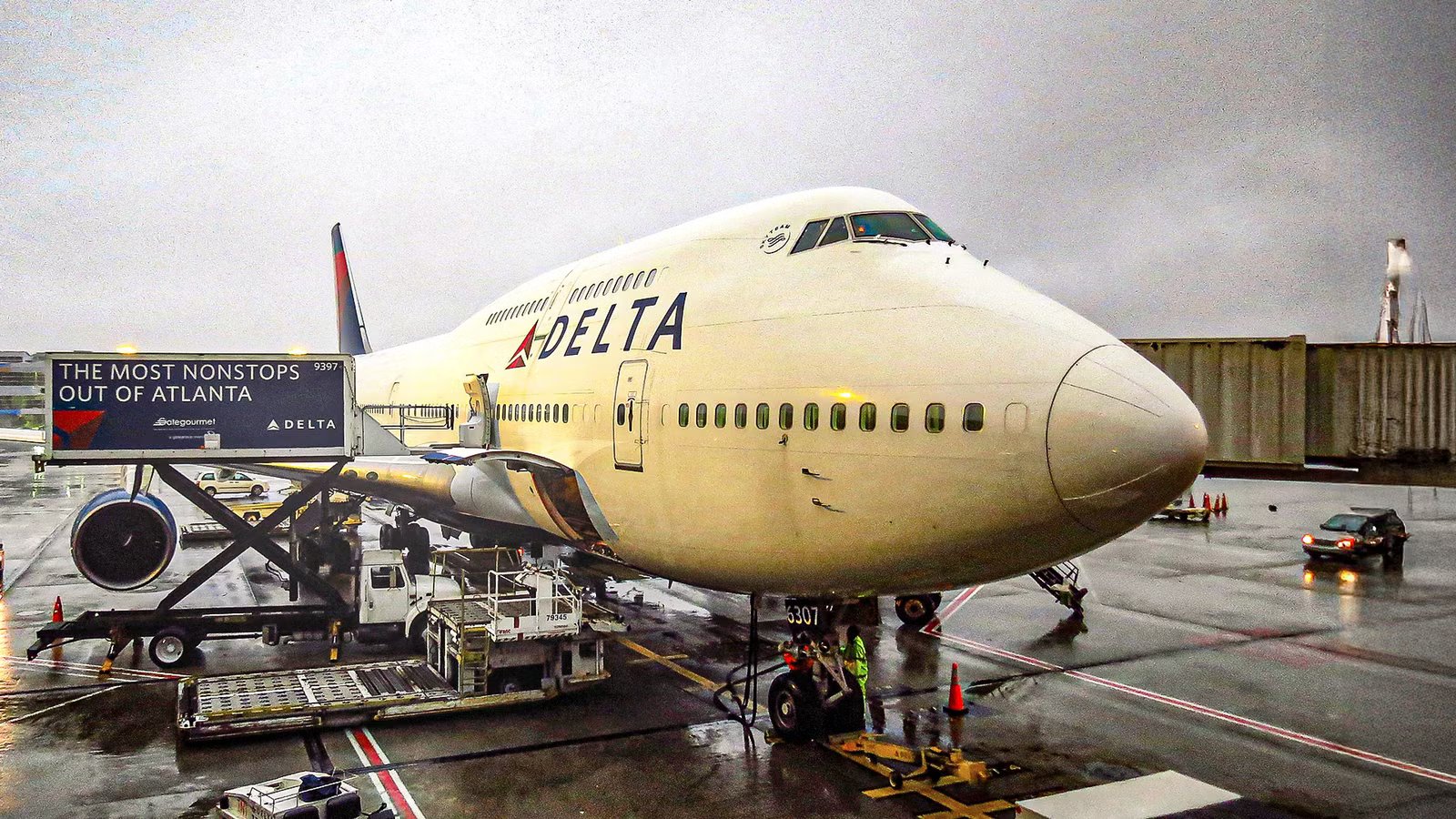
For most airlines, an aircraft type is rarely retired for multiple decades only to return in full force years later. Yet, that is precisely what happened when  Delta Air Lines found itself operating the iconic Boeing 747 after an 18-year absence. Given the initial retirement and long gap between Delta’s first and second time operating the 747, the question of why Delta brought back the jumbo jet remains.
Diving deeper, however, reveals a decision rooted in a major merger and evolving network strategy. The return of the 747 to Delta’s fleet was a strategic and necessary business decision, one that allowed Delta to expand its presence as one of the world’s largest airlines across both the Atlantic and Pacific oceans.
The World’s First Jumbo Jet: The Boeing 747

On February 9, 1960, the Boeing 747 took off for the first time, revolutionizing commercial air travel forever. Developed during the late 1960s, the 747 was designed to dramatically increase passenger capacity while lowering seat-mile costs. Its distinctive hump-backed upper deck, originally used as a lounge space for passengers but later converted to additional seating space on later variants, and immense size earned it the nickname “Queen of the Skies.”
At launch, the first variant of the 747, the 747-100, could carry more than 350 passengers in a typical configuration, nearly double the capacity of many aircraft flying at the time. Airlines like Pan American World Airways (Pan Am), Trans World Airlines (TWA), Northwest Airlines, and  United Airlines all embraced the jumbo jet as a way to expand long-haul travel and open new intercontinental routes. With a range well over 5,000 nautical miles (9,260 km), later growing to nearly 8,000 NM (14,810 km) on the most recent 747-8 variant, the 747 allowed carriers to consolidate demand, leading to lower operating costs for airlines and lower ticket prices for passengers.
Over its 54-year production run, Boeing completed 1,574 747 aircraft across all of its major variants, including the 747-100, 747-400, 747-800, and freighter variants of each as well. While Boeing ended production of the Boeing 747-8 in early 2023 due to the rise of more efficient twin-engine widebody aircraft, the Queen of the Skies will remain known as the aircraft that ushered in the modern age of commercial aviation.
Delta Air Lines And The Boeing 747-100: The First Seven Years

Delta’s initial relationship with the Boeing 747 began shortly after the aircraft’s debut. On October 2, 1970, Delta took delivery of its first Boeing 747-100, which entered commercial service just three weeks later on October 25, 1970. Four additional 747-100 series aircraft were delivered in the following year, bringing Delta’s 747 operation up to five aircraft by November 1971. These jets marked Delta’s entry into the widebody era and were configured to carry roughly 370 passengers. However, while the 747 offered impressive capacity, it was not ideally suited to Delta’s operational needs.
At the time, Delta’s route network was largely domestic, supplemented by limited international routes, many of which were part of the Delta/Pan Am European interchange agreement (similar to transatlantic joint ventures today). Within its network, Delta mainly deployed its jumbo jets between major U.S. cities, like Atlanta, Chicago, Dallas/Fort Worth, Detroit, Los Angeles, Miami, New York, and San Francisco, according to the Delta Flight Museum. Occasionally, however, Delta also deployed its 747s on some of Pan Am’s European routes, flying from Atlanta and Washington, DC, to London and Frankfurt.
These early 747s marked countless firsts for Delta and were loved among customers. Onboard the upper deck of the aircraft, Delta introduced a unique six-person private penthouse, the first such offering in the industry. Additionally, the 747 became the first Delta plane to feature personal audio systems for passengers and overhead bins for carry-on bags rather than luggage racks.
However, by the mid-1970s, Delta began to reassess its fleet strategy. Between 1974 and 1977, Delta returned all five of its 747-100 aircraft, reverting to a fleet of smaller widebody and narrowbody aircraft that better fit the airline’s domestic-heavy network. This early experiment with the 747 concluded that the jumbo jet’s size and economics did not align with Delta’s operational needs.

How The Boeing 747 Made A Comeback At Delta Air Lines
30 years after the carrier initially retired the jumbojet, it made a comeback to its fleet.
Northwest Airlines’ Strong Ties With The Boeing 747

While Delta stepped away from the 747, another US carrier built a strong long-term relationship with the aircraft. Northwest Airlines, which later merged with Delta in 2008, became one of the 747’s most committed operators, operating the Boeing 747-100, 747-200, 747-400, and 747 freighter variants. In total, after introducing the 747 in 1970, Northwest operated 53 Boeing 747 aircraft, placing it among the world’s largest 747 operators, alongside Cathay Pacific and Air France.
Before merging with Delta, Northwest was the world’s sixth-largest airline and operated a substantial international and domestic network. With large hubs in Minneapolis and Detroit, as well as international hubs, most notably in Tokyo, Northwest operated extensive international services to Asia and beyond. These long-haul international routes generated the kind of passenger demand that justified operating a large four-engine aircraft, like the Boeing 747.
Given the airline’s global route network, the 747 became central to Northwest’s identity, as the airline became the launch customer of the 747-400 and one of just two U.S. airlines to operate the type. The aircraft’s high seating capacity allowed the airline to grow its Pacific network efficiently, while the aircraft’s range made flights from the US to Asia possible without requiring stops. By the early 2000s, Northwest’s 747-400 fleet remained the backbone of its international operation. Even as other carriers had begun to rely more heavily on twin-engine aircraft, Northwest continued to operate a strong fleet of 16 747-400s through the first decade of the 21st century.
18 Years Later: Delta Brings Back The Queen Of The Skies

The pivotal moment in the Boeing 747’s return to Delta came in 2008, when Northwest Airlines announced its merger agreement with Delta. The merger created one of the world’s largest carriers and significantly expanded Delta’s international footprint, particularly across the Pacific.
With the merger, Delta inherited Northwest’s fleet of Boeing 747-400 passenger aircraft, along with A319s, A320s, A330s, and Boeing 757s. Rather than retire the 747, Delta decided to keep its new 747 fleet flying, maintaining and expanding its global network. Retrofitted with new interiors, including lie-flat business class and personal inflight entertainment screens, Delta’s 747s primarily connected the carrier’s Detroit hub with Asia, including flights to Seoul, Tokyo, and Shanghai.
By 2014, Delta decided to officially retire the 747 for the last and final time, anticipating deliveries of the Airbus A350-900 and increased reliance on newer twinjets like the Boeing 777. In 2017, the final year for the 747 at Delta, routes averaged 6,540 miles (10,500 km), reflecting the aircraft’s purpose as a long-haul international workhorse. On December 19, 2017, the final chapter of commercial U.S. 747 operations came to a close, with Delta operating one final flight from Seoul to Detroit.

10 Things You (Probably) Didn’t Know About The Boeing 747
The Boeing 747 is one of the world’s most iconic passenger jets, with endless trivia to know of it.
The Strategic Case For Reintroducing The 747 Into Delta’s Fleet

While in total the second life of the 747 at Delta lasted around seven years, the same length as Delta’s initial relationship with the jumbo jet, the 747-400 played an important strategic role in Delta’s operations. For starters, retiring the 747 would have resulted in Delta losing much of the international capacity it had just gained from its merger with Northwest. Rather than rapidly restructuring the new joint network, Delta was able to maintain and even expand service across the Pacific.
Additionally, the 747 served as a bridge to the next generation of widebodies. Delta had placed orders for newer, more fuel-efficient aircraft such as the A350-900, which would eventually replace the 747 on nearly all of its routes. However, with Delta’s A350 deliveries not beginning until 2017, the 747-400 remained an integral part of Delta’s fleet, especially on long-haul routes where passenger demand justified the aircraft’s operating costs.
Nevertheless, the 747 was never meant to remain a part of Delta’s fleet in the long-run. Rising fuel costs, environmental considerations, and the introduction of advanced twin-engine aircraft gradually eroded the economic case for continuing 747 operations. The A350 and Boeing 777 each offer comparable range with lower fuel burn and maintenance requirements.
The Lasting Legacy Of The Boeing 747 At Delta

Although the Boeing 747 no longer flies for Delta, its legacy remains deeply embedded in the airline’s history. From its initial operation in the 1970s to its resurgence following the Northwest merger, the Queen of the Skies represented two distinct chapters in Delta’s growth as an airline. The aircraft embodied Delta’s transformation into one of the world’s largest airlines, serving destinations on six of the seven continents.
Ultimately, Delta brought back the Boeing 747 because Northwest Airlines was a major operator. Given the two airlines’ 2008 merger, retiring such a substantial part of Northwest’s fleet would have removed much of Delta’s newly acquired international capacity, eliminating a major reason for the merger. In the 2010s, the 747 served its purpose well, providing a crucial bridge to the next generation of long-haul operations.
Today, one of Delta’s former 747-400 aircraft remains on display at the Delta Flight Museum in Atlanta, preserved as part of the airline’s heritage. Visitors can explore the aircraft and experience firsthand the scale and engineering that defined an era of aviation. While Delta may still not fly the jumbo jet, it will remain an important part of Delta’s rich 101-year history.