dailynewsnblog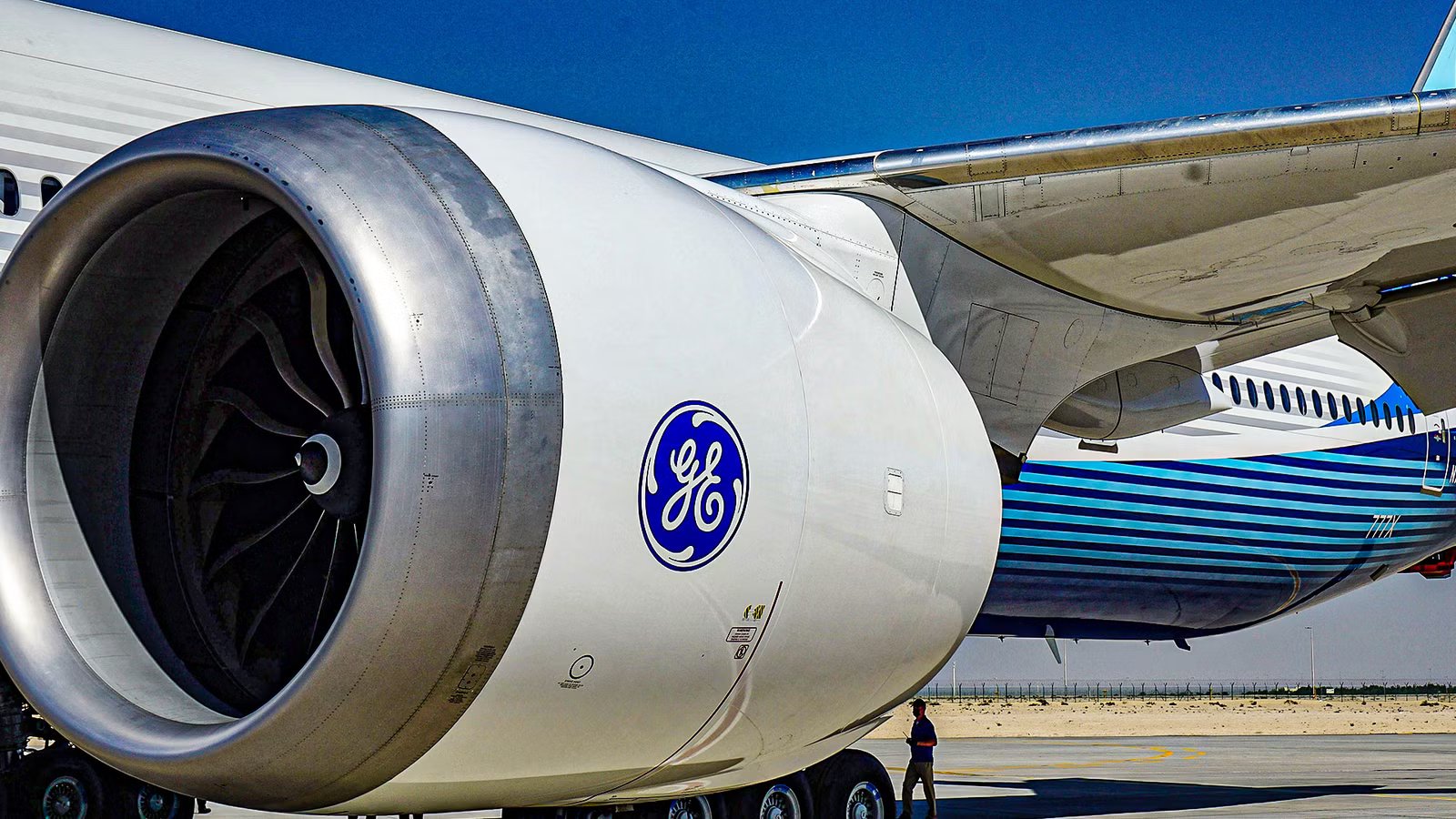
Engine chevrons have become commonplace on modern airliners over the past decade. The shark-toothed design seen at the rear of some engine designs is not to improve the engine’s appearance or make it more memorable to passengers; it actually serves a real purpose. To reduce engine noise emitted by the aircraft.
This issue has been a central issue in aviation for many decades, so why doesn’t the world’s largest commercial engine have chevrons? As with any engineering development, there are some drawbacks. This article will explore both the positives and negatives associated with them, as well as whether they will be seen in the future.
What Are Engine Chevrons?

Engine chevrons are sawtooth edges at the rear of aircraft engines. They were developed by NASA in the 1990s and early 2000s to help aircraft manufacturers reduce the amount of aircraft noise. Having been tested for the first time on March 27, 2001, they quickly became the new standard in engine design.
 Boeing, in particular, adopted chevrons in its aircraft. They can be seen on their 787, 747-8, and 737MAX products. Interestingly enough, all of these aircraft use different engine manufacturers. The 787 uses both Rolls-Royce and General Electric; the 747-8 uses General Electric; and the 737 MAX uses CFM propulsion. Airbus only included chevrons on their CFM-powered A321s as standard, and as an option on A320 aircraft. They, however, made the chevrons available only in the inner (core) nozzle.
NASA has said chevrons reduce engine noise by 2 to 4 decibels, a reasonably significant reduction. From a perceived noise standpoint, a reduction of 3 decibels of noise is the equivalent of the difference between running two lawnmowers and one. In 2025, 3,000 Boeing aircraft in service were fitted with the device.
Why Won’t The 777X Not Feature Chevrons?

The Boeing 777X features the GE9X engine, the world’s largest commercial engine. Developed by General Electric, it can produce an astonishing 134,300 pounds of thrust, the equivalent of 597.396 kN, according to the manufacturer. This huge thrust capability is partly thanks to the exclusion of chevrons from its design. However, without chevrons, won’t this eliminate the leaps forward in noise reduction? You would be forgiven for thinking so, but General Electric has come up with a new, more efficient method for reducing noise.
Thrust Limitations — How chevrons work is dampening engine vortices by creating more vortices to surround and smooth them. However, as you create more vortices, you are effectively removing energy from the source. This reduces the thrust produced by the engine, the entire point of a jet engine in the first place. Engine chevrons drop thrust by around half a percent. This may seem tiny, but over time that adds up, leading to increased fuel consumption of up to 0.5%.
New Solution — General Electric developed a brand-new nozzle design using ceramic-matrix composite materials. Essentially, these materials are so heat-resistant, they allow for a more compact exhaust system, which produces fewer vortices in the first place. This eliminates the need for chevrons outright and the associated thrust limitations.
The impact of engine chevrons wasn’t too significant for Boeing to overlook them. However, their main competitor, as discussed above, Airbus, took a different stance on most of its aircraft. They were never as keen on this technology as mentioned in the article below.

How Boeing’s Engine Chevrons Still Pose A Problem To Performance
They help reduce engine noise levels significantly.
Do Reductions In Noise Save Airlines Money?

In short, yes, airlines save money by operating quieter aircraft. It is so significant that it has affected airlines’ decision-making process when purchasing new aircraft.
One extremely prominent example is airport slots. In 2023, London Heathrow Airport introduced a new pricing system that is based directly off of how much noise emissions aircraft produce. Examining the Irish flag carrier,  Aer Lingus‘ Heathrow operations, they almost exclusively operate Airbus NEO aircraft into the European hub. Their A320neo aircraft were purchased with these flights in mind. Interestingly enough, they also operate both A321LR and XLR aircraft from Dublin to Heathrow, making their long-haul business class product available to passengers on a flight of only one hour in length. This stance is taken by the majority of airlines operating to Heathrow today, as a look at any recent plane-spotting video will show the huge number of “new generation” jets in and around the airport.
Airlines will take any opportunity to save money, so seeing improvements to an existing, proven platform such as the 777 will be popular with them. This will explain the over 600 777x orders from a multitude of airlines across the world, with Emirates and Qatar leading the charge, having ordered around 100 each. Emirates in particular showed their confidence in the aircraft at the 2025 Dubai Airshow, ordering an additional 65 777Xs in a deal worth US $38 billion at list prices, bringing their total to 270 777Xs on order.
What Else Can Engine Manufacturers Do To Reduce Noise?

With the GE9X focusing on nozzle advancements for its noise reduction, other manufacturers have focused on acoustic liners, fan blade shaping, and increasing the bypass ratio. These alternatives also reduce noise without the impacts chevrons have on efficiency.
These alternatives don’t come with their drawbacks. Weight and complexity are huge considerations here. Acoustic liners add weight to the engine as they are attached to the inside of the engine nacelle and bypass ducts. They also add an element of complexity to both construction and maintenance. The GE90 uses these liners, which have become, in aviation terms, dated technology compared to the latest advancements.
Using high bypass ratios also reduces the amount of noise produced by engines. It lowers the jet velocity produced by the engine, thus reducing noise. Engines such as the Rolls-Royce Trent XWB, seen on the A350, and the CFM Leap pursue ultra-high bypass ratios to reduce noise. Furthermore, Pratt & Whitney uses a geared turbofan system on their PW1000G family of engines to reduce fan-generated tonal noise. These are commonly seen on Airbus A220s and Embraer E2 aircraft. Unfortunately, these engines have not been without their own issues and have caused multiple groundings worldwide over the past few years. We previously covered Swiss Airlines’ grounding of A220 aircraft here on Simple Flying.

How Much Larger & More Powerful Is The 777X’s GE9X Engine Than The 777’s GE90?
The GE9X may be the largest turbofan ever built, but by just how much does it surpass its mighty predecessor, the GE90?
Are There Any Risks Associated With Not Using Chevrons?

In short, the risks or limitations associated with not using engine chevrons are minimal. However, there are some slight elements of the decision that cannot be overlooked. They mainly lie in the realms of maintenance requirements and operational limitations.
Using ceramic matrix composite materials increases the complexity of the initial construction of the engine and any maintenance carried out throughout its operating life. The shift from external shaping, chevrons, to internal flow and material design may cause complications in the future, but there is no way to know this yet. Furthermore, the aircraft may have a higher sensitivity to operational noise factors. Aircraft are louder when things like flaps and landing gear are deployed. This places a greater emphasis on flight procedures rather than hardware improvements.
Overall, the lack of chevrons is a benefit to the 777X. Over the years of long-haul flying, the increase in efficiency will compound significantly. Look out for how pilots are required to fly around certain airports in the future, especially those located in populated areas. One place where this is prevalent already is John Wayne Airport in California. Pilots must comply with relatively drastic noise abatement procedures, which can be an interesting experience for passengers. Why not read more here?
Are These New Developments The Way To Go?

It is clear why the GE9X will not feature engine chevrons. From increased efficiency and power output to reduced noise output and advancements in materials technology within the machine, these engines are set to be an extremely beneficial piece of innovation for the entire aviation industry.
As the industry adapts to increasing regulations, particularly regarding noise and carbon emissions, these developments in engine efficiency and sound reduction have become paramount. Finding a balance between these elements is key to success in aviation today. The GE9X is currently the leader in this quest. Since chevrons are, in aviation terms, a recent development, they won’t be disappearing from our skies anytime soon. However, we should all enjoy seeing the unique shark-tooth design before we fully return to the more “traditional” designs of the past.