dailynewsnblog
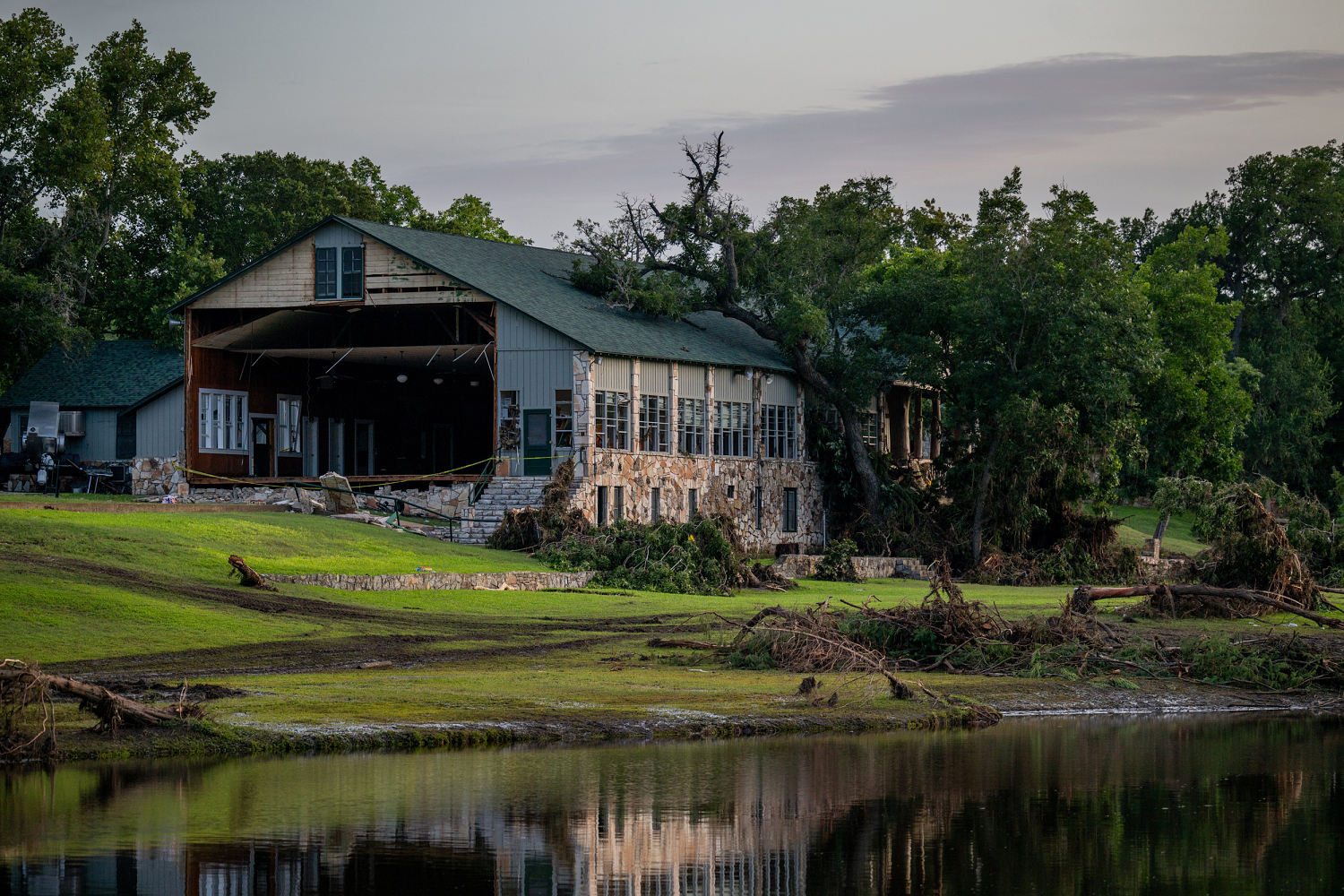
Families of nine victims of last summer’s deadly flooding in Texas are suing the state, alleging it failed to enforce a requirement that a girls’ camp where 27 campers and counselors died have an evacuation plan.
The civil claim, filed Monday in U.S. District Court in Austin, alleges the Texas Department of State Health Services (DSHS) and six of its officials denied the victims their constitutional right to “life and bodily integrity” by approving Camp Mystic’s licenses even though, the suit claims, it lacked a required evacuation plan.
The nine represented victims are seven girls who were attending the summer Christian camp and two teen girls there as camp counselors.
The suit alleges that a lack of an evacuation plan caused camp staff members to panic as the floodwaters rose on July 4, causing them to delay moving the girls to safety “until it was too late.”
“They died because the camp had no plan to evacuate the riverside cabins where the girls slept,” the suit says. “Instead, the camp’s stated policy was for campers not to evacuate during a flood.”
Camp Mystic did not respond to a request for comment about the suit.
Twenty-five of the girls who died in the flooding have been described as being 8 to 10 years old. Two teen counselors also died, as did Camp Mystic owner Richard “Dick” Eastland, 70.
The camp announced in December that it was preparing to reopen this summer at its newer Cypress Lake location, which it said is “completely independent from the older Guadalupe River camp” where the fatal flooding occurred.
On Monday, Lt. Gov. Dan Patrick sent a letter urging DSHS’ commissioner, Dr. Jennifer Shuford, to deny the camp a license to operate.
“Please do not renew a 2026 license for Camp Mystic until all legislative investigations are complete and any necessary corrective actions are taken,” Patrick said in his letter.
Camp Mystic’s current youth camp license expires March 31, according to the DSHS website.
Shuford is named as a defendant in the lawsuit. DSHS spokesperson Lara Anton said in a statement that the department had not been served yet and that “the agency does not comment on pending litigation.”
Patrick said elements of the lead-up to camp season alarm him, including that public-facing information on Camp Mystic’s website does not acknowledge the flood deaths and that Eastland is listed as “still being in charge, all as if 2025 never happened.”
Committees of the Texas House and Senate are expected to meet in the spring and discuss findings about the deaths at Camp Mystic, established on the banks of the Guadalupe River, which has been the source of deadly flooding in the past.
In response to Patrick’s letter, Camp Mystic said he and state legislative committees are welcome to tour its Cypress Lake location.
“Camp Mystic Cypress Lake is in compliance with all aspects of the state’s new camp safety laws,” it said in a statement. “There is, consequently, no regulatory basis to deny Camp Mystic Cypress Lake its license. Camp Mystic Cypress Lake is a separate property that is not adjacent to the Guadalupe River and sustained no significant damage from the historic flood on July 4.”
According to Monday’s lawsuit, DSHS inspectors “systematically ignored required safety rules.” Instead, the suit says, the department decided it would license camps as long as they had any sort of “emergency plan,” whether or not it called for evacuations.
In fact, the suit claims, Camp Mystic had an “anti-evacuation plan” that stated evacuating cabins was prohibited.
Plaintiffs’ attorney Paul Yetter said in a statement Monday that the state’s alleged failure to enforce its regulations contributed to the girls’ deaths.
“DSHS licensed a camp without it having a required evacuation plan,” he said. “We filed this lawsuit to expose another failure that led to these tragic deaths — and to keep other children who attend Texas camps safe in the future.”
Near 100-year flash flooding rushed through the Texas Hill Country, including Hunt and Kerrville, roughly 80 miles northwest of San Antonio, in early July, when rapidly emerging thunderstorms inundated the valleys, gullies and tributaries leading to the Guadalupe River.
Video verified by NBC News showed a “flood wave” and its loud, ocean-like whitewater rolling along the river and instantly raising its depth, leaving vehicles abandoned, mobile homes and businesses totaled and campsites usually busy with holiday weekend activities wiped of humanity and soon surrounded by muddy sediment.
More than 100 people died, and one Camp Mystic camper, 8-year-old Cecilia “Cile” Steward, is still missing.