dailynewsnblog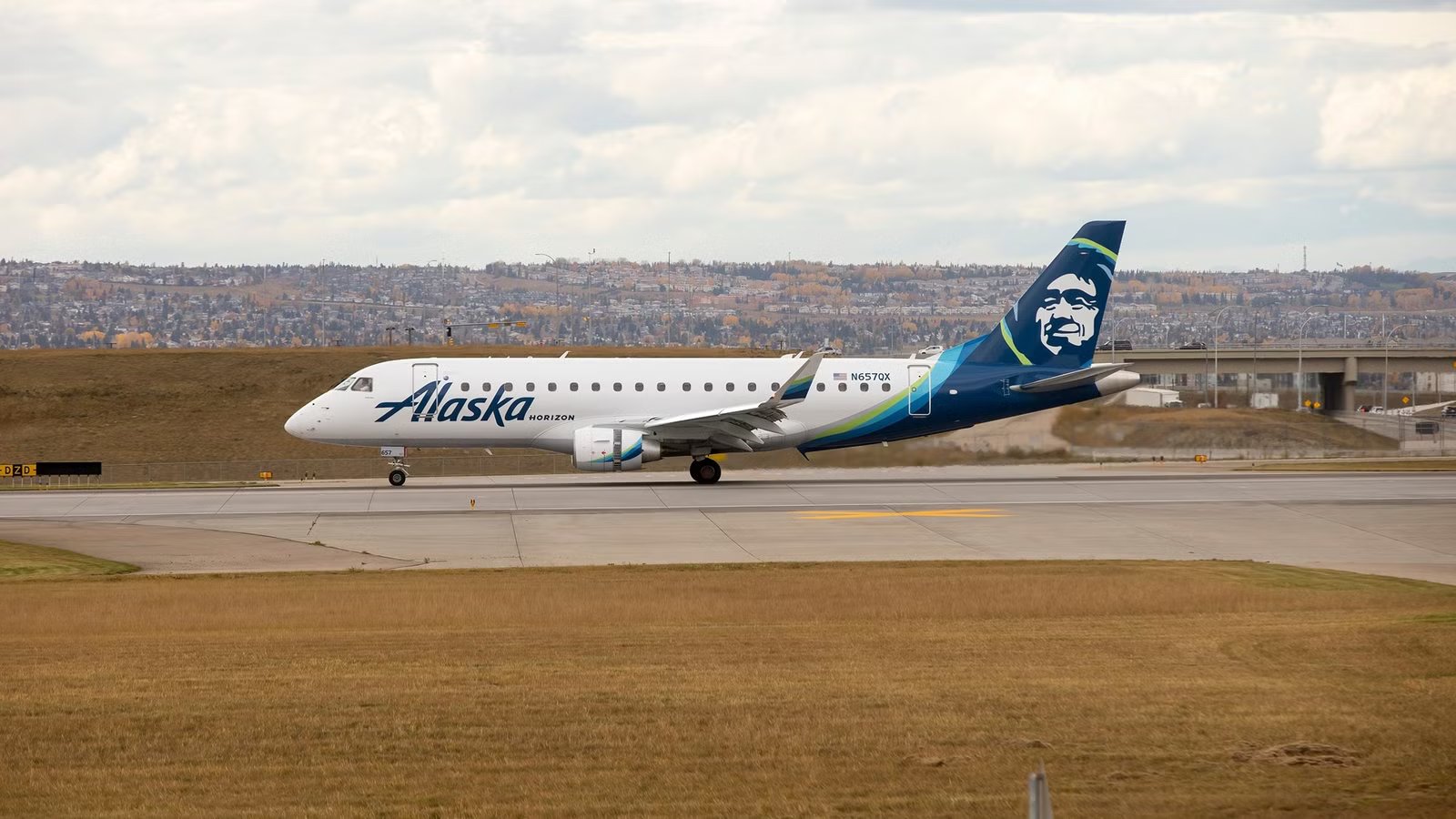
A scheduled flight on Horizon Air on February 22 ended up diverting after it appeared that the power bank caught on fire after experiencing a thermal runaway. This led to the Embraer E175 diverting back to Witchita, and the passenger was taken to hospital to be treated for what is reported to be minor burns.
The flight, as reported by Aviation Herald, was AS2117, a regular service that connects Wichita Dwight D. Eisenhower National Airport (ICT) to  Seattle-Tacoma International Airport (SEA). The flight had climbed to around 20,000 feet when the thermal runaway occured.
Burst Into Flames

Using data from Flightradar24, AS2117 had departed from Wichita on February 22 at 2:04 pm, some seven minutes behind the planned departure time of 1:57 pm. Shortly after pushing back from the gate and taking off bound for Seattle, the aircraft was at 20,000 feet and above the skies of St John, Kansas, when the passenger’s power bank was reported to have burst into flames.
Hawaii News Now reported that a neighbouring passenger threw the powerbank into the aisle, before a towel was thrown over the flames, which were allegedly up to one foot (30 cm high). Crew also sprang into action, with the flight attendant dousing the device to put out the flames, before securing it in a containment bag.
Whilst the flight attendant undertook these actions, the pilot decided, out of an abundance of caution, to return to Wichita and declared an emergency landing. Once safely on the ground, one passenger was taken to the hospital for minor burns.
An Emergency Landing After Thermal Runaway

The aircraft at the centre of the incident was N641QX, a seven-year-old Embraer E175. This aircraft remained on the apron at Wichita overnight for inspection before it was repositioned as QXE9741 (as per Flightradar24) to Portland International Airport (PDX) on February 23. The aircraft departed Wichita at 11:07 am and touched down in Portland at 1:02 pm. The aircraft has since returned to regular service.
The replacement flight for the affected passengers was operated by N652MK, another Embraer E175, which sports the Horizon retro livery. This flight departed as QX2117 from Wichita at 9:34 pm, and got the affected travelers to Seattle, landing at 11:30 pm that evening, some seven hours after the initial arrival time of 3:57 pm.
As reported by Hawaii News Now, a total of 76 passengers were reported to be on the flight, and passengers reported that the external battery charger pack was not being touched or played with when it ‘exploded’. The smoke from lithium-ion batteries is known to be highly toxic, and passengers did report that at times it was hard to breathe from the smoke. Nausea and headaches can be a side-affect after inhaling it.

American Airlines Boeing 737-800 Catches Fire At Denver International Airport
The aircraft was preparing to depart to Dallas/Fort Worth when flames began to erupt.
N641QX Aircraft Details

Using data from ch-aviation, the Embraer E175 operated by Horizon Air for  Alaska Airlines was first delivered to the carrier on November 15, 2018. The aircraft, which took its first test flight under Brazilian registration PR-EQV, was transferred to its current US registration N641QX upon delivery. The airplane is configured to carry a total of 76 passengers across three classes.
Cabin | Number Of Seats | Seat Pitch |
|---|---|---|
First Class | 12 | 36-38 inches (91-96 cm) |
Premium Economy | 12 | 34 inches (86 cm) |
Economy | 52 | 31 inches (78 cm) |
The aircraft is powered by two General Electric GE CF34-8E engines and carries the Hex Code A86A66. It has been operating for Horizon Air for over seven years, with serial number / MSN 761. Horizon Air operates a total of 47 Embraer E175 aircraft, this makes up its entire fleet. It historically also operated the CRJ 550, CRJ700, Dash 8-100, Dash 8-200, and Dash 8-400.
All Horizon airplanes carry unique co-branding to differentiate their Alaska Airlines livery from other regional flights operated by SkyWest Airlines. Horizon Air is wholly owned by the Alaska Air Group and is paid by the group to staff, operate, and maintain scheduled flights.