dailynewsnblog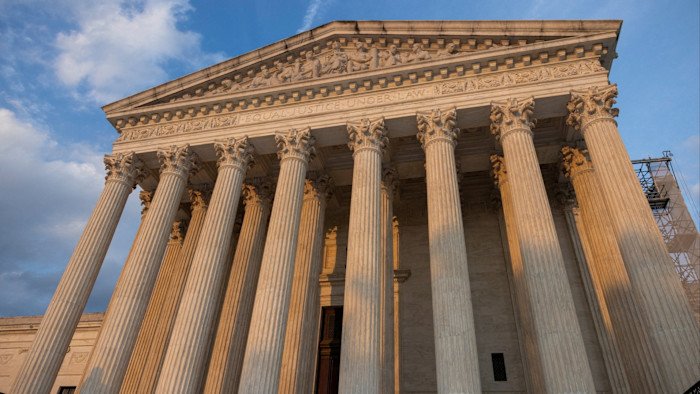
This article is an on-site version of our Swamp Notes newsletter. Premium subscribers can sign up here to get the newsletter delivered every Monday and Friday. Standard subscribers can upgrade to Premium here, or explore all FT newsletters
A few weeks ago, I wrote a column about Kevin Warsh and how he might manage monetary policy as the new Federal Reserve chair. Aside from reading the tea leaves on inflation, to me one of the key challenges for Warsh is getting out from under the post-2008 bloated Fed balance sheet and curing the country of its addiction to monetary versus fiscal policy. Warsh had already taken (I thought rightly so) a tough line against too much easy money since 2008. Could he fix the legacy of this now? I argued that to do so, we needed a White House and Congress willing to make tough choices between interest groups.
Around the same time, I read an interesting piece by Jefferies chief market strategist David Zervos, an economist who was previously a visiting adviser at the Fed Board of Governors in Washington. He shares my view that easy money has increased inequality (by goosing markets more than salaries), thus exacerbating populism and destabilising politics even as it buoyed markets. Both of us feel that getting the balance sheet under control will be important in terms of stabilising longer-term risk premiums in the US.
But while I was sceptical in my column that Warsh would be able to do much on that score without a more functional executive branch or Congress, Zervos laid out a case that Treasury secretary Scott Bessent, who has been more interventionist in markets, would provide a new kind of “put” — via mortgage-backed securities purchases, currency interventions, and so on — that would help take pressure off the Fed, thus giving Warsh more leeway to trim the balance sheet. We are lucky today to have Zervos with us in the Swamp, so I want to push these scenarios a bit further and get his thoughts on how things might play out, particularly amid all the news of the past few days.
For starters, last Friday we got the not unexpected news that the Supreme Court has ruled that Trump’s use of emergency tariffs was illegal. The tariffs in question amount to about $175bn, so you might now start to see some of that money flowing back into the economy via refunds, although that will be a convoluted and long process. Meanwhile, Trump has already slapped a new 15 per cent global tariff on all imports, via section 122, and may try to invoke higher levies in some sectors under the 232 national security provisions and the 301 unfair market practices rules that have been used to take tariff actions against countries like China. Still, my quick take is that this Supreme Court decision will be a tailwind to the economy taken in tandem with the fiscal policy that was already being pushed forward by Treasury and the White House.
At the same time, you have the possibility of US strikes on Iran. As I’ve written, I think that markets are underplaying the risk of an oil spike in the coming year. Any sort of blockage through the Strait of Hormuz would quickly rid the world of excess oil. Add to this the fact that the 232 national security provisions will now be the main route into tariffs for the Trump administration, and you may have an (even) more provocative geopolitical stance from this administration going into the US-China summit in April. Given Trump’s psychology (which tends to become more aggressive when he’s under pressure) this makes me think that the risk of accidental conflicts in our already very dangerous world is rising.
Taken together, I doubt we’ll see inflation subdued. The economy is running hot, the geopolitical situation is more tense, global supply chain chokepoints remain an issue, and unless productivity growth is quite strong, Warsh may have less room to cut rates than he would like. So, my questions to you, David, are twofold. First, what is your analysis of how the Supreme Court ruling and the Iran situation could affect inflation? And secondly, if we believe the risks are still on the upside, what if anything could Bessent and the White House do to help make Warsh’s job easier?
Recommended reading
California billionaires eager to tax optimise have spawned a new cottage industry of consultants. But seriously? If you are worrying about how to save money by moving your Rothko from Palo Alto to Aspen, then you have too much time and money on your hands.
In the FT, I thought my colleague Sarah O’Connor was spot on about how we should stop referring to certain jobs that don’t involve advanced degrees as “low-skilled.” My kids’ nanny had a heck of a lot more skill than many people I’ve worked with making six figures.
David Zervos replies
Good Sunday evening Rana.
There is a lot to unpack in your latest Swamp Note, most of which I agree with, but let me focus on your two questions at the end.
Let’s begin by discussing how the Supreme Court ruling on the International Emergency Economic Powers Act and the Iran situation might affect inflation. For me, the answer is very little. Remember, the latest read on headline CPI inflation was 2.4 per cent year over year in January. This is only 0.1 per cent above the post-Covid cycle low set just before “Liberation day”. It is also within spitting distance of the Fed’s 2 per cent target. And it is down from a peak of 9 per cent just three-and-a-half years ago.
The bottom line is that all of the calls for an inflation spike due to BOTH geopolitical and tariff risks have failed miserably for the last year. But that should be no surprise. The same folks who told us three years ago that a recession was imminent are the same folks who were forecasting this inflation spike. And sadly they are still at it, trying to sell more inflation doom in 2026.
These Keynesian ivory tower elite academics, along with the DC think-tank mob and the Fed staff economists, rely on faulty Phillips curve-based macro models. And that constantly leads them (and their clients) astray. To that point, it is also worth noting that three years ago these folks said that the unemployment rate would need to rise to 6 or 7 per cent for least two years to bring inflation back towards its 2 per cent target. Wrong again! Productivity and supply side forces have created a disinflationary boom. And that is likely to continue into 2026.
The good news is Warsh does not view the economic outlook through a Keynesian lens. He has been highly critical of Phillips curve-based models in the past, and will no doubt be a supply-side steward in his new role. Focusing on the disinflationary forces associated with productivity growth will be a priority for Warsh. And that will keep the politically motivated hawks/hacks currently at the Fed, with their janky demand-side models, sidelined. And Warsh will have plenty of supply-side back-up from the administration with Kevin Hassett and Bessent. Both have been continuously invoking the Goldilocks spirit of the Greenspan-era 90s.
That now leads to your second question, which really doesn’t need answering as I don’t see significant upside risks to inflation. For me, the current risks are more in the form of job weakness. The creatively destructive Schumpeterian forces that have driven the unemployment rate from 3.5 per cent to 4.3 per cent over the past three years are real. Rapid productivity gains have led to labour market weakness, all while growth has been running at close to a percentage point above most estimates of potential. The macroeconomic data all point to the supply side driving the economy — not the demand side. To that end, a Warsh Fed will probably be thinking about demand-side stimulus policies to counter that job weakness. After all, the Fed’s job is to maximise employment in the context of price stability. With long-run inflation expectations firmly anchored and the CPI at 2.4 per cent, the focus will quickly turn to getting that unemployment rate back towards 3.5 per cent in the second half of 2026.
Your feedback
We’d love to hear from you. You can email the team on swampnotes@ft.com, contact Rana on rana.foroohar@ft.com, and follow her on X at @RanaForoohar. We may feature an excerpt of your response in the next newsletter
Recommended newsletters for you
The AI Shift — John Burn-Murdoch and Sarah O’Connor dive into how AI is transforming the world of work. Sign up here
Unhedged — Robert Armstrong dissects the most important market trends and discusses how Wall Street’s best minds respond to them. Sign up here