dailynewsnblog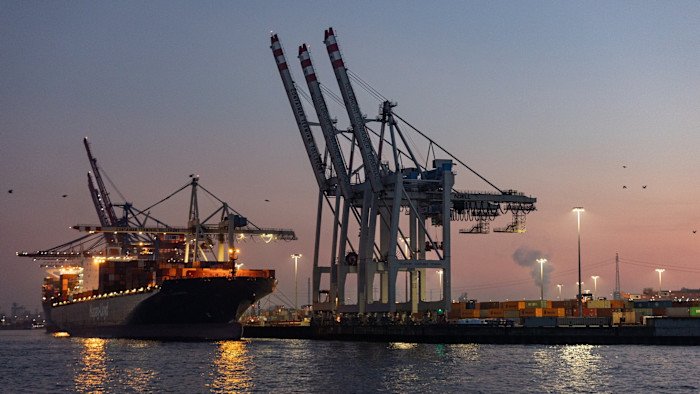
This article is an on-site version of our Europe Express newsletter. Premium subscribers can sign up here to get the newsletter delivered every weekday and fortnightly on Saturday morning. Standard subscribers can upgrade to Premium here, or explore all FT newsletters
Good morning. A scoop to start: European Central Bank president Christine Lagarde receives about €140,000 a year on top of her regular salary as a board member of the Bank for International Settlements — despite a ban on third-party payments to staff.
Today, our trade correspondent explains why the EU-US trade deal could be delayed after US President Donald Trump’s latest tariff twist. And our Paris correspondent reports on France’s mounting confrontations with the US over Washington meddling in national affairs.
What’s the deal?
The EU is likely to further delay ratifying its trade deal with the US after President Donald Trump imposed global tariffs of 15 per cent over the weekend, unleashing what one lawmaker called “pure tariff chaos”, writes Andy Bounds.
Context: The trade deal approved in Scotland last year involved the EU paying 15 per cent tariffs on most exports to the US, while cutting its own levies on American industrial goods and some agricultural products to zero.
But Trump’s decision to impose 15 per cent levies, using a different law after the Supreme Court struck down his existing tariffs, has thrown the deal into uncertainty. It would result in an overall 0.8 percentage point increase for the EU, with some countries hit even harder depending on product categories.
The European Commission yesterday demanded “full clarity” from the Trump administration on the tariffs. “The current situation is not conducive to delivering ‘fair, balanced, and mutually beneficial’ transatlantic trade and investment, as agreed to by both sides,” it said in a statement. “A deal is a deal.”
Member states have approved the agreement but the European parliament has not, and is now likely to freeze the process. Lawmakers of the trade committee are meeting today to decide whether to delay a crucial vote, originally planned for tomorrow.
“It is clear that we have a clear breaking of the Scotland deal. We need clarity and stability and therefore it could be that we decide tomorrow for a hold,” Bernd Lange, chair of the trade committee, told the FT.
In a separate statement, he condemned the “pure tariff chaos from the US government. No one can make sense of it anymore.”
The Greens and the Left will back his Socialist group, according to officials, but Lange says he wants a broad consensus. The liberal Renew group is also leaning towards a delay.
“The Renew Europe group has said from the outset that [Trump’s] tariffs are illegal,” said Renew MEP Karin Karlsbro.
Officials at the centre-right European People’s Party of Commission president Ursula von der Leyen, who signed the deal, said they were still analysing the situation.
Chart du jour: Kill zone

Drones have redrawn the map of war in Ukraine. Read our visual investigation into the fast-expanding “kill zone” expanding around the frontline.
Stay out of it
France admonished the Trump administration over the weekend for wading into national affairs, summoning Paris ambassador Charles Kushner after the US weighed in on the killing of a far-right activist, writes Sarah White.
Context: The summons isn’t Kushner’s first. He was already summoned last August over an open letter to French President Emmanuel Macron saying he was not doing enough to end antisemitic violence.
The latest reprimand comes after a series of tit-for-tat exchanges over free speech and digital sovereignty which have strained relations between Paris and Washington.
Most recently, the US seized on the death of Quentin Deranque, a 23-year-old with links to the far right, who died over a week ago after being beaten allegedly by far-left activists in Lyon.
The killing has sparked spiralling recriminations between political parties and put particular pressure on the far-left France Unbowed. It also caught the US embassy’s attention, which on Friday wrote on X that “violent far-left extremism is on the rise” and was a “menace for public security”.
But foreign minister Jean-Noël Barrot yesterday told the US to stay out of the furore. “We reject any effort to instrumentalise this drama to political ends,” Barrot said in an interview with French outlets. He said France “has no lessons to take” from what he called a reactionary worldview.
Last week, Macron also wrote to Trump asking the US to drop sanctions on former EU commissioner Thierry Breton and a French International Criminal Court judge, the Élysée said yesterday. In Breton’s case, Washington took aim in December at what it called European “censorship” of social media platforms and tech groups.
What to watch today
EU foreign affairs ministers meet.
Eu agriculture and fisheries ministers meet.
European parliament committee on foreign trade meets.
Now read these
Recommended newsletters for you
Free Lunch — Your guide to the global economic policy debate. Sign up here
The AI Shift — John Burn-Murdoch and Sarah O’Connor dive into how AI is transforming the world of work. Sign up here
Are you enjoying Europe Express? Sign up here to have it delivered straight to your inbox every workday at 7am CET and on Saturdays at noon CET. Do tell us what you think, we love to hear from you: europe.express@ft.com. Keep up with the latest European stories @FT Europe