dailynewsnblog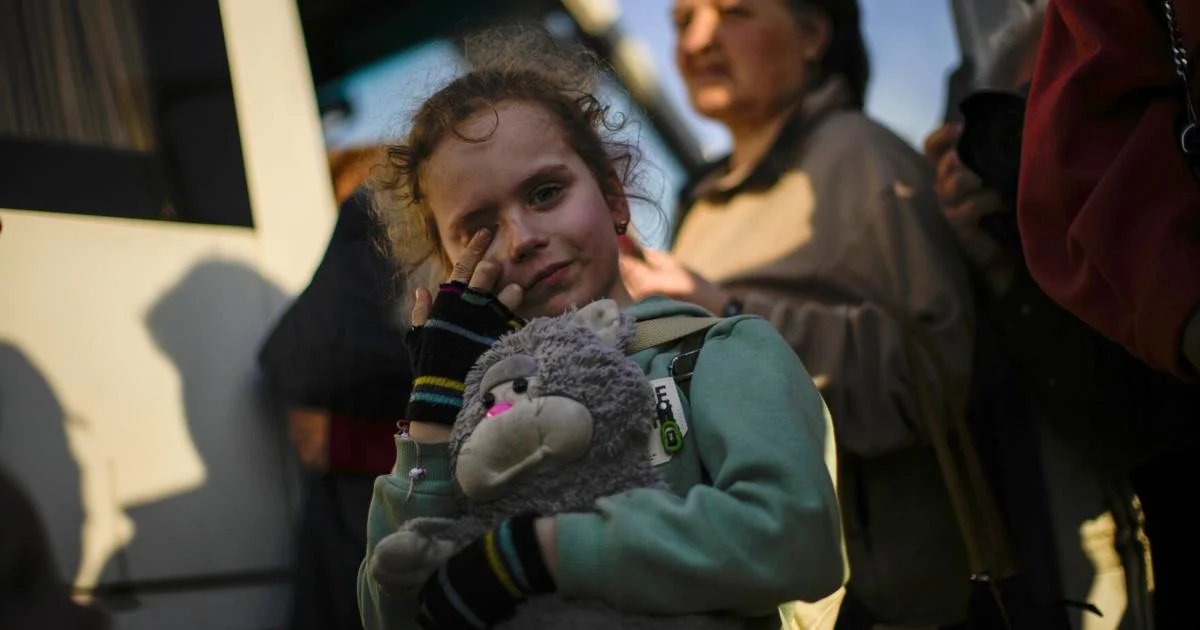
Katharine Lake Berz has interviewed more than a dozen Ukrainian survivors of the siege of Mariupol. She met Svitlana during the war’s first year and has followed her life closely since. In 2023, the Star reported some of the suffering of Svitlana’s family previously. After spending two days with her in Lviv last year, Lake Berz reveals all that has happened in the intervening years.
LVIV, Ukraine—On the morning Russia attacked Mariupol, as artillery boomed and missiles hit their targets, Svitlana Obedinska tried to get her family to safety.
She called each of her four adult children, scattered across her seaside city in eastern Ukraine.
“Come home,” she told them. “Or flee the city. Get somewhere safe.”
Her three sons told her not to worry; the fighting would ease soon. Only her daughter, Katerina, and her seven-year-old granddaughter, came to shelter at the apartment she shared with her husband, Alexandr. Svitlana, then 60, met them in tears at a nearby bus stop as the sounds of war filled the city’s skies. Rain drenched them. She wrapped her arms around them and hugged them tight.
“I was terrified for my children,” she said later. “But I did not think then that Russia would destroy everything in its path.”
In the weeks that followed, Russia’s full-scale invasion tore across Ukraine, from Lviv to Luhansk, from the capital to the coast. Mariupol became one of its deadliest battlegrounds.
After four years of war, Svitlana’s story reveals the long, grinding toll of Russia’s attack on Ukraine, felt not only in shattered homes and lives lost, but in families torn apart.
In those first weeks, as a siege closed in on Mariupol, the family survived without power, water or heat. They walked almost two kilometres every day to fetch water from a spring, often under fire. Bodies lay on the streets where they had fallen. Svitlana and her daughter cooked outside over an open fire, darting indoors when explosions announced an approaching attack.
Yevhen, Svitlana’s middle son, made the long, dangerous trek from his apartment twice, bringing food and water. Yevhen was the one who lifted the family’s spirits. A champion water polo player who survived brain cancer, he had raised his daughter, Kira, alone after her mother died of influenza two weeks after her birth. When he visited, his good cheer steadied them.
Her other two sons, journalists in a city where reporters were hunted, were hiding in a basement in one of the city’s most dangerous areas. As the shelling intensified, she stepped onto the balcony and looked east, toward the men’s neighbourhood, where the fighting was heaviest. She called out prayers for their lives.
Three weeks into the siege, Svitlana and Alexandr no longer believed they would survive if they stayed. Tank fire tore through the streets. Bombs fell without warning. They did not want to leave without the rest of the family, but with each passing hour it became clear that waiting meant death.
Finally, they packed the car with their daughter, granddaughter, fluffy cat and what little they could carry. As the city faded in the rearview mirror, their thoughts turned to their sons and older granddaughter, who had chosen to remain in Mariupol, believing it safer than fleeing. It was the last time their family would share the same city, though they did not yet know it.
Svitlana met Alexandr when she interviewed him in her role as a reporter for Mariupol’s main newspaper. He was a well-known water polo coach.
She was an accomplished woman, small-framed but steady, raising two sons on her own after an early marriage fell apart. Alexandr, broad-shouldered, with an easy smile, had also known loss. Widowed young after his wife was killed in a car accident, he was raising a daughter and a son alone. Together, the new couple brought four children into the happy life they built in Mariupol.
On that war-torn morning, they began their escape to western Ukraine with a grinding many-day drive through aerial fire, mined roads and Russian interrogations. The further they drove, the more the danger receded. But the weight of what they had lost did not.
Russia’s bombardment of Mariupol reduced much of the city to rubble, damaging or destroying nearly 90 per cent of its homes, hospitals and schools. Tens of thousands of civilians were killed within weeks. Mariupol’s losses have surpassed those of any other city Russia has attacked in a war that has left millions of Ukrainian homes destroyed and nearly two million people killed or wounded.
Surrounded in Chernivtsi, in southwestern Ukraine, by Ukrainian flags and volunteers offering warm food, Svitlana and Alexandr lamented their losses, the home they had carefully renovated, the community that had sustained them and many small, ordinary things accumulated over a lifetime. Everything gone.
Then the first phone call came.
The voice on the line was faint, breaking.
Their middle son Yevhen, the optimist, was dead. He had been standing on his balcony watching for fires after heavy shelling. He was shot in the head. His daughter Kira, 12, saw him fall.
The slaughter of civilians has been a hallmark of Russia’s fighting, borne out in repeated attacks on homes, hospitals and civilian infrastructure, documented by international observers.
Yevhen’s body remained in his apartment. His partner took Kira and fled.
The death shattered Alexandr and Svitlana. Yevhen was Alexandr’s son by birth, but his death overwhelmed Svitlana.
The next call came just days later.
Kira had been hit in the face by shrapnel while trying to leave the city on foot. Bleeding and disoriented, she was picked up by Russian soldiers and taken to a hospital in occupied Donetsk.
Her family did not know how she was or whether they would ever see her again.
As a journalist, Svitlana knew that since Russia’s invasion began, thousands of Ukrainian children have been systematically taken into Russia and occupied territory.
According to research by Yale University’s Humanitarian Research Lab, many have been placed in a network of facilities where they are subjected to “re-education” and militarization. Russia also naturalizes many of these children, making them Russian citizens and processing them for coerced adoption, severing ties to their Ukrainian families and identity.
Frightened and distressed, Svitlana and Alexandr appealed to political leaders and the media to denounce Russia’s kidnapping of their granddaughter, now a war orphan. They gave dozens of interviews to Ukrainian and international outlets. Alexandr turned to his contacts in the Ukrainian sports community which worked to amplify their pleas.
In a phone call, Russian authorities were clear: Kira would be sent to an orphanage in Russia.
Svitlana’s fear was unrelenting. She continued pressing officials, refusing to accept silence as an answer.

Svitlana Kuzminskaya, then-husband Oleksandr Obedinsky and sons Dmytro and Oleksandr welcoming Kira home.
Courtesy of Svitlana Kuzminskaya.
While waiting for Kira’s return, Svitlana learned that her other two sons had been detained at gunpoint in Mariupol. When Russian soldiers found her eldest son’s tattoo — a map of Ukraine — and a hidden Ukrainian flag, they wrapped him in it and took him outside to be shot. A neighbour intervened, persuading the militants he was a just civilian who had “got into trouble.” The commander spared him on one condition: the tattooed map of Ukraine on his arm had to disappear by morning.
That night, neighbours used chemicals to try to erase her son’s tattoo. Before dawn, the two brothers fled, paying a driver a small fortune to bypass Russian checkpoints and take them to safety in western Ukraine.
Finally a text arrived. “We are alive. We are safely in the west.”
Svitlana was overjoyed. Reunion with her surviving children was finally within reach.
Her youngest son, Oleksandr, was a cancer survivor, unfit to join the army. Rather than stay and wait on the sidelines, he chose exile, leaving almost immediately for Germany to earn money for the family.
Daughter Katerina left soon after with her seven-year-old to start a new life in France. Svitlana cannot afford to visit.
That experience is shared by hundreds of thousands of families. The fighting in Ukraine has caused the largest displacement crisis in Europe since the Second World War, according to the United Nations. Almost ten million Ukrainians have fled their homes, with close to six million taking refuge abroad, including 300,000 in Canada.
Svitlana took refuge in Chernivtsi, a city far from the front line, with Alexandr, Kira, and eldest son Dmytro, the last of her children still with her.
The war’s wider trauma reached Svitlana’s family as well. Nearly half of Ukrainians now live with mental health issues, such as anxiety, depression or post-traumatic stress disorder, according to the World Health Organization. Among them are hundreds of thousands of Ukrainians who served on the battlefield and are struggling with severe PTSD.
The violence took a psychological toll on Dmytro. He had spent years behind a television camera, documenting Russia’s attacks on Ukraine since 2014. He carried what those years left behind. After his narrow escape from execution, the effects of his trauma caught up with him. He withdrew, rarely going outside. Svitlana mourned him even as he sat beside her.
Then, as Svitlana worried about Dmytro, the family fractured further. Alexandr grew angry, insisting she should focus on their granddaughter Kira, a young orphan, not on Dmytro, a grown man. The argument tore them apart. Alexandr moved to another city with Kira.
Svitlana was left behind. Now she lives in a dark, claustrophobic apartment with Dmytro, who rarely speaks. Her temperamental tabby makes her smile occasionally. But most days, she just feels alone.
That, too, is a condition she shares. The war has split apart millions of Ukrainian families, leaving people isolated during a time of tremendous stress, according to an International Rescue Committee survey. Official data show divorce rates surging and fewer couples marrying since the conflict began.
As fighting rages along a 1,200-kilometre front and Russia intensifies attacks on civilians and infrastructure, Svitlana struggles just to survive each day.

Svitlana Kuzminskaya’s granddaughter, 12-year-old Kira Obedinsky, was visited by President Volodymyr Zelenskyy in Hospital in Ukraine on April 26, 2022.
Office of President Zelenskyy
Sitting in a café in Lviv last fall, Svitlana spoke of her loneliness — of how war shattered her family through death, destruction, kidnapping, exile and mental illness.
She fears that Ukraine is lonely too — that allies are turning away, one by one.
“I am grateful that Canada stands by us,” she said, reaching out in embrace.
Right now, like so many in Ukraine, Svitlana is living without power through the conflict’s coldest winter. She can barely support herself and her ailing son. Unrelenting airstrikes leave her trembling for hours afterward.
“I still dream of Ukraine’s victory,” she said.
“But victory cannot bring back what we have lost.”