dailynewsnblog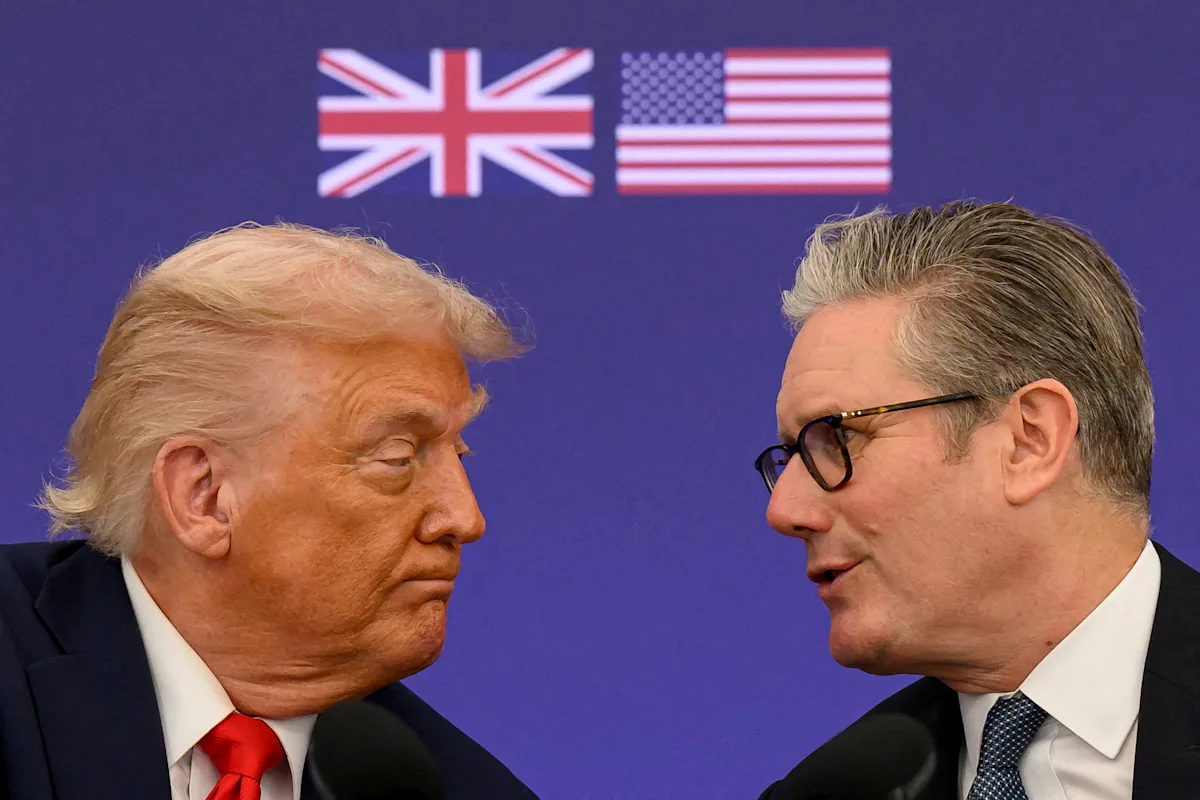
(Bloomberg) — After boasting for months about its preferential trade deal with US President Donald Trump, the UK is at risk of becoming the biggest loser in the aftermath of the Supreme Court’s decision to strike down his global tariffs.
Most Read from Bloomberg
Britain had enjoyed a relatively lower reciprocal tariff rate at 10% compared to other countries — giving it a competitive advantage — but Trump’s promise to reimpose them at 15% for all nations means businesses may now face even higher duties. The UK will see the largest increase as a result, followed by Italy and Singapore, according to Global Trade Alert, while Brazil, China and India stand to benefit the most.
“At the moment, we have no clarity on whether the 10% tariff agreed will be honored — but until and unless the US gives a steer, we’ve got to assume it’s 15%,” said Sam Lowe, a trade specialist at strategic advisory firm Flint Global in London.
UK officials are now anxiously trying to persuade the US administration to exempt it from the higher rate. The British Chambers of Commerce estimates that it will raise the cost on UK exports to the US by as much as £3 billion ($4 billion) and will impact 40,000 British companies.
“We are having conversations at the highest levels to make sure that what we regard as being in our national interest is heard loud and clear with our American counterparts,” cabinet minister Bridget Phillipson told Sky News on Sunday. She acknowledged the “uncertainty it does cause” for UK businesses.
Trump’s new tariff regime, imposed under Section 122 of the 1974 Trade Act, can apply for a maximum of 150 days unless Congress extends it. The tariff exemption on steel, pharmaceuticals and automotives — which was previously agreed between the UK and US — is expected to remain in place, giving Britain continued preferential status on those key sectors.
“Under any scenario, we expect our privileged trading position with the US to continue,” a government spokesperson said.
Still, businesses exporting other products to the US — from scotch whisky to toys — will “now face a higher tariff, equivalent to what the EU was facing before,” said Crawford Falconer, Britain’s former top trade negotiator. “It would appear on face of it that Australia and the UK have been most negatively affected: there will be a desire to get clarity and indeed get it lowered.” Australia was also subject to the 10% rate before the Supreme Court ruling.