dailynewsnblog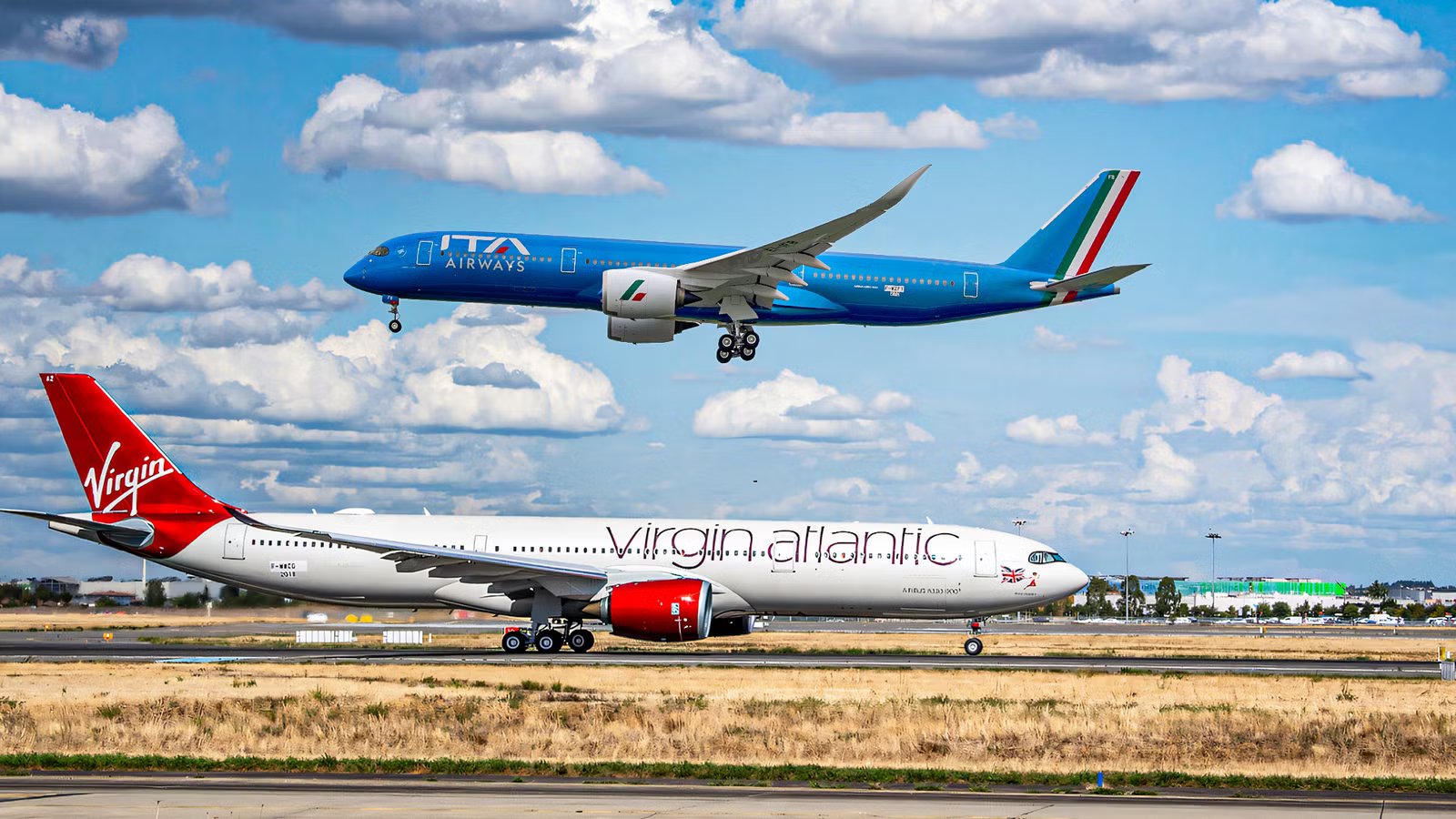
Introduced into service just under four years apart, Airbus’s A350 and A330neo intentionally share a score of similarities. Indeed, the Airbus A330neo was designed in part to incorporate some of the best features of the Airbus A350. From flight control and navigation, to traffic and safety systems, to checklist parameters, the two are built to be interchangeable from a pilot’s perspective.
Of course, though, as with any aircraft, there are differences. Whether that is subtle and simply displays within the cockpits of either, or more obvious factors around power and handling, given the different individual purposes the A330neo and A350 are designed to serve, respectively. Below is a deep dive into each model and what pilots notice when switching between the two.
A330neo And A350 Specifications

The Airbus A350 was first introduced as  Qatar Airways brought its first 900 variant into service in January 2015. Airbus’ A330neo followed shortly, making its first commercial flight in December 2018 with TAP Portugal. In practice, the two were developed by Airbus to serve differing markets. With its composite airframe, the A350 was designed from scratch to boast better range and fuel efficiency. In contrast, the A330neo evolved from earlier aluminum aircraft, and was Airbus’s new engine option (neo) for the original Airbus A330, which first flew commercially under Air Inter colors in early 1994. Essentially, this makes the A350 better suited to long-haul, high-capacity routes, while the A330neo aims to offer a cost-effective solution on medium-haul routes.
Variants of the A330neo encompass two sizes, the A330-900 and A330-800. The former can house up to 465 passengers and has a range of up to 7,350 nautical miles. The 800 can fly further at 8,100 miles, with as many as 406 passengers aboard. In terms of weight, the 900 comes in just two tonnes heavier at a maximum of 253 tonnes.
There are also two versions of the A350. The A350-1000 boasts a capacity of up to 410 passengers and a range of 9,100. Its counterpart, the A350-900, can carry as many as 350 seats and travel 8,500 miles. The absolute maximum takeoff weight for the 900 is 280 tonnes, against 322 for the 1000.
Chances Of Flying Both

For pilots, conflicting specifications translate to differences in the weight-to-size ratio of each. For instance, with obvious differences stretching to inspection parameters and even higher maximum cabin pressure on the A350, in turn making for more comfort. At this point, it is worth considering how likely it is that pilots find themselves swapping between the two models.
As of January 2026, Airbus had orders for 472 A330neo variants and had filled deliveries of 185. A350 orders totaled 1,529 from 67 customers, while deliveries sat at 699 for 39 operators. Delta Air Lines and Virgin Atlantic are among a handful of major carriers currently operating both, with  Etihad Airways set to join them in 2027 after swooping for the A330neo late last year.
Below are figures showing the top operators of the A330-900, given its clear popularity against the 800 version.
Airlines With The Largest Airbus A330-900 Fleets
|
Delta Air Lines |
39 |
|
TAP Portugal |
19 |
|
Condor |
18 |
|
Cebu Pacific |
12 |
|
ITA Airways |
11 |
|
Corsair International |
9 |
|
Malaysia Airlines |
9 |
|
Lion Air |
8 |
|
Virgin Atlantic |
8 |
|
Azul Linhas Aéreas |
7 |
|
Garuda Indonesia |
5 |
The likelihood of crossover for pilots is, of course, only set to increase. Whether that be, airlines increasingly opting for the A350’s freshness or looking to the A330’s successor to replace aging jets gradually. Indeed, the latter has big shoes to fill, as Airbus has chalked up nearly 1,500 deliveries of older A330-family aircraft.

Etihad Airways Swoops For Airbus A330neo And Bolsters A350-1000 And A350F Orderbook
The first A330s – a new aircraft type for Etihad – are slated to arrive in 2027.
Inside The Cockpit

With that in mind, as switching from the A350 to A330neo or vice versa becomes more common, pilots will instantly notice changes within the cockpit of each. Displays vary between the two, as do the tools for displaying data. These physical differences, though subtle, may well equate to the most obvious changes within the aircraft.
Having entered service before the A330neo, a range of technologies from the A350 were transferred, including Airbus’s now-standard fly-by-wire control system. However, crossovers excluded the former’s on-board information system. In the A330neo, the integrated system, which included larger screens, was replaced with laptops or tablets, referred to by Airbus as electronic flight bags.
Airlines With The Largest Airbus A350 Fleets
|
Singapore Airlines |
65 |
|
Qatar Airways |
58 |
|
Cathay Pacific |
48 |
|
Air France |
38 |
|
Delta Air Lines |
37 |
|
Air China |
30 |
|
Lufthansa |
30 |
|
Japan Airlines |
25 |
|
Turkish Airlines |
25 |
|
Thai Airways |
23 |
That said, in Airbus’s own words: “Overall, the A330neo and A350 cockpits share a similar layout.” This stretched to another standard Airbus feature, “the ‘dark cockpit’ concept, whereby lights only show on the overhead systems management panel to indicate where an action is required”. Detailed by Airbus test pilots Captain Jean-Michel Roy and Captain Shaun Wildey, commonalities also include trajectory displays, ‘4D’ satellite-based navigation, and digitalized air traffic communications, to name a few.
Differences For Airlines Themselves

The fact of the matter is, Airbus built the A350 as a standalone with a clean slate and then used this base to update its aging A330 offering. As such, differences were very deliberately kept to a minimum for those taking charge of flights. Looking more broadly, airlines naturally have a wider range of considerations to weigh when evaluating both.
Cost is a big factor. Take the A350-900 and A330-900. For the sake of argument, the difference is pretty stark. At $296.4 million, the A330-900 undercuts the A350-900 by some $21 million. Now, as we know, airlines rarely pay anywhere near the listed price. But on paper, it is easy to see why such carriers may be drawn to cheaper A330neo options.
That said, the A350 is built from lighter materials, and so reduced fuel burn over time will translate to big savings. This is particularly relevant when considering the distances each variant flies, with the A350 offering better efficiency per seat when traveling further afield. Money aside, if it is capacity airlines are focusing on, the A330neo takes the edge, with economy seating typically laid out in a 2-4-2 configuration, against the 3-3-3 plan usually seen on the A350.

The Airbus A350 vs A330neo – Which Plane Is Best?
A battle between the two Airbus twinjet widebodies.
Differences In Performance

Back to pilots’ perspectives, and key differences, quite obviously, center around weight and handling. Indeed, the A330neo is best suited for medium-haul travel, while the A350 is designed for longer journeys. As such, pilots might not be blamed for noticing disparities in power between the two during takeoff, for instance.
Boasting Rolls-Royce Trent XWB engines, the A350 might deliver up to 97,000 lbs of thrust depending on the variant being flown. Despite being heavier, this is a clear step up from the maximum of 72,000 lbs of thrust that the A330neo’s Trent 7000 engines can deliver.
Again, though, power is very obviously suited to each design, so major differences in what pilots feel behind the controls might translate into a more solid climb in the A350 and a lighter, more agile sense of handling in the smaller A330neo. In terms of layout, the A330neo may also make for a more classic flight experience in the cockpit, given its older roots.
Subtle Differences, But Designed For Commonality

Realistically, Airbus piggybacked the A330neo off its predecessor purely intentionally. A key reason is that pilots trained on one can fly the other, since the A330neo and A350 are approved under a single-pilot license endorsement. Albeit some training on specifics is required, namely, regarding air pressurization limitations and operating weights. However, according to the manufacturer, this takes as little as eight days, by which time pilots can “fly both […] from one day to the next” and “be totally at home in either cockpit.”
Importantly, addressing emergencies on either the A330neo or the A350 is said to follow similar procedures thanks to their standardized Electronic Centralized Aircraft Monitor (ECAM). As Airbus test pilot Roy notes: “In this regard, the two aircraft are fairly equivalent. From a pilot’s perspective, the methodology of our training is the same in terms of how you manage a failure in the cockpit.
“You could even introduce a pilot from an A350 to the A330neo cockpit, who had never flown in the latter – or vice versa – and they would be able to manage an emergency or failure in exactly the same way using the ECAM.”
So have you piloted either the A350 or A330neo, or, even better, both? Feel free to share your experiences below and any striking differences that jump out when switching between the two.