dailynewsnblog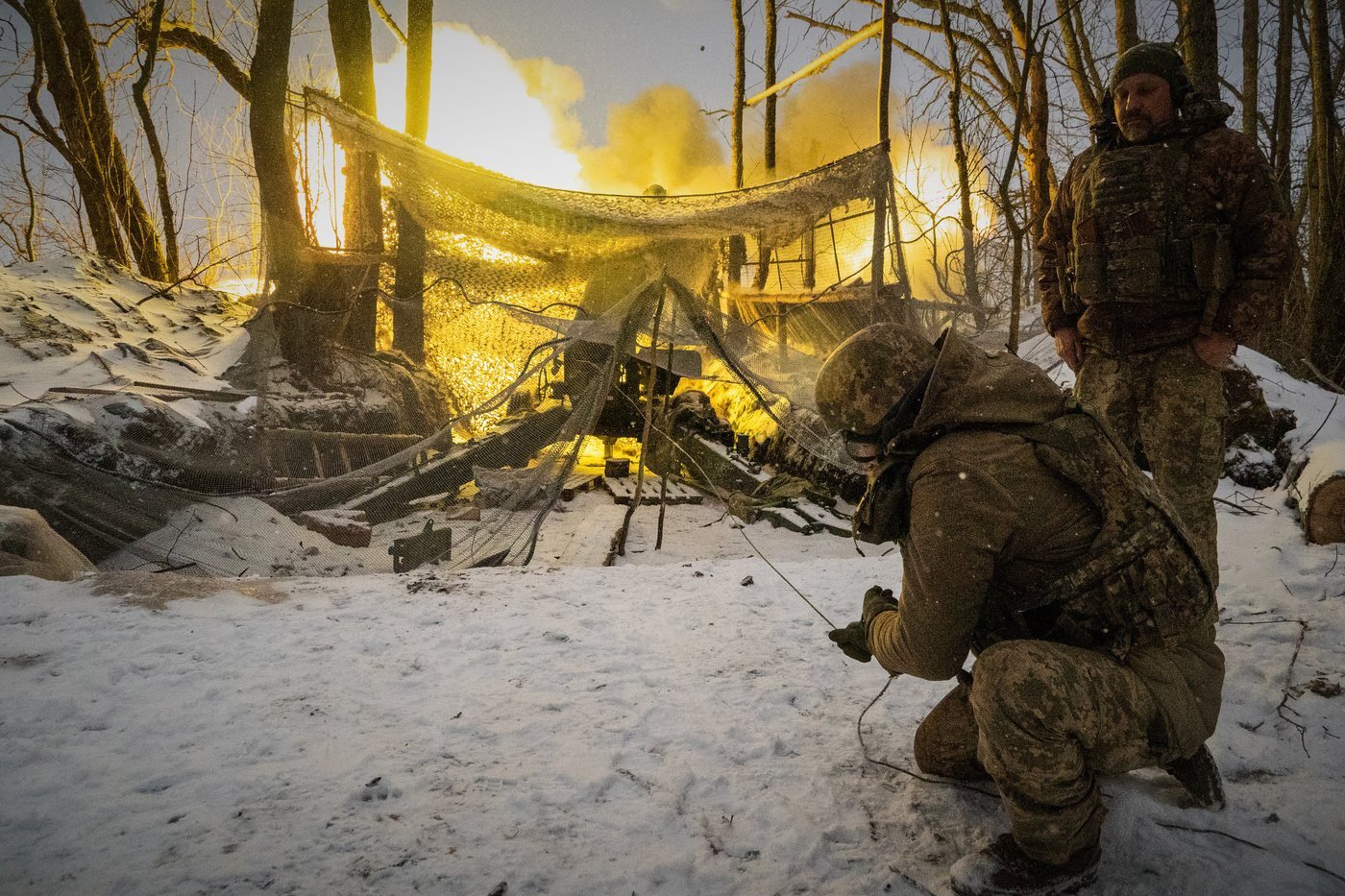
OTTAWA — As the world marks four years since Russia began its full-scale invasion of Ukraine on Tuesday, analysts say Moscow has contributed to global instability that will force Canadians to spend more — and more quickly — to defend their territory.
“People need to understand why defence is extremely important right now, and why we’re going to have to make sacrifices financially to make sure that we stay protected and safe in the long run,” said Anton Sestritsyn, a lobbyist who has helped to organize civil society support for Ukraine.
“It’s time for world leaders to start talking to their people and explaining to them what kind of situation we really find ourselves in.”
Sestritsyn was speaking at a panel last month staged by the Canadian Global Affairs Institute and the Konrad Adenauer Foundation, a think tank funded by German governments to promote transatlantic relations.
The panel looked at how Canada and its NATO allies responded to Russia’s 2014 annexation of Crimea and its full-scale invasion of Ukraine in 2022. Tuesday marks four years since that invasion.
Wendy Gilmour oversaw industry collaboration for the Department of National Defence during Russia’s initial invasion in 2014 and, nine months after the full-scale invasion, served as NATO assistant secretary-general overseeing defence investment.
She said Canada and its peers are still dragging their heels on supporting Ukraine’s defence.
“It’s still too slow and we are not meeting the need to help Ukraine win this war,” she said. “What we need to learn from Ukraine is how to adapt under pressure.”
Gilmour recalled how she was tasked by the government of Stephen Harper in 2014 with identifying equipment Ottawa could send swiftly to Ukraine that “was not going to be controversial, and the context of that point was entirely non-lethal equipment.”
That thinking held among Ukraine’s allies during the early part of the full-scale invasion, she said, when allies eager to support Ukraine were also wary of being drawn into a direct confrontation with nuclear-armed Russia.
Gilmour said by the summer of 2023, Ukraine’s allies — Canada included — were engaging in “wishful thinking” about a sudden breakthrough in the fighting that would lead to Russia’s defeat.
NATO nations have gradually realized since, she said, that “Ukraine is in a war of attrition,” with small battlefield movements similar to trench warfare in the First World War, except with highly sophisticated drones.
Allies “hollowed out” their munitions stockpiles a few years after the full invasion, Gilmour said, just as Russia reoriented to a war economy focused on building military equipment and sending vast numbers of soldiers into combat.
The Center for Strategic and International Studies reports that 1.2 million Russian troops have been killed, wounded or gone missing over the past four years — a number that does not include citizens of countries like North Korea and Bangladesh who have fought on the Russian side.
Gilmour said the return of U.S. President Donald Trump to the White House upended the Ukraine Defence Contact Group, which was launched by Washington to co-ordinate military aid.
Trump’s “erratic behaviour,” she said, has forced NATO to step up and co-ordinate support for Ukraine, bolstered by Canada and European nations boosting their military spending in response to the president’s threats.
That collaboration has led to efforts by countries like Denmark to pool funds and link gaps in Ukraine’s defences to allies equipped to fill those gaps.
Gilmour said Ukraine’s allies still don’t have a predictable supply chain for munitions and equipment, which forces the embattled country to cope with a mix of arms from multiple sources.
“They are still serving as the experimentation platform for NATO interoperability and standardization,” she said. “They have very little control over what is provided to them.”
Canada joined European allies in Paris last month to sign an agreement on future security guarantees for Ukraine. The agreement states that Ukraine’s allies would secure the country’s land, air and marine borders if it is presented with a viable ceasefire deal.
Maj.-Gen. Travis Morehen, who oversees Canada’s military collaboration with countries other than the U.S., told the panel that Ottawa sees that agreement as a 10- to 15-year commitment to Ukraine’s defence.
Gilmour said while Ottawa’s move to boost military spending will help Ukraine, it also prepares Canada to defend its borders in a more unstable world.
The Arctic foreign policy Canada launched in 2024 notes that Russia’s invasion of Ukraine has undermined global rules on sovereign territory, and warns Russia’s military buildup in the North could endanger Canada. Trump has since threatened to take control of Greenland, falsely claiming that the territory is swarming with Russian and Chinese boats.
“If we as Canadians start thinking very seriously about where our interests lie to ensure our own sovereignty … we need to ensure that we are fulfilling our own requirements for Canadian territory,” Gilmour said.
Meeting those requirements is particularly important “in the context of a wildly ambitious U.S.” that might view territorial threats against Canada as posing a risk to the United States, she said.
Ultimately, that could compel Canada to spend a lot more on defending its northern flank, Gilmour said.
“It’s going to be a very challenging period and for Canadians, we are going to have to understand that the government is going to make difficult public choices about where to put its resources,” she said.
“We can’t fulfil our own expectations for our economy and our level of prosperity and the continuation of Canadian interests unless we are able to secure them.”
Sestritsyn said Canadian firms are missing out on a chance to partner with Ukrainian companies that are now building some of the world’s most effective drones after four years of technological advances. He said those companies could be building factories in Canada.
Sestritsyn said Russian President Vladimir Putin will continue trying to take Ukraine’s territory unless it secures credible guarantees that Moscow would face direct conflict with an alliance of countries.
He said Putin cannot justify the war’s huge costs to Russia’s population by absorbing only a hundred or so Ukrainian villages, and will seek more territorial gains under a ceasefire if he doesn’t expect real consequences.
“We need to shift our mentality from supporting Ukraine for as long as it takes to supporting Ukraine until victory. And that victory needs to be very decisive. It’s an existential war for Putin, and I think we’re sometimes losing track of that,” Sestritsyn said.
“Ukraine gets just enough to sustain the fight but not enough to win, and that’s increasingly a problem.”
This report by The Canadian Press was first published Feb. 22, 2026.
Dylan Robertson, The Canadian Press