dailynewsnblog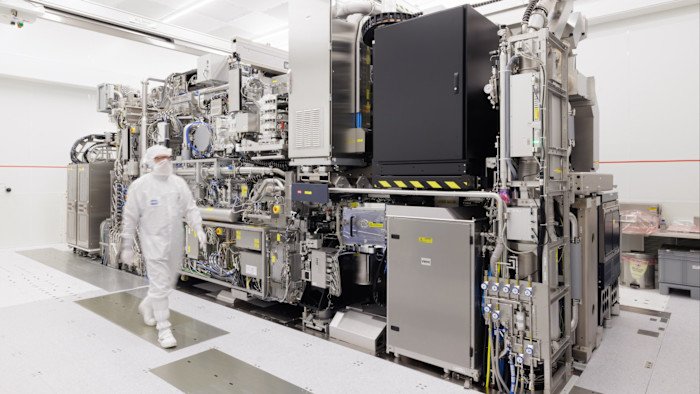
Unlock the Editor’s Digest for free
Roula Khalaf, Editor of the FT, selects her favourite stories in this weekly newsletter.
Europeans’ great geopolitical awakening has been to realise, first, that they depend on other powers in many near-existential ways, and second, that those powers are increasingly willing to use their strangleholds to bend Europe to their wills.
This fear first fully emerged vis-à-vis China, with concerns over Huawei’s role in 5G networks a decade or so ago. Vulnerability to Vladimir Putin over energy flows was something countries near Russia warned against early on, but became commonly understood only after his open weaponisation of gas sales in 2022.
Yet what has most shocked Europeans is how the US has joined those turning their dependence against them. The most egregious economic case is Donald Trump’s punitive tariff threats against countries opposing his land grab in Greenland. In addition, Europeans acutely feel their reliance on US provision of strategic military technology.
These (and more) cases all amount to a list of “chokepoints” — supplies of vital goods and services where Europe is at the mercy of producers elsewhere. Their weaponisation has left Europe economically and politically, and even philosophically, bereft, since Europeans practised and preached economic interdependence more earnestly than any other part of the world.
European leaders are now accepting the new reality, by converging around autonomy and resilience in a bid to undo the chokeholds others have over them. That is a purely defensive reaction. Aiming solely for resilience obscures any consideration of countervailing power that Europe itself possesses and could wield against others.
But something more ambitious is beginning to stir. In a study last year, participants from policymaking and industry told the Paris-based Institut Montaigne think-tank they had less confidence in achieving autonomy than in fostering European “indispensability”, especially with a group of reliable allies (which may or may not include the US).
The study concluded: “By fostering European leadership in cutting-edge semiconductor technologies, the EU can create choke points on which others depend, strengthening its geopolitical leverage. Specifically, this would then strengthen European means to deter the imposition on Europe of export boycotts and perhaps even military adventurism by rival states.”
The technologies in question refer to Europe’s domination of extreme ultraviolet lithography through Dutch company ASML, and could, with the right policies, in future include photonic and quantum chips, according to the Institut Montaigne.
Europe dominates in other sectors too. A group of experts called the Geostrategic Europe Taskforce last week published a report which “identifies 41 critical chokepoints where China depends on the EU for more than 80 per cent of its imports, and 67 such dependencies for the United States. These span essential inputs including insulin, pharmaceutical intermediates, medical technologies, and specialised machinery for agriculture, paper production, and industrial processing.”
And the German economic think-tank Dezernat Zukunft has also just released a study highlighting that “Europe has more cards than it thinks. We control 80 per cent of US uranium imports. Siemens dominates the turbines US data centres desperately need.”
These researchers do a great service in showing Europe is better armed for geopolitical conflict than its leaders might think. Simply mapping the levers one might use is a step towards a more assertive stance. These exercises also offer a number of further lessons for European leaders.
One is the need to broaden one’s perspective from “managing partnerships to projecting power”, as Geostrategic Europe Taskforce puts it. Specifically, for the EU, this means lowering the threshold for the “anti-coercion instrument”, which permits many kinds of retaliation, to also be deployed to see off any threat before it materialises, rather than just reactively.
Another lesson, as Dezernat Zukunft emphasises, is that it is not all about supplying scarce goods. Being a large consumer and financial market — access to which can be denied — is also a form of leverage. A third is that the EU and the UK must find ways to align on the use of chokepoints (like they have on sanctions against Russia).
This knowledge is welcome and necessary, but only a start. Power in the sense of having instruments of coercion is not the same as power in the sense of successfully securing one’s interests. The latter requires a willingness to make use of the former — perhaps aggressively so. That is a step Europe’s political leaders have yet to take.
martin.sandbu@ft.com