dailynewsnblog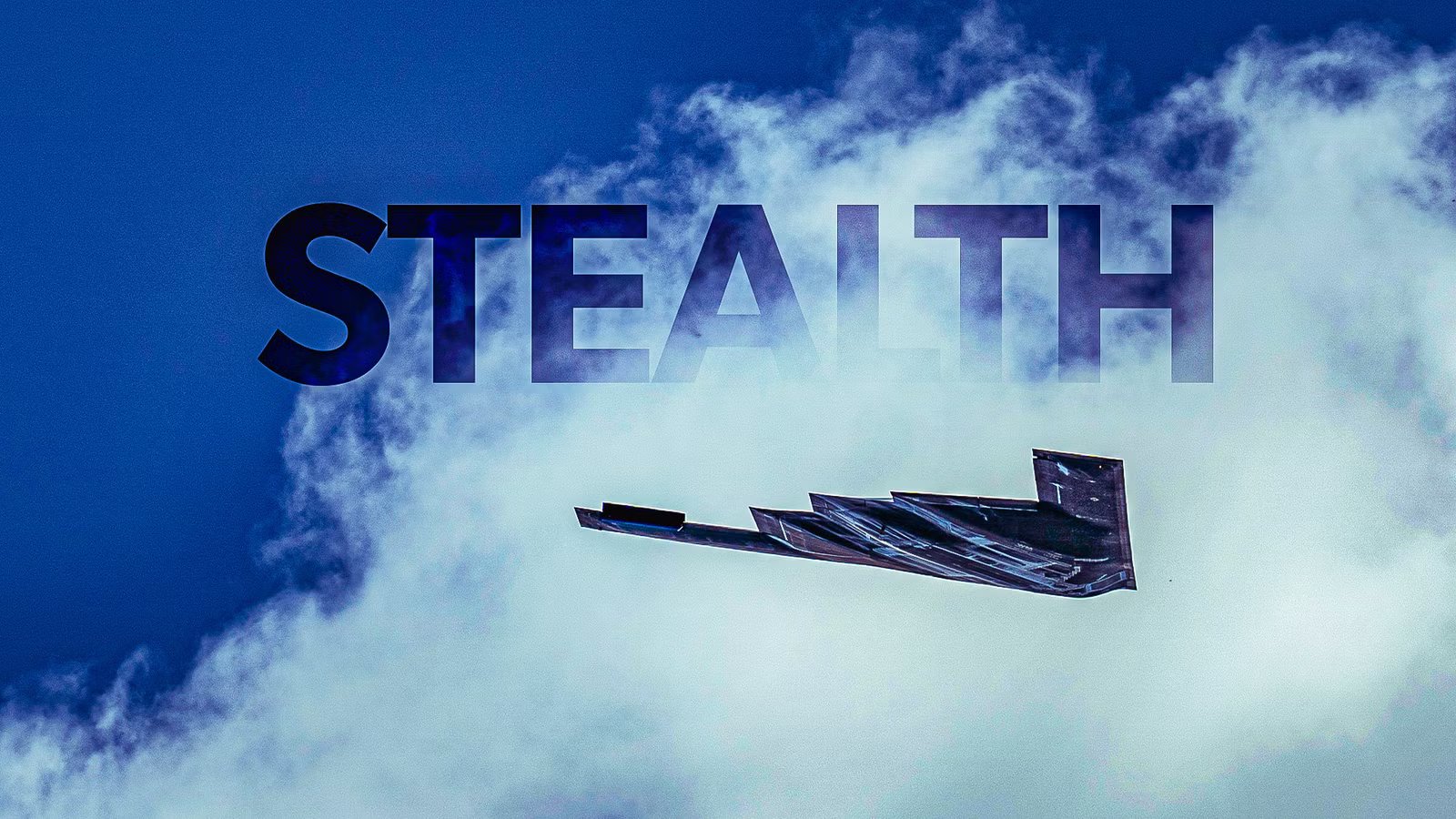
Why does the United States Air Force rely heavily on stealth technology? Stealth plays a crucial role in how the US aims to project power in contested regions. Today’s environment, with advanced radar and long-range missiles shaping defenses, makes stealth the Air Force’s primary strategy to address a vital operational challenge: staying alive and successful despite detection. The importance of this issue has only grown. Potential enemies have spent years developing integrated air defense systems (IADS) designed to block American forces. These systems use early-warning radar, long-range surface-to-air missiles, electronic warfare, and connected command centers. Against such defenses, old tactics based on speed, altitude, or numbers are less effective. So, stealth is a strategic response to the decreasing chances of survival for traditional methods.
We will examine how American stealth technology developed, how aircraft like the F-117, F-22 Raptor, F-35, B-2 Spirit Bomber, Northrop Grumman B-21 Raider, and RQ-170 Sentinel influenced doctrine, how stealth is used in real-world conflict planning, and why the Next Generation Air Dominance (NGAD) program is a logical step forward in this approach. More importantly, it argues that stealth is less about invisibility and more about managing time, information, and escalation.
What Is The Short Answer?

The USAF relies on stealth because modern air warfare punishes visibility. In a battlespace saturated with sensors, survivability depends on reducing detection long enough to strike first, gather intelligence, or establish dominance before the enemy can respond effectively.
The US Air Force’s focus on stealth stems from years of lessons learned. During the Cold War, advances in Soviet radar and missile technology revealed the vulnerabilities of traditional aircraft. High-altitude bombers and fast fighters could no longer rely solely on speed. The clear conclusion was that the safest aircraft might be the one the enemy never detects. But when is an aircraft considered “detectable”? Before radar was developed, the best way to “hide” an aircraft, or at least make it less visible, was optical camouflage. The main “sensors” were originally the human eye and ear, sometimes aided by telescopes and acoustic locators, allowing detection of enemy aircraft miles away. Therefore, using colors similar to those of the surrounding environment to deceive the enemy’s eyes was sufficient.
Things changed significantly with the advent of radar and thermal-seeking devices: to make an aircraft invisible, infrared emissions and radar cross-section (RCS) should be minimized.
During the Cold War, surface-to-air missiles gained reach, and electronic countermeasures became a contest of escalation. The Vietnam War underscored how lethal air defenses could be, even against advanced aircraft.
The result was achieved by combining radar physics, materials science, and unconventional aerodynamics. Infrared emissions could be managed through engine exhaust design and heat distribution. The key insight came from theoretical work on RCS modeling: radar detection heavily depends on how electromagnetic energy reflects off surfaces. It minimizes electronic emissions by disciplined sensor control. The goal is not complete invisibility but rather an operational advantage that keeps the adversary in a reactive stance.
By shaping aircraft to scatter radar waves rather than reflect them at their sources and by using radar-absorbing materials, engineers could significantly reduce the radar cross-section. This effort shifted from abstract ideas to practical operational doctrine through classified programs in the 1970s, culminating in the development of the F-117 Nighthawk by Lockheed Martin Skunk Works, where unconventional shapes and radar-absorbing materials were tested. What began as a survivability experiment quickly proved revolutionary: stealth technology enabled entirely new operational concepts centered on surprise and first-strike capability.
At its core, stealth is about survivability through invisibility, or more precisely, delayed detection. Modern stealth aircraft are engineered to scatter radar waves, suppress infrared signatures, and reduce visual cues. When effective, this significantly decreases the distance at which enemy sensors can detect and track the aircraft. Although this delay may last only seconds or minutes, in combat, time equals survivability.
Factors Behind The Stealthiness

Multiple interconnected factors explain why stealth technology has become a key part of the USAF strategy, starting with the ongoing development of integrated air defense systems. Modern IADS are layered, mobile, and networked: early-warning radars trigger tracking systems, which then guide surface-to-air missiles across various altitude levels, all linked by resilient data connections. In such defenses, a traditional strike package must depend on mass and coordination: escort fighters, electronic warfare, enemy air defense suppression, decoys, and tankers — each additional aircraft adding complexity and risk. Stealth changes this dynamic. Instead of trying to overwhelm defenses with numbers, it reduces the chances of early detection, shortens the enemy’s decision time, and enables smaller groups to reach objectives that previously required large, combined forces.
This logic underpins the “first-night-of-war” doctrine that emerged after the Cold War. Stealth aircraft are often tasked with the initial strikes of a campaign, targeting command nodes, radar sites, and communications hubs to fracture the opponent’s coordination. The Lockheed F-117 Nighthawk demonstrated this during Operation Desert Storm, striking high-value targets in Baghdad before Iraqi defenses could respond effectively. The Northrop Grumman B-2 Spirit expanded the concept to the strategic level, flying intercontinental missions from the continental United States to attack hardened Serbian targets during the Kosovo conflict, where it accounted for a disproportionate share of early target destruction. In subsequent operations over Afghanistan and Iraq, and in contingency planning and demonstrations of reach toward heavily defended states, including missions associated with US signaling toward Iran, sometimes referred to in open sources as “Operation Hammer”, the B-2’s ability to strike without reliance on forward basing offered policymakers credible options with limited visible buildup.
Stealth also reshaped air superiority in contested airspace. The Lockheed Martin F-22 Raptor fused low observability with supercruise and high maneuverability, enabling it to detect and engage adversaries before being targeted itself, thereby controlling the timing and geometry of an engagement. The Lockheed Martin F-35 Lightning II broadened that paradigm by combining stealth with advanced sensor fusion, allowing it not only to survive in contested zones but to act as an information node, distributing targeting data to other aircraft and surface units. In this way, stealth is no longer solely about penetration; it becomes a means of shaping the entire battlespace, extending the reach and survivability of platforms that are less survivable.
Finally, stealth has expanded beyond strike and fighter roles into intelligence collection in denied environments. The Lockheed Martin RQ-170 Sentinel illustrates this evolution. Designed for low observability and high-altitude penetration, it enables reconnaissance inside heavily defended airspace where conventional ISR aircraft would face unacceptable risk. Its operational history, including missions over Afghanistan and sensitive regions near major power competitors, as well as the widely publicized 2011 airspace incident that led to its capture and exploitation, underscores both the strategic value and the inherent risks of deploying stealth assets. What emerges in these cases is a consistent principle: whenever detection threatens mission success, stealth becomes not a luxury but a prerequisite for credible military options.

Top 5 Key Milestones In The Development Of Stealth Technology For Military Planes
There have been major advancements in stealth technology in the last few decades.
Engineering The Stealth

Military planners and aerospace engineers consistently emphasize that stealth is about controlling the enemy’s decision cycle. Detection triggers reaction — interceptors launch, missiles track, defenses activate. By delaying or degrading detection, stealth aircraft compress this cycle, forcing defenders to respond with incomplete information.
Operational commanders have noted that stealth platforms reduce the logistical burden of strike missions. Instead of assembling complex packages of escorts and jammers, stealth aircraft can act as pathfinders, neutralizing defenses and opening corridors for follow-on forces.
Engineers stress that stealth is multi-spectral. Radar reduction alone is insufficient; infrared, acoustic, and electromagnetic signatures must also be managed. Modern stealth design, therefore, integrates materials science, cooling techniques, and digital mission systems.
The broader implication is that stealth shifts warfare from brute force toward information dominance. The side that controls detection controls initiative.
Other Stealth Plane Operators

Russia’s fifth-generation fighter, the Su-57, reflects a different balance of priorities. While it incorporates low-observable features, its design philosophy emphasizes maneuverability, kinematic performance, and multirole flexibility alongside partial stealth characteristics. Russian doctrine has traditionally valued aerodynamic performance and powerful radar systems, and the Su-57 reflects that heritage. Its shaping and materials reduce radar cross-section from certain aspects, but it does not pursue the same degree of all-aspect low observability that defines American designs such as the F-22 or F-35. In operational terms, this suggests a different assumption about survivability — one in which stealth complements performance rather than defines it. Russia appears to hedge between traditional air combat philosophy and low-observable adaptation, rather than fully reorganizing doctrine around stealth penetration.
China’s approach, embodied in aircraft such as the J-20, offers a different comparison. The J-20 demonstrates a clear commitment to forward-aspect stealth, long-range engagement, and integrated sensor capabilities. Its large airframe suggests a focus on extended reach and missile carriage, potentially optimized for targeting high-value assets such as tankers and airborne early warning aircraft. China’s doctrine increasingly emphasizes anti-access and area denial — preventing US forces from operating freely near its periphery. In that context, stealth serves both defensive and offensive purposes: protecting Chinese aircraft within contested zones while threatening the support infrastructure on which American airpower depends.
Yet there remains a structural difference in emphasis. The United States built stealth into its force architecture over decades, beginning with the F-117 and evolving through the B-2, F-22, and F-35. Entire operational concepts, first-night-of-war strikes, suppression of enemy air defenses, and forward ISR in denied airspace are built around low observability.
In contrast, Russian and Chinese stealth programs emerged later and coexist alongside substantial fleets of non-stealth aircraft. Their force structures remain more visibly mixed in composition. That does not mean their stealth aircraft are insignificant; rather, it suggests a different stage of doctrinal integration. The United States, by comparison, is progressively aligning procurement, training, basing, and operational planning around stealth-centric platforms.

The Striking Differences Between The F-22 Raptor & F-35 Lightning II
F-22 vs F-35: 2 fifth-generation fighters with unique strengths: speed and air dominance vs multirole flexibility. Discover what truly sets them apart
Main Drawbacks

Stealth reduces the likelihood of detection but does not guarantee complete immunity: opponents can still detect, track, or target low‑observable platforms under certain conditions, and non-kinetic methods (cyber, EW, navigation spoofing) introduce additional points of failure. The historical record is clearly reported by The Aviation Geek club: a US F‑117 was shot down over Serbia on March 27, 1999, demonstrating that careful air defense can counter even advanced low‑observability tactics, and an RQ‑170 Sentinel was lost over Iran in December 2011, later confirmed by Iranian authorities. This event exposed both kinetic and non-kinetic vulnerabilities for unmanned stealth ISR.
Stealth is costly not only to acquire but also throughout its entire lifespan: decades of classified R&D contributed to platforms like the F‑22, F‑35, B‑2, and the emerging B‑21. However, the larger and more constant expense is sustainment: radar-absorbent materials require careful, routine maintenance; panels must be aligned precisely to maintain signature integrity; and the aircraft require specialized facilities, trained technicians, and disciplined procedures, all of which increase lifecycle costs. This high cost creates a second issue: strategic overreliance.
Stealth fleets are small, think the very limited B‑2 force and the F‑22 line that closed at fewer than 200 aircraft, to concentrate extensive capability on a few advanced platforms strains readiness and capacity when demand rises, or attrition, maintenance, or other factors reduce availability.
Even the globally distributed F‑35 fleet must be managed carefully while accounting for other commitments. The essential counterpoint is direct but unavoidable—the alternative to investing in stealth and its protection is often far worse: operating without it in contested airspace risks much higher attrition and loss of access. Therefore, stealth must be part of a layered approach that maintains force diversity, strengthens command and control, and combines low observability with electronic warfare, resilient logistics, and distributed sensing.
The lesson is not that stealth is flawed, but that it must be integrated intelligently into a broader force structure.
Overall Takeaway

The USAF relies on stealth technology because modern warfare punishes visibility. In a battlespace saturated with sensors, survivability depends on denying the enemy information. Stealth aircraft embody this philosophy, enabling precision strikes, air dominance, and strategic deterrence in environments where conventional aircraft would face unacceptable risk.
Stealth technology has developed from a Cold War-era experiment into a key feature of American airpower, spanning modern fighters and bombers. It exemplifies a strategic conviction that the capability to operate everywhere where access is crucial for deterrence and success is essential.
From the F-117’s first combat missions to the strategic reach of the B-2 and the ISR penetration of the RQ-170 Sentinel, stealth has evolved into a systemic philosophy. It shapes procurement decisions, mission planning, and deterrence strategy.
In the near future, the NGAD program could revolutionize stealth technology once more. As stated by the US Congress, instead of relying on a single aircraft, NGAD is likely to operate as a “family of systems,” potentially combining a manned stealth fighter with autonomous cooperative aircraft and sophisticated electronic warfare platforms. Stealth capabilities may be distributed across networks rather than limited to a single airframe.
In that future, survivability may rely not only on geometry and materials but also on digital deception, AI-driven emission control, and system-level integration. Stealth will shift from being a shape to a strategy. Ultimately, the reliance on stealth reflects a deeper truth: in an age saturated with sensors, controlling what the enemy can see is as decisive as controlling the skies themselves.