dailynewsnblog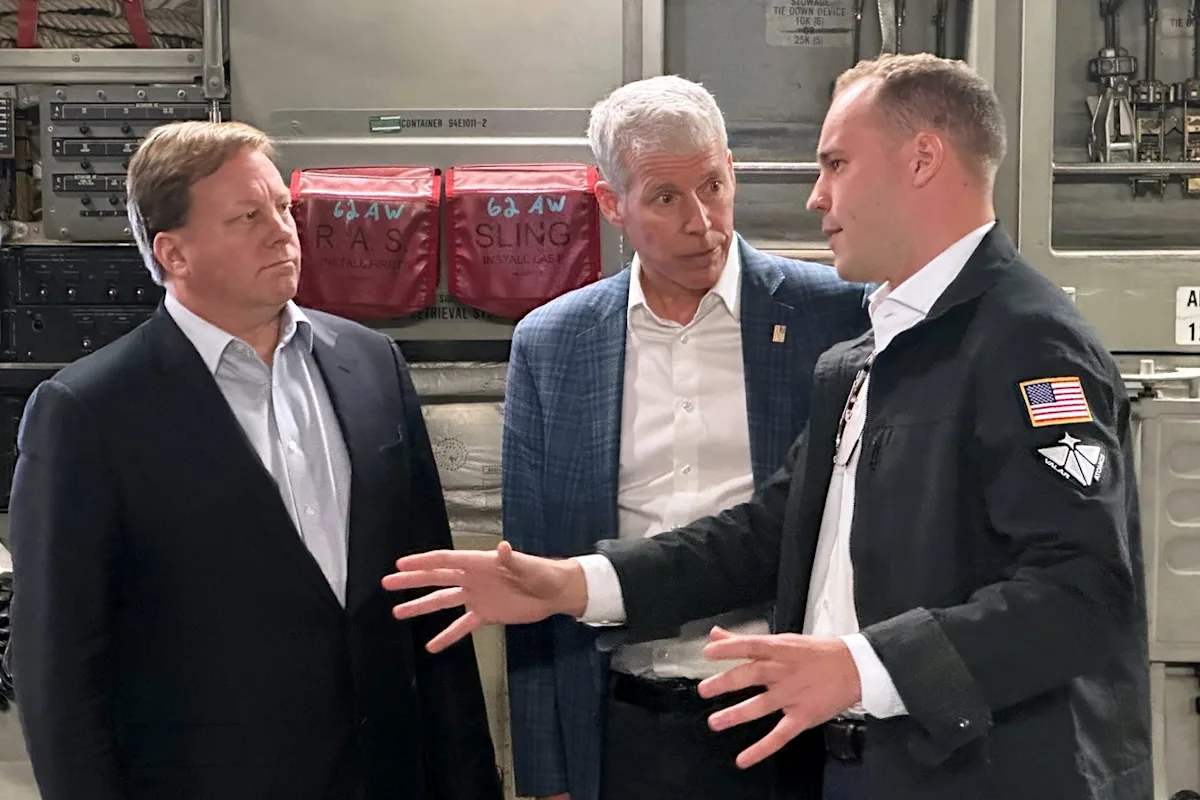
HILL AIR FORCE BASE, Utah (AP) — The Pentagon and the Energy Department for the first time airlifted a small nuclear reactor from California to Utah, demonstrating what they say is the U.S. potential to quickly deploy nuclear power for military and civilian use.
The nearly 700-mile flight last weekend — which transported a 5-megawatt microreactor without nuclear fuel — highlights the Trump administration’s drive to promote nuclear energy to help meet skyrocketing demand for power from artificial intelligence and data centers, as well as for use by the military.
Energy Secretary Chris Wright and Undersecretary of Defense Michael Duffey, who traveled with the privately built reactor, hailed the Feb. 15 trip on a C-17 military aircraft as a breakthrough for U.S. efforts to fast-track commercial licensing for the microreactors, part of a broader effort by the Trump administration to reshape the country’s energy landscape.
A new emphasis on nuclear energy
President Donald Trump supports nuclear power — a carbon-free source of electricity — as a reliable energy source, even as he has been broadly hostile to renewable energy and prioritizes coal and other fossil fuels to produce electricity.
Skeptics warn that nuclear energy poses risks and say microreactors may not be safe or feasible and have not proved they can meet demand for a reasonable price.
Wright brushed those concerns aside as he touted progress on Trump’s push for a quick escalation of nuclear power. Trump signed a series of executive orders last year that allow Wright to approve some advanced reactor designs and projects, taking authority away from the independent Nuclear Regulatory Commission, which has regulated the U.S. nuclear industry for five decades.
“Today is history. A multi-megawatt, next-generation nuclear power plant is loaded in the C-17 behind us,” Wright said before the two-hour flight from March Air Reserve Base in California to Hill Air Force Base in Utah.
The minivan-sized reactor transported by the military is one of at least three that will reach “criticality” — when a nuclear reaction can sustain an ongoing series of reactions — by July 4, as Trump has promised, Wright said.
“That’s speed, that’s innovation, that’s the start of a nuclear renaissance,” he said.
Microreactors would be for civilian and military use
Currently, there are 94 operable nuclear reactors in the U.S. that generate about 19% of the country’s electricity, according to the U.S. Energy Information Administration. That’s down from 104 reactors in 2013 and includes two new commercial reactors in Georgia that were the nation’s first large reactors built from scratch in a generation.