dailynewsnblog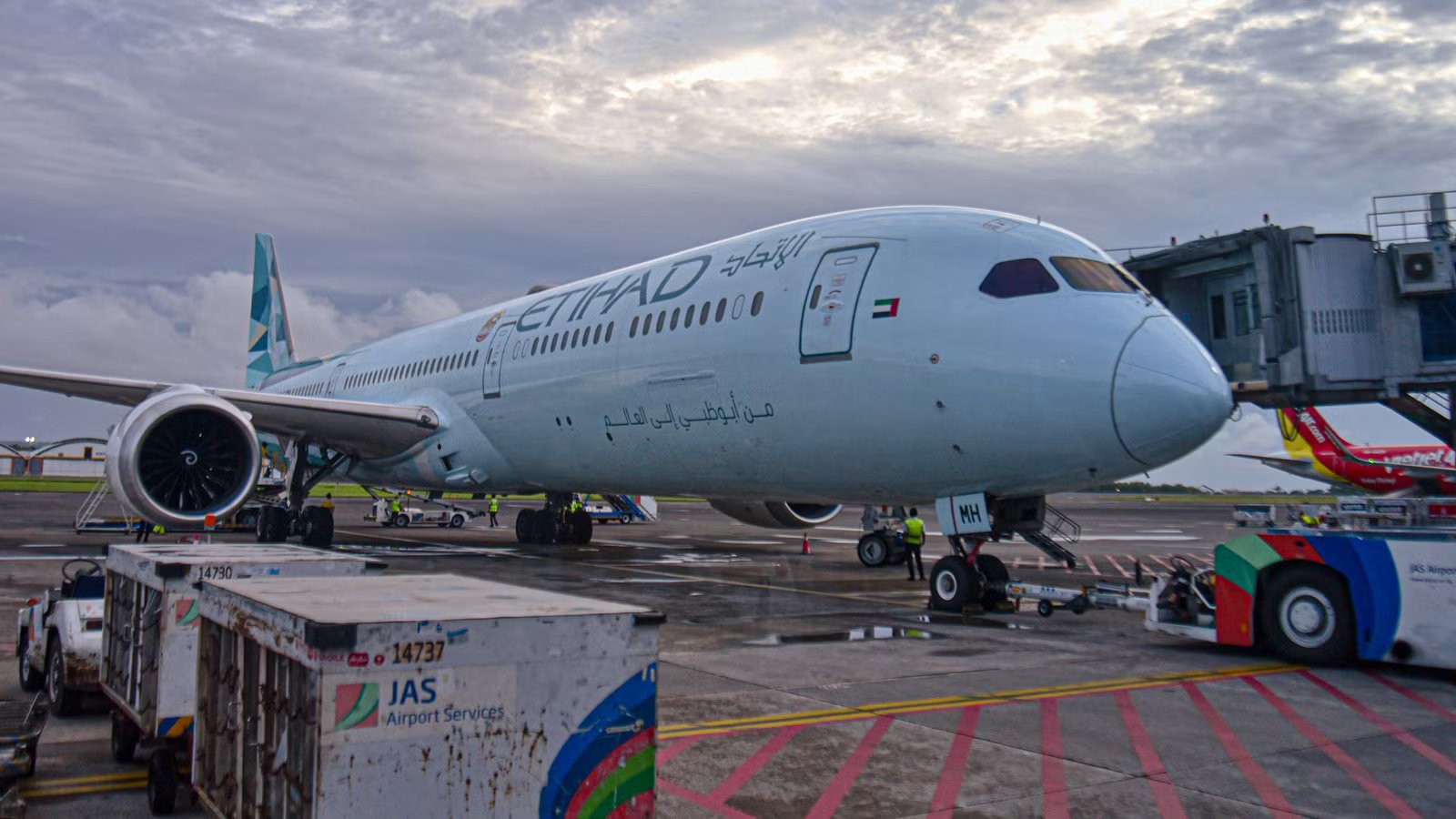
From a passenger’s perspective, the only parts of an airliner that you typically see are the cabin. From the gate area, you may also see bags and containers being loaded into the cargo hold, and you may also catch a glimpse of the flight deck when boarding or leaving the aircraft. Otherwise, however, there’s little else to see, given that the rest of an aircraft’s interior typically consists of little more than wires or mechanical components, only opened up during maintenance.
The Boeing 787, however, has more hiding inside its fuselage. On long flights, airlines are required to staff aircraft with extra crew members, with the intention that staff rotate throughout the flight: one set works while the other rests. The crew members who rest need a designated area to do so. On the Boeing 787, one of the world’s most popular long-range airliners, Boeing designed dedicated modules located above the passenger cabin, accessible only to crew, and largely hidden from view.
Why Crew Rest Areas Are Necessary

Exact regulations vary by jurisdiction, but universally, pilots and flight attendants have limits as to how long they can legally work before timing out. Many long-haul flights, however, exceed the amount of time that crews are permitted to work, which is why airlines staff long-distance flights with additional crew members. A general rule of thumb is to schedule an extra pilot on flights over eight hours, and a fourth pilot for flights over 12 hours. Longer flights also require additional flight attendants.
These regulations can also be stricter by airlines depending on contract terms, and can be calculated on other factors such as the number of time zones crossed. In addition to staffing long-haul flights with additional crew members, airlines also need to provide a space for staff to rest during the flight. These spaces are required to be private or physically separated from the passenger cabin, and allow crew members to sleep, although pilots and flight attendants don’t always sleep during breaks.
On smaller aircraft, like the Boeing 767, some airlines will block off passenger seats with a blackout curtain for crew use, and United Airlines even installs special economy seats with a legrest, added legroom, as well as additional recline for flight attendant use. However, these solutions take up valuable floor space that could otherwise be used for paying customers. Newer aircraft like the Boeing 787, meanwhile, have shifted the rest areas above the passenger cabin.
Inside The Boeing 787’s Crew Rest Modules

The Boeing 787 has two separate crew rest modules. Above the passenger cabin, behind the first set of exit doors, is the area for the pilots. Here, there are two beds side-by-side, which are separated by a curtain, along with a single rear-facing seat. In addition, this module features storage areas and reading lights, along with a phone connected to the flight deck. This area is unoccupied during take-offs and landings, but is otherwise used by one or two pilots simultaneously, depending on the number of relief crew.
The flight attendant crew rest features a similar design. It’s located above the passenger cabin ahead of the fourth set of exit doors, but does not feature a seat. Instead, there are six beds arranged around the entrance, each equipped with a privacy curtain, power outlet, and a reading light. Because of the 787’s relatively modest size, these quarters can be cramped (especially vertically), and there’s little space to move around, although many find the beds to be comfortable.
The entrance to the pilot crew rest module is located in the forward galley, while the entrance to the flight attendant rest area is located in the rear galley. The doors lead to steps, which lead directly up to the rest areas. Although these modules are largely hidden from the eyes of the passengers, there is one way that passengers can spot them. Specifically, the modules create a bulge in the center section of the cabin’s ceiling. For the rear of the cabin, this is less noticeable (although there are no overhead bins as a result), while the bulge is more noticeable in the front of the aircraft if the airline has deleted the center bins.

Inside The Airbus A350-1000’s Secret Crew Rest Areas
From overhead bunks to cockpit rest areas, here is how the A350-1000 supports its long-haul crews.
The Innovation With Passenger Crew Rest Areas

With aircraft range increasing in the late 20th century, airlines and manufacturers had to devise solutions for where to accommodate resting crew members. The tried-and-true solution was to simply block off seats in the cabin, with pilots getting first/business class seats while flight attendants had to make do with economy seats, but this cost airlines revenue potential. With the Boeing 747-400, the aircraft’s cockpit was made smaller due to the lack of a flight engineer, and this created additional space for a bunk area behind the flight deck, but the 747 was also a huge aircraft.
On other planes, space would be at more of a premium. Early examples of planes like the Airbus A340 and Boeing 777 would feature a small bunk behind the cockpit for the pilots, while the flight attendants would get a module in the cargo hold. Some airlines also opted to install a cargo-hold module for pilots and use the cabin space for the galley. Here, however, the issue is that these modules took up potential revenue space in the cargo hold, which can be a huge moneymaker for some airlines.
In 2003, Boeing introduced an option for overhead crew modules on the 777. These modules fit inside the aircraft’s “crown area” and take up virtually no revenue space. They soon became the standard on all 777 models, and this same design is used with the 787. In addition, Airbus uses overhead rest modules on the A350. However, this design requires a large crown area. As such, you won’t find overhead modules on smaller widebody aircraft like the Boeing 767 or on a narrowbody.
Comparing The Rest Module On The Airbus A330

 Boeing was able to design overhead crew rest areas on the 777 because the width of the aircraft’s fuselage created a large crown area, leaving enough space for these modules. Boeing was able to replicate this design with the 787, and Airbus followed suit on the A350, but the modules are noticeably smaller as these planes are narrower than the 777. With the A330, however, the plane is simply too narrow and the crown area too small for an overhead crew rest module, so airlines have to make do with underfloor rest areas.
The challenge with these is that they can take up revenue space in the cargo hold, although this is preferable to blocking seats. Some older Airbus A330s feature a rest area directly behind the cockpit pilots, but these cramped bunks are no longer used, with airlines instead installing galleys or lavatories in their place. The underfloor module is accessed from the passenger cabin and takes up the space of an LD36 container. As they’re located directly in the cargo hold, they’re also removable.
|
Aircraft |
Crew Rest Module Type |
|---|---|
|
Airbus A330 |
Underfloor |
|
Airbus A350 |
Overhead |
|
Boeing 777 |
Overhead |
|
Boeing 787 |
Overhead |
On the Airbus A330, the underfloor module as a whole is shared between the pilots and flight attendants, although there are two sections within the module that are separated for the two groups. On the A330-900 and A330-300, the module is located near the third set of exit doors, while the module on the A330-200 is located near the rear of the aircraft and partially takes up space in the bulk cargo hold. The newer module designed for the A330-900 is generally considered more comfortable by pilots, with improved privacy and two seats in addition to the bunks.

How Cabin Crew Rest & Sleep On The Boeing 747-8
This article gives detail on the rest areas available to 747-8 crew members, before comparing them with the A380.
Crew Rest Areas On Other Aircraft

Today, overhead crew rest modules are standard on the Airbus A350, Boeing 777, and Boeing 787, while the Airbus A330neo is sold with underfloor rest modules. Older Boeing 777s typically feature underfloor modules, and these are also an option for the Boeing 767, although it’s less common as some airlines (most notably United Airlines) instead block seats in the passenger cabin.
The Airbus A380 is unique in being a double-decker aircraft, and this means that an overhead crew rest module doesn’t work. For the pilots, Airbus designed a two-level rest area with two beds and two seats located directly behind the flight deck. Meanwhile, for the flight attendants, Airbus offered three options: a designated section towards the rear of the main deck, a designated section towards the rear of the upper deck, or an underfloor module, all of which come with 12 berths. The majority of A380 operators went with the underfloor module.
|
Aircraft |
Number Of Berths For Flight Attendants |
|---|---|
|
Boeing 787 |
6 |
|
Boeing 777 |
8 |
|
Airbus A380 |
12 |
One option that some widebody operators choose, however, is to go with no crew rest area. This is done when a customer expects to operate a few or no flights that exceed flight duty time regulations. Singapore Airlines, for instance, only flies its Boeing 787-10s on flights within Asia and to Australia, and therefore doesn’t require crew rest modules. These ultimately cost extra money and add weight, so airlines only add them if they are used. Furthermore, these modules can be retrofitted if an airline later sees the need for them.